


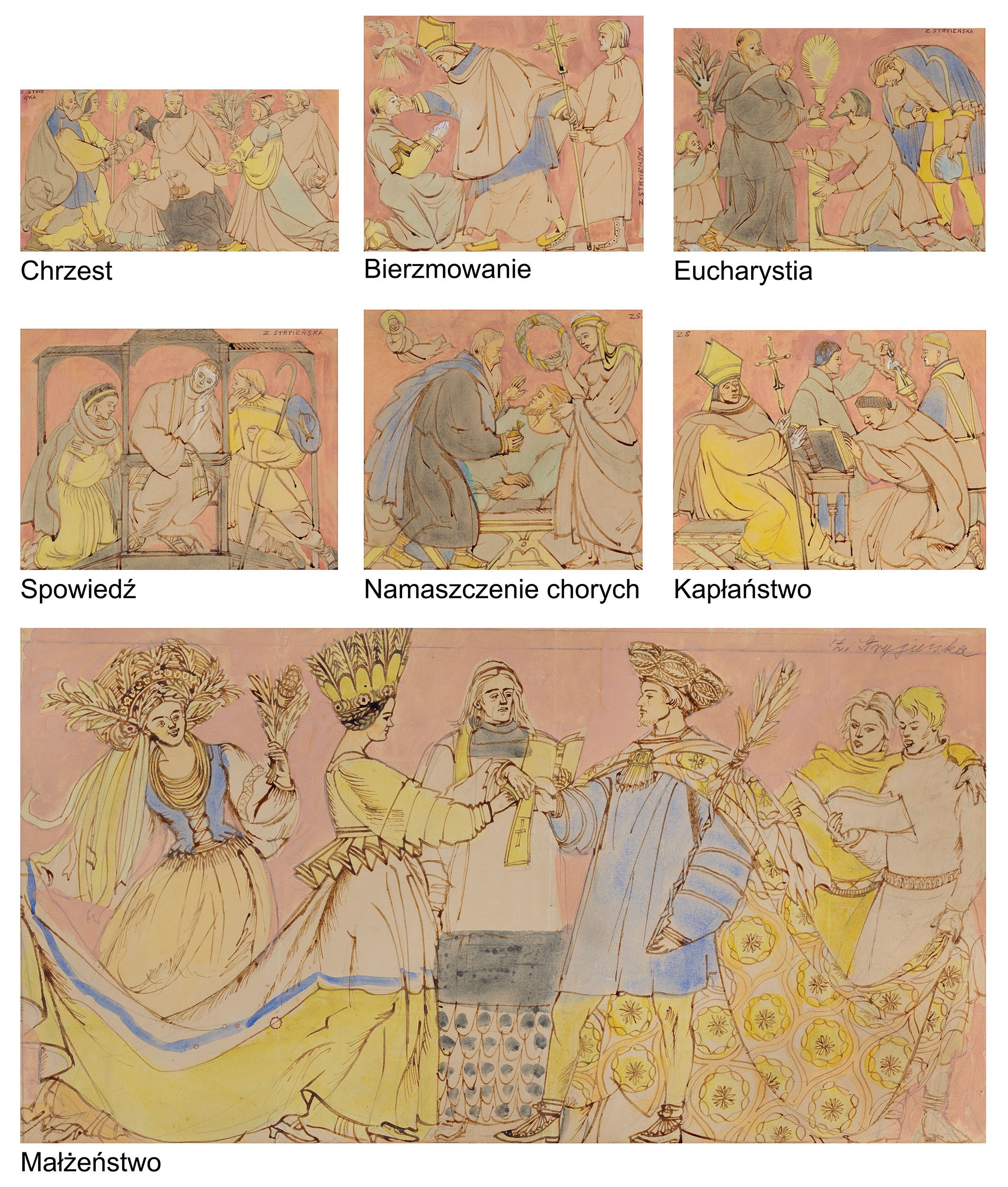
42.5 x 78.5cm - pencil, watercolor, gouache, paper
On the lower slats of the frames and the clasps stickers of the auction house.
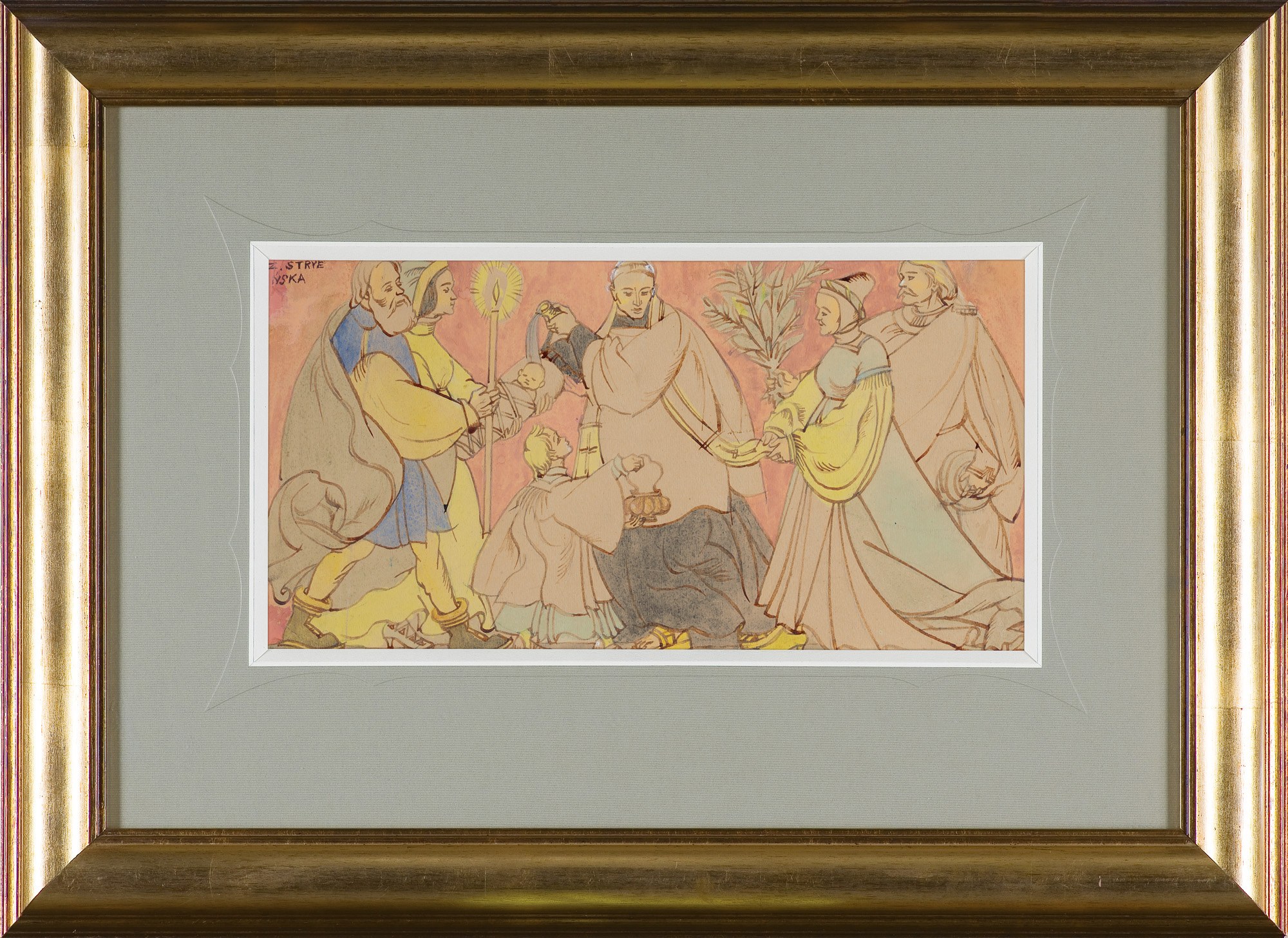
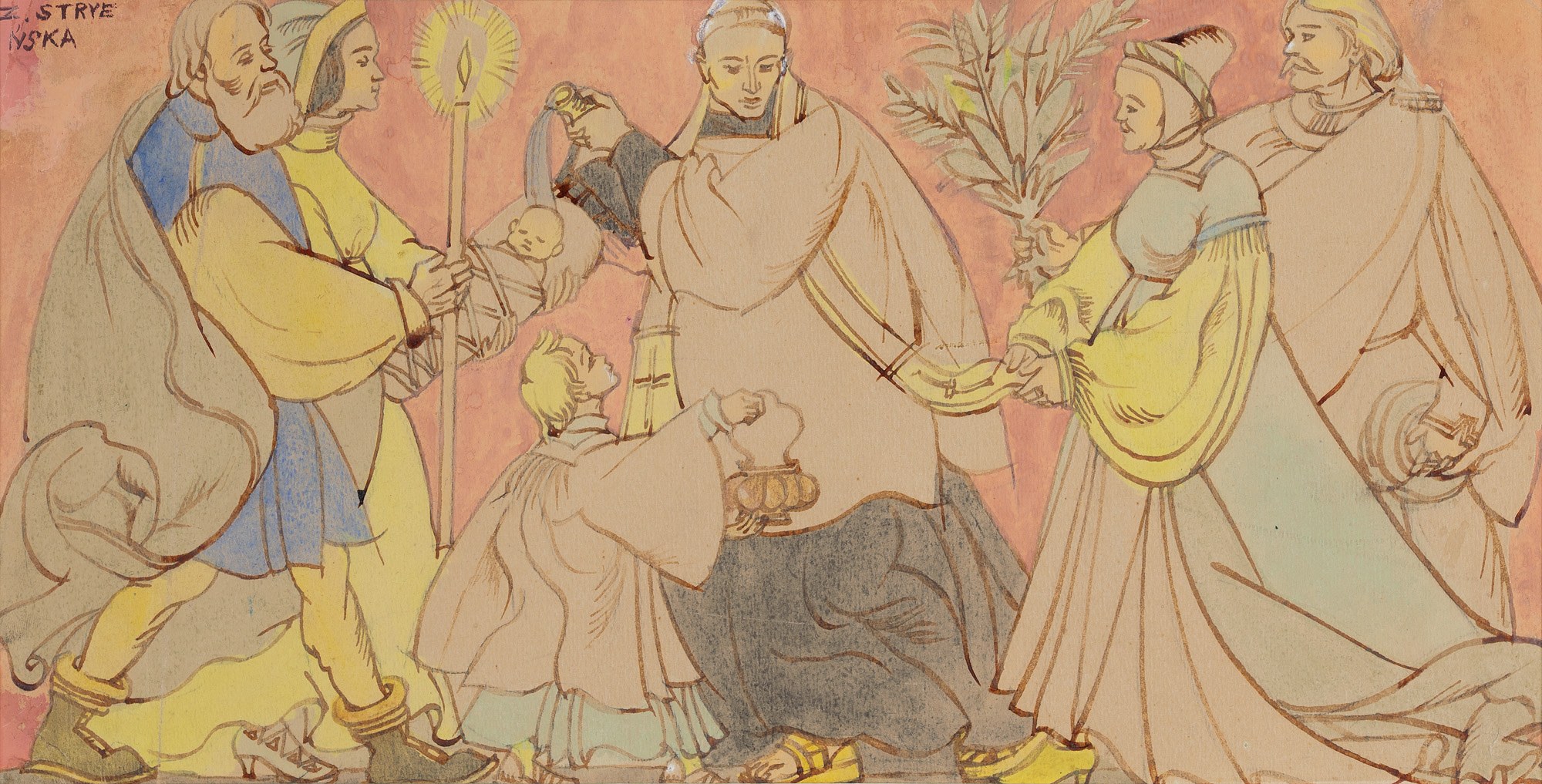
Baptism
pencil, watercolor, tempera, gouache, ink, paper pasted on cardboard, 21 x 40.8 cm (light passe-partout)
Signed l.g.: Z. STRYE | ÑSKA
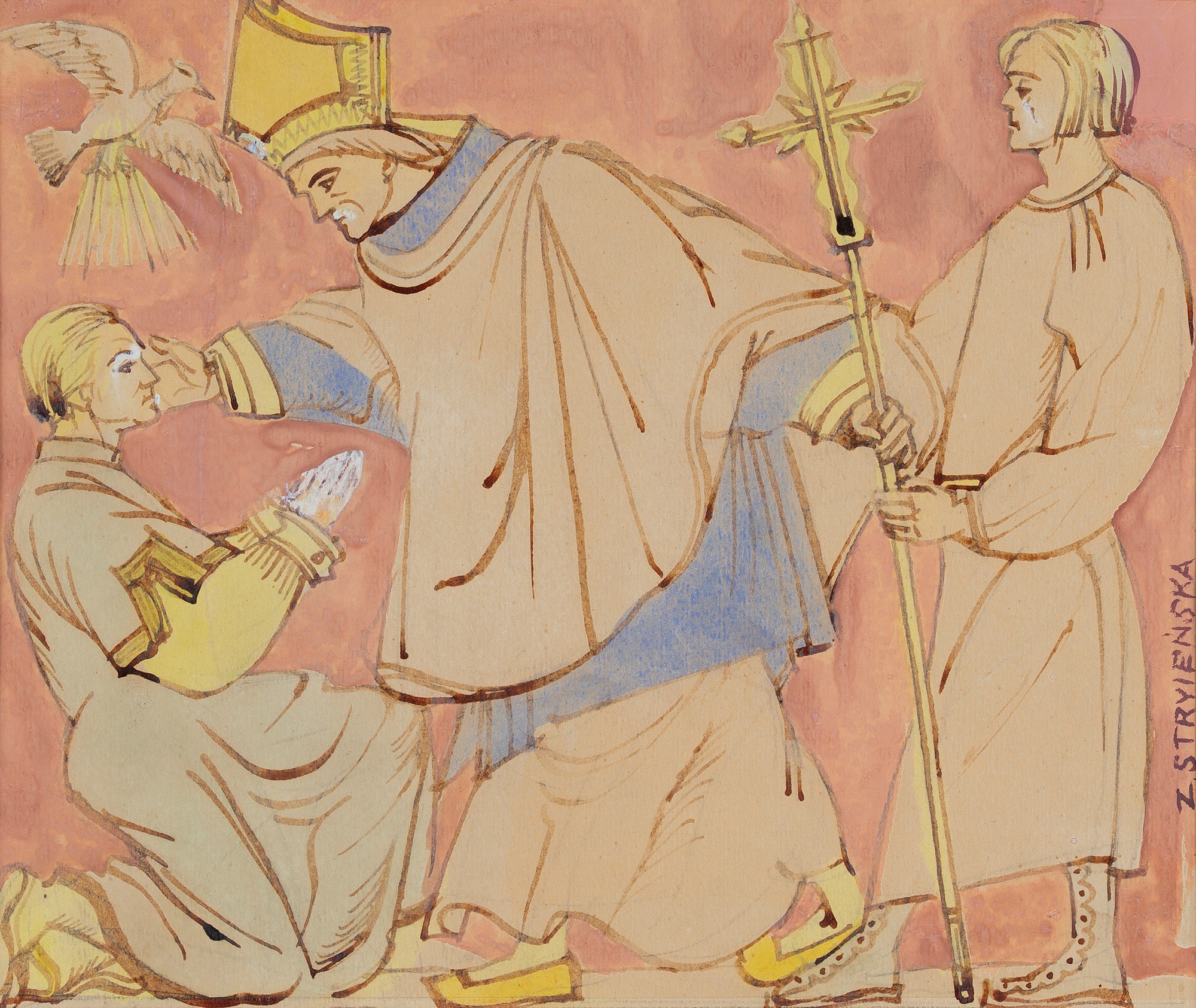
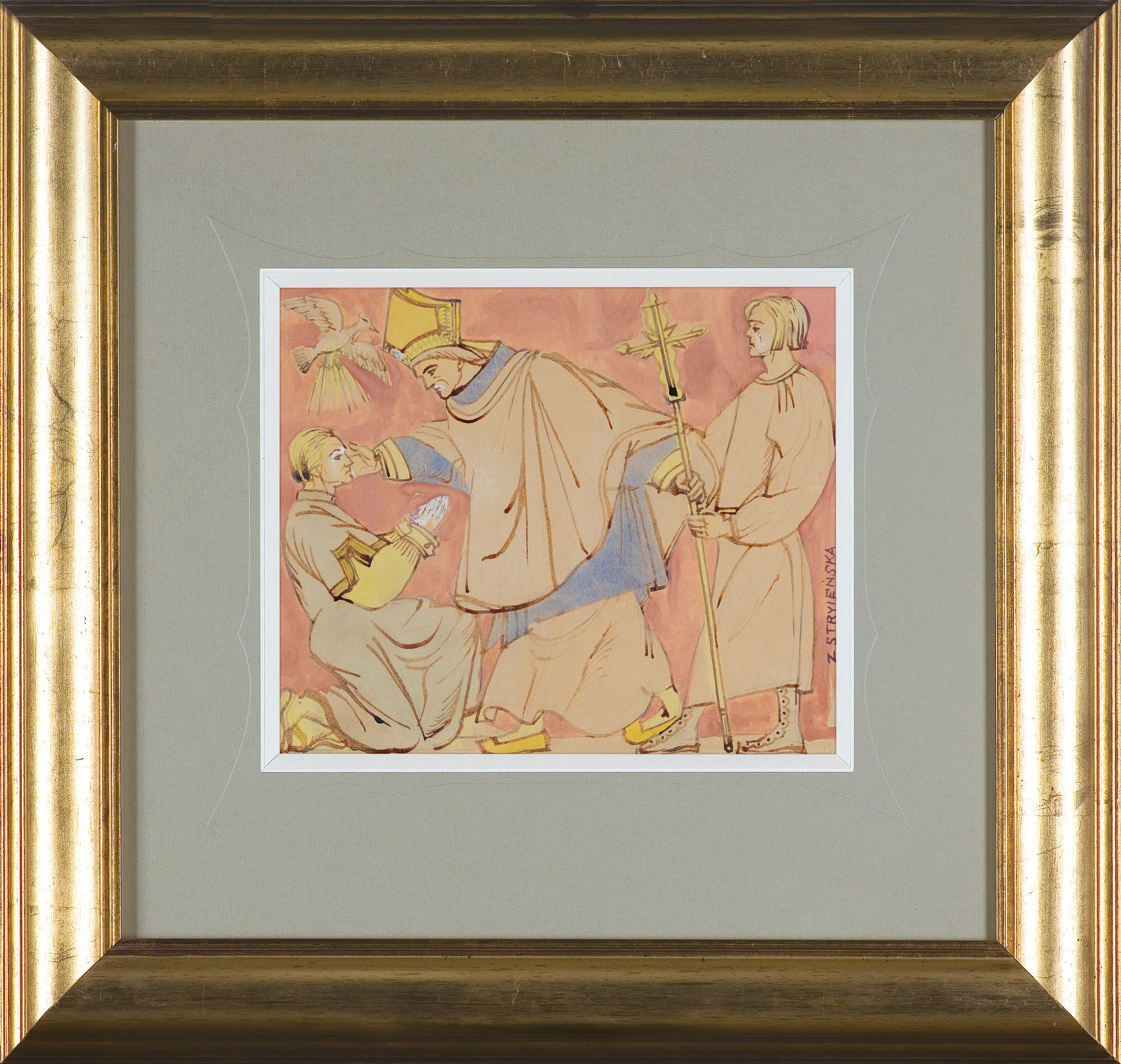
Confirmation
pencil, watercolor, tempera, gouache, ink, paper pasted on cardboard, 22.2 x 26.4 cm (clear passe-partout)
Signed along right edge: Z. STRYIEŃSKA;
on the back centrally numbered (in pencil): 6.; on the back repeated number 6.
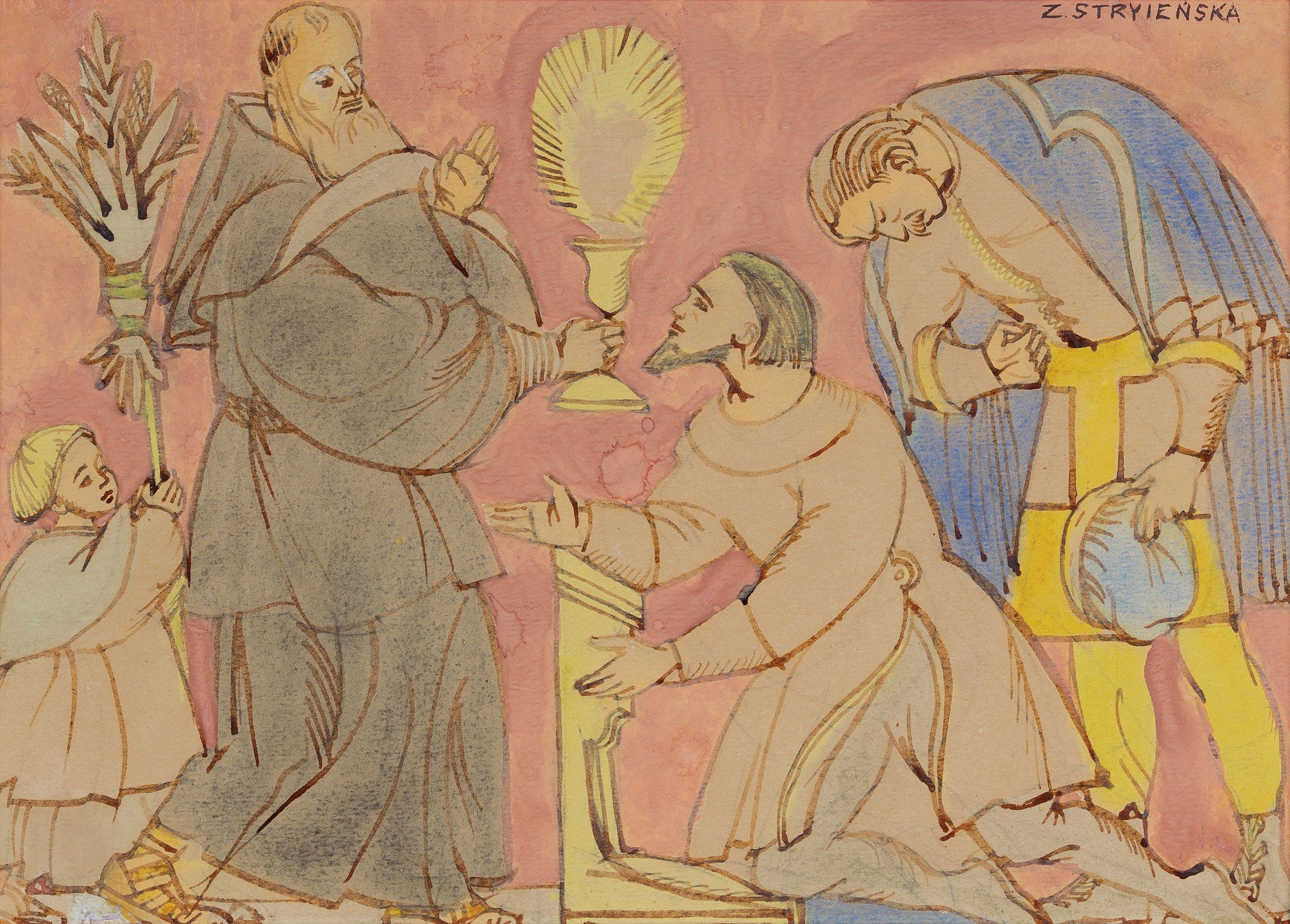
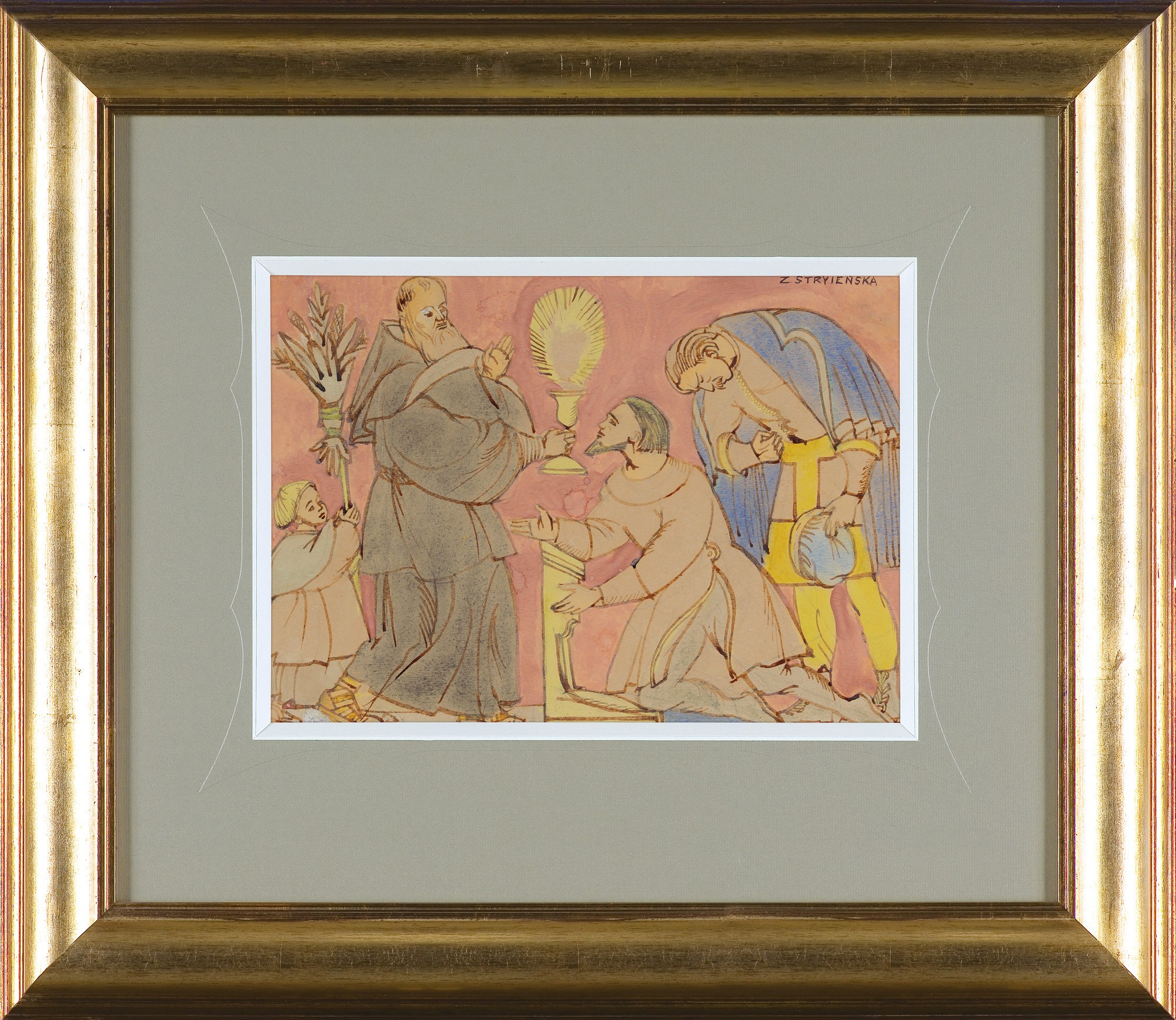
Eucharist
pencil, watercolor, tempera, gouache, ink, paper pasted on cardboard, 22.2 x 31.4 cm (inside passe-partout)
Signed p.g.: Z. STRYIEŃSKA;
on the back centrally numbered (in pencil): 5.
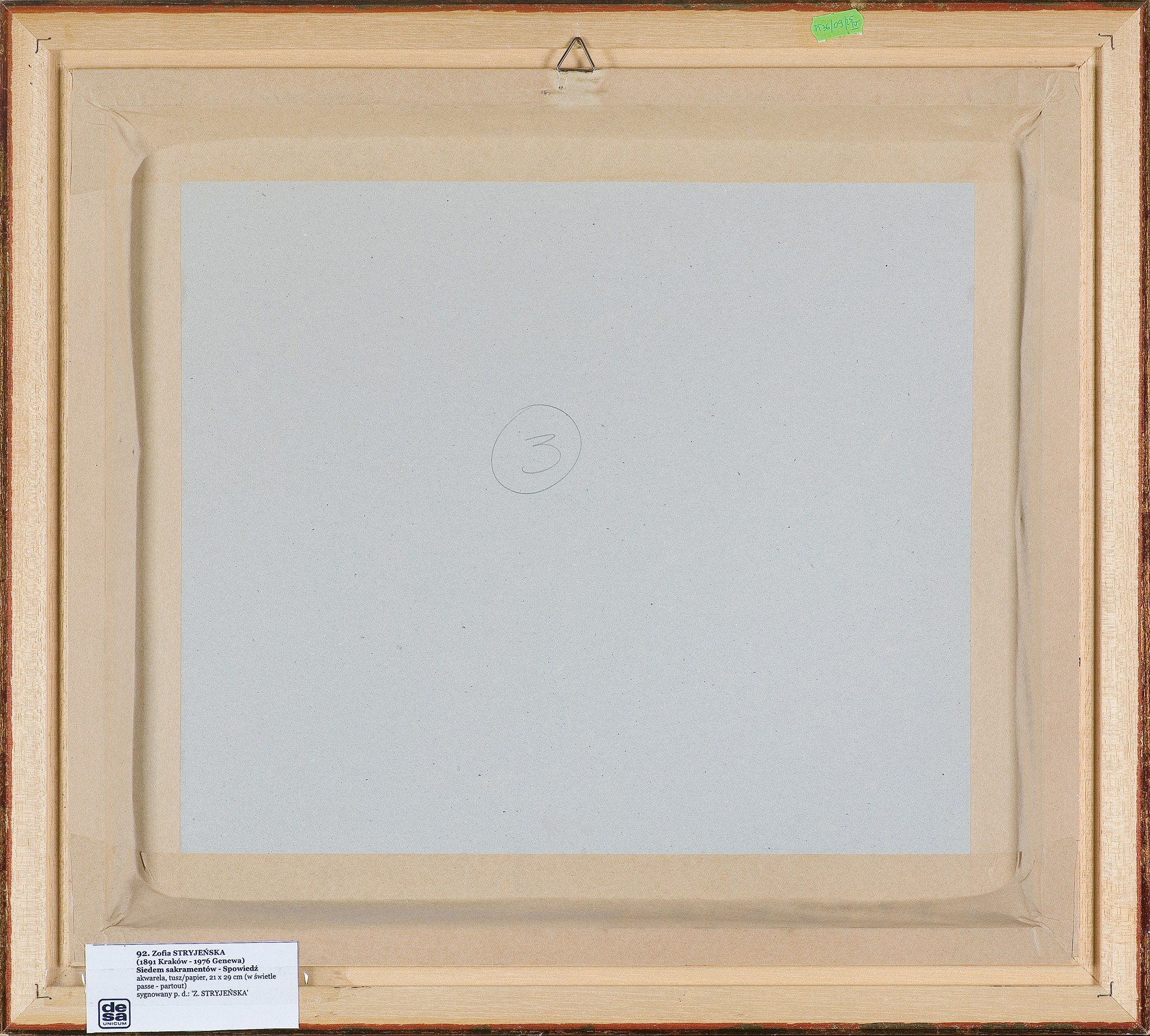
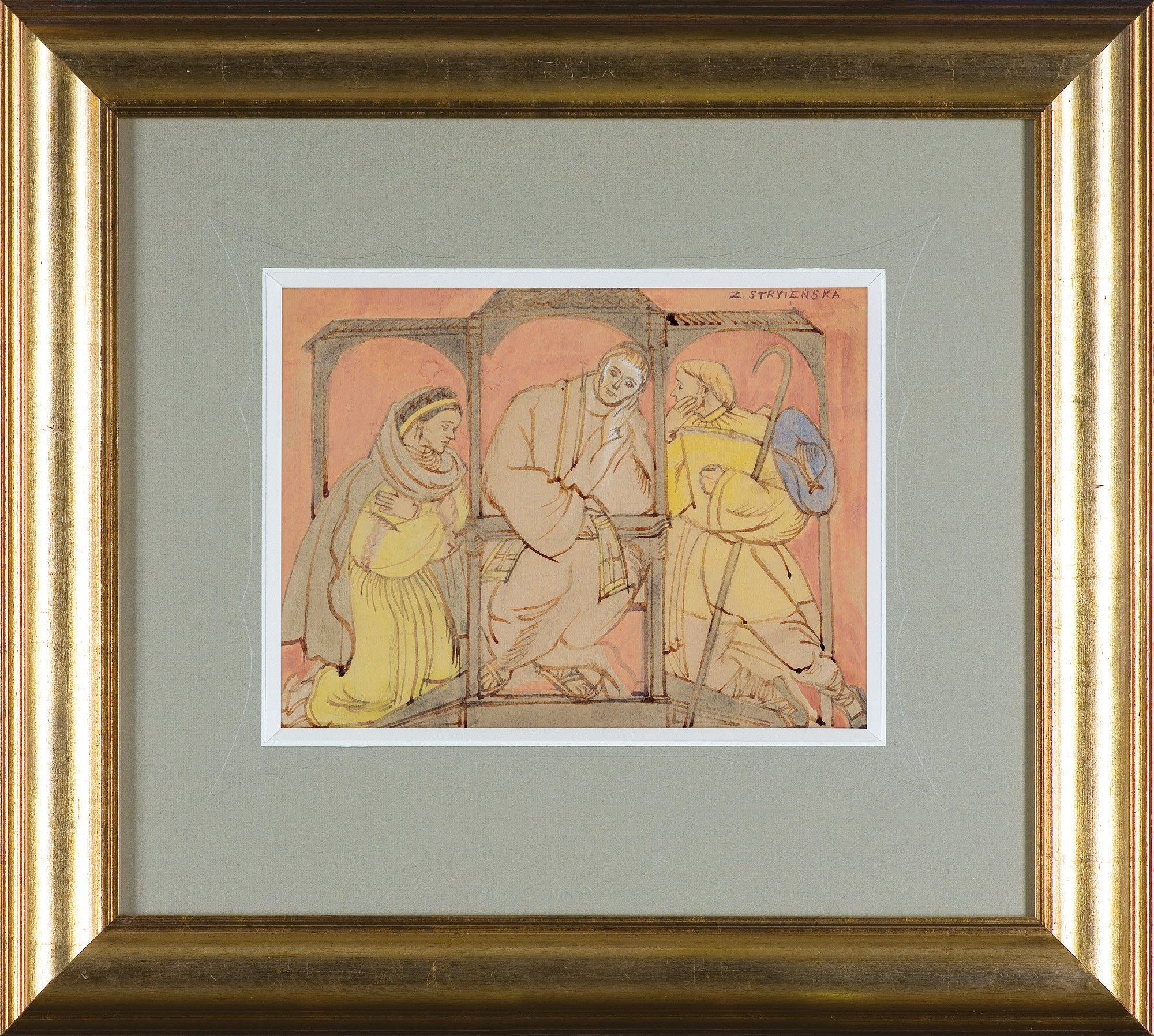
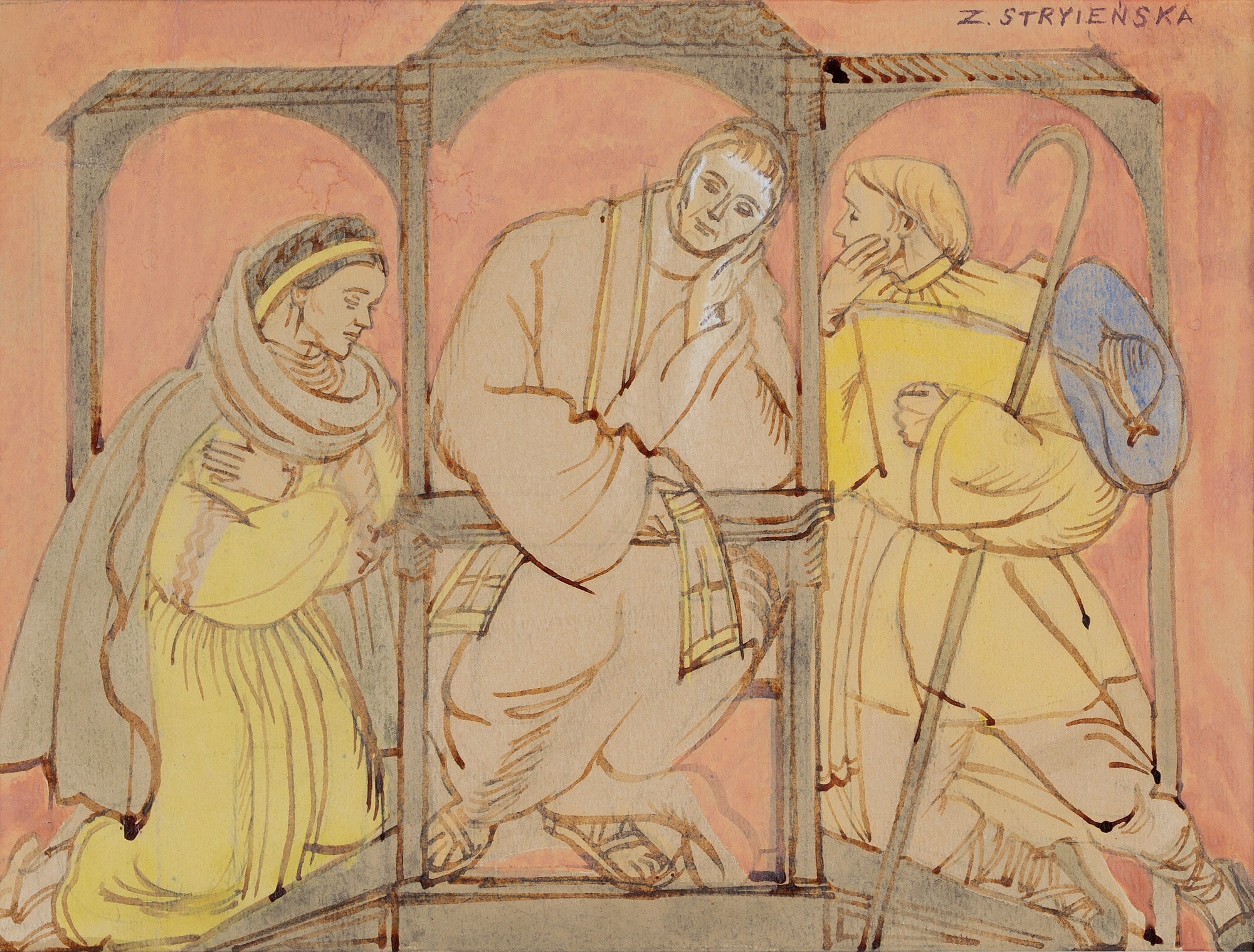
Confession
pencil, watercolor, tempera, gouache, ink, paper pasted on cardboard, 21.5 x 28.6 cm (clear passe-partout)
Signed p.g.: Z. STRYIEŃSKA;
on the back centrally numbered (in pencil): 3.; on the back repeated number 3.
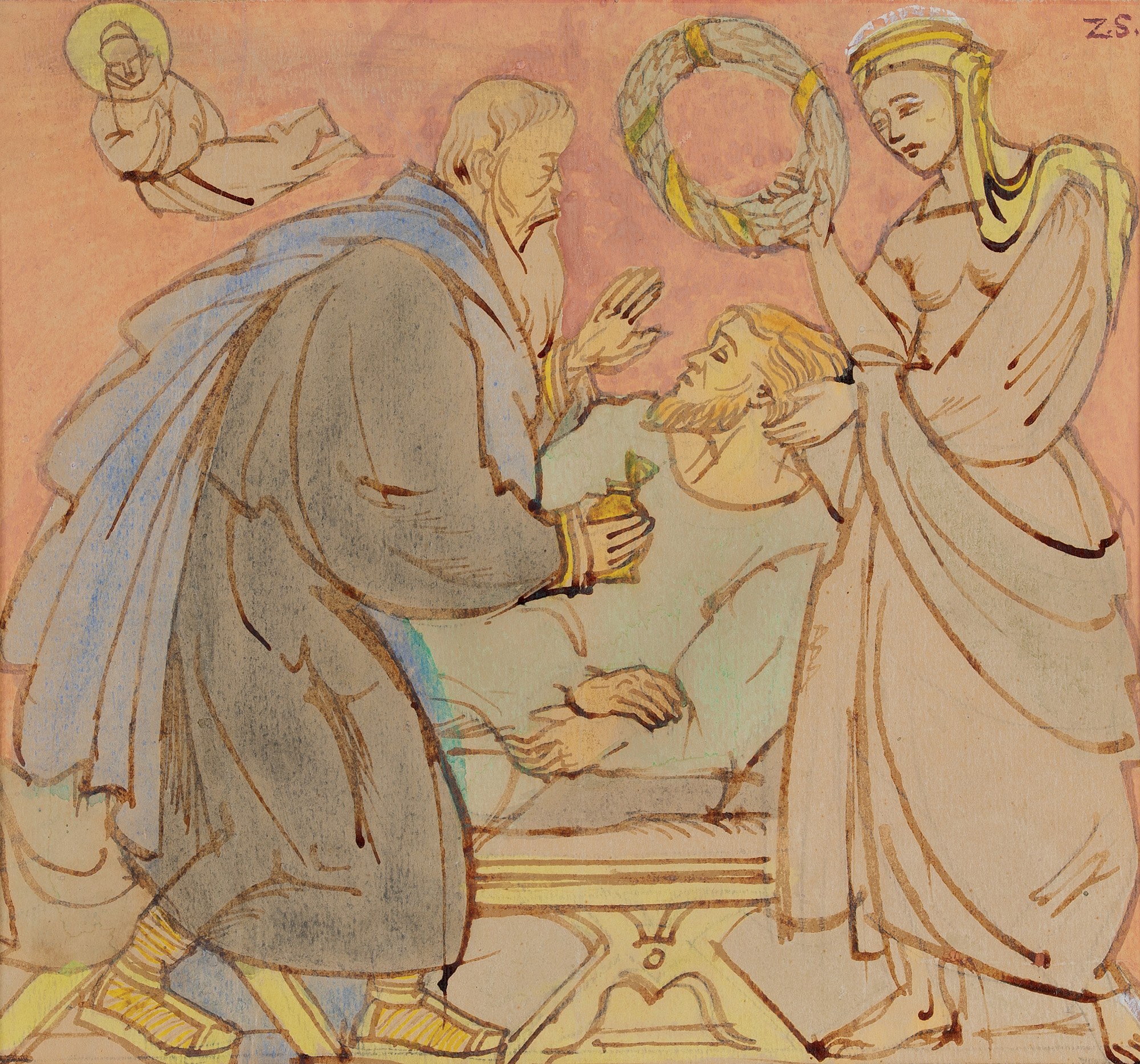
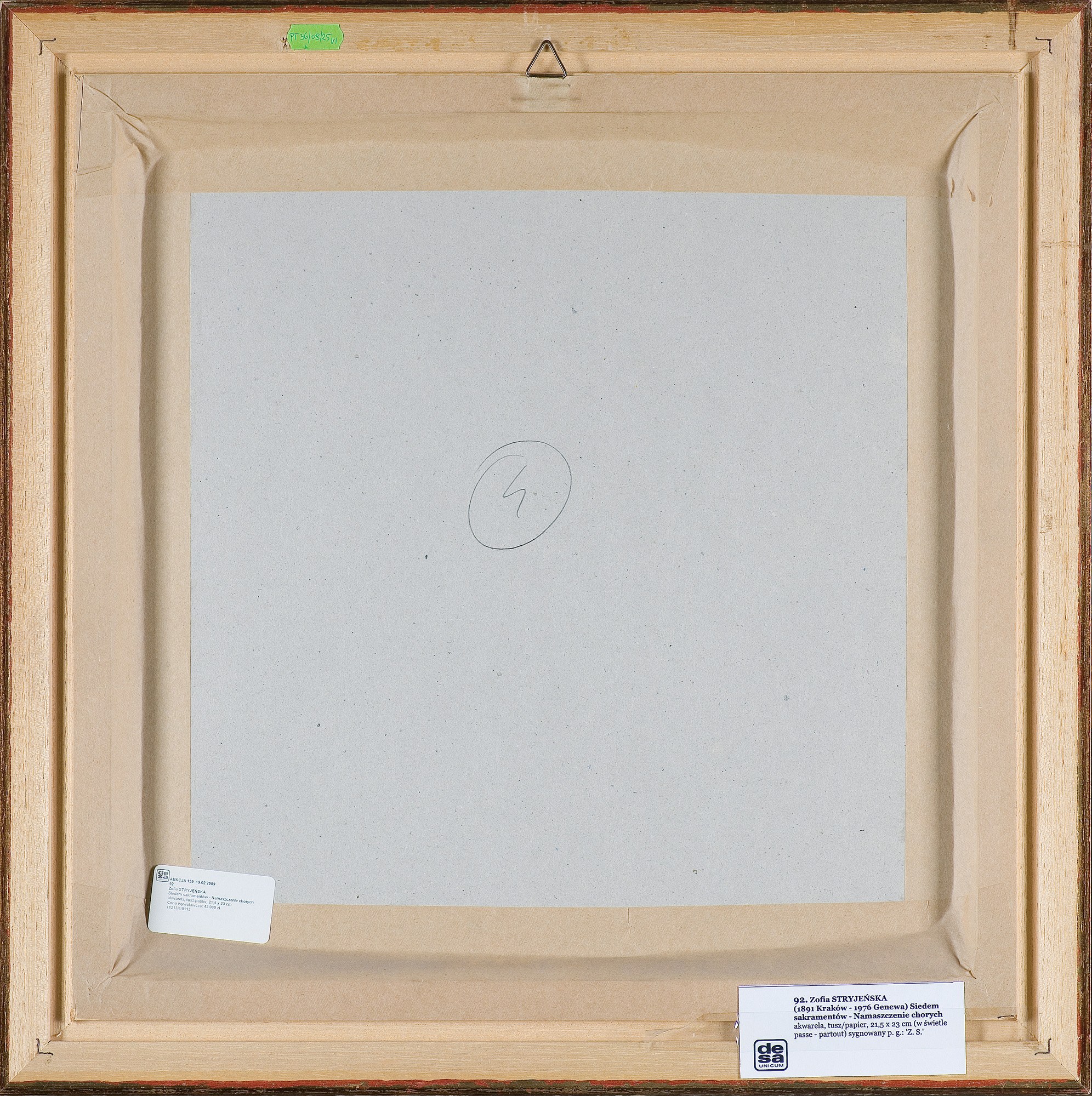
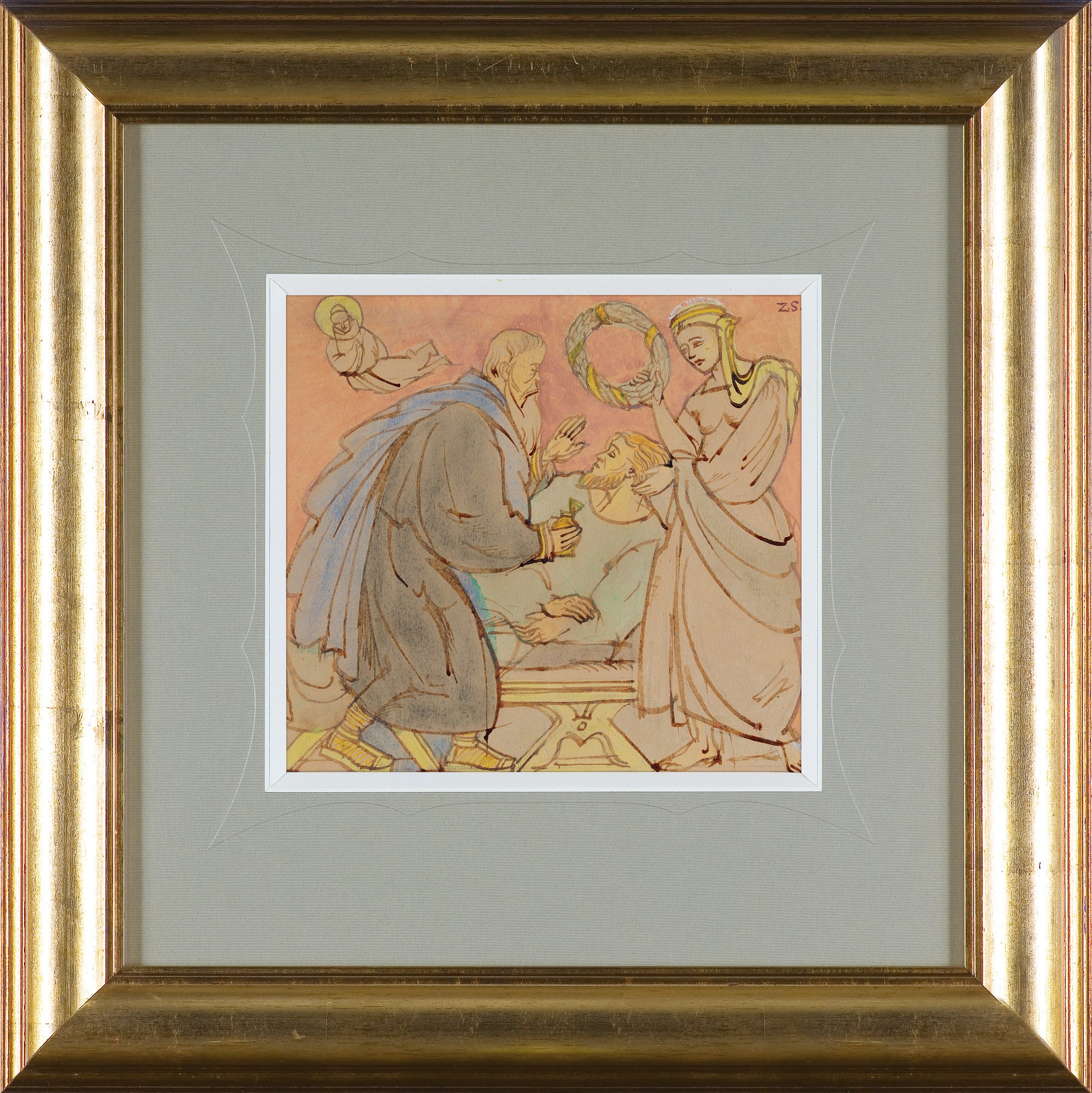
Anointing of the sick
pencil, watercolor, tempera, gouache, ink, paper pasted on cardboard, 22 x 23.8 cm (light passe-partout)
signed p.g.: Z. S.;
on the back centrally numbered (in pencil): 4.; on the back repeated number 4.
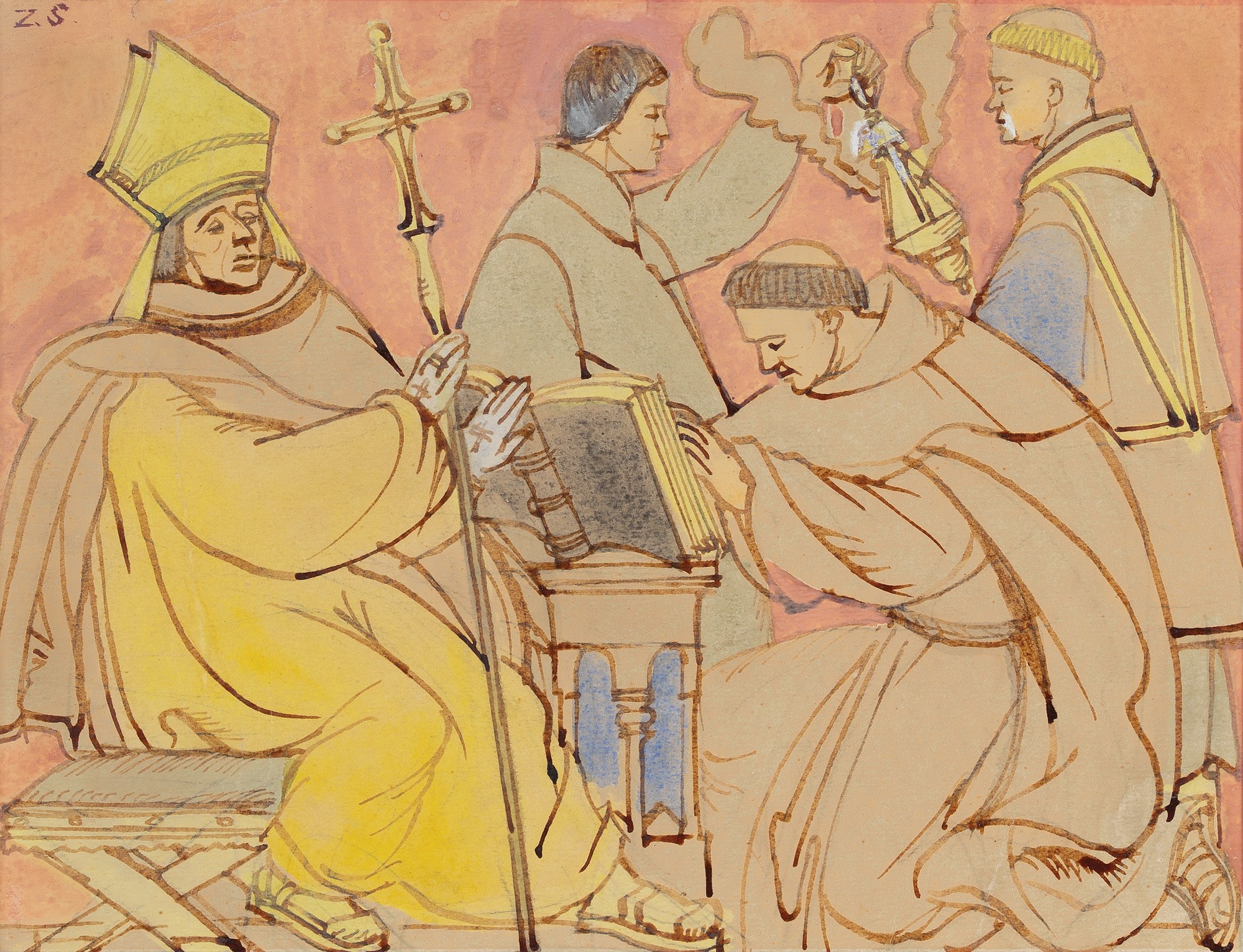
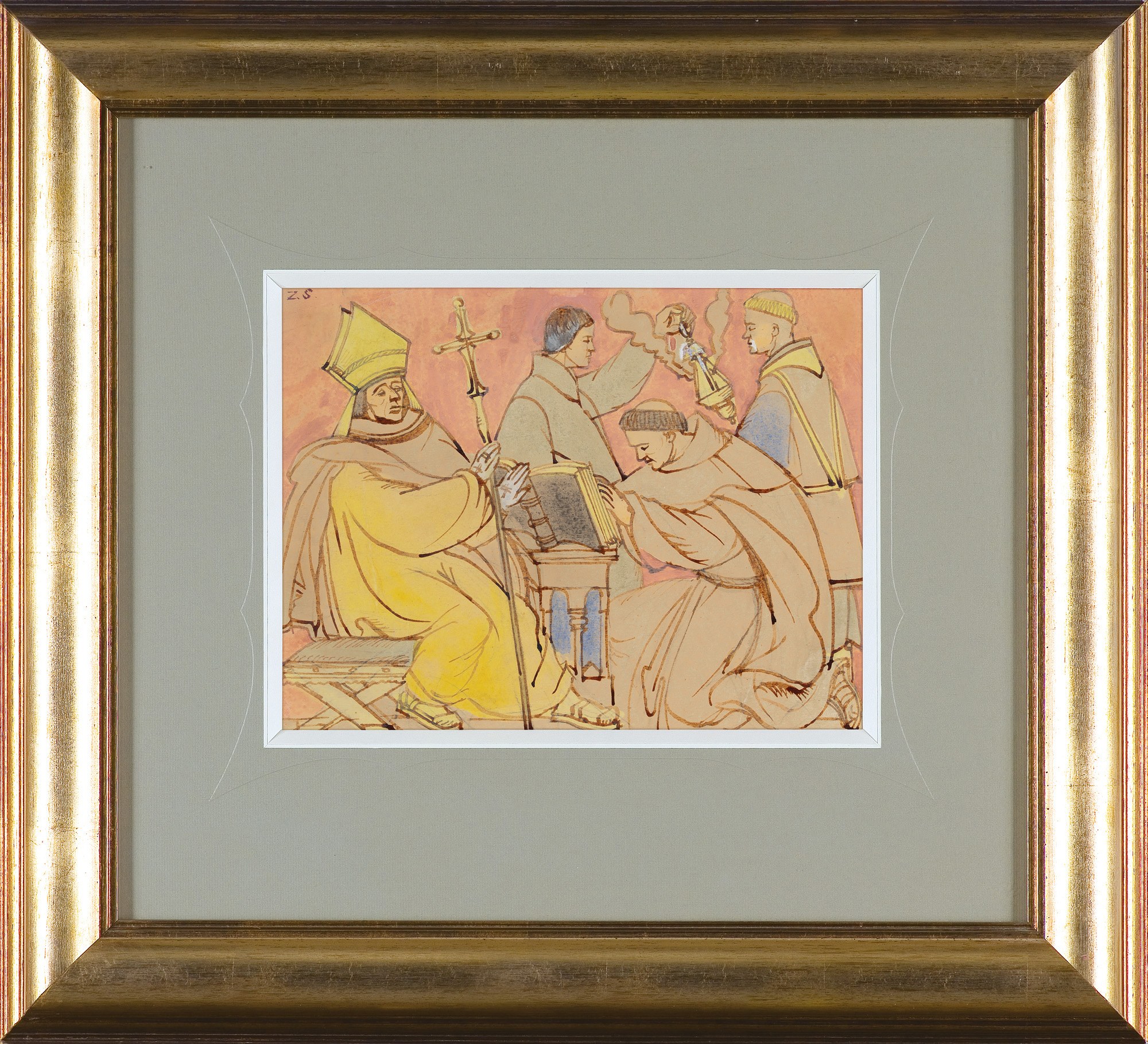
Priesthood
pencil, watercolor, tempera, gouache, ink, paper pasted on cardboard, 21.5 x 28.2 cm (inside passe-partout)
signed l.g.: Z. S.;
on the back centrally numbered (in pencil): 1.; on the back repeated number 1.
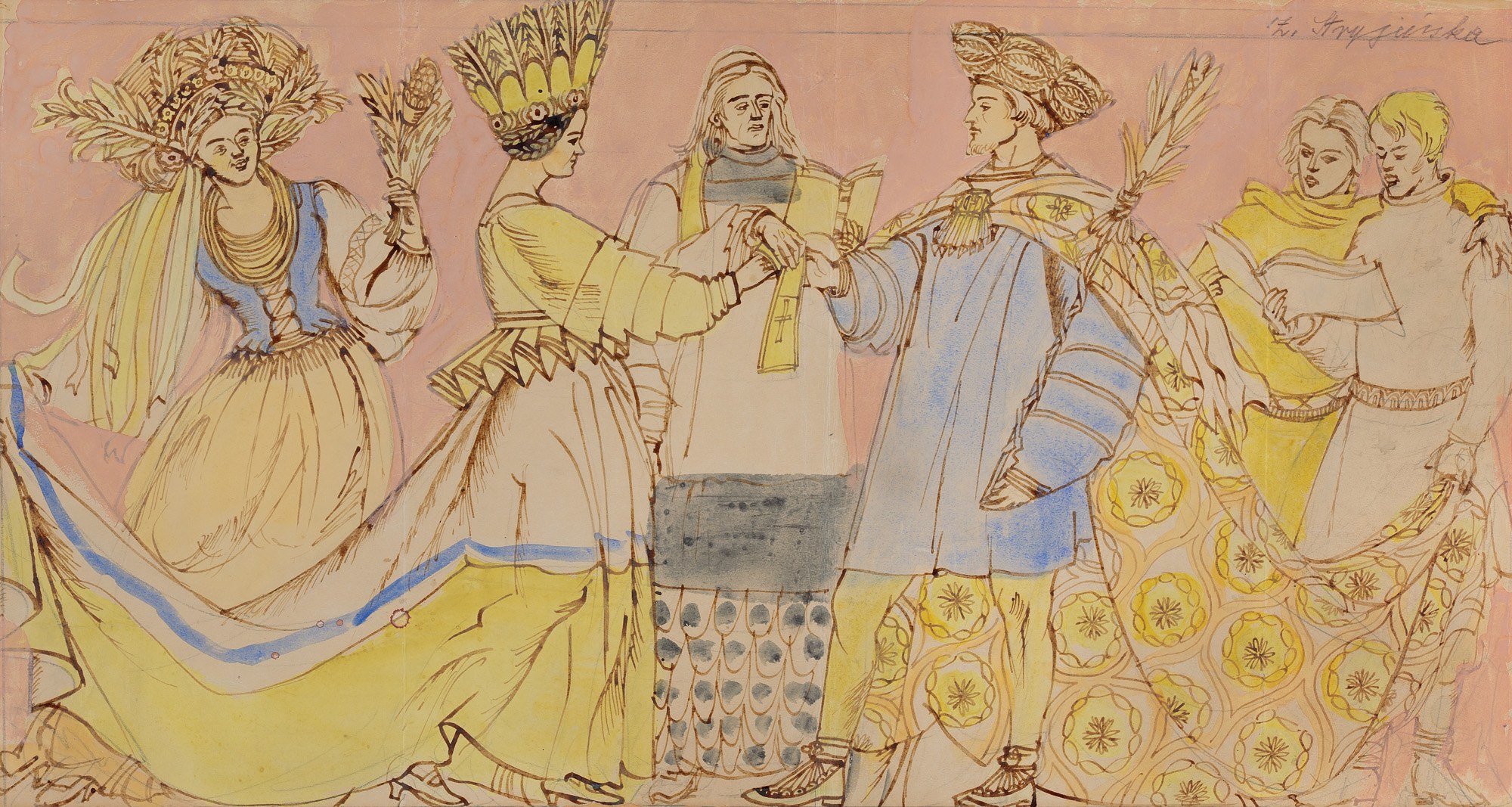
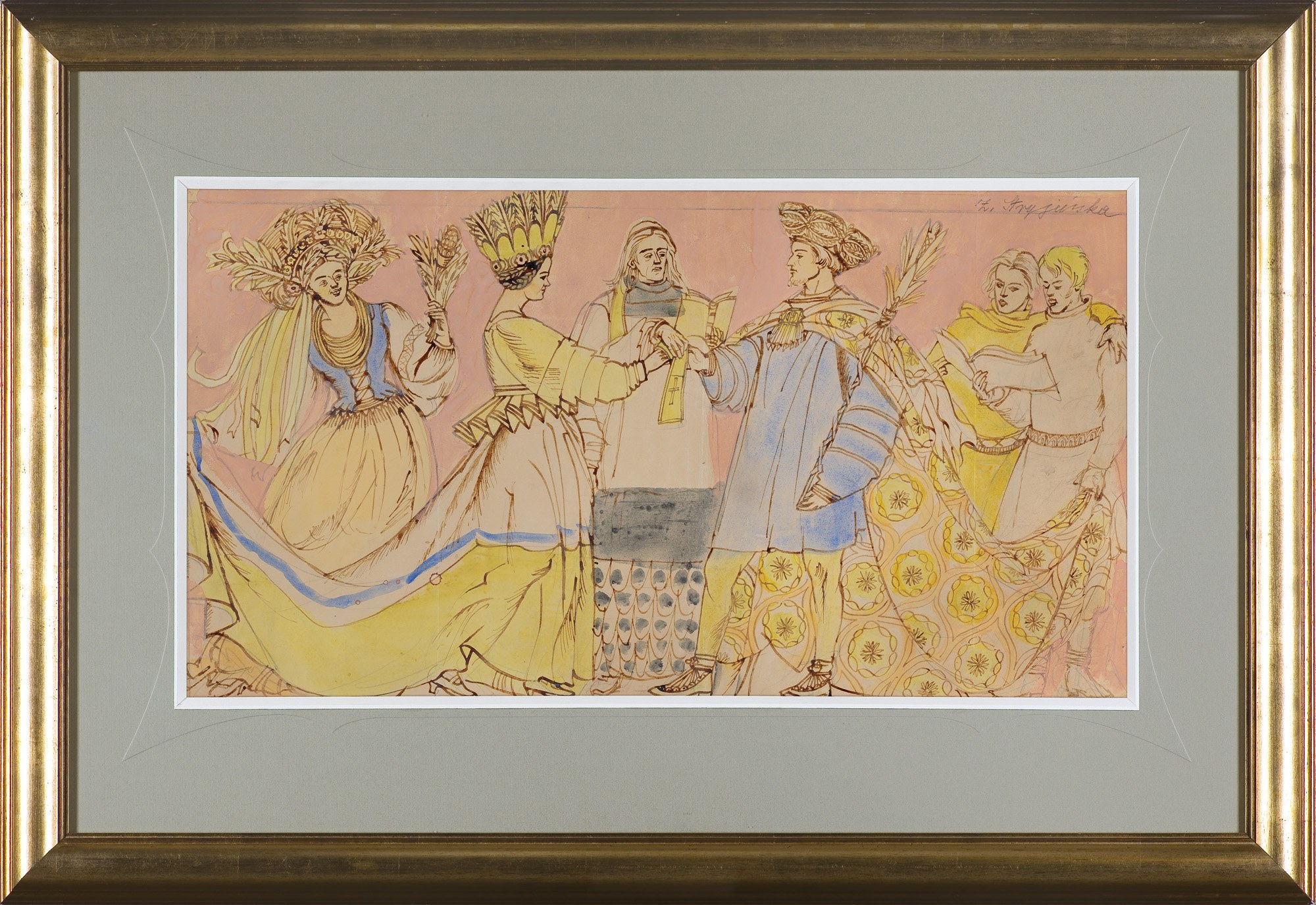
Marriage
pencil, watercolor, tempera, gouache, ink, paper pasted on cardboard, 42.5 x 78.5 cm
Signed p.g.: Z. Stryjeńska
Compare:
- Zofia Stryjeńska 1891-1976. exhibition at the National Museum in Cracow, October 2008-January 2009
(exhibition catalog; curator Światosław Lenartowicz), Kraków 2008, cat. no. III.I.13.
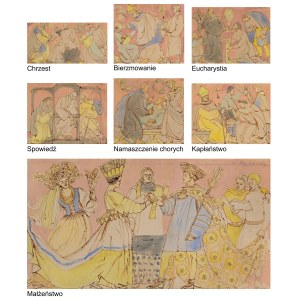
Painted in 1922, the series of seven paintings entitled Sacraments is among Stryjeńska's most important achievements. It was commissioned by her brother-in-law Adam Dygat, Stefania's husband, but remained all the time at the disposal of the artist, who highly valued it and exhibited it many times. Shortly after painting, the paintings were shown at the first exhibition of the Association of Polish Artists Rhythm in Warsaw's Zachęta Gallery. It is therefore legitimate to judge that they had the character of programmatic works for the painter, which she wanted to show off as a member of the new art grouping. She then exhibited the series (...) at an important exhibition for her work at Franciszek Studziński's Art Antiquarian in Krakow in 1928. However, she received the greatest recognition for her paintings from the series at the 1931 Religious Art Exhibition in Padua, held as part of the celebration of the 700th anniversary of the death of St. Anthony - she received a silver medal for them there.
Sviatoslav Lenartovich, On the series "Sacraments," in Zofia Stryjeńska..., op. cit. p. 252
Unfortunately, only 4 paintings from Zofia Stryjeńska's programmatic work (Baptism, Confession, Confirmation, Last Anointing) have survived to this day. Hence, the offered Sacraments, which are the author's repetition of the famous work in a smaller format, have significant museum value.
Zofia Stryjeńska, née Lubanska (Krakow 1891 - Geneva 1976) - painter, illustrator, stage designer - was one of the more colorful figures of the Polish artistic community in the interwar period. After a short period of study with Leonard Stroynowski and at Maria Niedzielska's school in Cracow, she left for Munich, where in 1911-1912 she studied at the Academy of Fine Arts in male disguise (women were not admitted at the time). She made her debut at the Kraków TPSP in 1912 with a series of cartoons of Polish fairy tales inspired by folk tales. In 1916 she married Karol Stryjeński. She lived in Cracow until 1919, later living in Paris, Cracow, Zakopane and Warsaw. In 1925, she achieved international success at the Decorative Arts Exhibition in Paris, receiving the Gran Prix in four divisions (painting, poster, textile, illustration) and the Diplom d'Honneur for her toy designs. She was involved in decorative architectural painting, polychromy, illustration, stage design (including Karol Szymanowski's Harnasie; 1938), industrial design (kilim designs, toys). She created her own specific style in decoratively stylized, colorful, dynamic and temperamental paintings; tempera, watercolors and gouaches. In their subject matter she referred to legends, beliefs, history and folk customs. She published several graphic volumes (Slavic Idols, 1917 and 1922) and albums of reproductions (Polish Dances, 1927; Pascha, 1929; Piasts, 1929; Slavic Gusła / Magie Slave, 1934). Her works were also popularized by numerous color postcards.













Recentemente visualizados
Efetue login para ver a lista de itens
Preferidos
Efetue login para ver a lista de itens