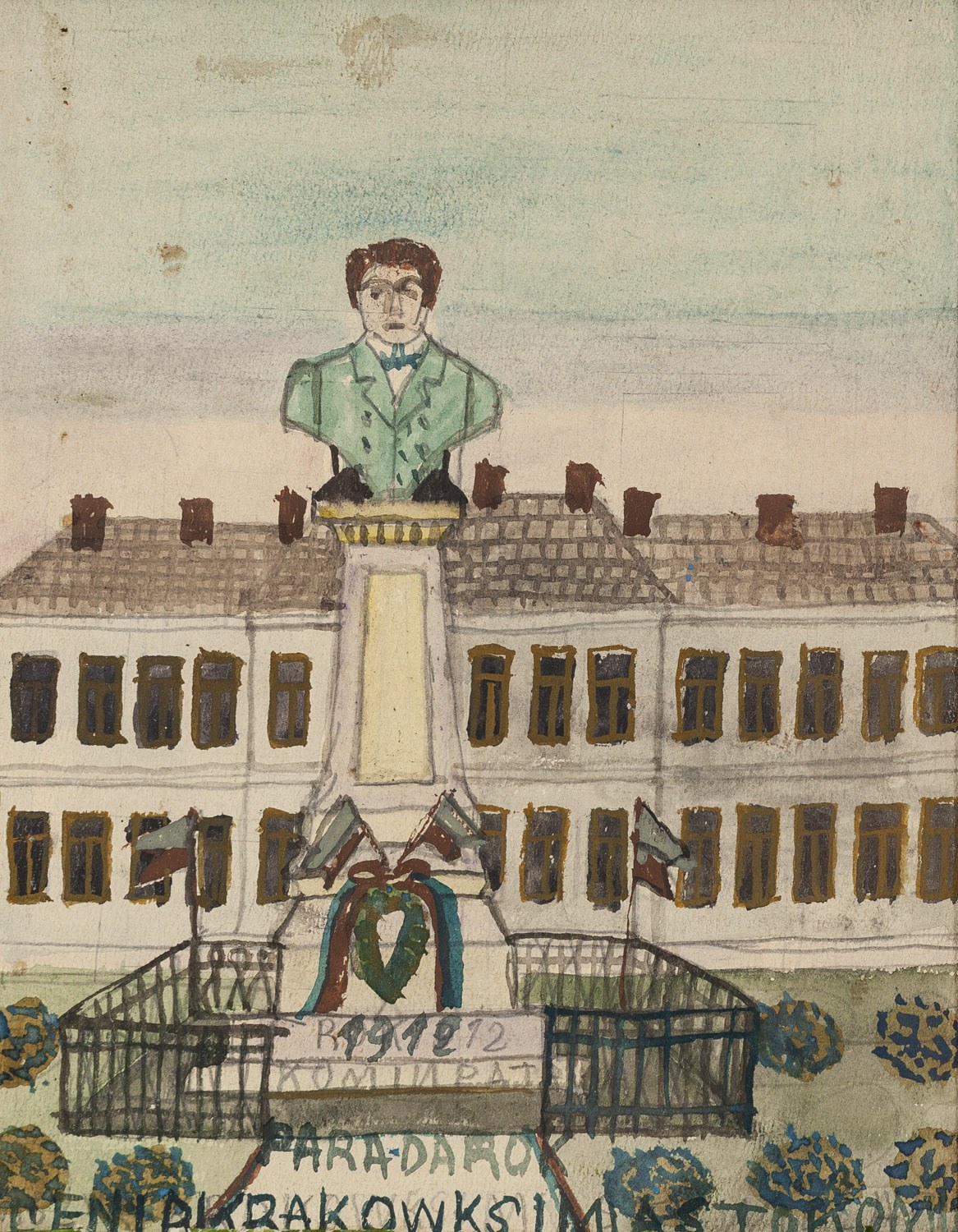
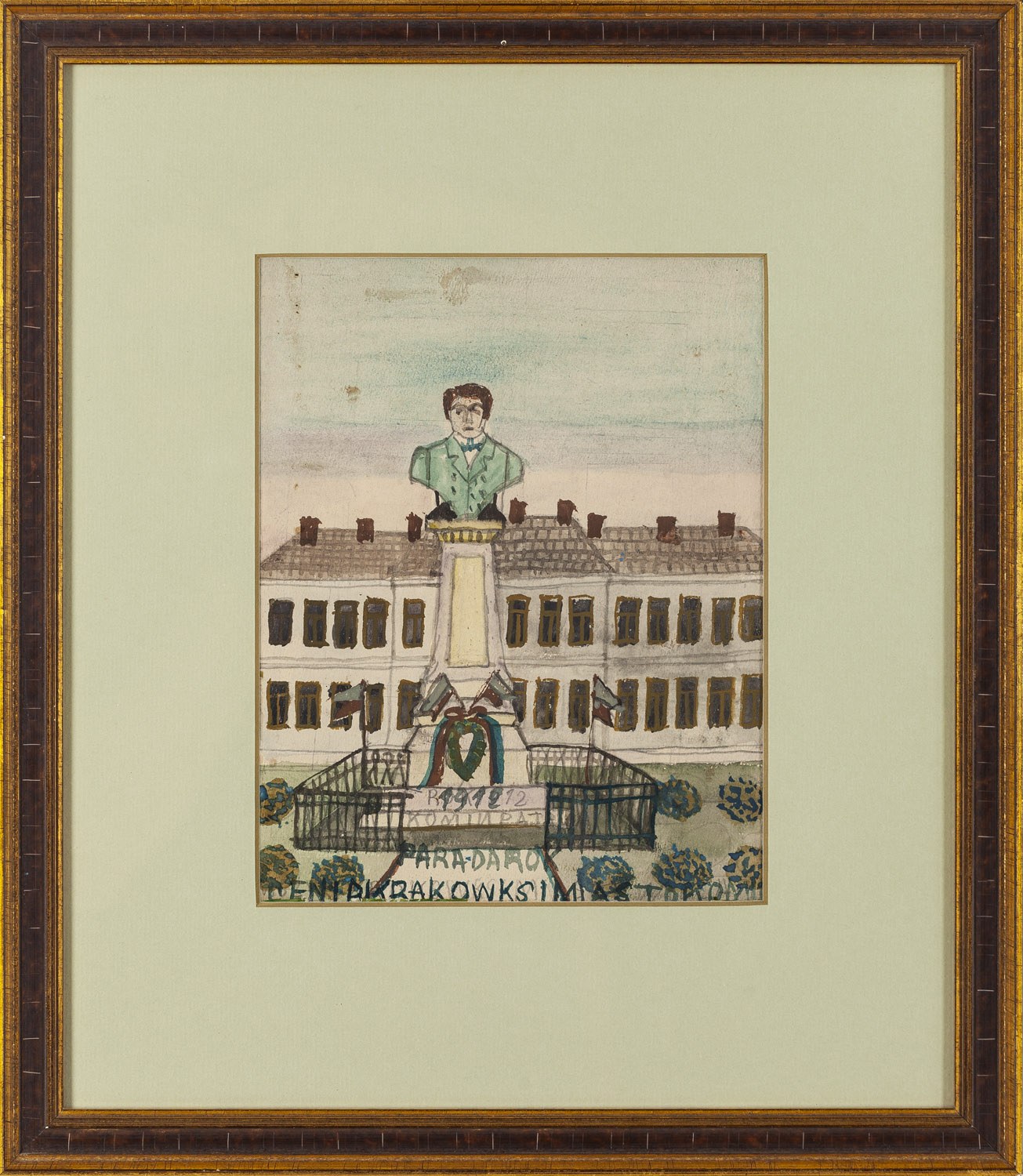
Dimensions: 23 x 18 cm (inside the mat)
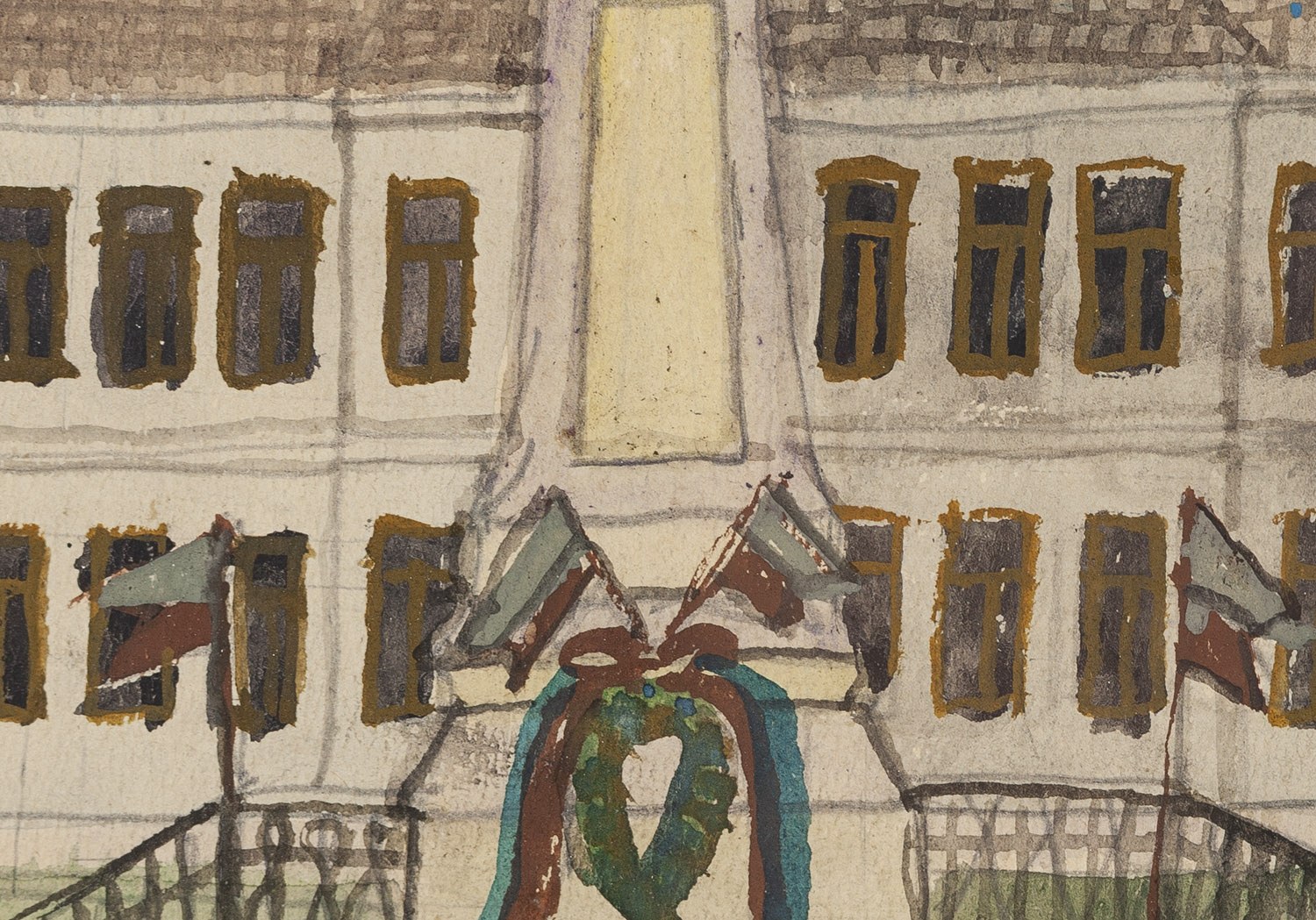
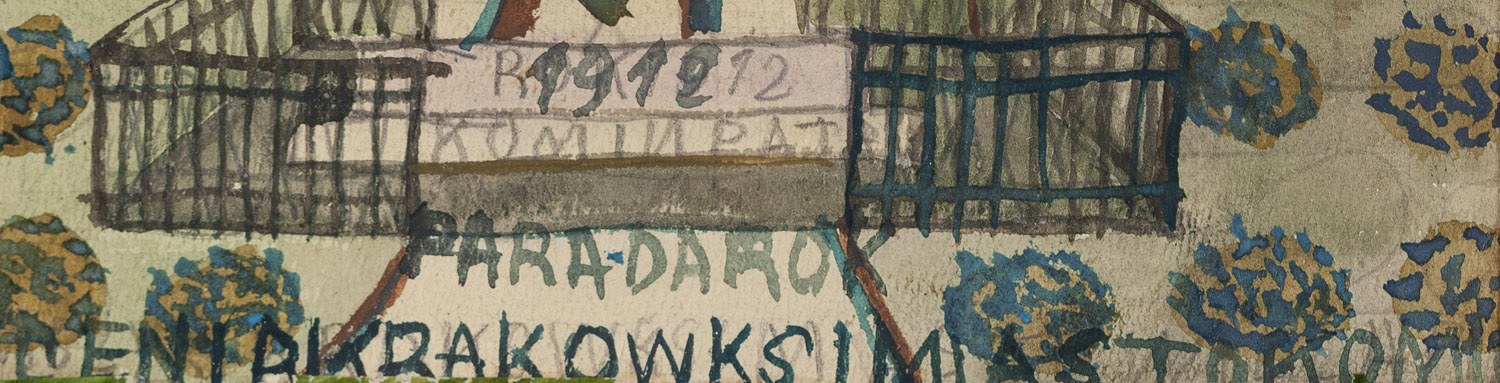
Signed by the artist at the bottom: '1912 | KOMAPAT | PARADAROK | DENIPKRAKOWKSIMIASTOKOMI'
Biography
Nikifor—a Lemko by origin associated with Krynica, self-taught, semi-illiterate, amateur painter, and one of the most outstanding creators of “naïve art.” Information about the artist’s origins and early life is scarce and uncertain. He is remembered as having “always been” a part of Krynica’s folklore. He had no formal education, and mental and physical disabilities hindered his interaction with those around him. Painting served as his link to the outside world. His pictures were created on small pieces of salvaged paper, cardboard, packaging, and notebook pages—sometimes with writing on one side. He drew with pencil and crayon and painted in watercolor the world around him, enriched by his personal imagination and experiences. He primarily painted architectural landscapes of towns that were difficult to identify, featuring church or town hall towers as focal points. He was fascinated by train stations, overpasses, and trains; he also created portraits and religious scenes. He often signed his works with incomprehensible or only partially legible words written clumsily in capital letters. The subjects he depicted were outlined with strong contours, which he filled with colorful patches. Even before the war, Jerzy Wolff had noted the uniqueness and freshness of Nikifor’s painting. In 1947, he was “rediscovered,” gaining fame, recognition, and wealth.