Dimensions: 100 x 90 cm
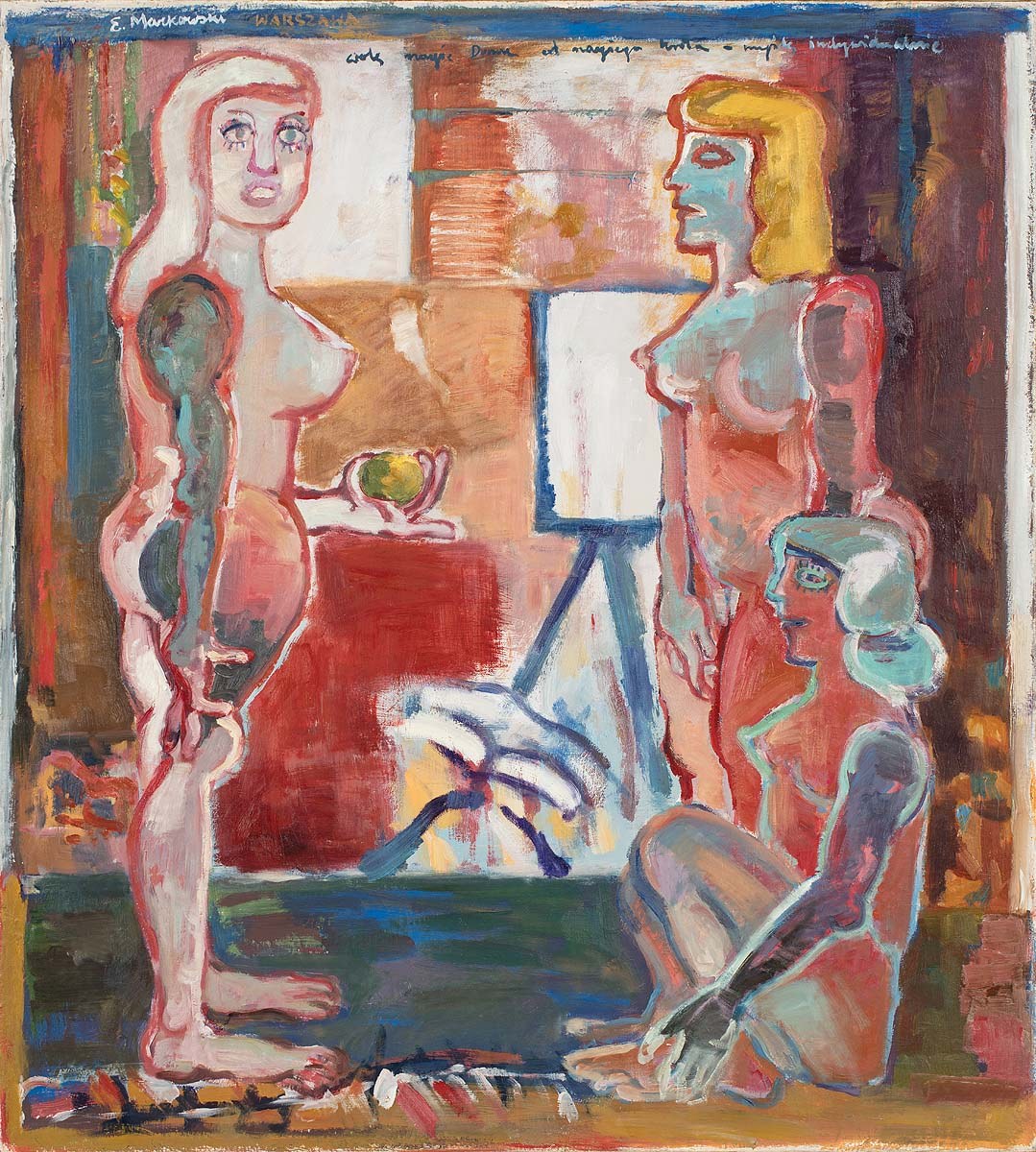
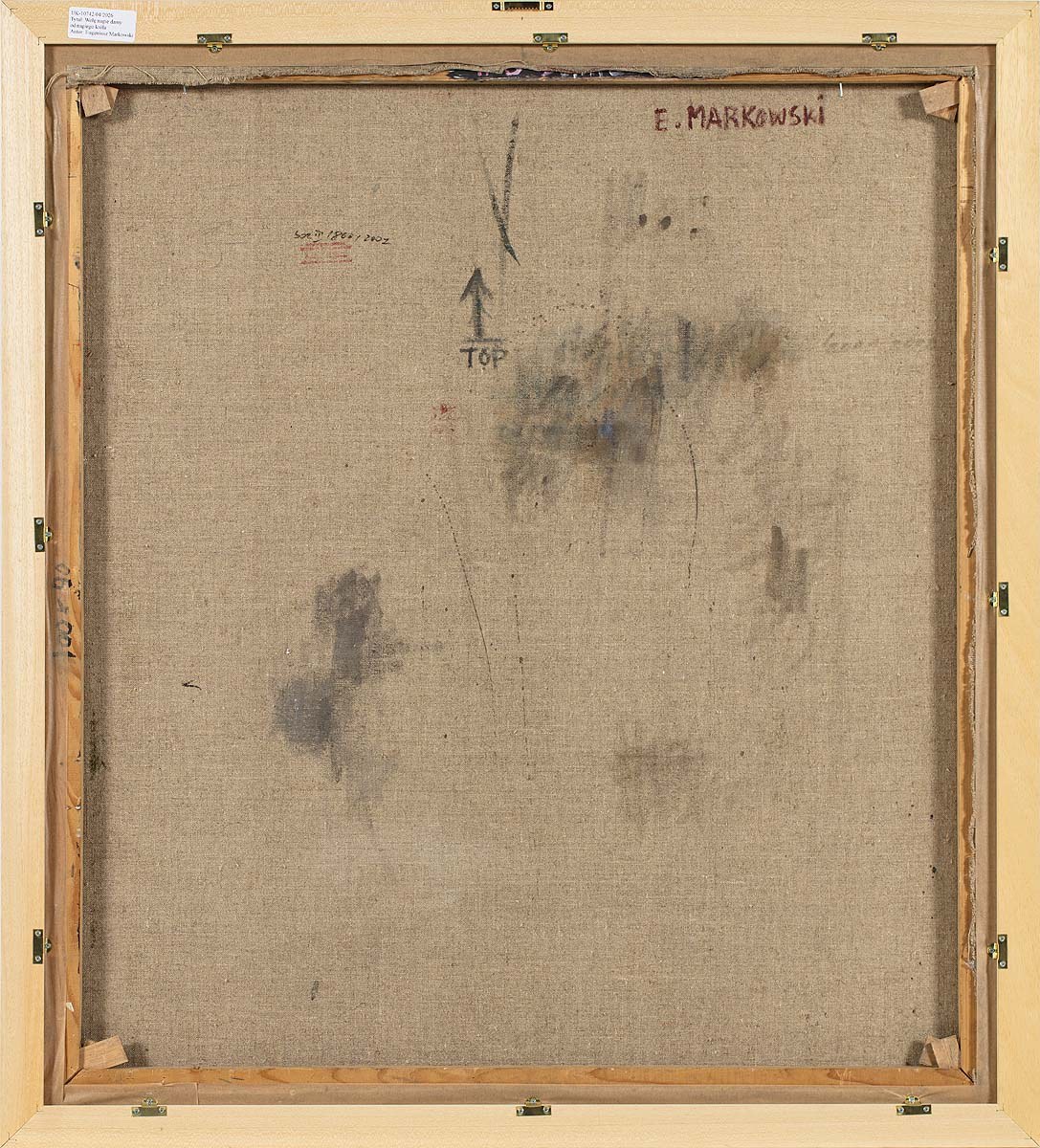
Signature: signed and inscribed on the lower left: E. Markowski WARSZAWA, inscribed along the upper edge: I prefer naked ladies to a naked king—I think for myself; signed on the reverse: E. MARKOWSKI, along with an illegible stamp and a deposit number
Provenance
Łódź, private collection
Markowski did not begin his artistic career until the age of forty, which is why it is difficult to classify his work within any particular art movement. His works suggest the direction of new figuration. This was an art movement that emerged after World War II, also known as expressive figuration. Artists focused on the human being, their emotions, and the drama of their existence. A characteristic feature was the use of symbols and the creation of paintings with a pessimistic, dark atmosphere.
Markowski, however, did not belong to the representatives of this movement in art. The main protagonist of Markowski’s expressive, “wild” compositions is always a human being subjected to the pressure of various emotions. Heavily deformed human figures, often resembling animals, swarm across his paintings in a ceaseless quest to achieve an unknown goal. It seems that the painter treats his characters with merciless brutality; grotesquely funny and at the same time tragic,
, they become a metaphor for the dark side of existence. Bożena Kowalska writes about Markowski’s works: “(...) he creates a repulsive human circus in his paintings and drawings. In it, people are usually physically naked and, at the same time, psychologically exposed. Stripped of dignity and all sense of shame along with their clothing, they reveal base passions and cruelty, greed and lust for power, hypocrisy and triviality, anger, stupidity, and selfishness.”
As the world rapidly evolves, Markowski’s painting takes on an increasingly timeless character. At the heart of it all remains the human being in their primal state. In the artist’s paintings, the protagonist is not always a human. Sometimes an animal—a bull or a horse—appears alongside him or alone. The animals are depicted in a powerful, often personified manner. After years of aestheticism and idealization dominating art—when the main subjects of paintings were beautiful and moral people, and wicked characters appeared as a warning to viewers—the time for Markowski’s works has arrived. Repulsive figures stare at us from the canvases, exposed in their wickedness and ugliness, yet so human and real that, looking at them, we examine our own consciences.