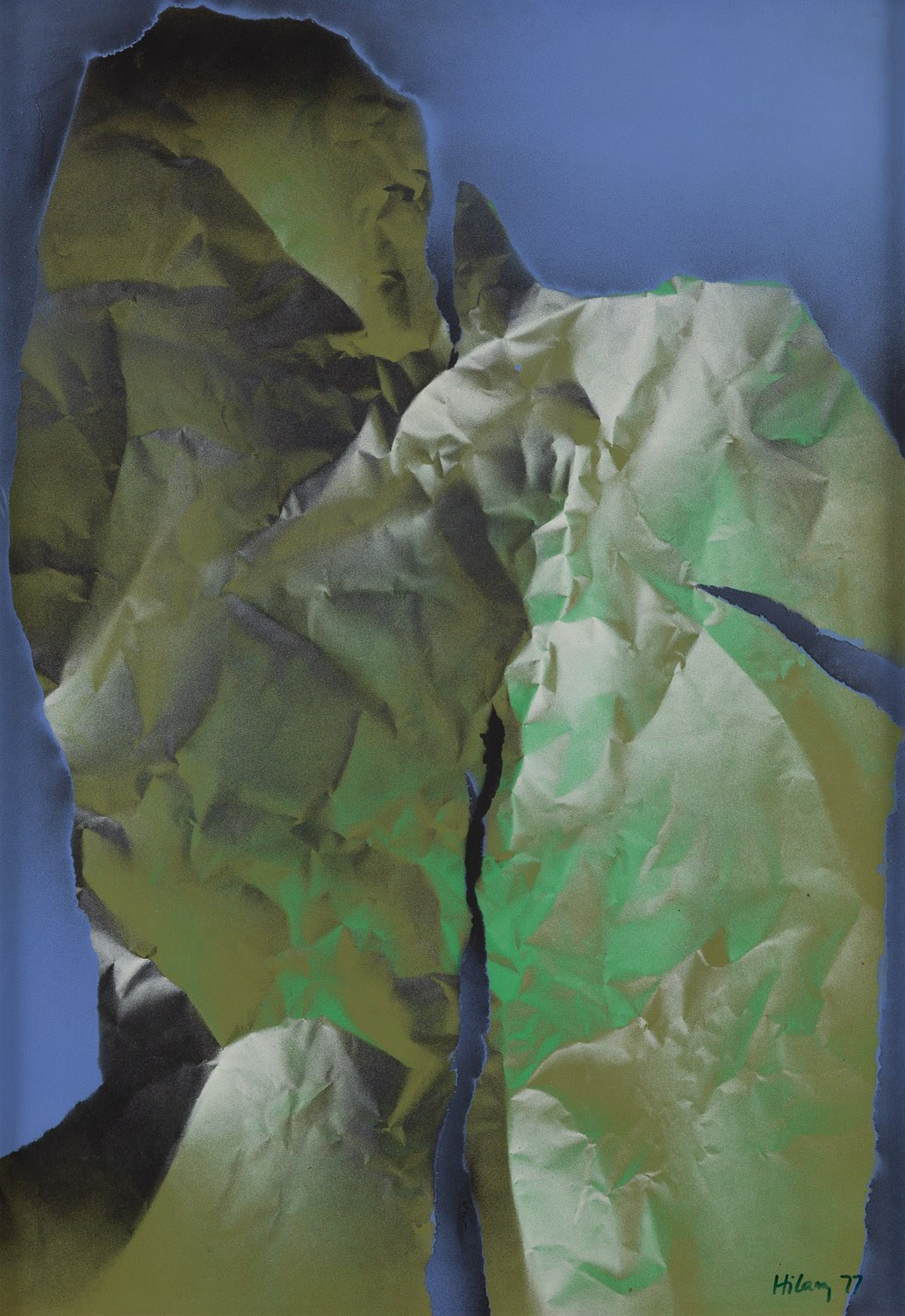
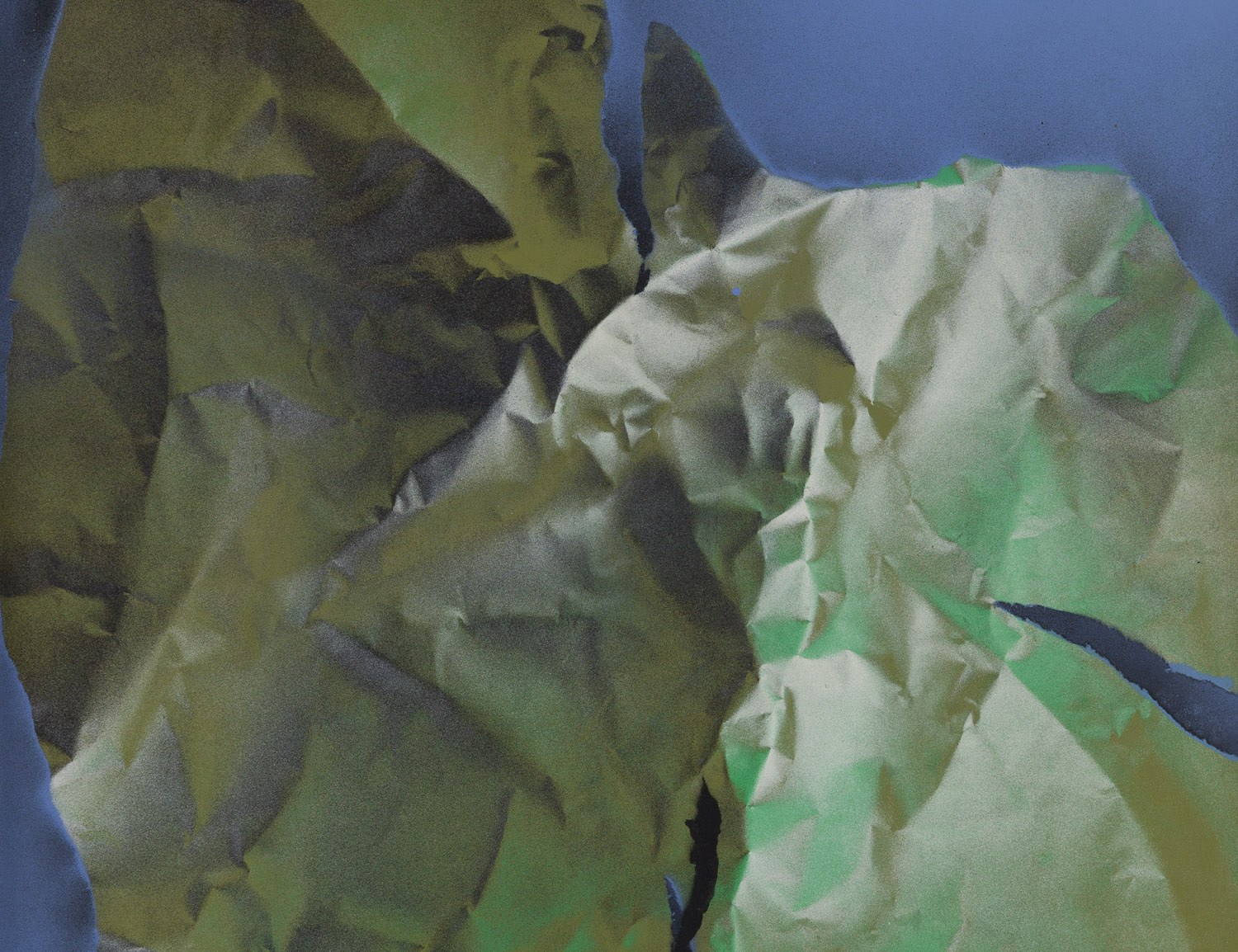
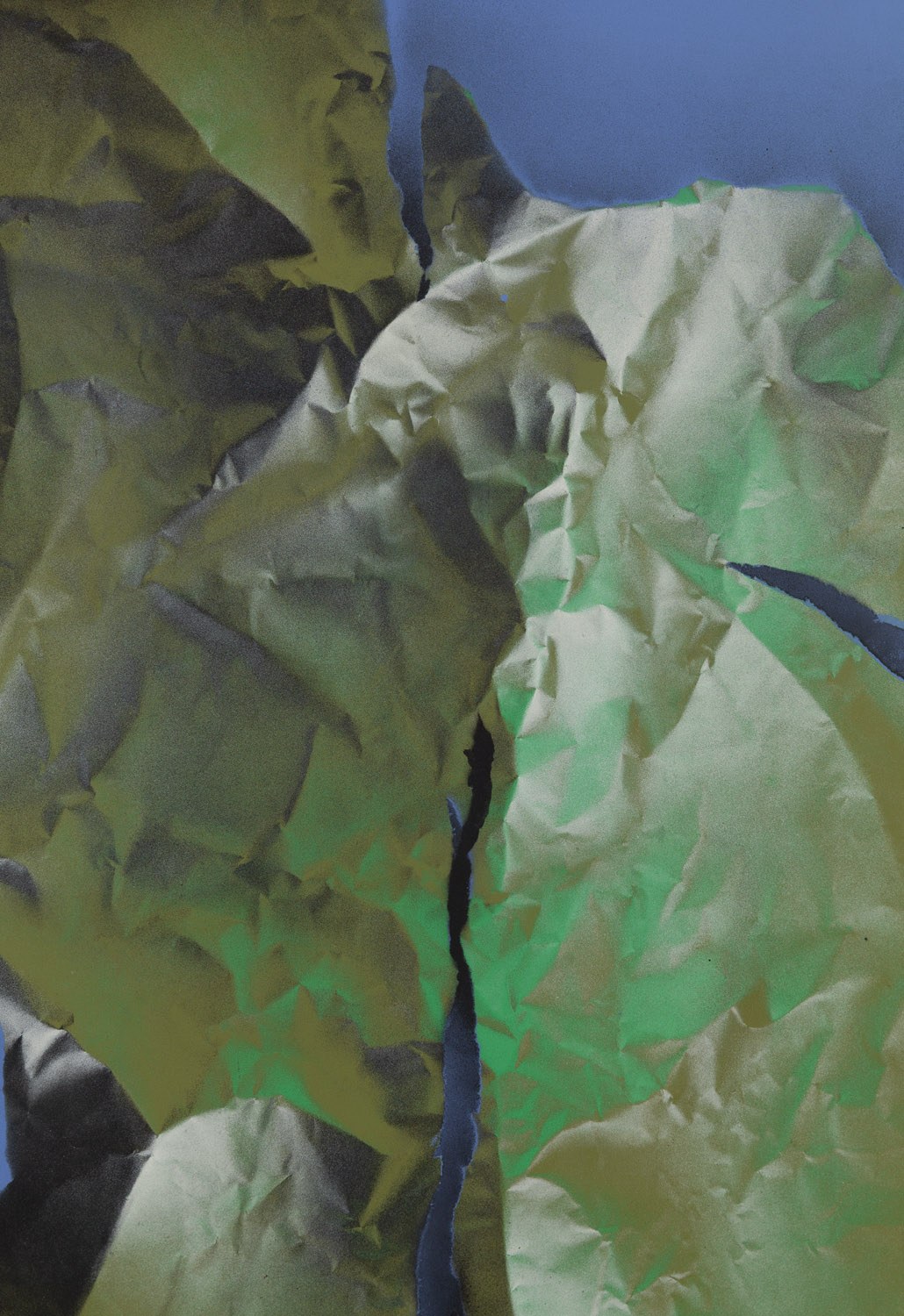
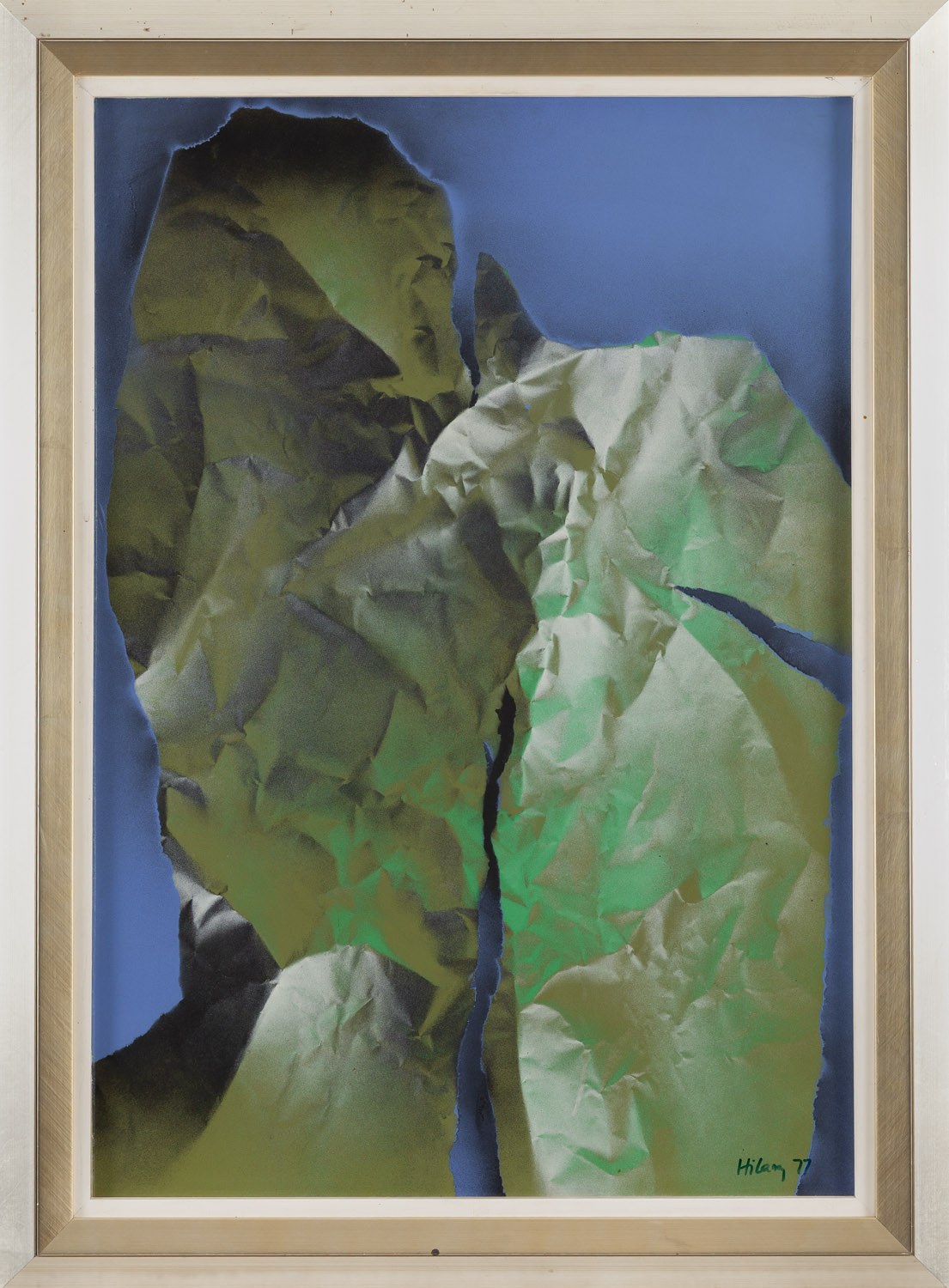
Dimensions: 61 x 42 cm (inside frame)
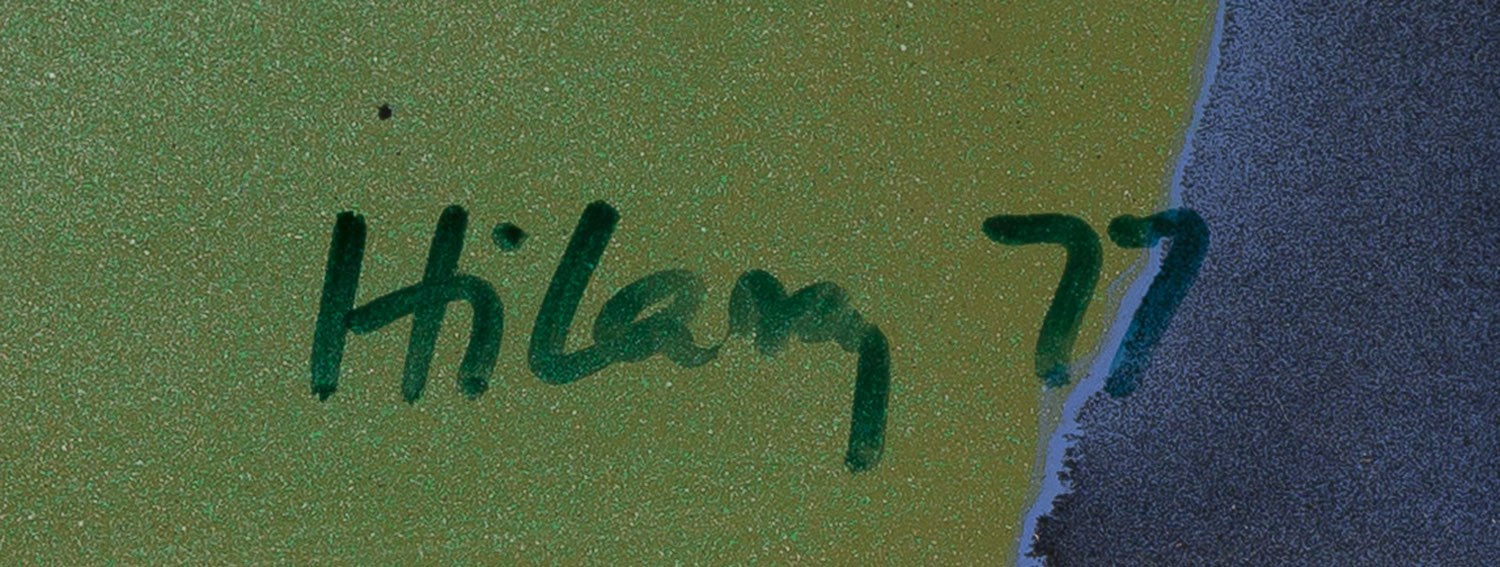
signed lower right: 'Hilary 77'
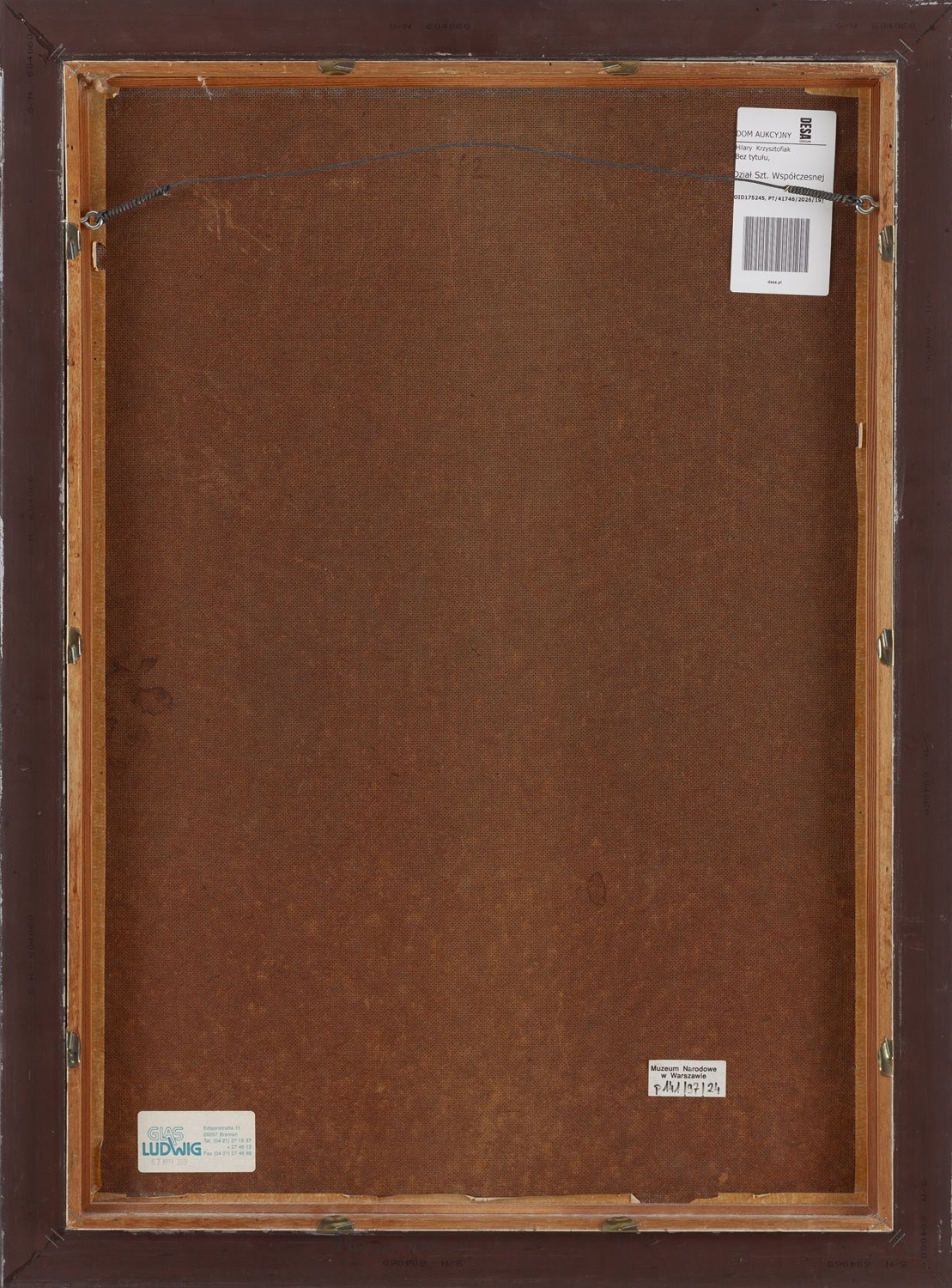
On the reverse, a sticker from the National Museum in Warsaw with an inventory number
Provenance
private collection, Poland
Exhibited
Hilary. Painting and Drawing, Zachęta Gallery, Warsaw, March 17–April 13, 1997
Hilary: Painting and Drawing, Silesian Museum in Katowice, June–September 1997
Hilary. Painting and Drawing, Bunkier Sztuki Contemporary Art Gallery, Kraków, December 1997–February 1998
Bibliography
Hilary. Painting and Drawing, exhibition catalog, National Museum in Warsaw, ed. Hanna Kotkowska-Bareja, Warsaw 1997, p. 289, cat. no. 242 (ill.)
Biography
Painter, printmaker, and theater set designer. He studied at the Academy of Fine Arts in Warsaw. He was a member of the avant-garde St-53 Group and served as art director for magazines such as *Po prostu* and *Ruch Muzyczny*. He participated in major artistic events, including those at the Arsenal, the First Open-Air Workshop in Osieki, the Biennale of Spatial Forms in Elbląg, and exhibitions at the Krzywe Koło Gallery and the Salon of Contemporary Art, playing a significant role in shaping modern Polish art in the 1950s and 1960s. He also designed stage sets for numerous plays, including works by Ionesco and Mrożek, with whom he was friends. In the late 1960s, despite his established reputation, he did not return to Poland after one of his exhibitions—he decided to emigrate, having found insufficient freedom for himself and his art. He continued his artistic work in Germany and later in the United States. After his departure, the artist’s studio in Warsaw was sealed off; later, his paintings were thrown into the trash, and his works on paper were burned by roofers in tar-fired boilers during the renovation of the roof over the “Wisła” cinema. In 1976, he received an award from the A. Jurzykowski Foundation in New York. He was a well-known figure in Polish émigré circles, including the Paris-based “Kultura” circle. J. Czapski, S. Mrożek, and W. Odojewski wrote about him. In Poland, the censorship of the People’s Republic of Poland effectively erased him from existence. His work was not brought back into the public eye until a monographic exhibition in March 1997 at the Zachęta in Warsaw. This exhibition subsequently traveled to the Silesian Museum in Katowice and the Bunkier Sztuki Gallery in Kraków.