


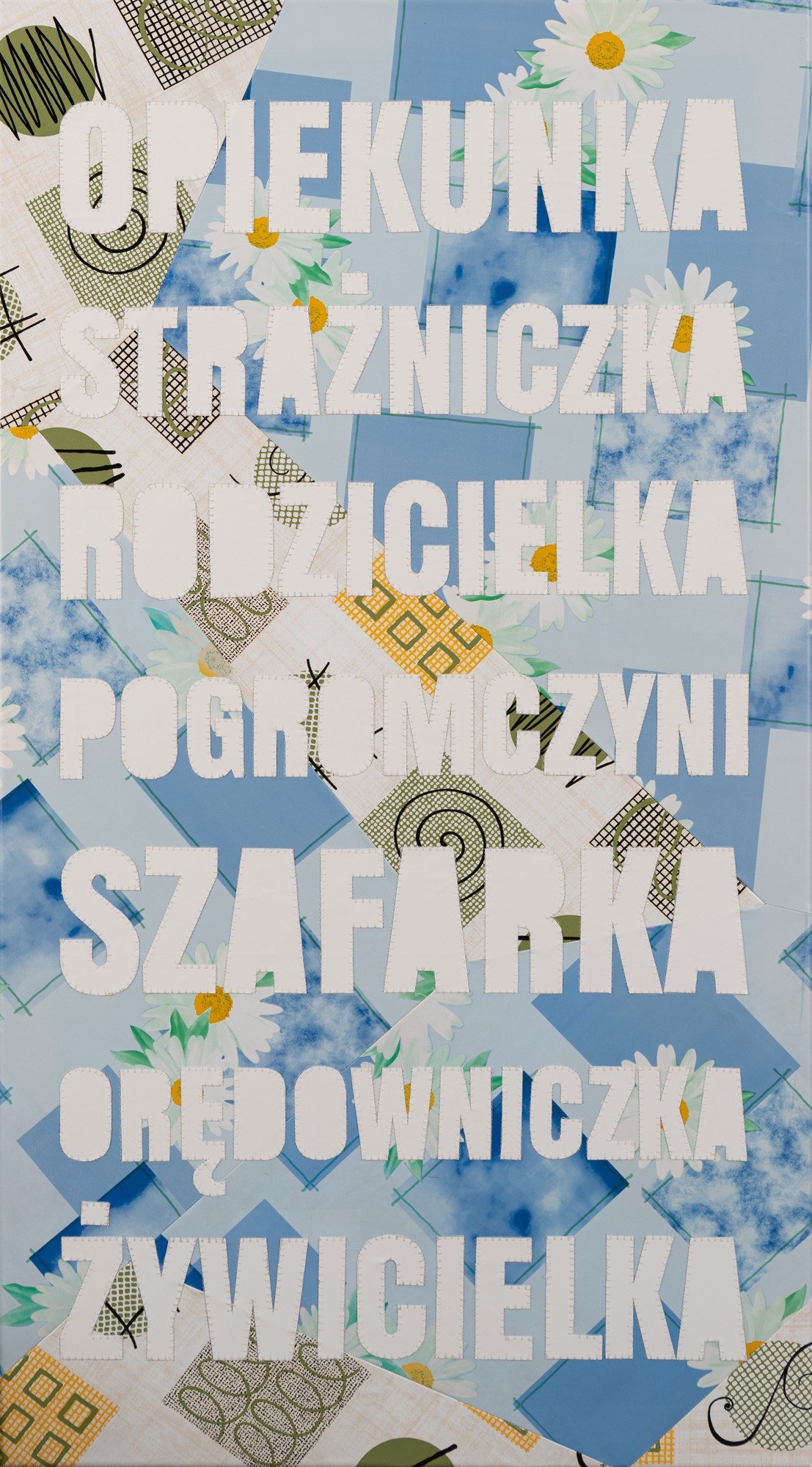

sewn oilcloth, femmage technique; 110 × 60 cm;
Signed and dated on back: Iwona Demko 2023
on the reverse an author's sticker
Provenance:
private collection, Poland
The first feminatives appeared in Old Slavonic. The greatest activity in the occurrence of feminine names can be seen in the 19th century, when women became emancipated and began to study and work. In 1918, an ad appeared in the "Kurier Lwowski": Magister of pharmacy is looking for a pharmacy in Radziechow.
Later, many female names of professions lost their popularity, as they were associated with the lower social status of women. It was nobilitating to use the masculine form, so women were reluctant to use feminine forms.
Language not only reflects social changes, but also influences our perception of the world and imagination. Through language we look at the world, language reflects and shapes reality and our plans for the future. What words we use when describing the world affect how we think about ourselves. Professor Miroslaw Bańko says that when we use feminine forms, we can express ourselves more precisely.
The femininatives you can read in the painting come from prayers.











Recentemente visualizados
Efetue login para ver a lista de itens
Preferidos
Efetue login para ver a lista de itens