


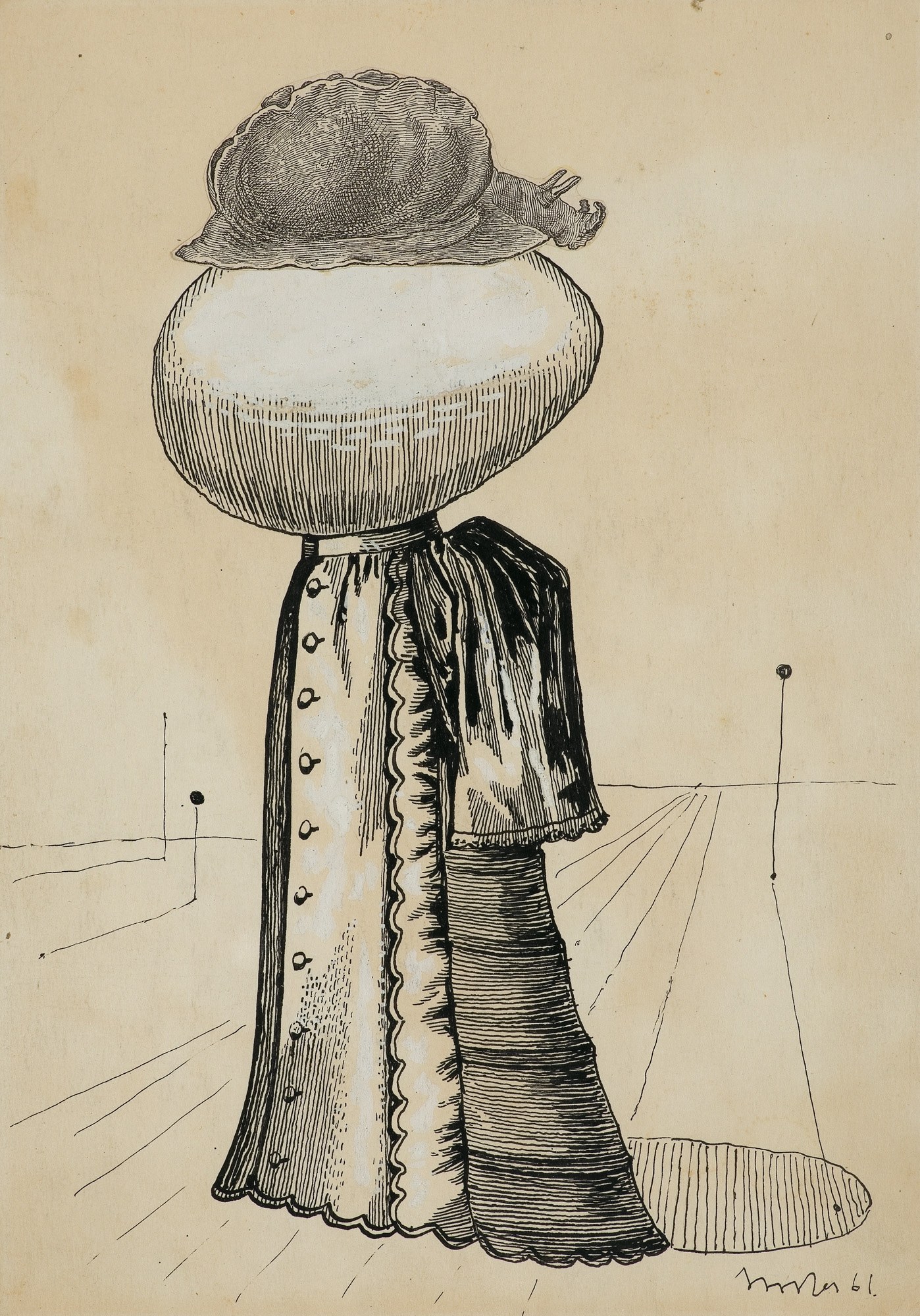
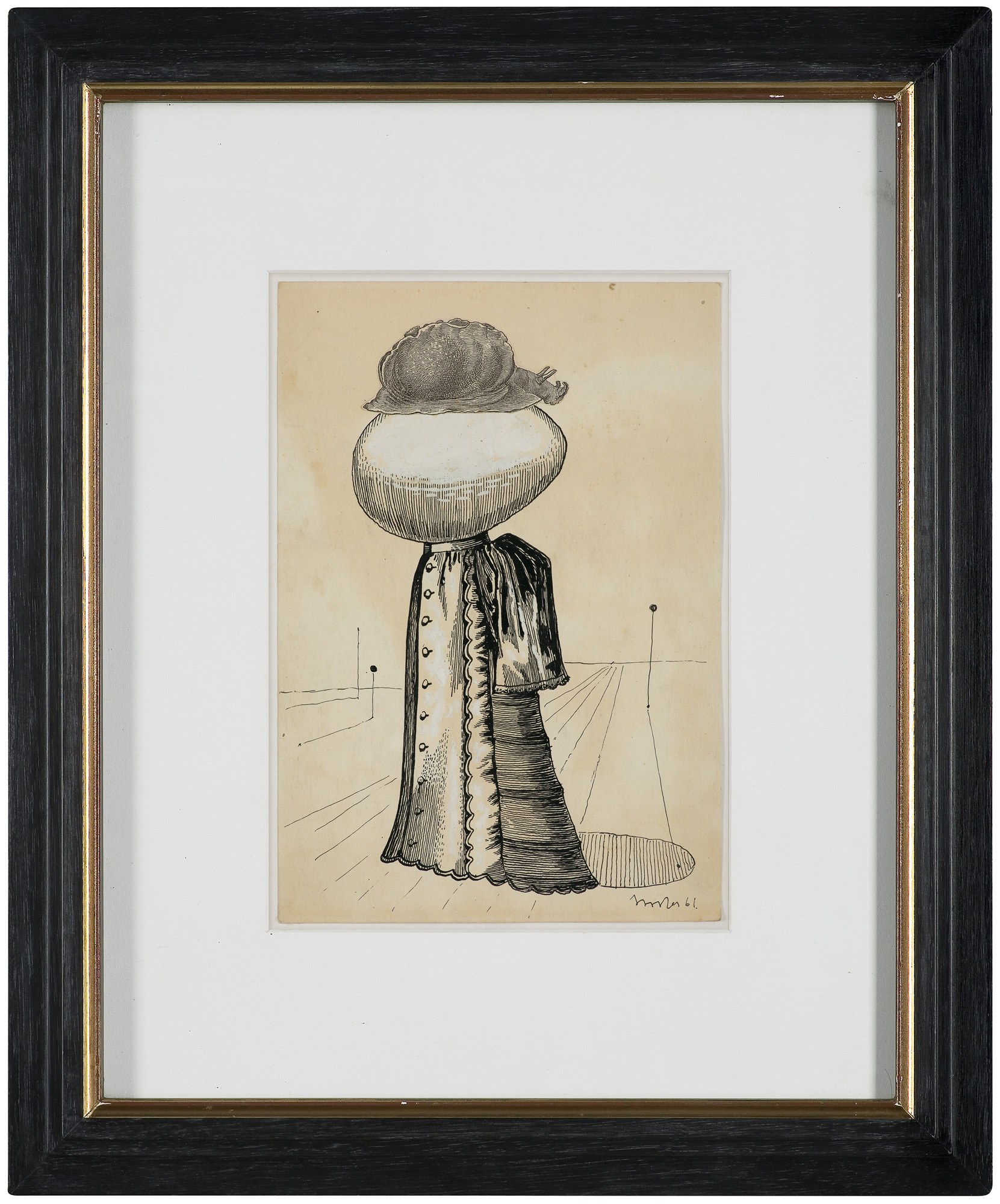
27 x 18.9 cm - collage, ink, gouache, beige paper
signed lower right: Sooster 61.
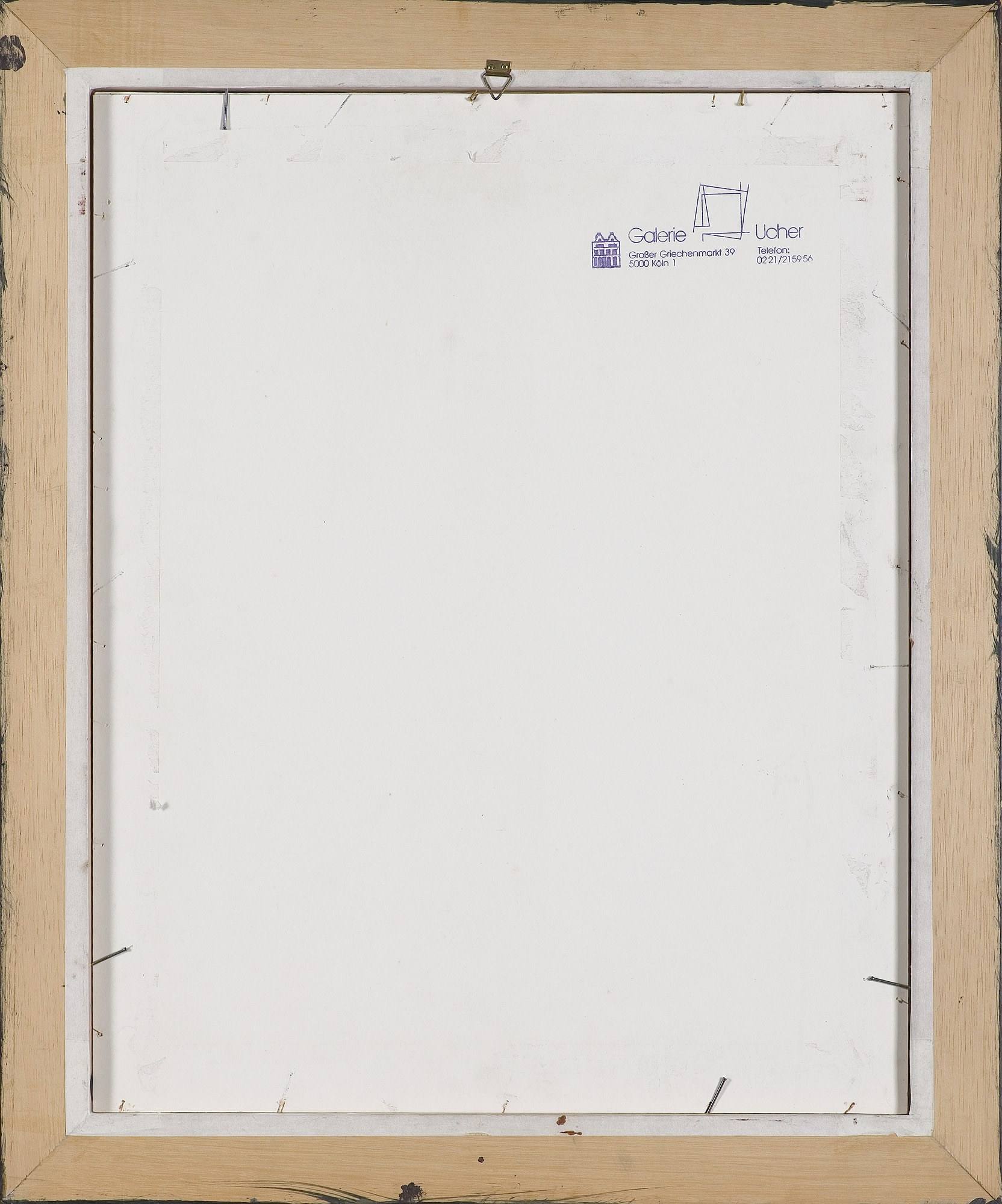
On the reverse of the mounting, at the bottom left, a stamp from the Ucher Gallery in Cologne
Ülo Sooster is one of the leading figures of Soviet and Estonian nonconformist art. In the 1940s, he studied at the State Art Institute in Tartu. In 1949, along with several fellow artists, he was arrested and exiled to a labor camp in Karaganda (Kazakhstan), where he remained until 1956. He created art during his imprisonment and afterward in the spirit of rebellious art, blending illustration, satirical drawing, and comics. After his release from the camp, he lived in Moscow, where he joined the circle of artists known as the “Second Russian Avant-Garde.” His work consists primarily of ink drawings and collages, though he also painted in oils and watercolors. He also worked in printmaking and commercial art. On the 100th anniversary of his birth, the Ajaloomuuseum in Tallinn presented a retrospective exhibition “Ülo Sooster: Prison and Love,” which also commemorated his wife, the artist Lidia Serkh, whom he met in Karaganda. (See also: https://soosterfoundation.org/en/)
♣ Droit de suite: ♣ A fee resulting from the right of the artist and his heirs to receive remuneration in accordance with the Act of February 4, 1994, on Copyright and Related Rights (droit de suite) will be added to the Purchase Price.
Ülo Sooster is one of the leading figures of Soviet and Estonian nonconformist art. In the 1940s, he studied at the State Art Institute in Tartu. In 1949, along with several fellow artists, he was arrested and exiled to a labor camp in Karaganda (Kazakhstan), where he remained until 1956. He created art during his imprisonment and afterward in the spirit of rebellious art, blending illustration, satirical drawing, and comics. After his release from the camp, he lived in Moscow, where he joined the circle of artists forming the so-called Second Russian Avant-Garde. His work consists primarily of ink drawings and collages, though he also painted in oils and watercolors. He also worked in printmaking and commercial art. On the 100th anniversary of his birth, the Ajaloomuuseum in Tallinn presented a retrospective exhibition titled “Ülo Sooster: Prison and Love,” which also commemorated his wife, the artist Lidia Serkh, whom he had met in Karaganda.








Recentemente visualizados
Efetue login para ver a lista de itens
Preferidos
Efetue login para ver a lista de itens