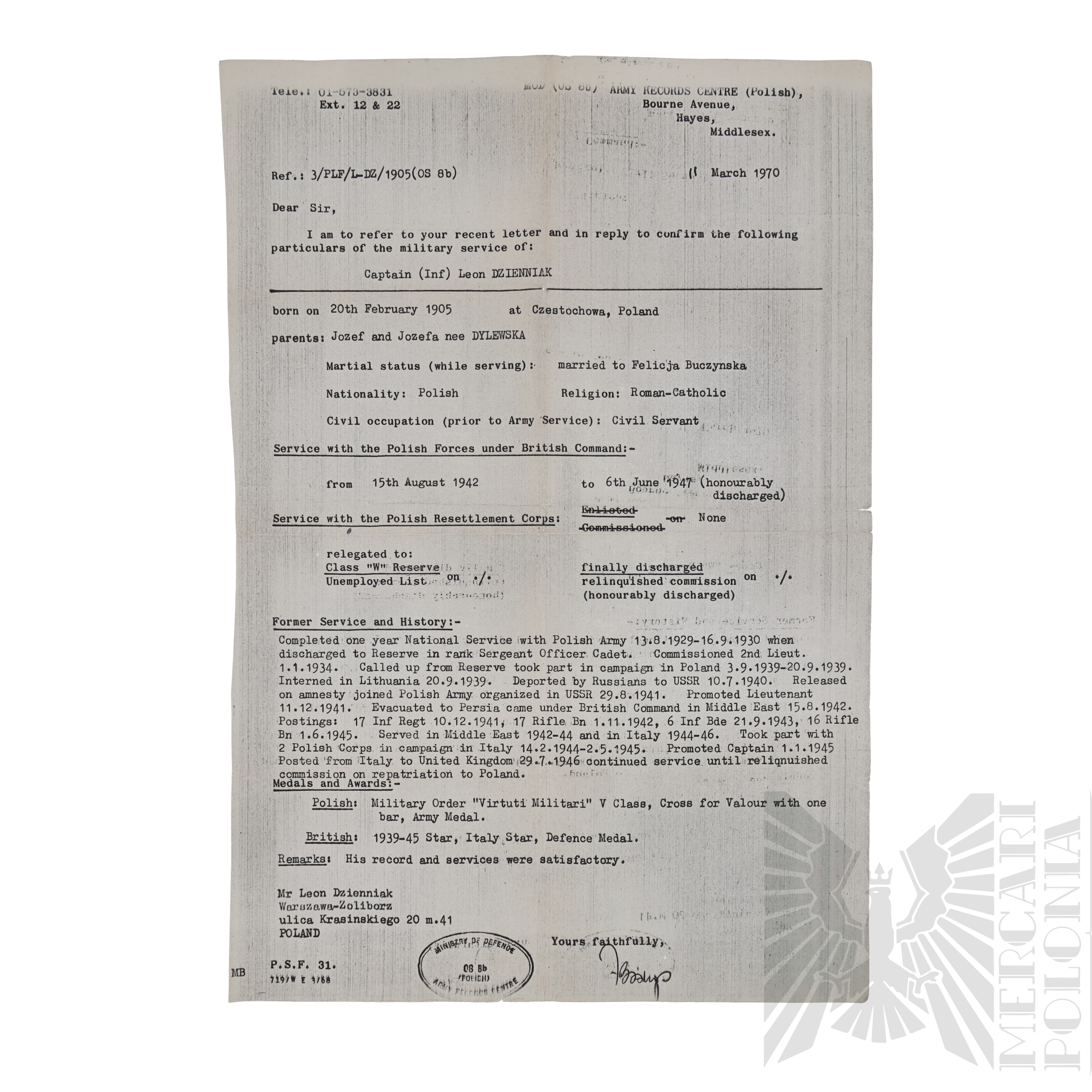
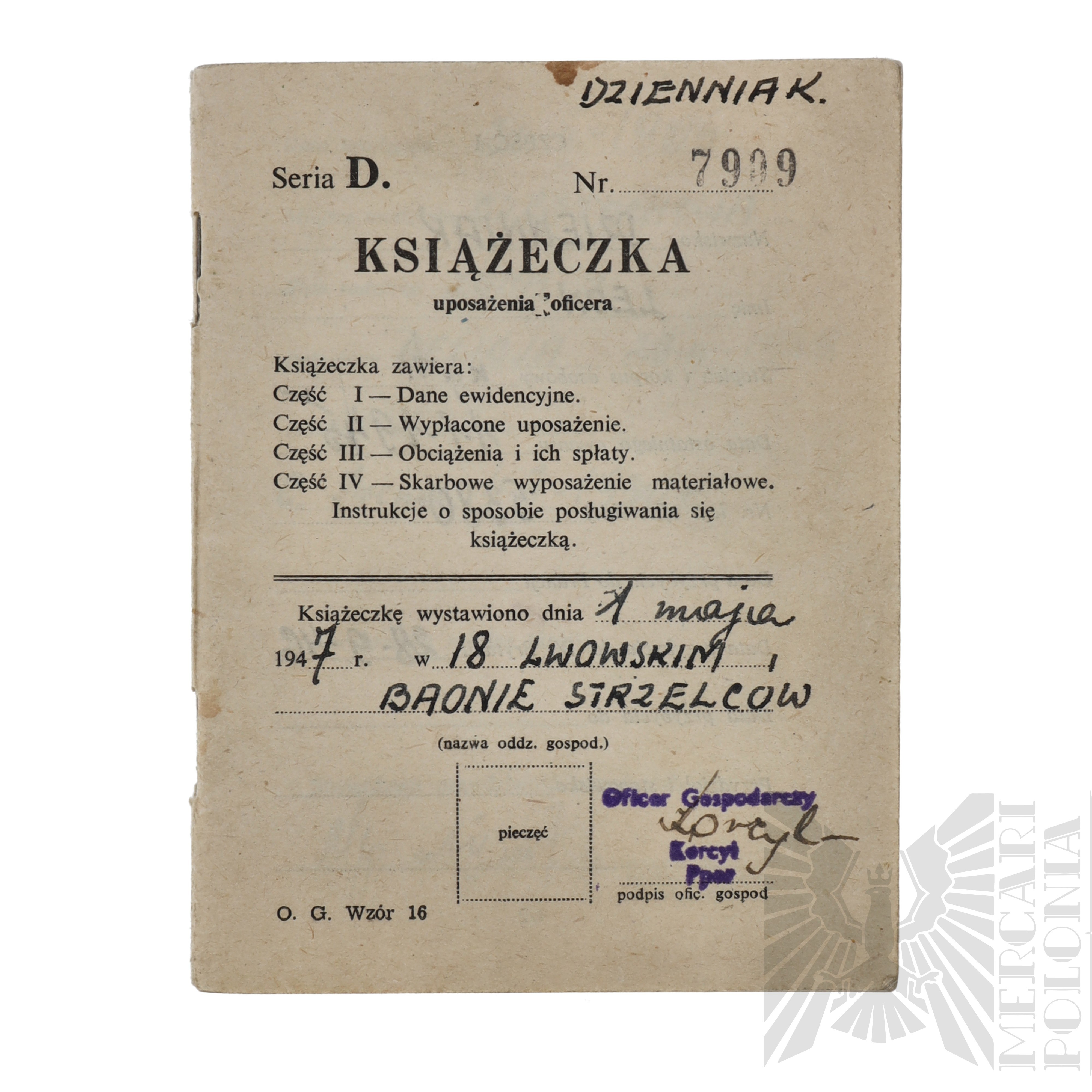
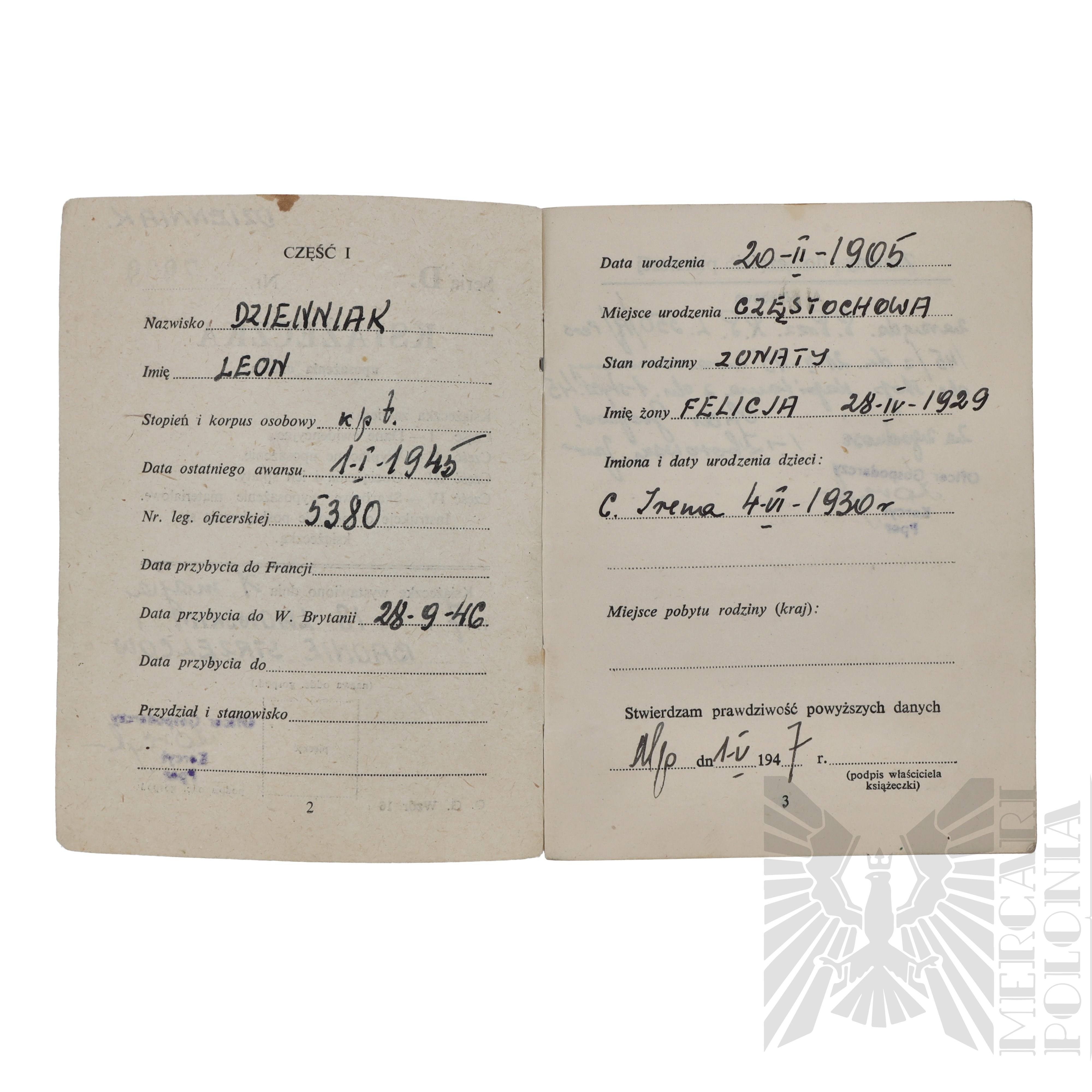
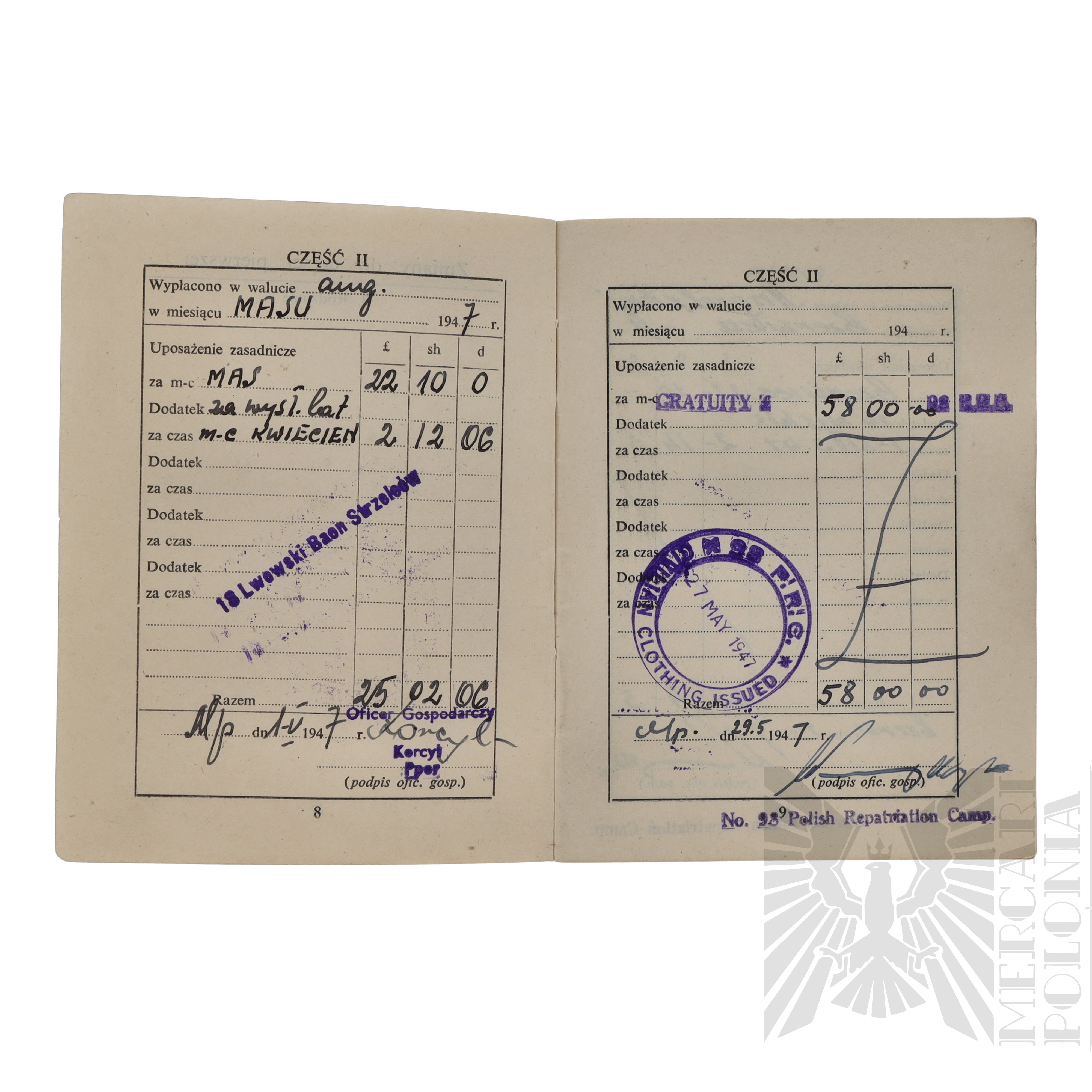
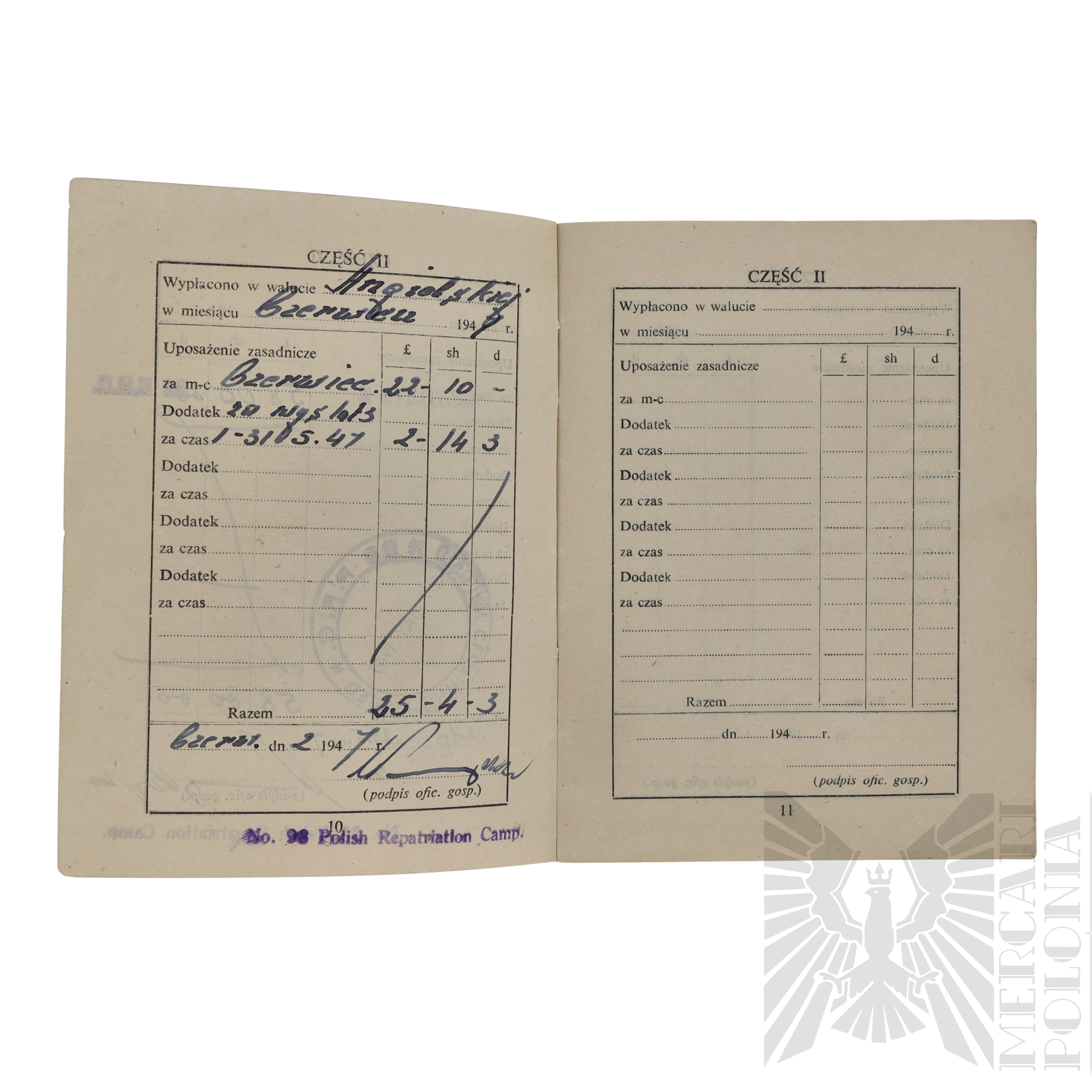
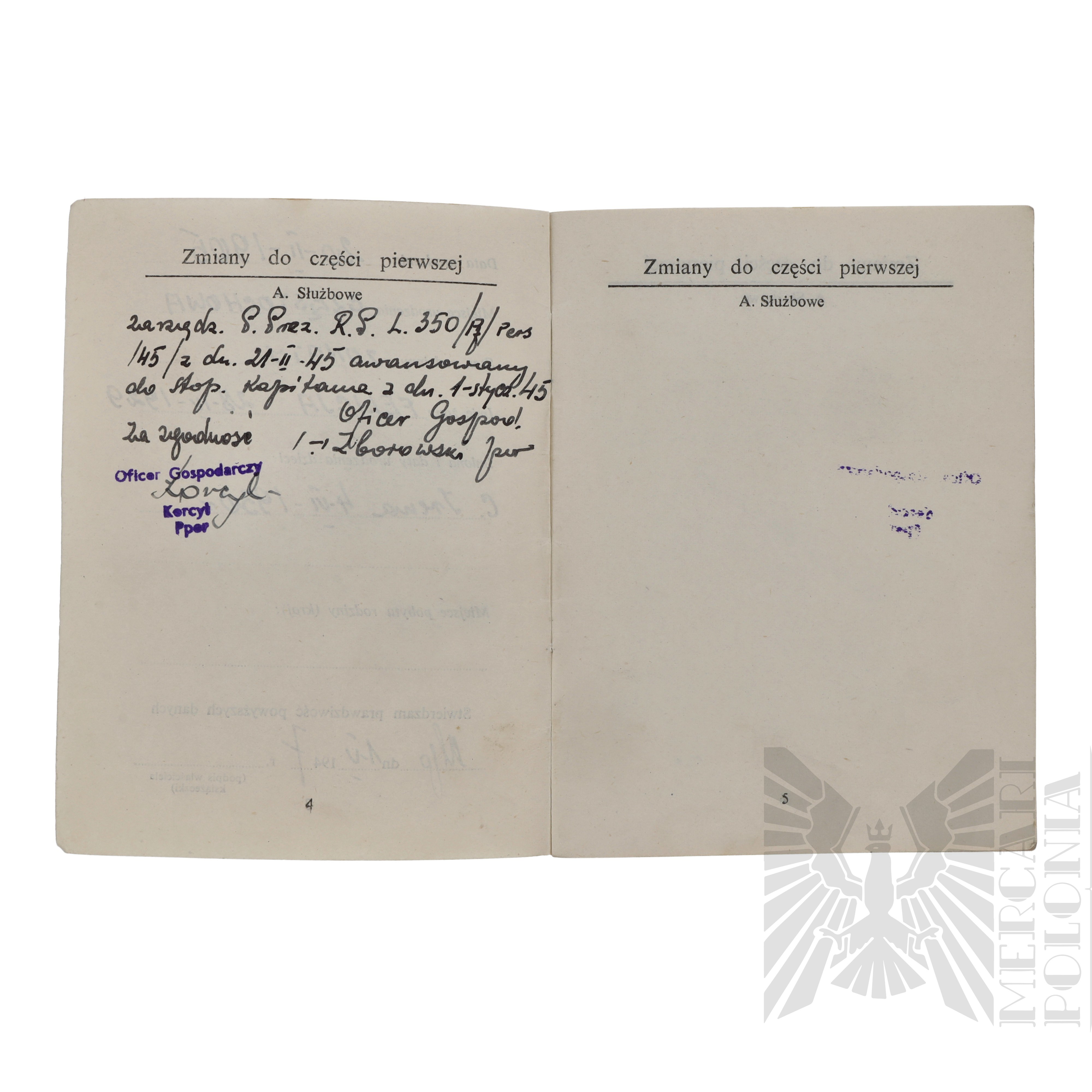
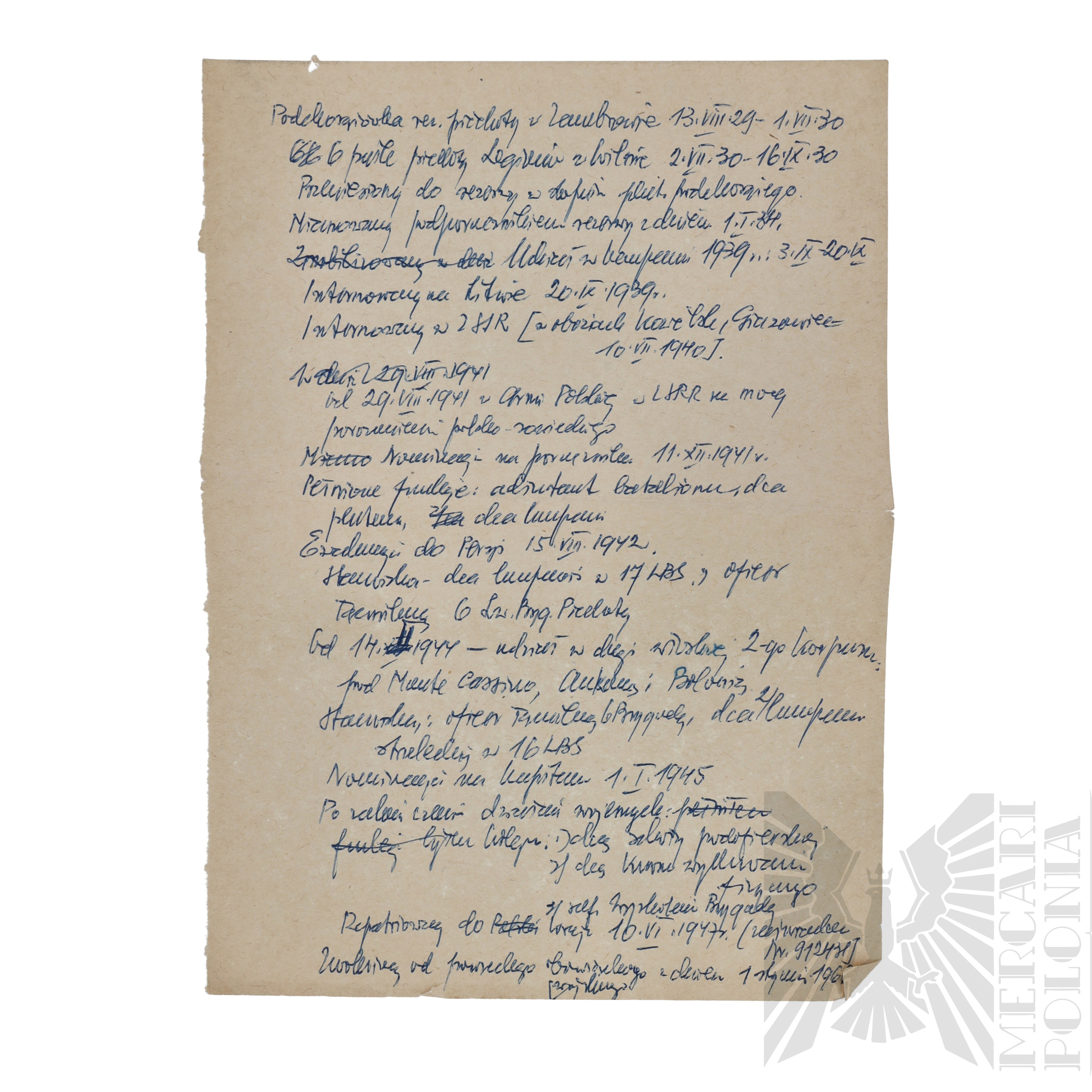
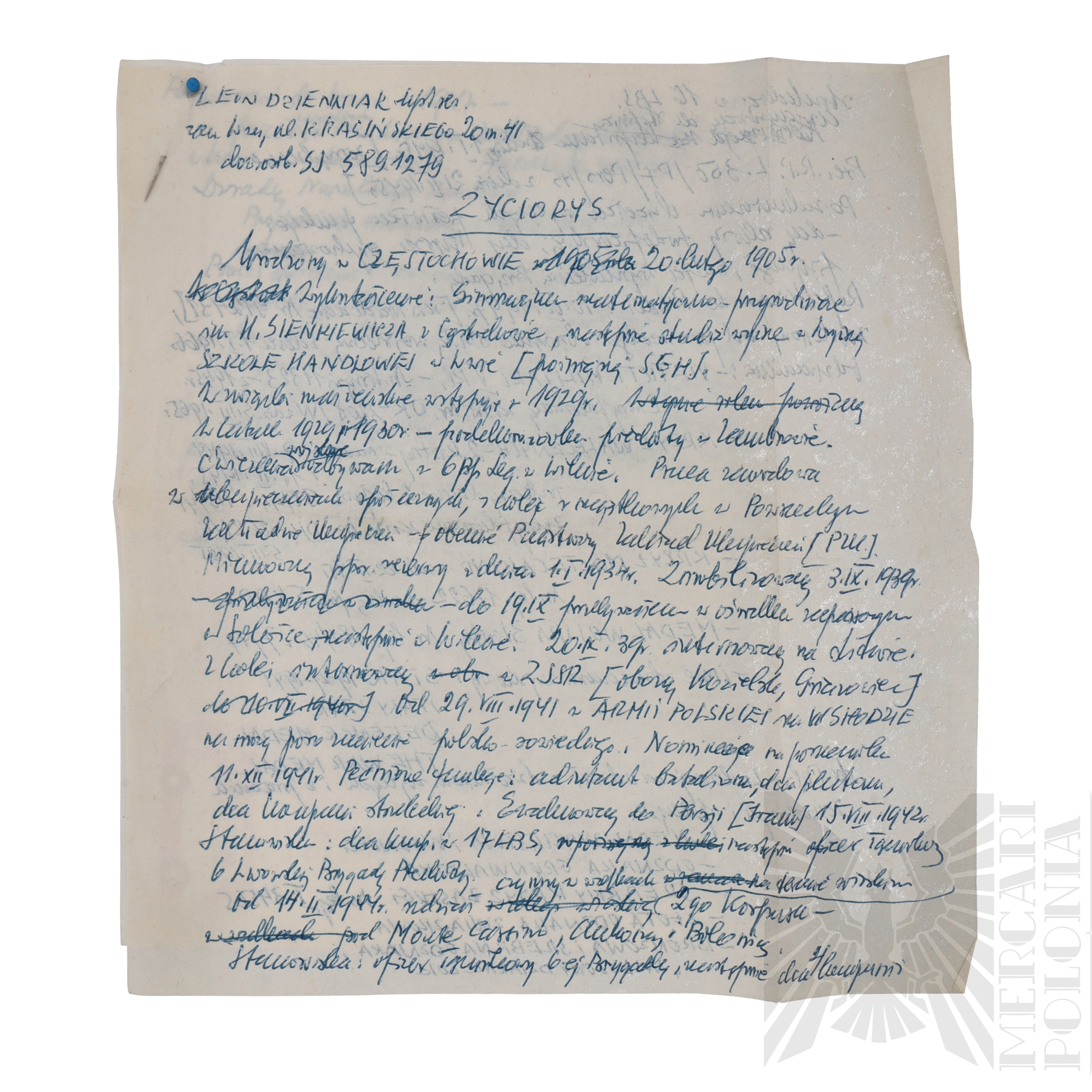
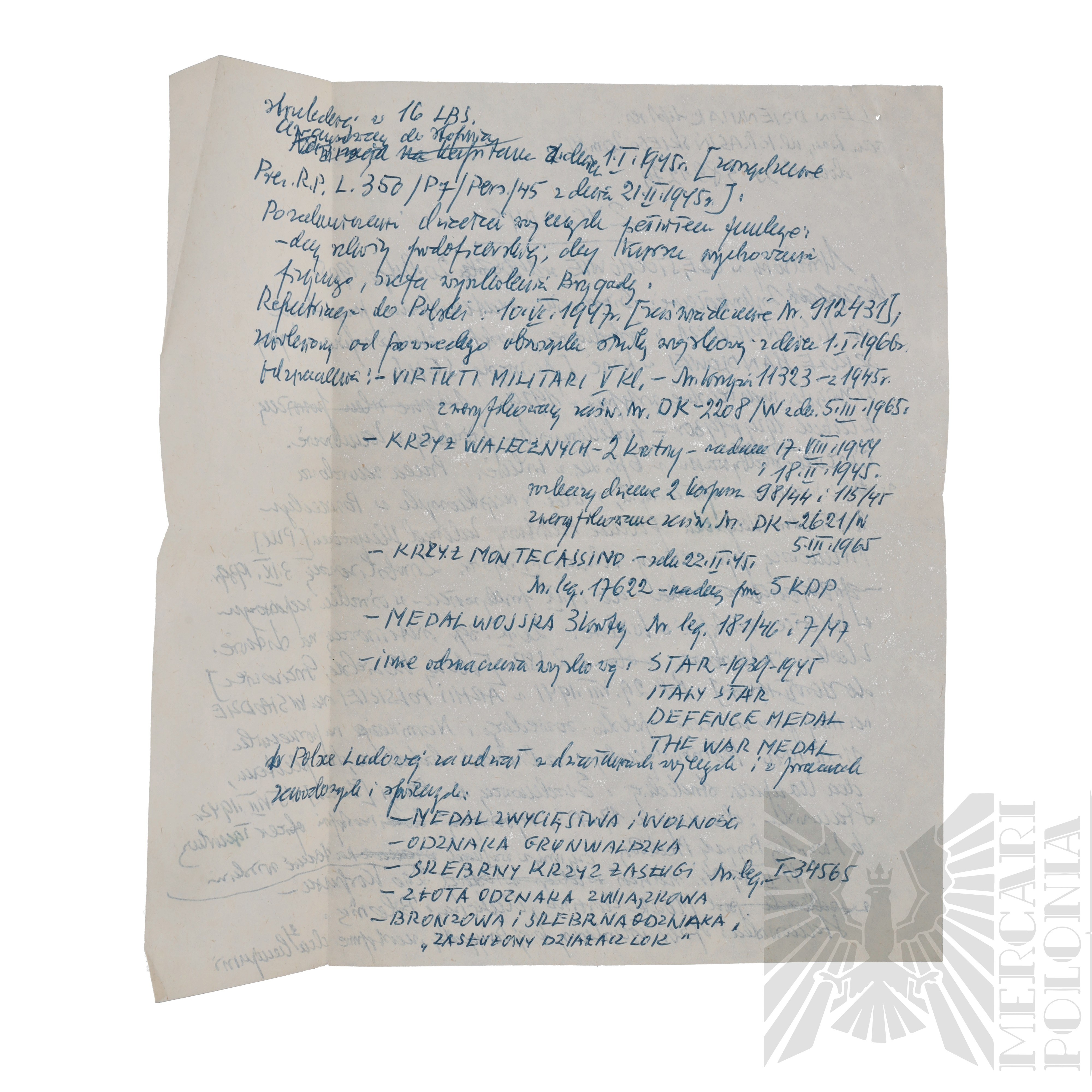
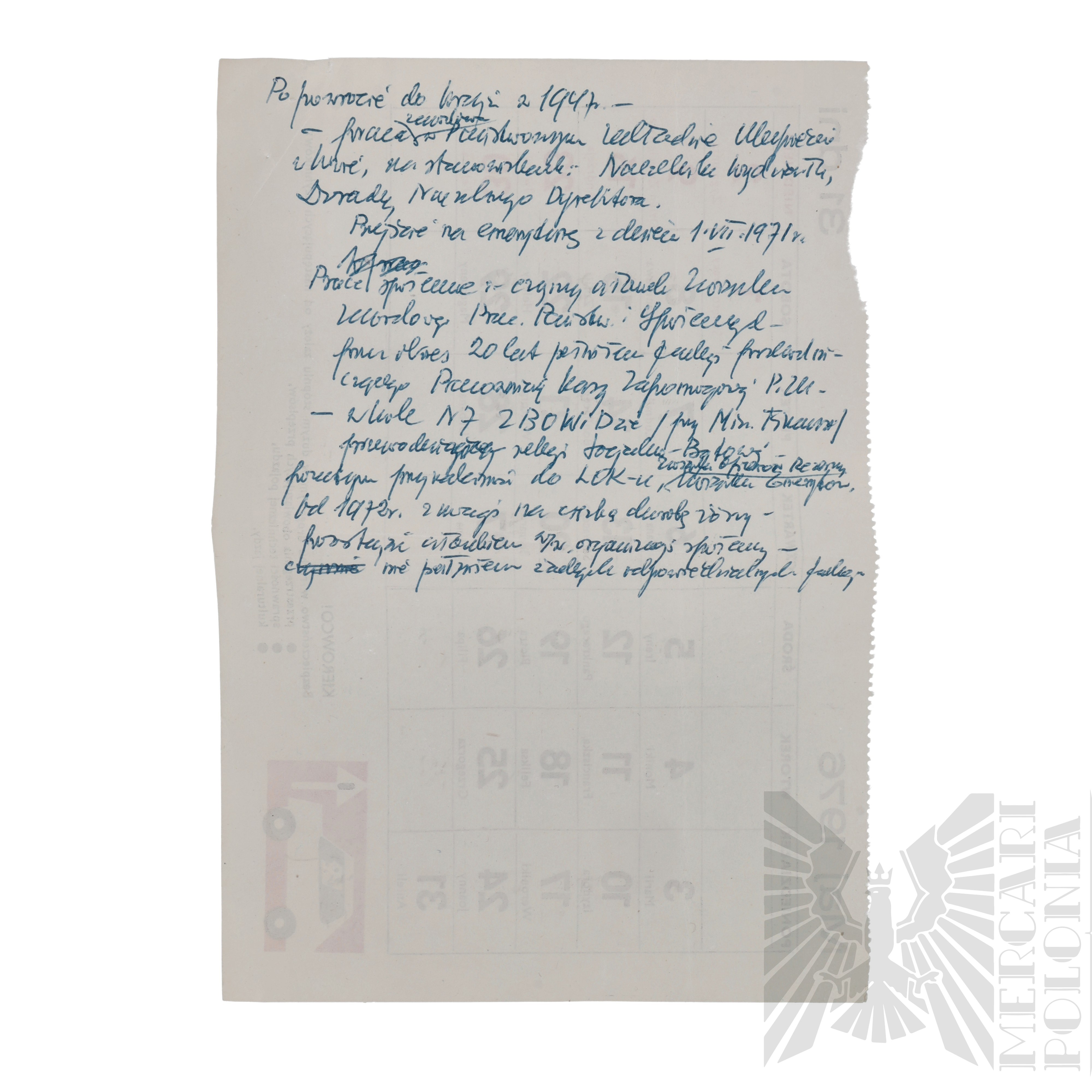
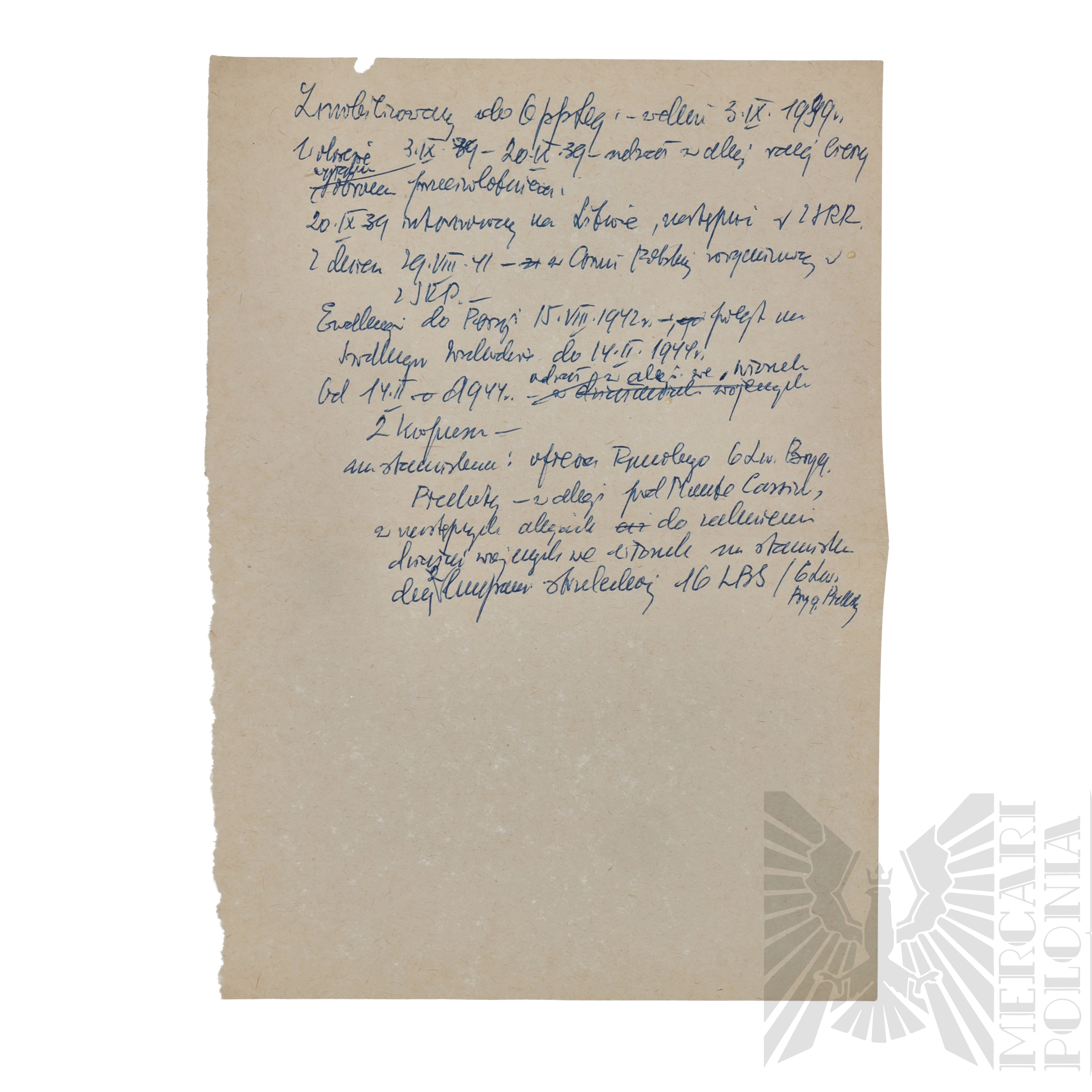
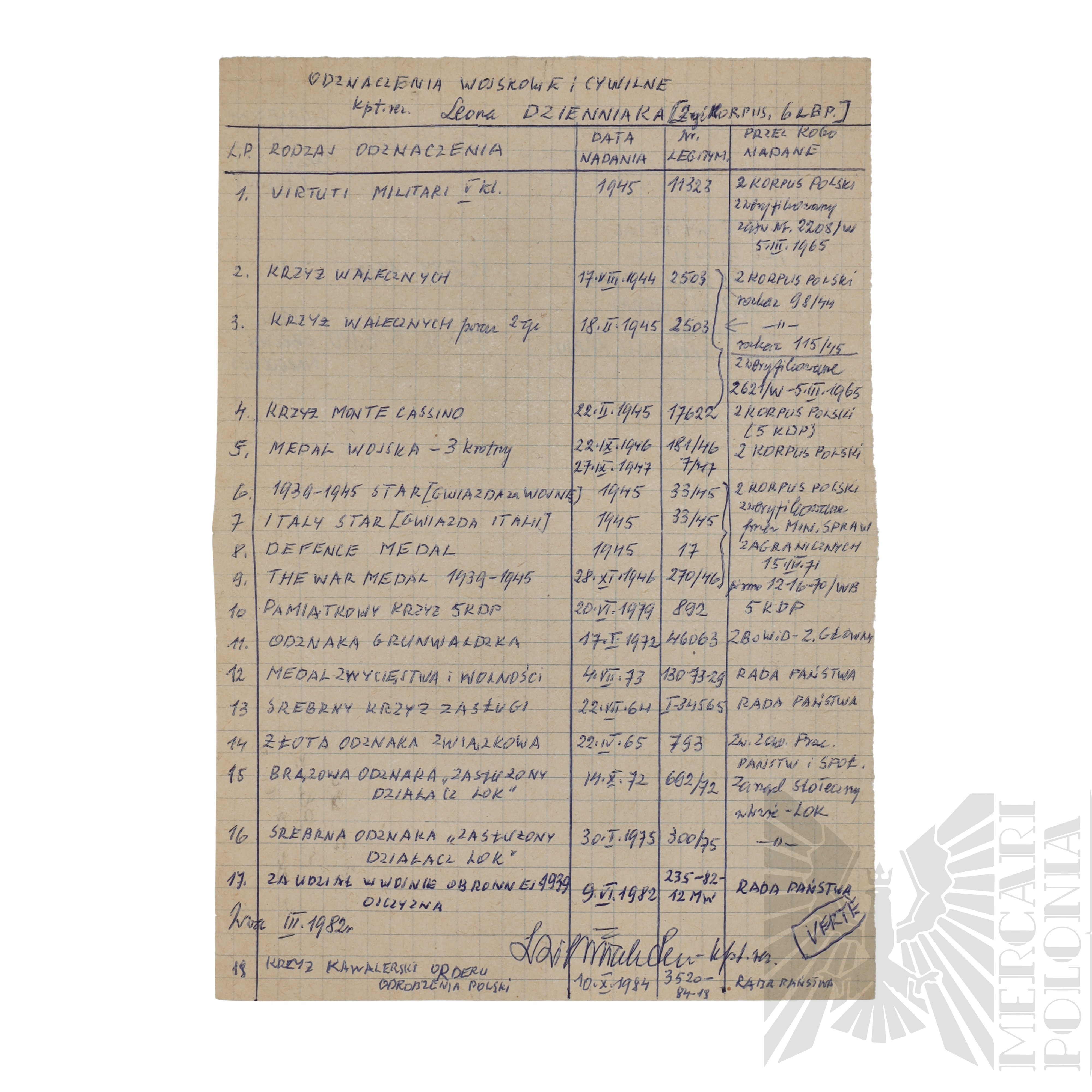
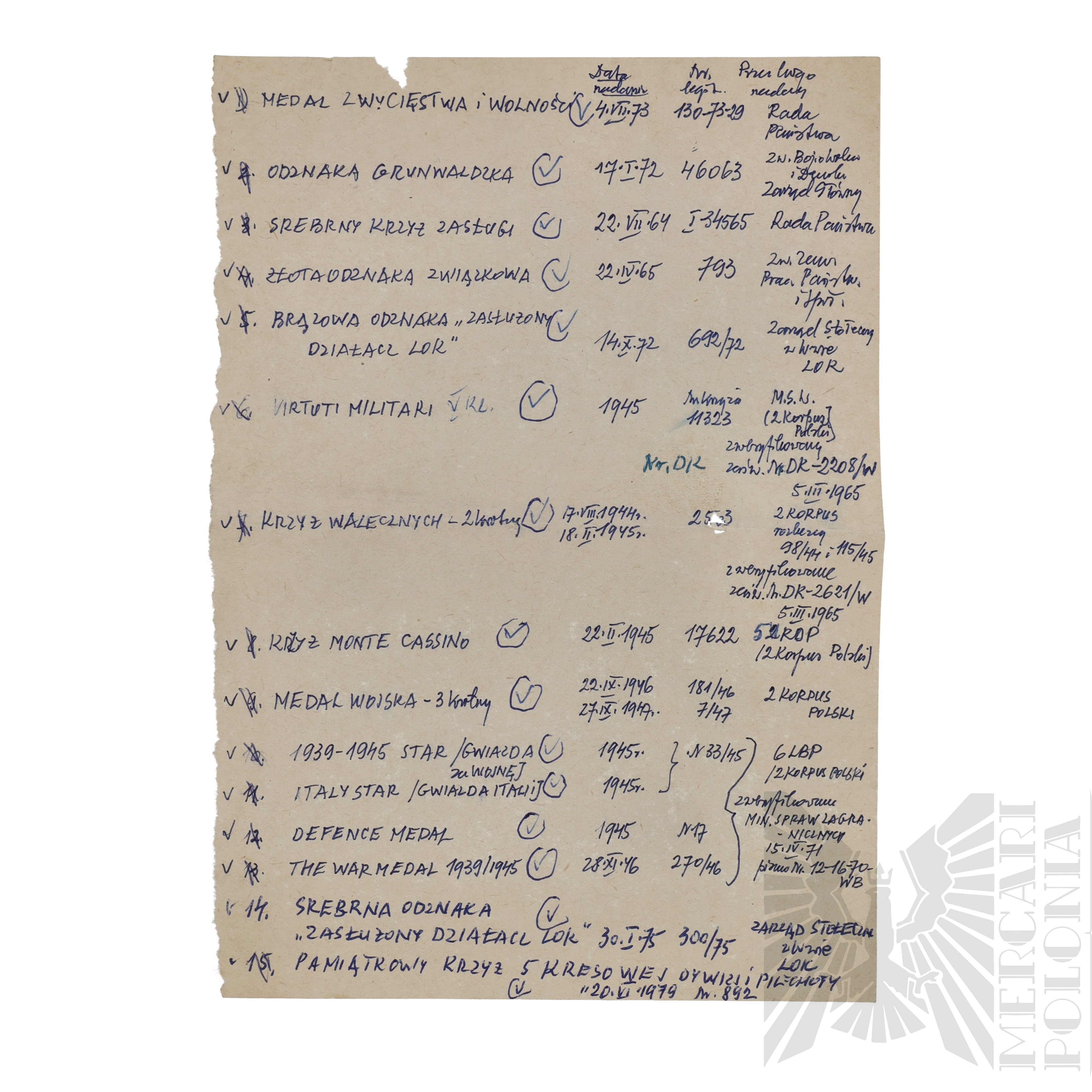
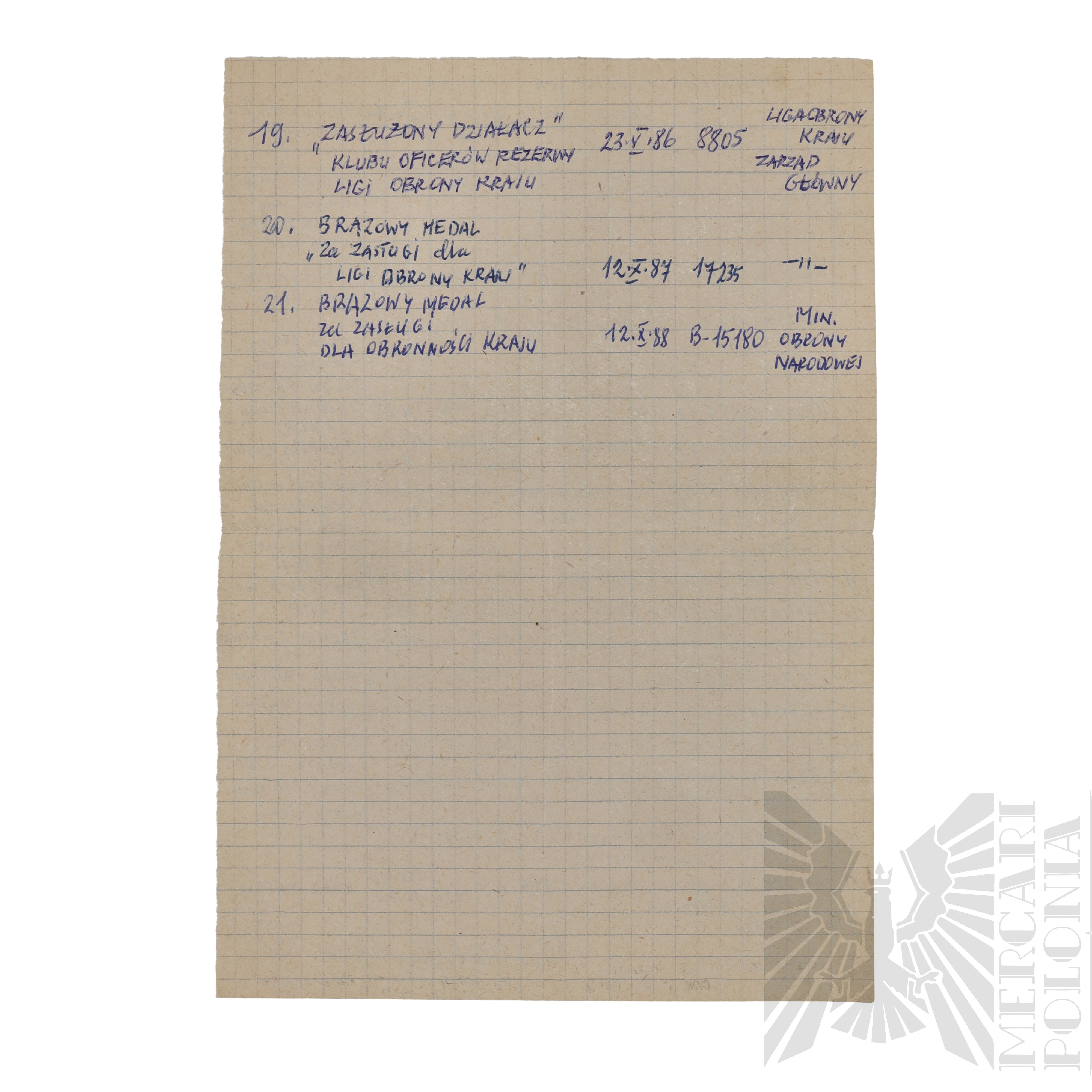
A set of documents after the captain of the 18th Lviv Rifle Baon Leon Dzienniak. The set includes an officer's emolument booklet issued on May 1, 1947 by the 18th Lviv Rifle Baon. A handwritten curriculum vitae and a list of decorations received with dates and orders of award, as well as a military service statement dated March 1970.
Leon Dzienniak was born on February 20, 1905 in Czestochowa. In 1923 he graduated from the H. Sienkiewicz Gymnasium in his hometown, where he received his high school diploma. At the beginning of World War II, on September 3, 1939, he was mobilized as a reserve second lieutenant in a military unit in Vilnius. After a short stay in Sokolka and Vilna, he was taken prisoner of war on September 20, 1939 and interned in Lithuania, before being transferred to the Kozelsk camp in the USSR in July 1940. After the signing of the Sikorski-Stalin treaty in 1941, he was released and through the Tnockoye and Yakkobag camps reached the Polish Army in the East on August 15, 1942, where he was drafted into the 2nd Polish Corps.
He served as a liaison officer in the command of the 6th Lviv Infantry Brigade under Colonel Witold Nowina-Sawicki. He took part in the Battle of Monte Cassino, where for many days he maintained communications with battalion and company commands in advanced positions, delivering reports and supplies. After the first phase of the assault, he was assigned to the staff of the 5th Borderland Division, where he served as liaison officer to Colonel Klemens Rudnicki, appointed by General Anders to lead the assault. After the capture of Monte Cassino, he took command of the 2nd Rifle Company of the 16th Lviv Rifle Battalion. In April 1945, he commanded the company during the fighting on the Santerno River, where his unit, reinforced by tanks and anti-tank artillery, acted as a shock company.
After the end of hostilities, he was put in charge of the non-commissioned officer school in San Benedetto del Tronto, and later became commander of the physical education school in Pieve di Cadore. In 1946 he became seriously ill and was hospitalized in Ancona for three months. In 1947, he and the troops of the 2nd Corps were evacuated to England, from where he returned to Poland.
After the war, he settled in Warsaw and took a job at the State Insurance Company, where he served as head of the Transport Insurance Department and later as advisor to the chief director. He was an active member of social and veterans' organizations, including the Union of Fighters for Freedom and Democracy, the Carpathian Club and the National Defense League. He received numerous decorations for his combat merits and activities, including the Virtuti Militari Fifth Class, the Cross of Valor, the Monte Cassino Cross, and the Army Medal. He died on January 22, 1990 in Warsaw.
Overall condition as shown in the photos.