


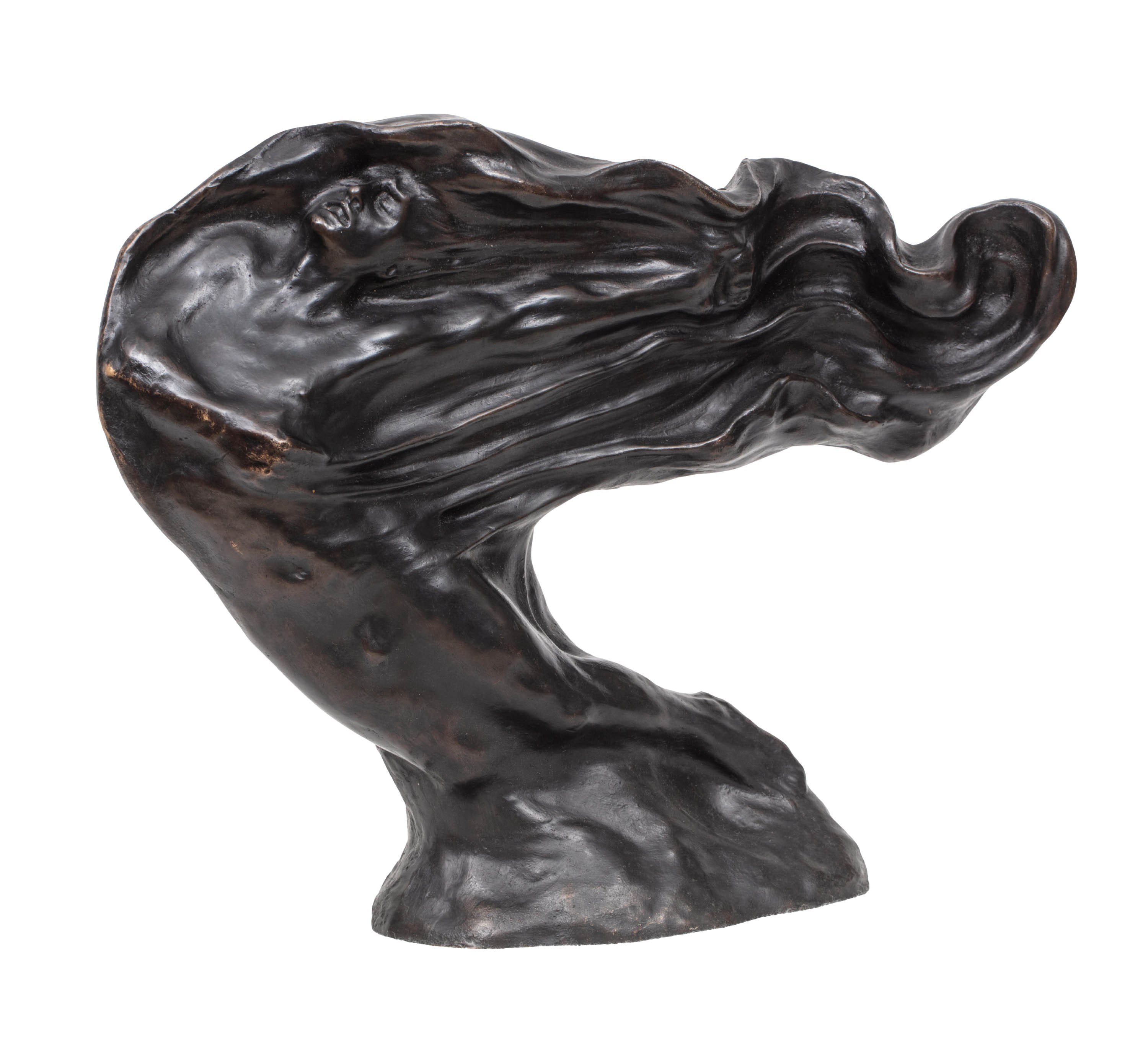
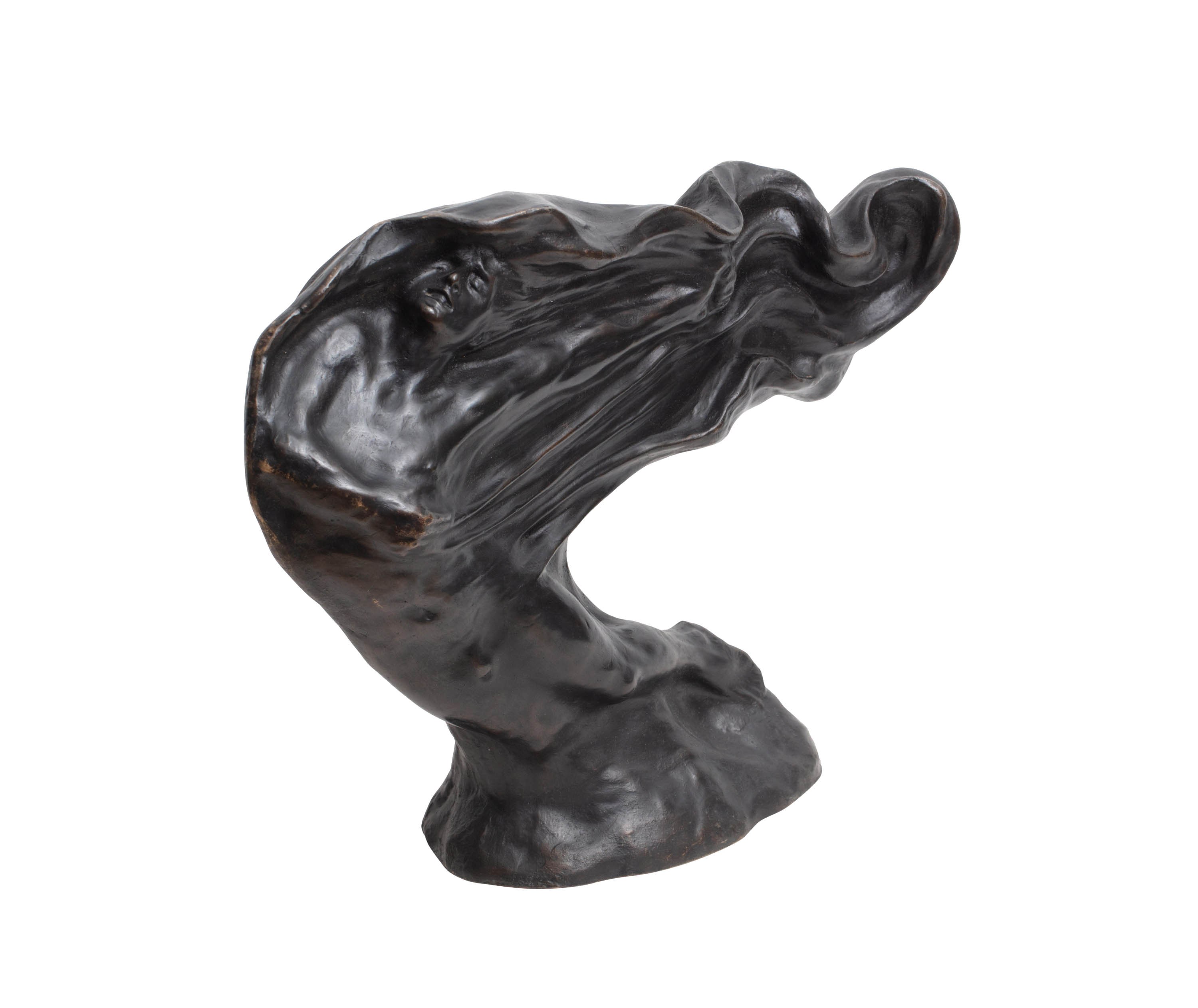
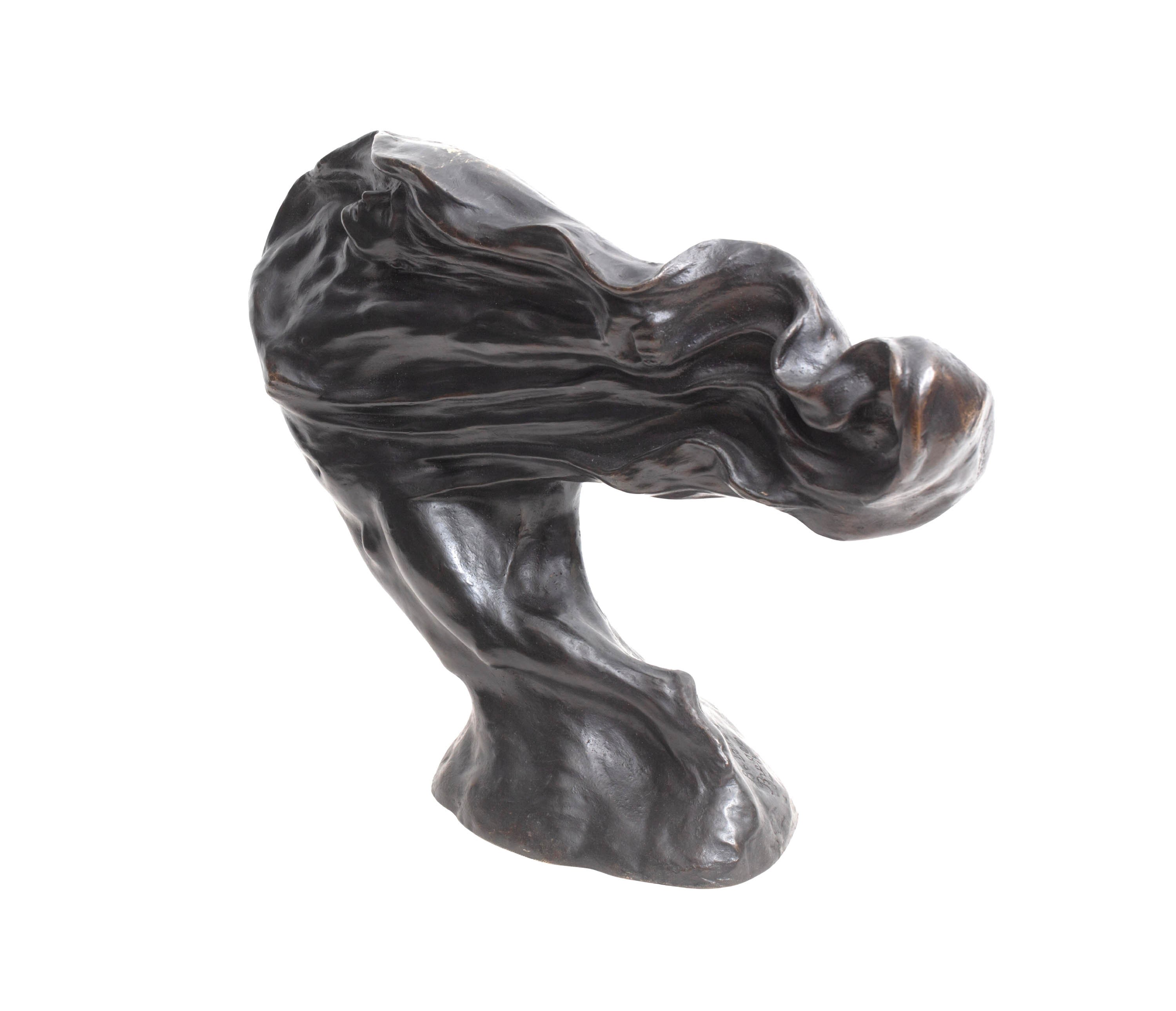
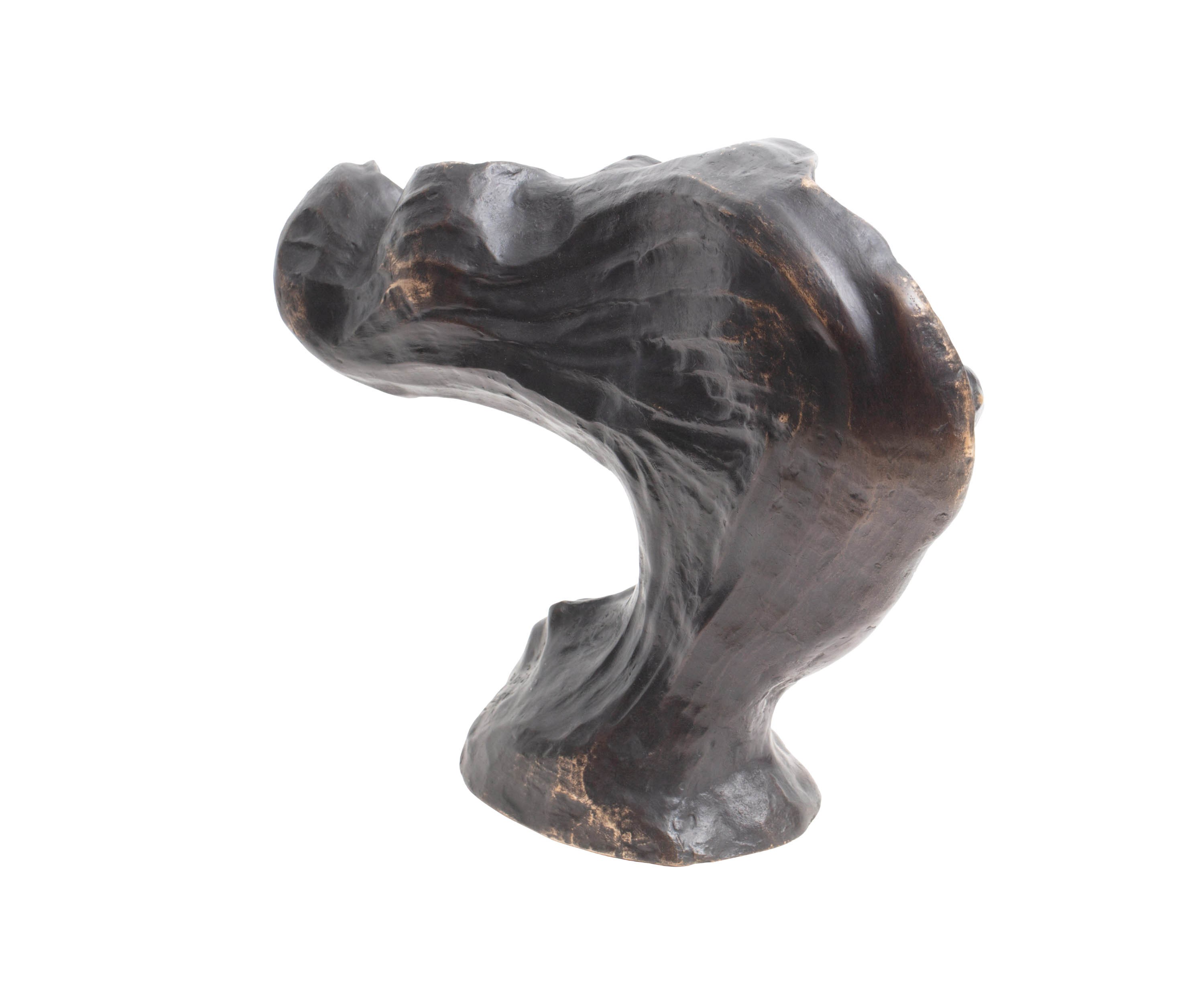
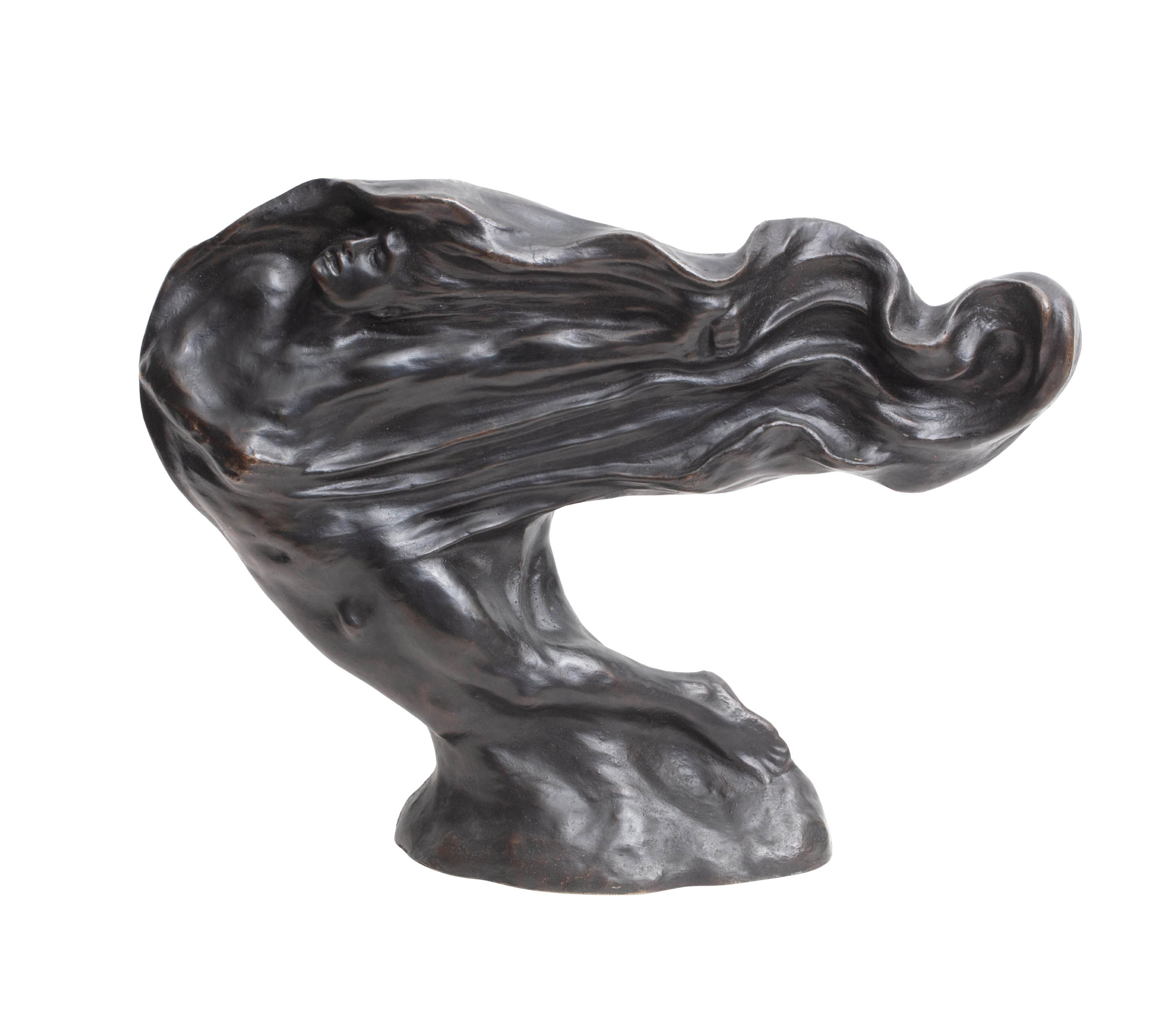
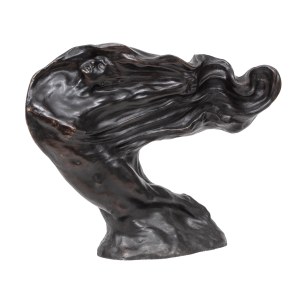
patinated bronze, dimensions: 38 x 50.5 x 16 cm
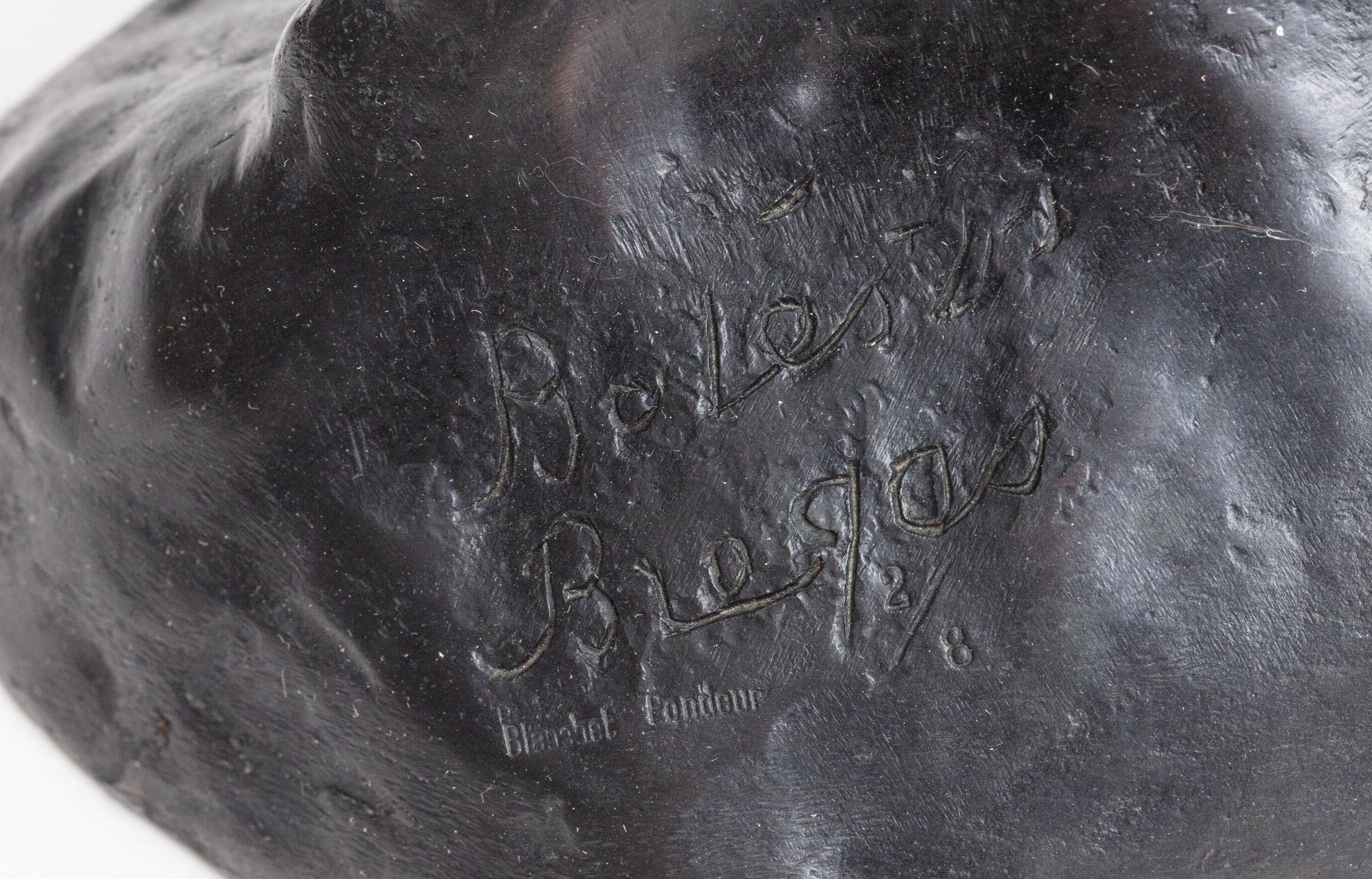
signed on the base: “Boleslaw / Biegas / 2/8 Blanchet Fondeur”
The casting was made in 1983 at the Blanchet Fondeur foundry in Paris.
Provenance:
- Private collection, USA, until 1994
- Sotheby’s, auction on September 29, 1994, lot 16
- Collection of Alicja and Stanisław Jonas
- Phillips Auctioneers, auction on July 2, 2025, lot 49
- Private collection, Poland
Bibliography:
- X. Deryng, Bolesław Biegas, Paris 2011, p. 172 (ill.) (cf.)
Exhibited:
- Exposition Biegas, Galerie des Artists Modernes, Paris, March 23–April 11, 1908, (bronze) (cf.)
“I will sculpt, I will carve your face from marble… I will breathe love and suffering into it… I will sketch your eyes with my own pain—and press out the flowing tears with my own tears… and sketch your terrible weeping with my own weeping. All of it together, I will capture it all in your features. My work and your statue; I will place it on the altar and inscribe on the statue: (“My Sister of Secrets”) and I will surround it with love… for it will be a great work, for it was created with tears and sorrow.”
Bolesław Biegas
in: “Bolesław Biegas, *Graczak*,” Warsaw: K. Idzikowski Bookstore, 1905, p. 81
“What strikes one most in Biegas’s work is the exuberance of his imagination, his sincerity, the power of his expression, and his extraordinary gift for invention. His vision is not limited to form alone; he appears to be familiar with it, but only on the surface, for, never satisfied, he constantly seeks new forms for his visions. He merely thinks, and even more so, he expresses his dreams in sculptural compositions. He sculpts, but his high reliefs look like painted hallucinations, brilliant images across which entire processions of masks and phantoms pass.”
A. Basler, “Bolesław Biegas (Sketch)*,” *Przegląd Tygodniowy* 1902, no. 31, p. 894.
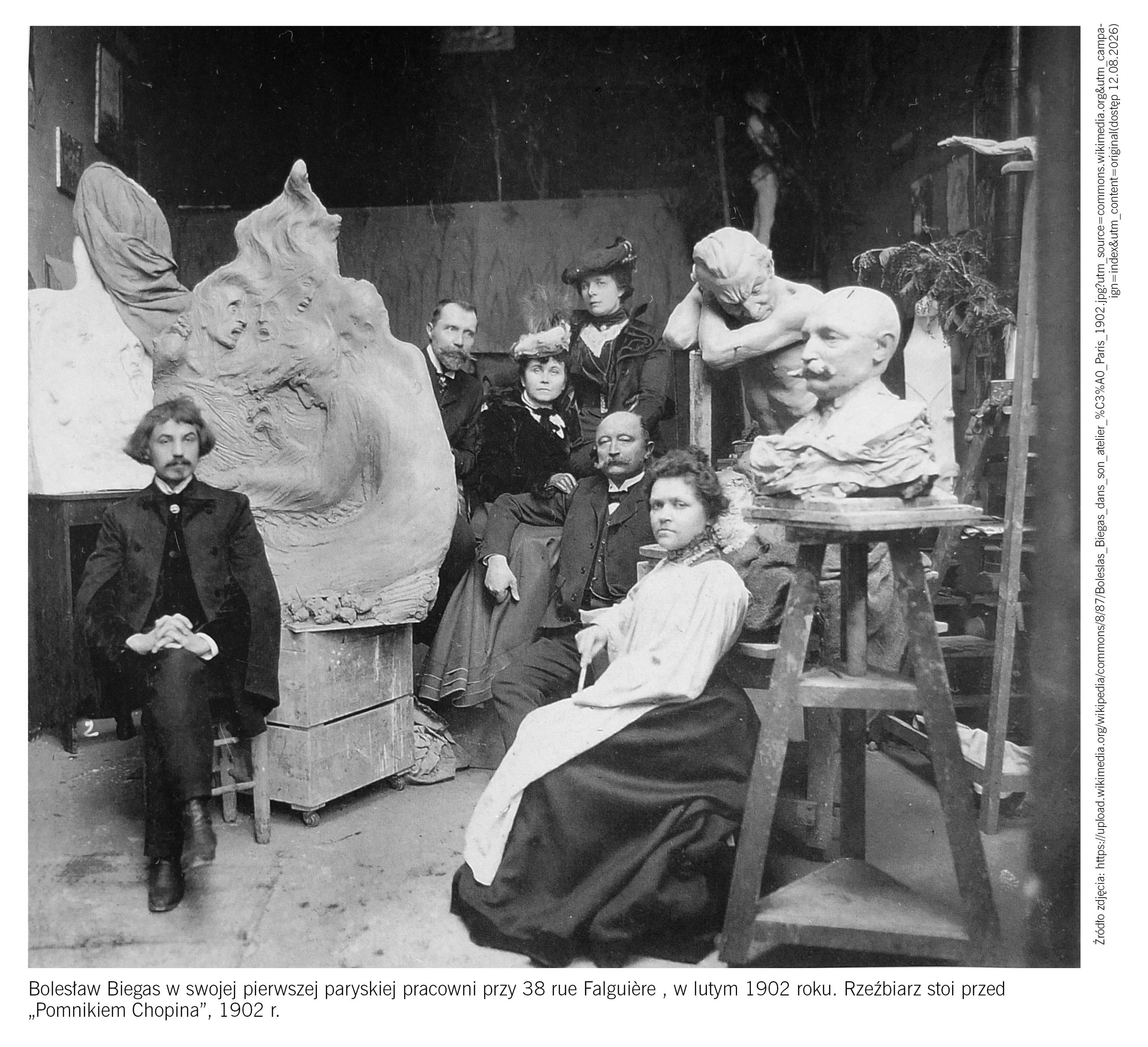
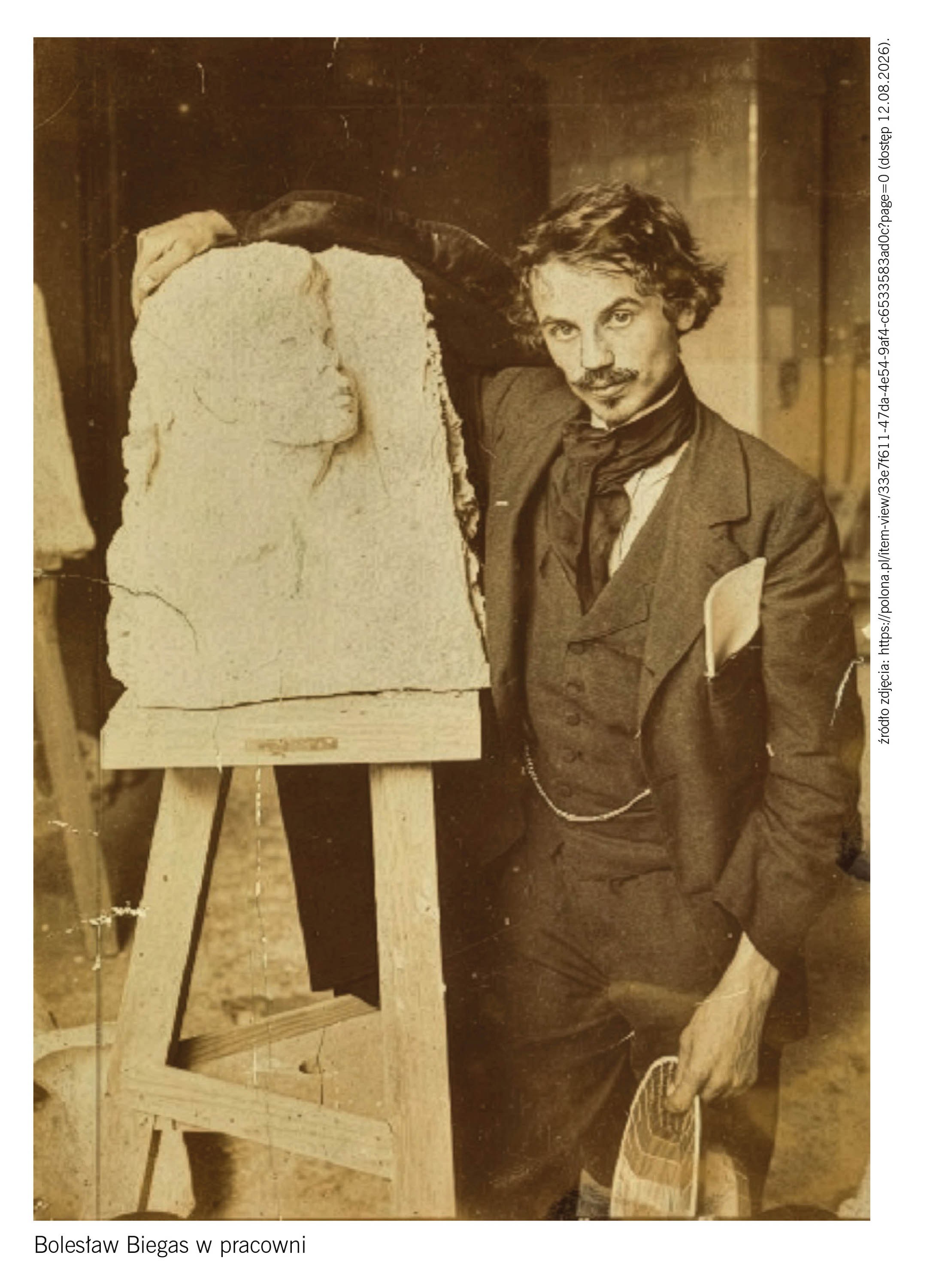
The extraordinary talent of this “rural genius” allowed the artist to become the most outstanding sculptor of European modernism. The phenomenon of his work can be explained to some extent by the artistic credo he formulated in 1906: “Creative power should move forward boldly and courageously. The artist’s soul should not be constrained by form; that is a bad and false means, which often kills creative force. The arts are associated with the altar of the human soul; above them hovers a sphinx, gazing into a mysterious future. The artist, endowed with the grace of inspiration, forges through the darkness, overcomes obstacles, ventures with his thoughts into the distance, and breaks down the barriers separating him from the sources of the afterlife; there he journeys, enveloped in dreams, seeking the source of a mysterious power.” (Polish translation of *Le Criterium de l’Art*—Bolesław Biegas’s artistic credo, in: Louis Theuveny, *Bolesław Biegas. Sculpteur et peintre*, Paris 1906, pp. 6–10). (..) Biegas advocated for artistic freedom and the pursuit of “art for art’s sake” , for creating works that are “new, sincere, emerging from the mystery of the universe,” and for breaking with rationality, dogmatism, and bourgeois culture—a commitment that would guide the sculptor throughout his life. (quoted from Anna Wierzbicka, “Bolesław Biegas. Sculpture. La Sculpture.” Sculpture Institute of Art, Polish Academy of Sciences, 2012, p. 15.
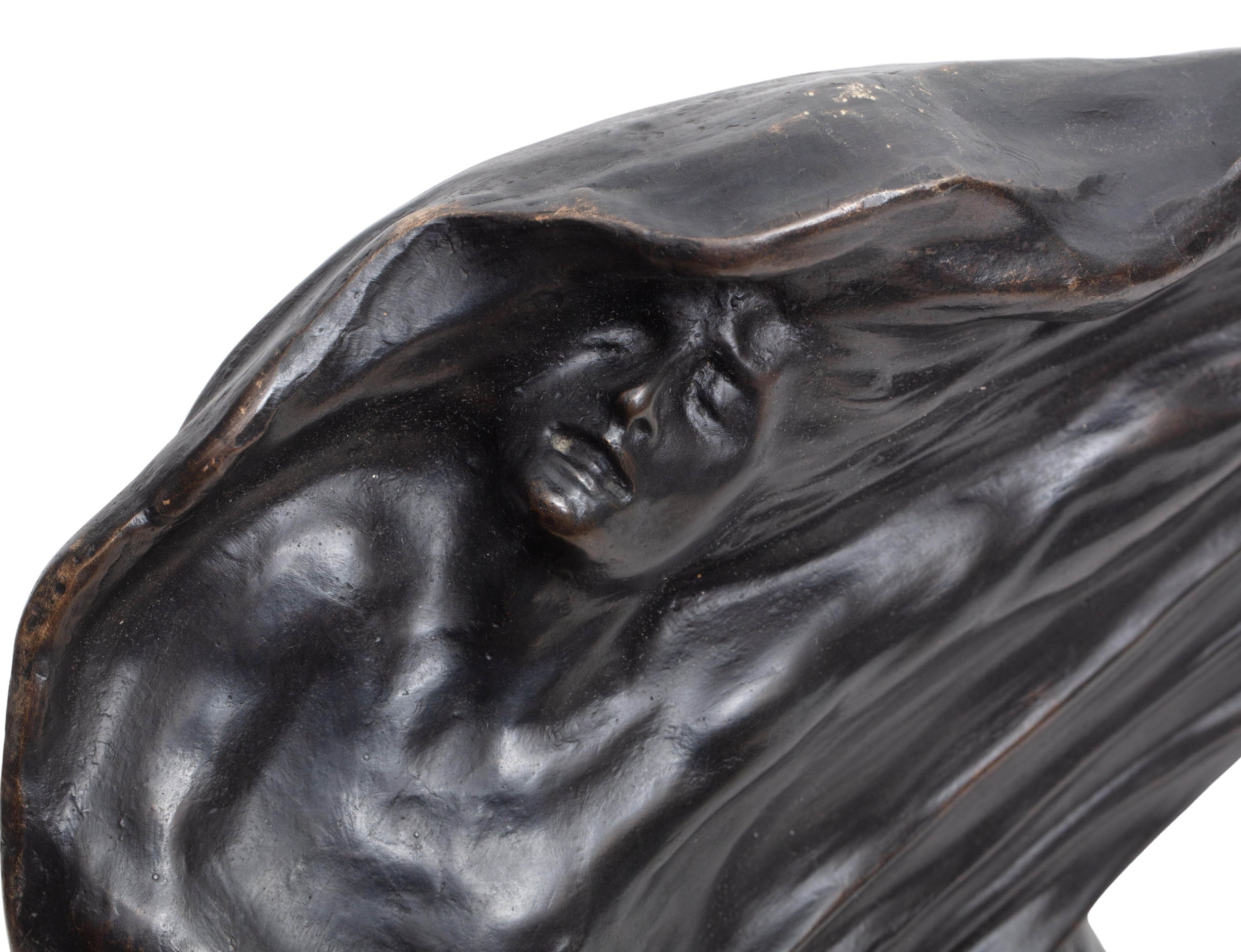
Bolesław Biegas created “Suffering” (“La Vie blessée”) at a time when the artist—the sculptor—was shifting the direction of his work. After 1903, Biegas moved away from linear and geometric works, and the undulating Art Nouveau line began to appear in his style. The fluid wave and its variations—used to convey expression both in the modeling of busts and in the symbolic depiction of emotions, states of the human soul, and the full weight of human life—became the leitmotif of the sculptures created during this period. A face submerged in the mass, tossed about in the depths of pain and suffering, creates an image of human fate that is sophisticated in its reception yet unsettling in its form.
The sculpture comes from the collection of Alicja and Stanisław Jonas. Stanisław Jonas was born in Warsaw. During the war, as a six-year-old child, he was sent to the Warsaw Ghetto. After the war, he graduated from the Medical Academy and earned a doctorate in analytical chemistry. In the 1960s, he moved with his wife, Alicja, to the United States, where he began collecting Polish art. He purchased his first painting by Stanisław Eleszkiewicz from Zbigniew Legutko. Over time, this passion grew into the creation of a significant collection of Polish paintings and sculptures. The Jonas couple built up a vast collection of Polish paintings and sculptures, which remained dear to their hearts until the end of their lives. (based on: Czesław Czapliński, “Kolekcje sztuki polskiej w Ameryce / Polish Art Collections in America,” Fundacja Dobrej Książki, 2005).
The sculpture “La Vie blessée” was cast in 1983 at the Blanchet-Landowski foundry in Paris, one of the leading workshops in French artistic casting. The foundry’s history dates back to the 1920s, when Armand Blanchet, an engineer associated with the École des Arts et Manufactures, took over the former bell foundry at 237 rue Saint-Martin in Paris. In 1933, his nephew Robert Landowski, a graduate of the École des Travaux Publics, joined the company. In the second half of the 20th century, under the leadership of Didier Landowski, the foundry increasingly focused its activities on casting bronze sculptures. In 1965, bell production ceased, and the foundry began specializing in the creation of works by contemporary sculptors. Its operations encompassed all the key stages of the casting process, from preparing the mold and casting the piece, through chiseling, to patinating the surface. A key figure in the foundry’s history was Georges Gay (1930–2009), an outstanding French bronze castor who headed the Blanchet-Landowski workshop in the 1980s. In 1983, at the time the cast “La Vie blessée” was created, he served as the studio manager. Gay was among the most highly regarded French artisans specializing in artistic casting. He received the prestigious title of Meilleur Ouvrier de France (MOF), and in 1995 he was honored with the title of Maître d’art. In this context, the 1983 cast “La Vie blessée” should be regarded as a work created in a renowned Parisian studio during the period when it was under the direction of Georges Gay.








Recentemente visualizados
Efetue login para ver a lista de itens
Preferidos
Efetue login para ver a lista de itens