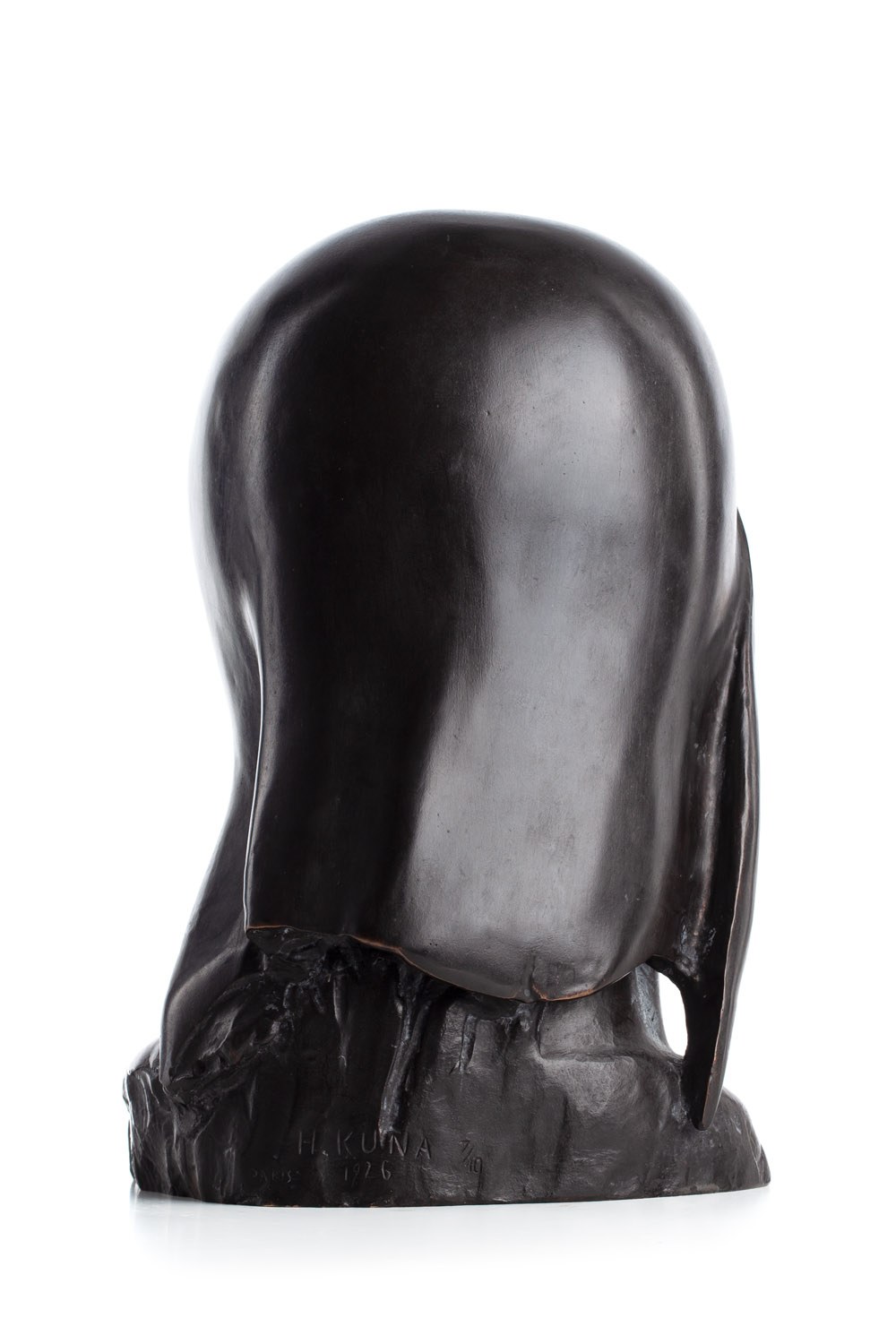
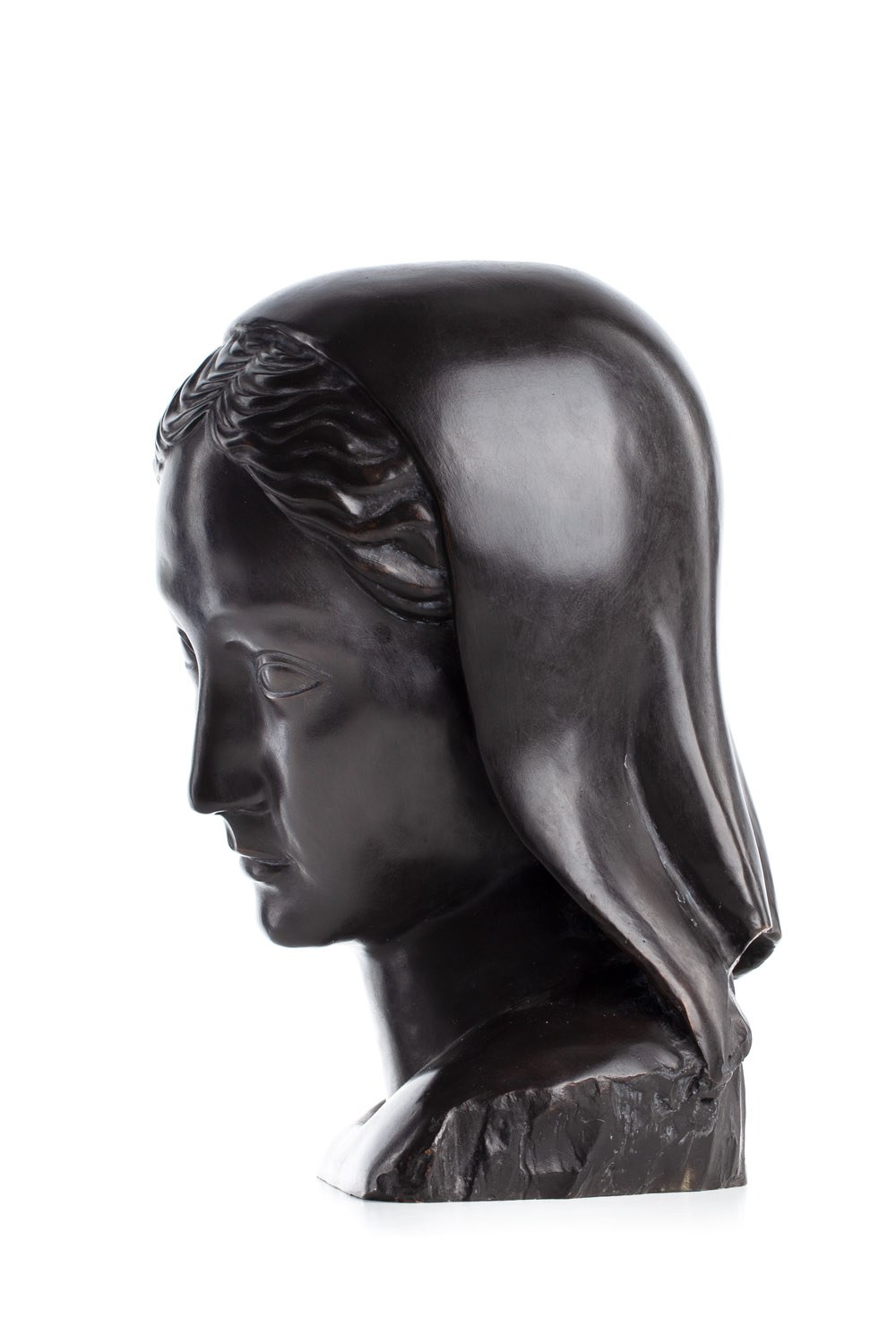
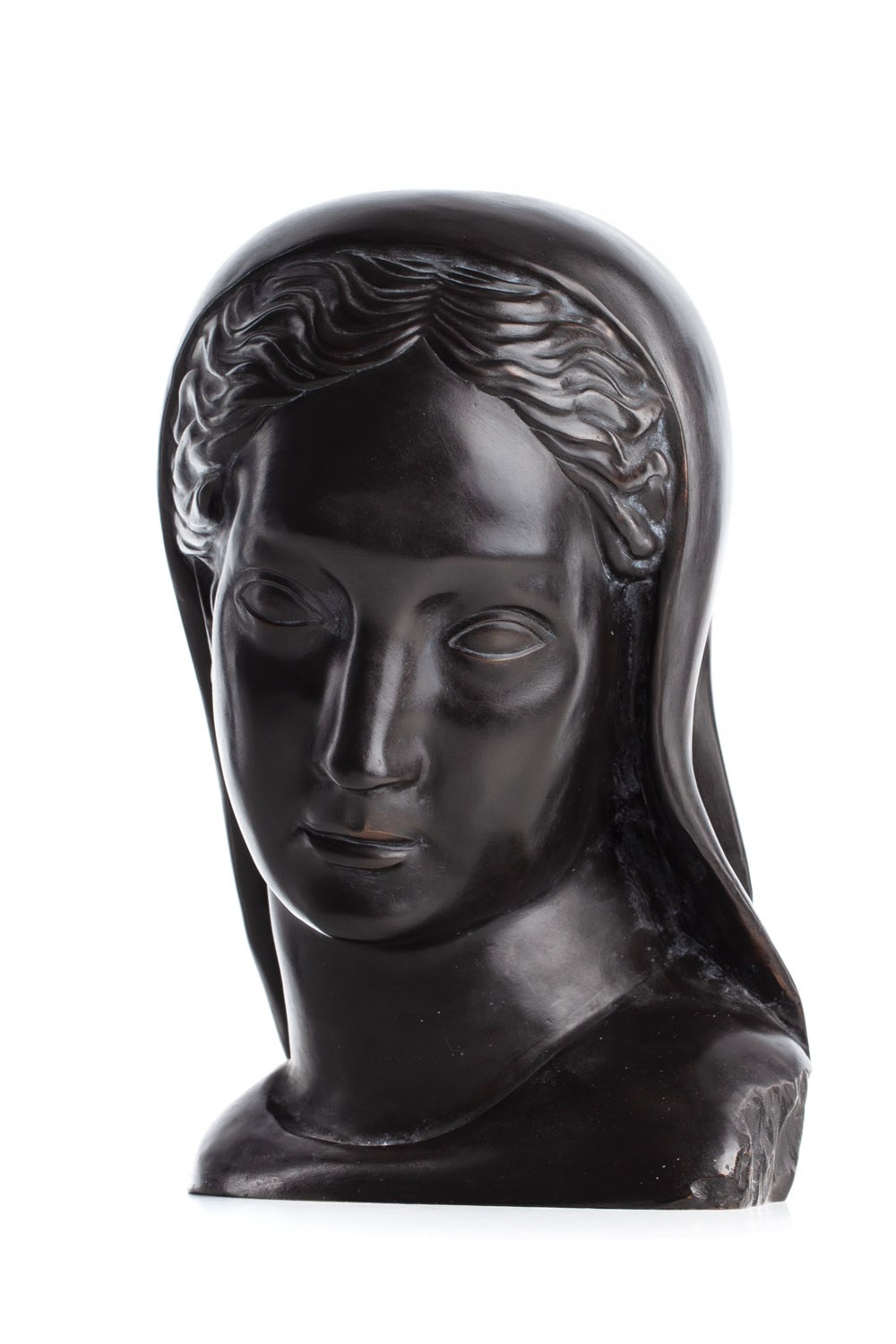
Dimensions: 33.5 x 22 x 15 cm
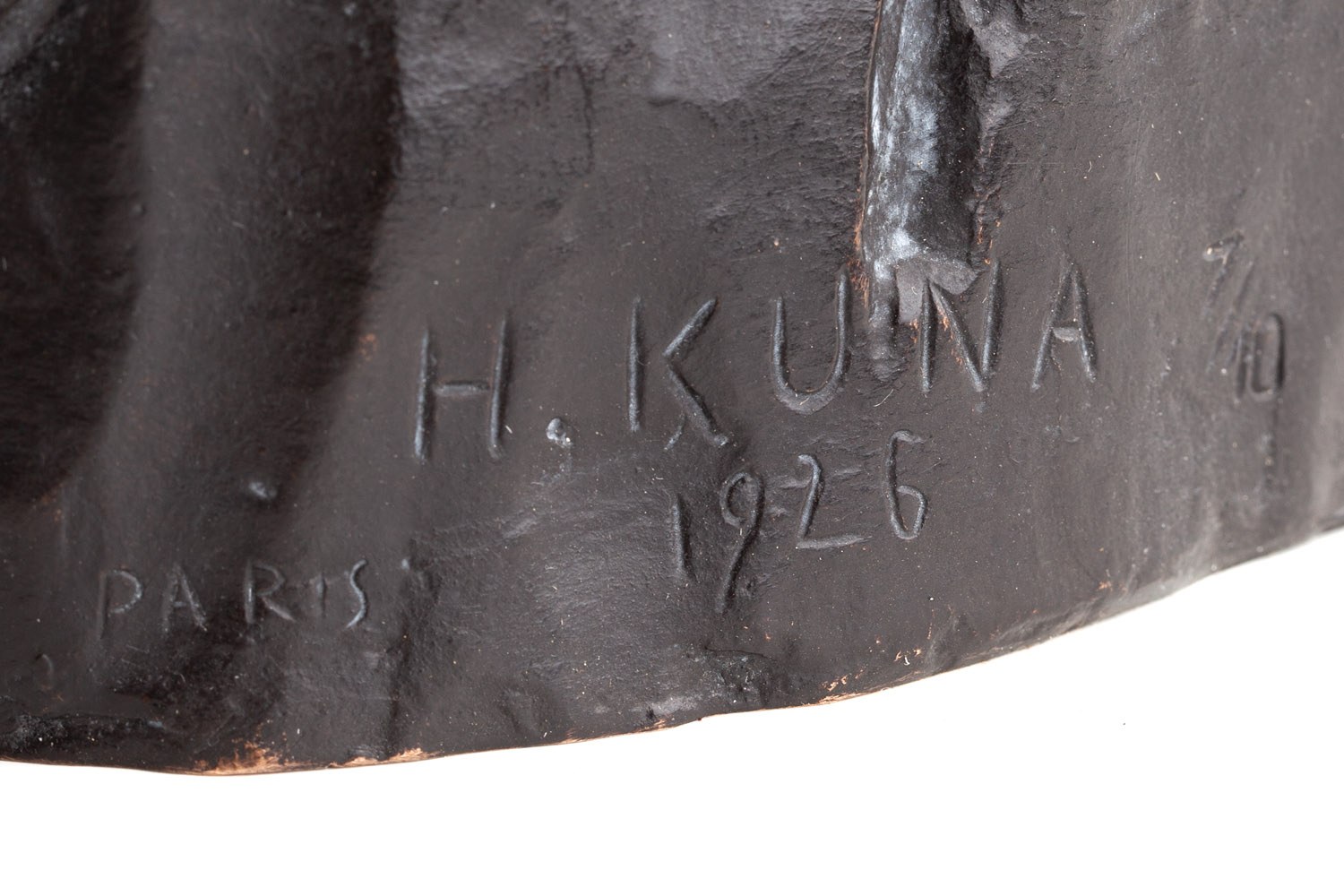
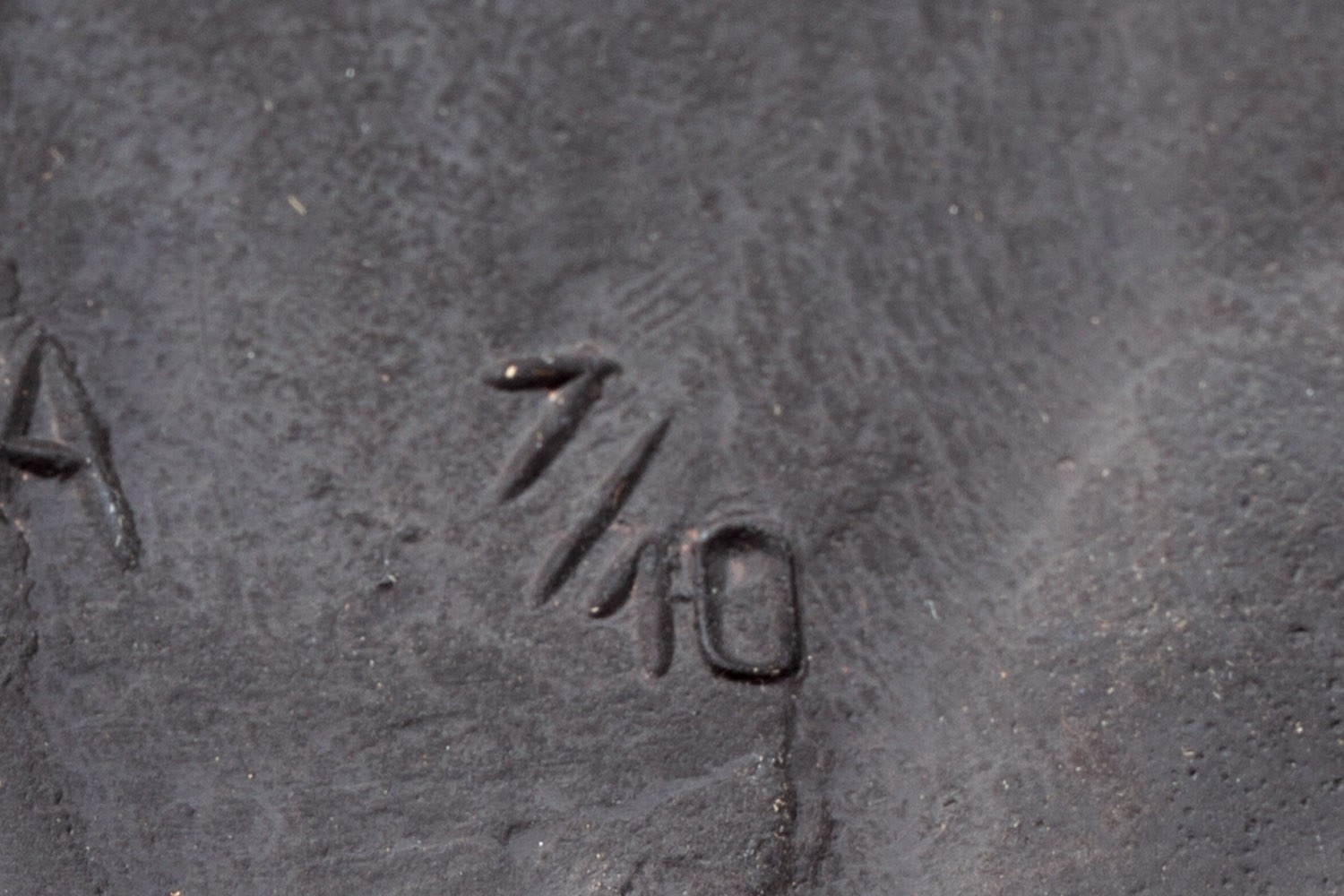
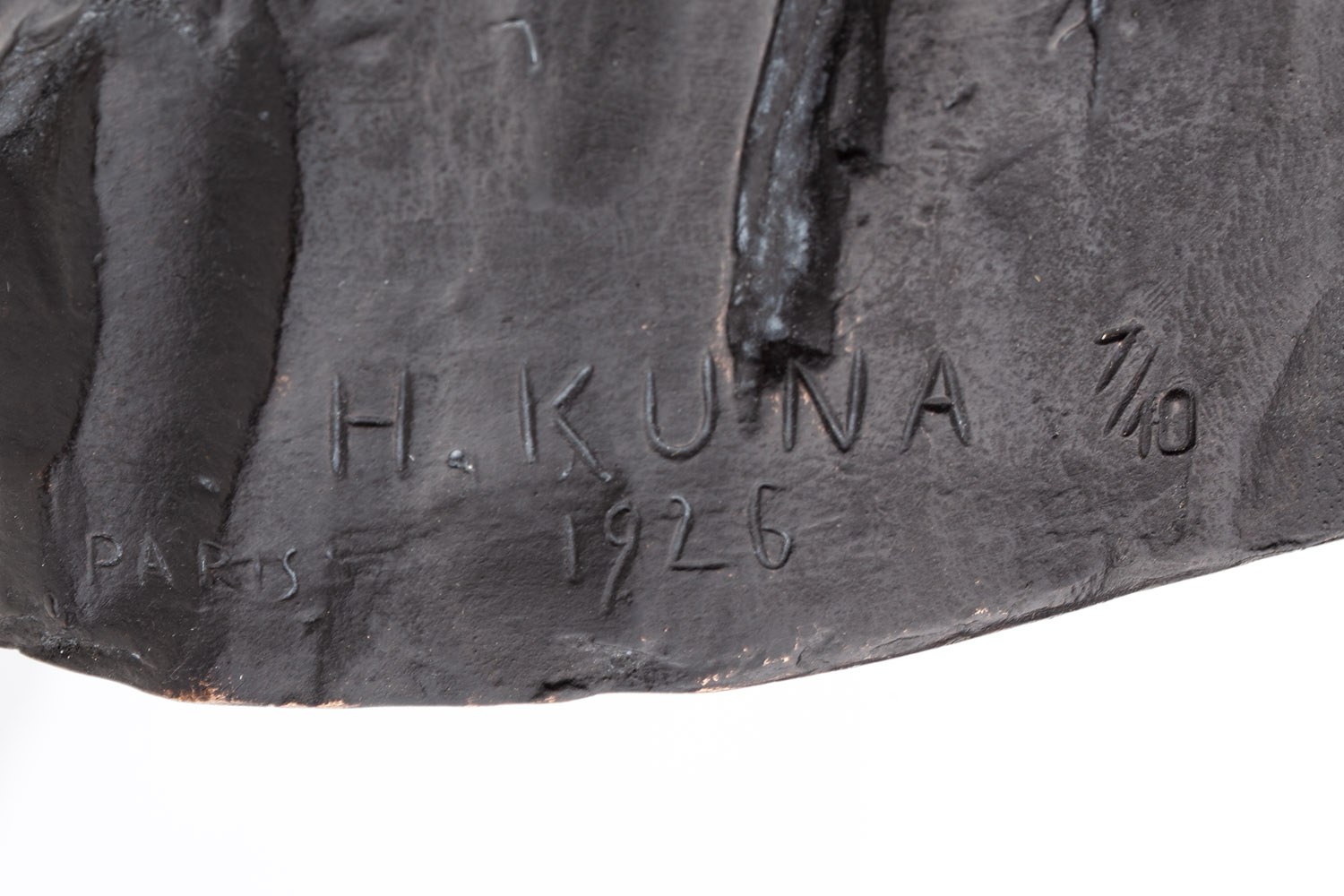
Signed, dated and described: 'H. KUNA Paris | 1926 7/10'
contemporary cast, edition: 7/10
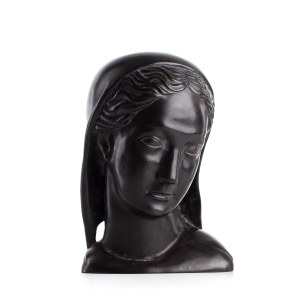
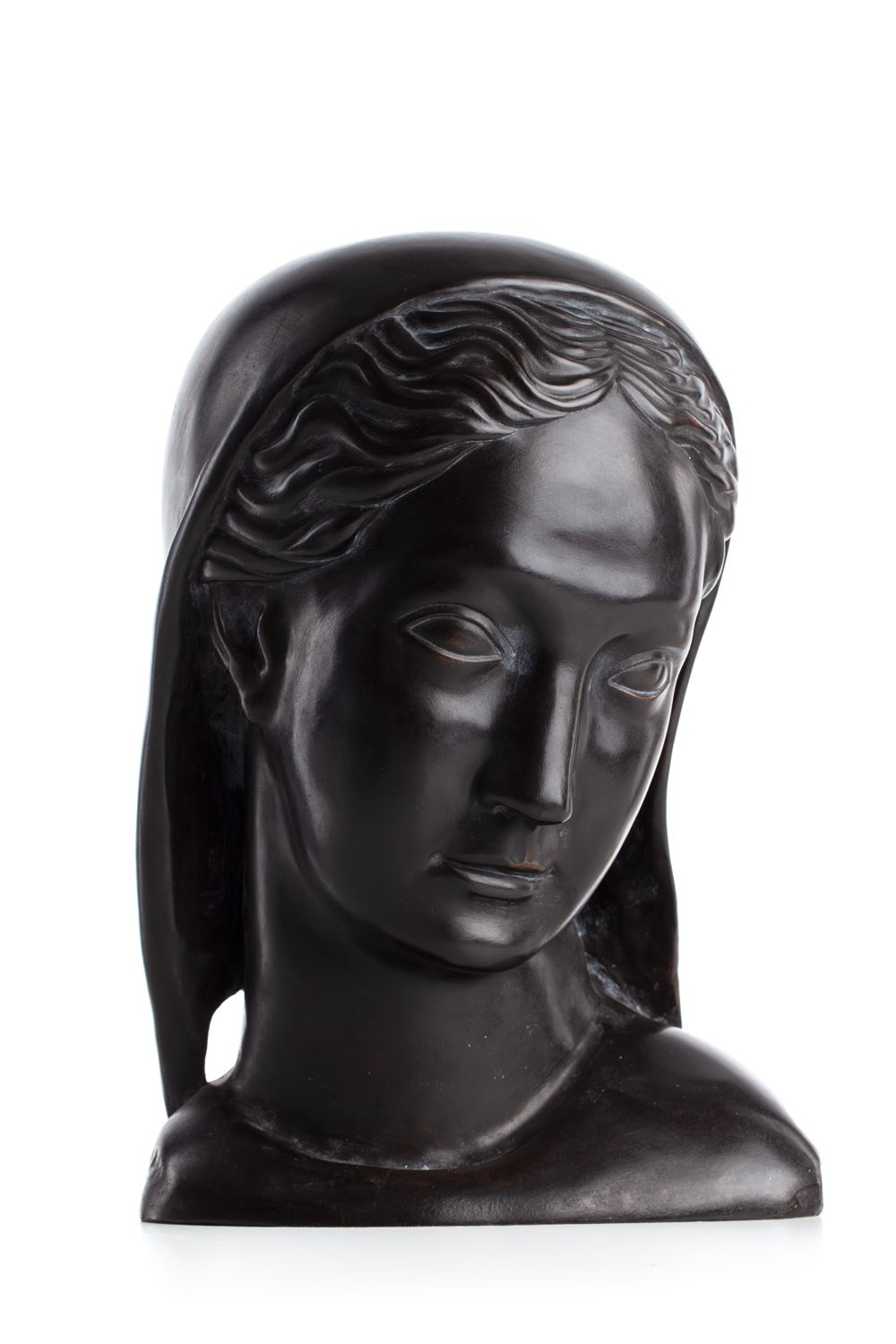
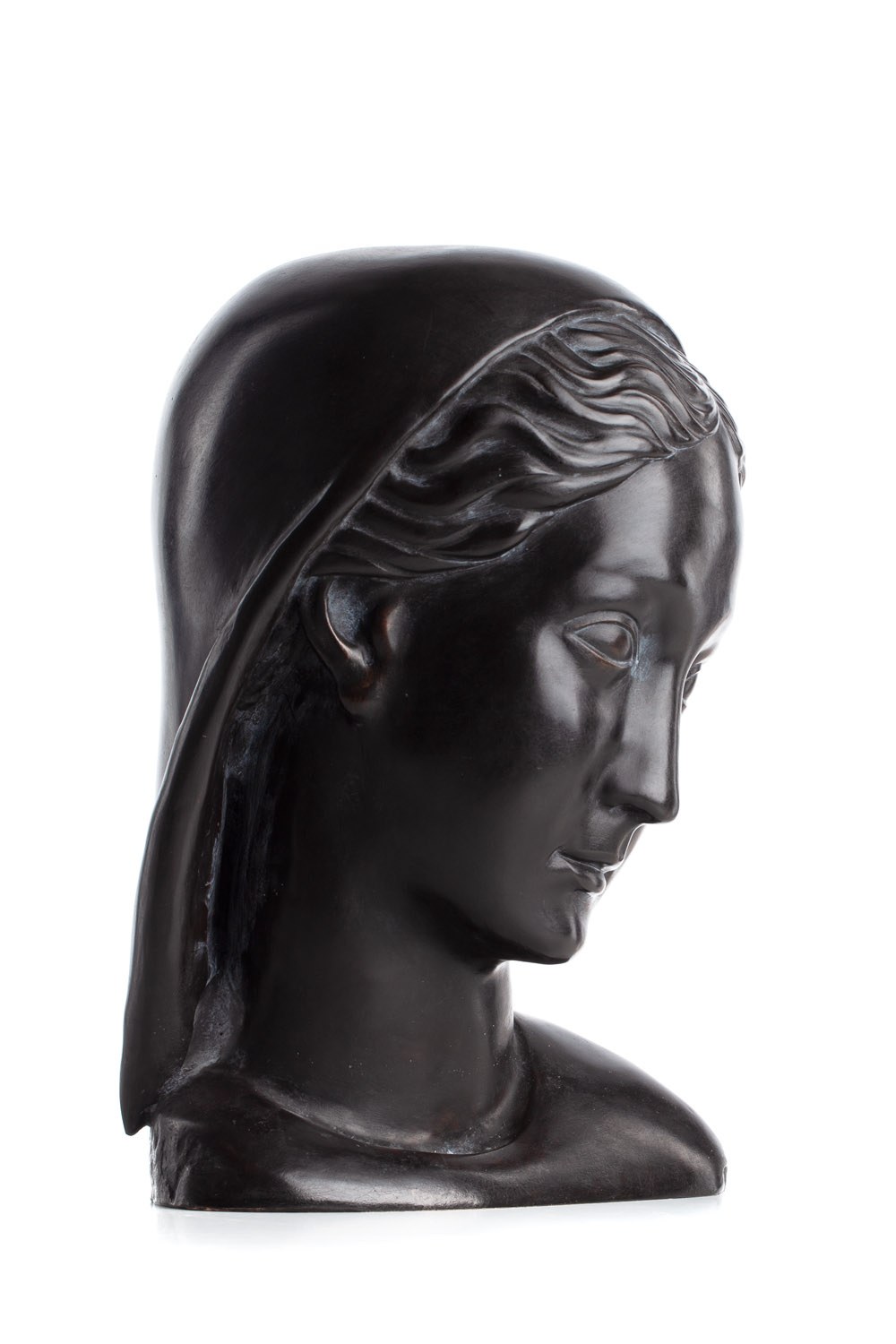
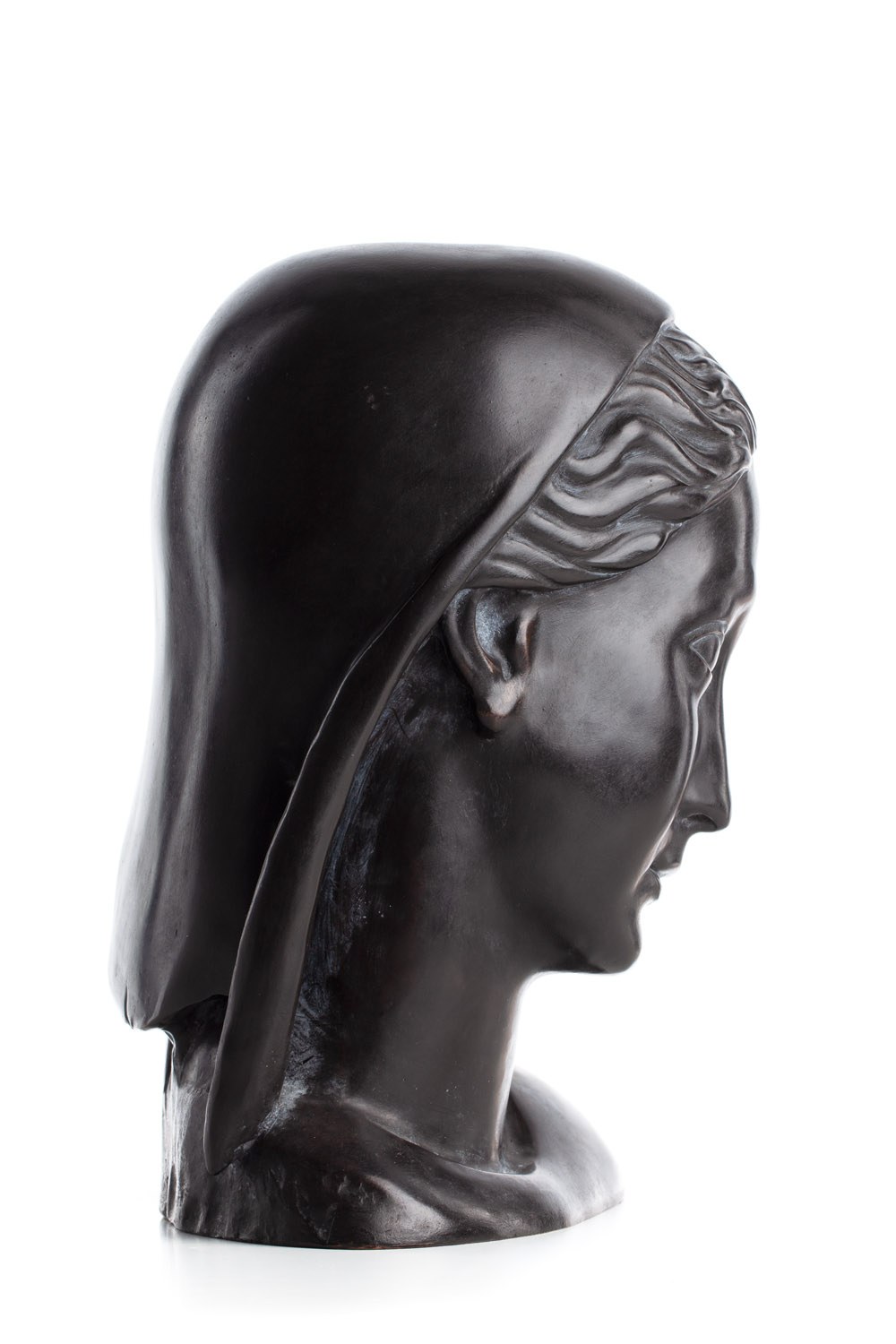
"Head of a Saint" refers to the famous "Rhythm," set up in front of the Tchaikovsky pavilion at the 1925 Paris International Exhibition of Decorative Arts. The prototype of "Head" was created a year later, in 1926, and was later shown at a group exhibition of the Society for the Encouragement of Fine Arts in Warsaw.
Literature
compare: "Fine Arts" 1931, r. 7, p. 152 (il. period cast presented at a group exhibition at the TZSP in Warsaw)
Biography
Henryk Kuna was one of the most colorful figures in the artistic world of the interwar period. The son of a rabbi, a student at a yeshiva (or rabbinical school) in Ciechanow, he learned Polish only as a teenager. Around 1900, he settled in Warsaw, where he began studying in the studio of Pius Waloński. Later, with the help of Boleslaw Biegas, he went to study in Krakow. In 1902-04 he studied with Konstanty Laszczka, and also traveled twice to Paris. In 1910 he worked as a laborer for a stonemason. During this period he created works in the spirit of Young Poland, referring stylistically to the sculptures of August Rodin and Impressionism, and later classicizing, inspired by the work of Aristide Maillol. Kuna made his debut in 1904 at Warsaw's Zachęta Gallery. In Warsaw, he also exhibited at the Garlinski Salon and the Institute of Art Propaganda. In 1912 he settled permanently in Warsaw. From 1921 he belonged to the Rhythm association and was one of the main representatives of this group. Together with Rhythm, he exhibited in the country in 1922-32 and at foreign shows of Polish art. In 1931 he won a famous competition for a monument to Adam Mickiewicz for Vilnius. Two years later, the artist presented a wooden model of a sculpture showing the bard on a pedestal in the form of a pole - the Svyatovid. Unfortunately, due to the publicity unleashed by the Vilnius weekly "Słowo", the realization of this monument, undoubtedly one of the most interesting in the interwar period, was abandoned. In 1936 Kuna took over the chair of sculpture at the Faculty of Fine Arts of Stefan Batory University in Vilnius. At the same time he worked in Warsaw - his studio was located on Czackiego Street.