


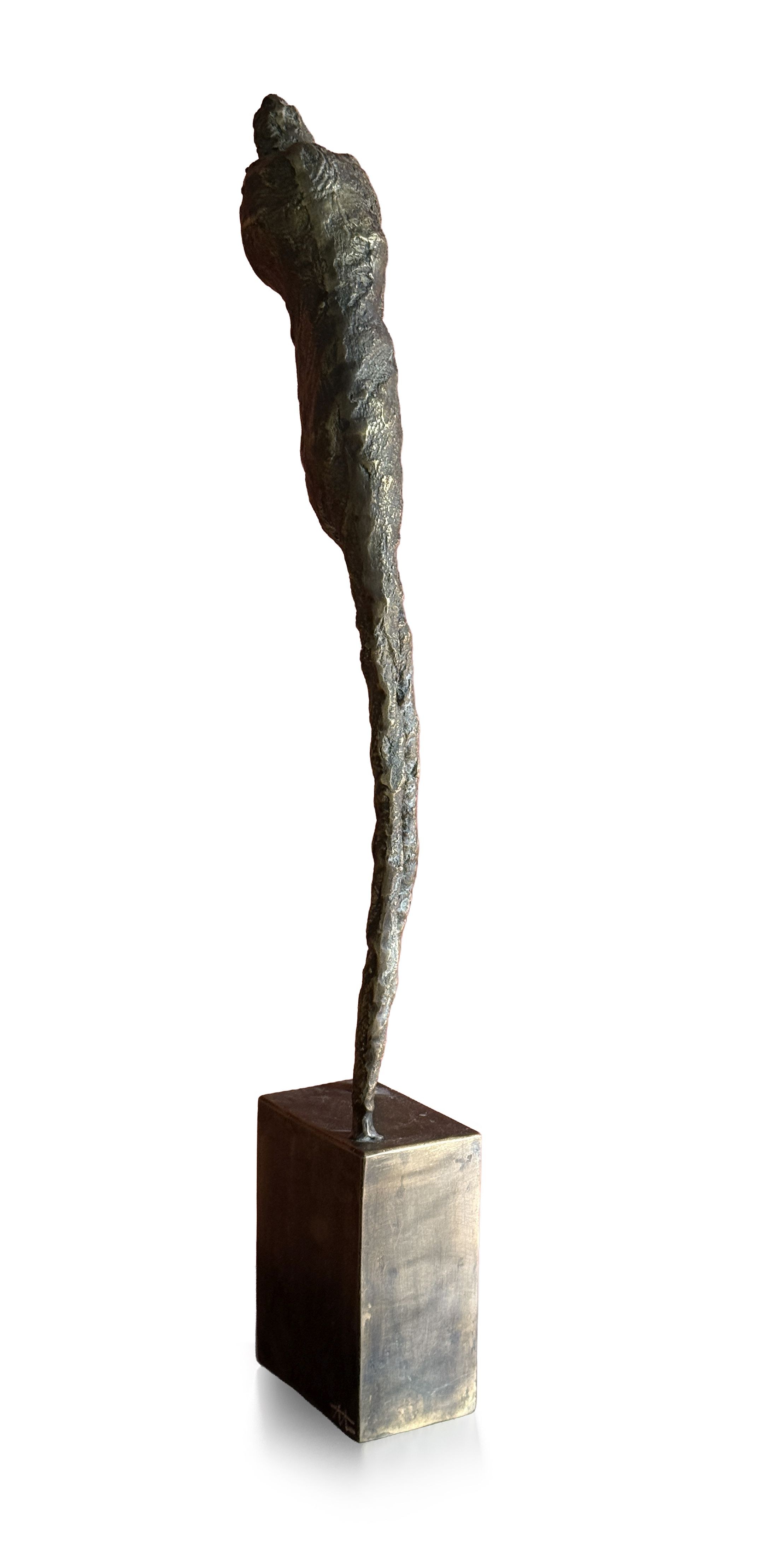
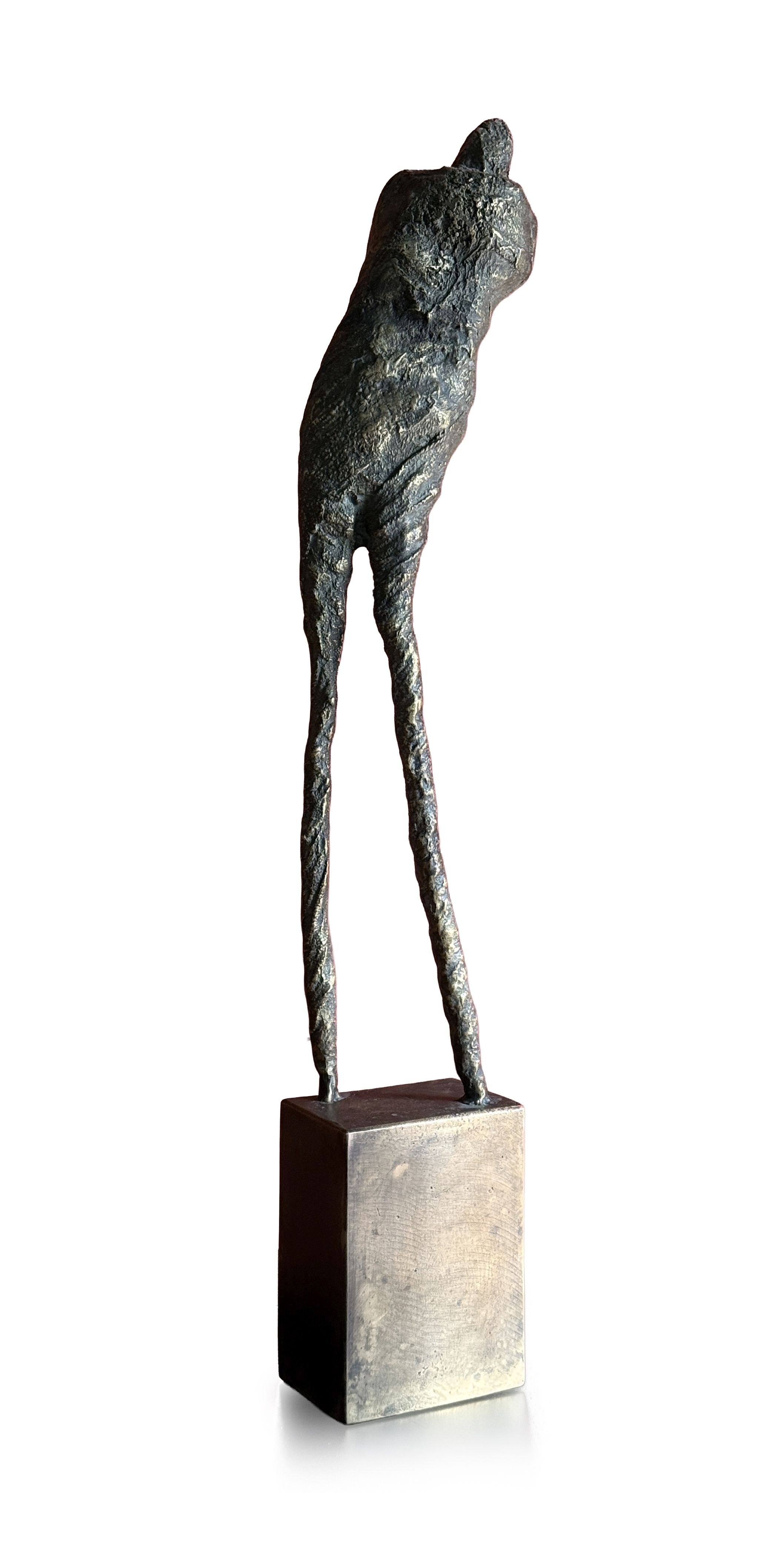
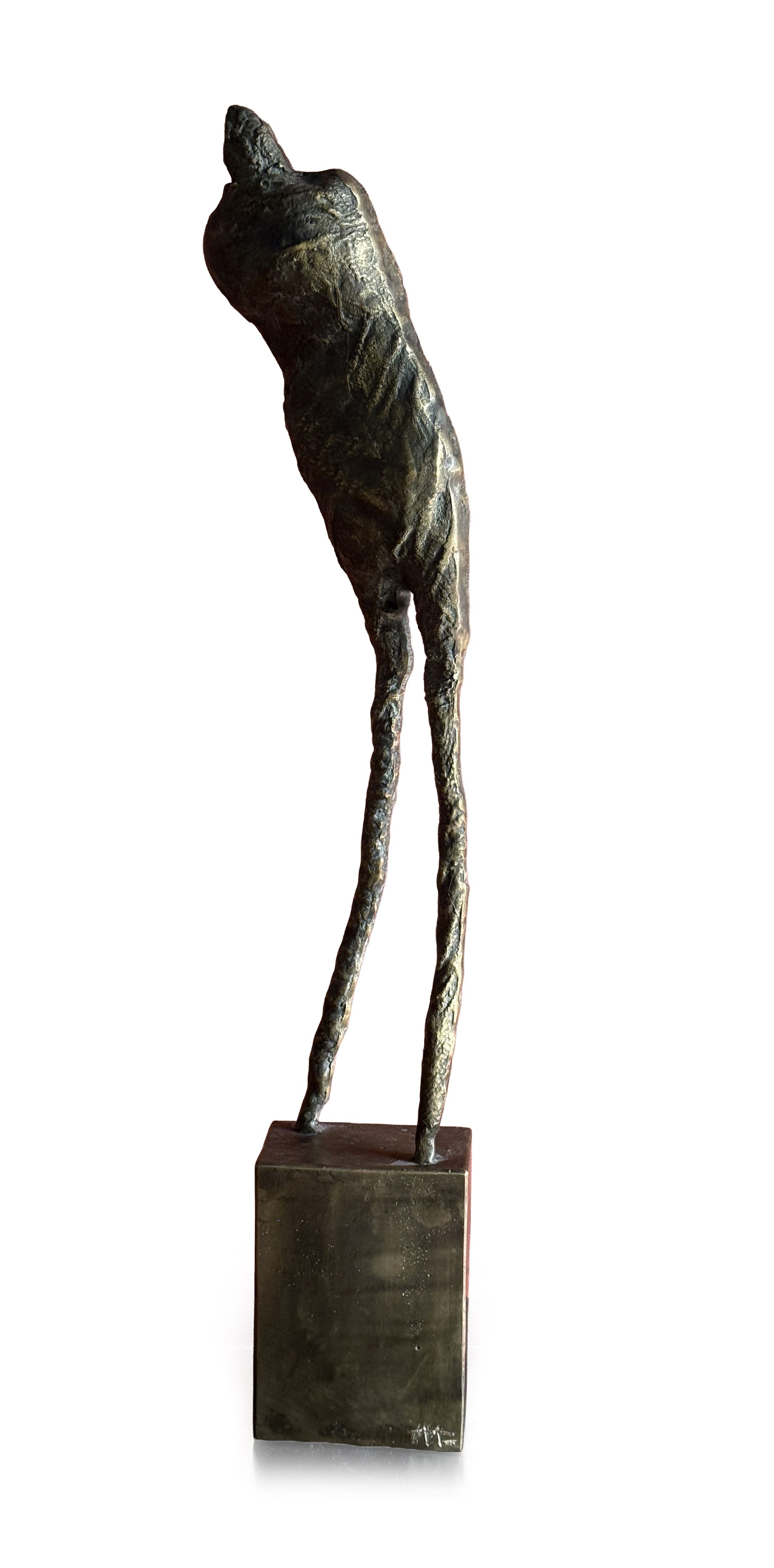
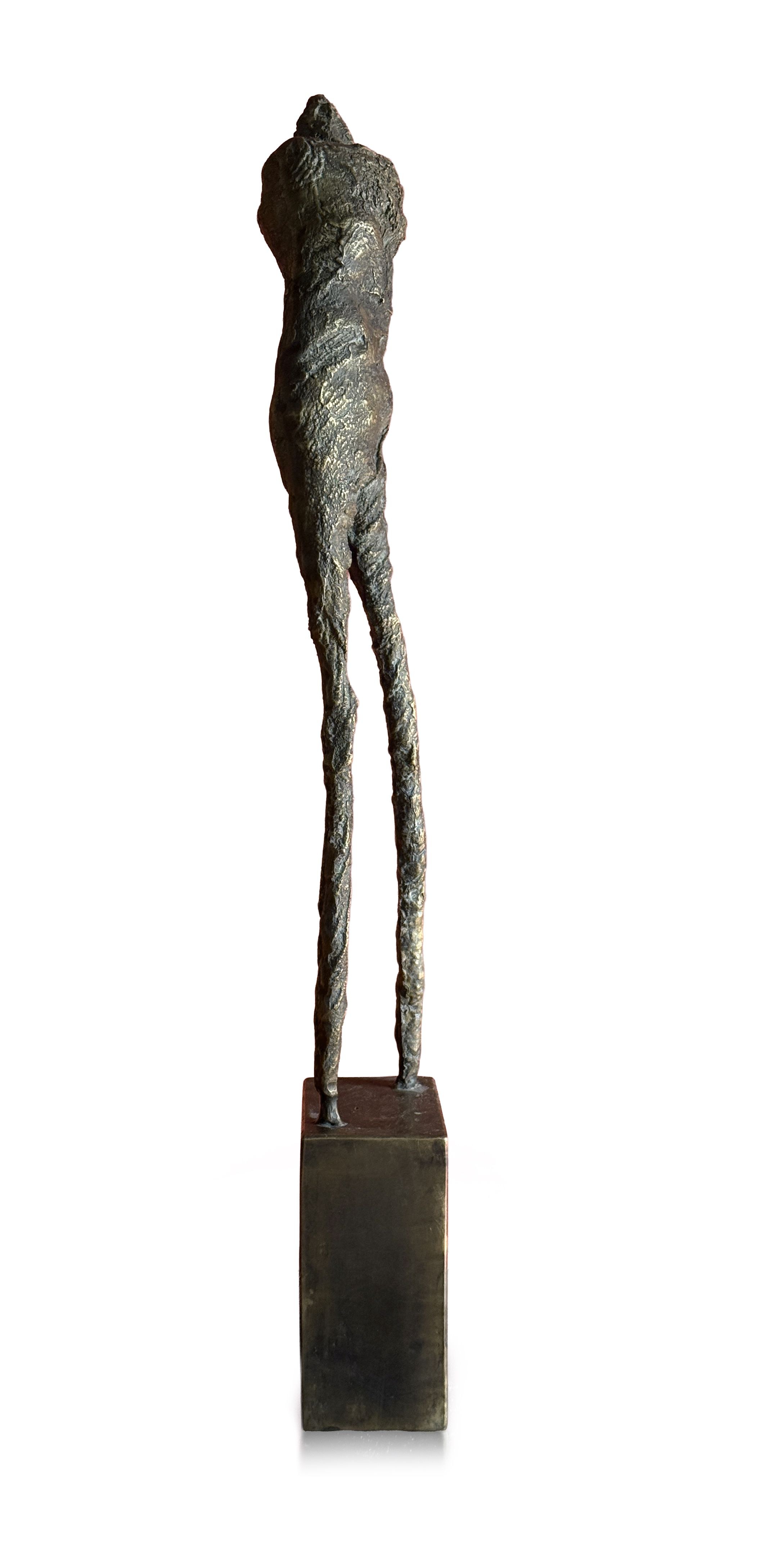
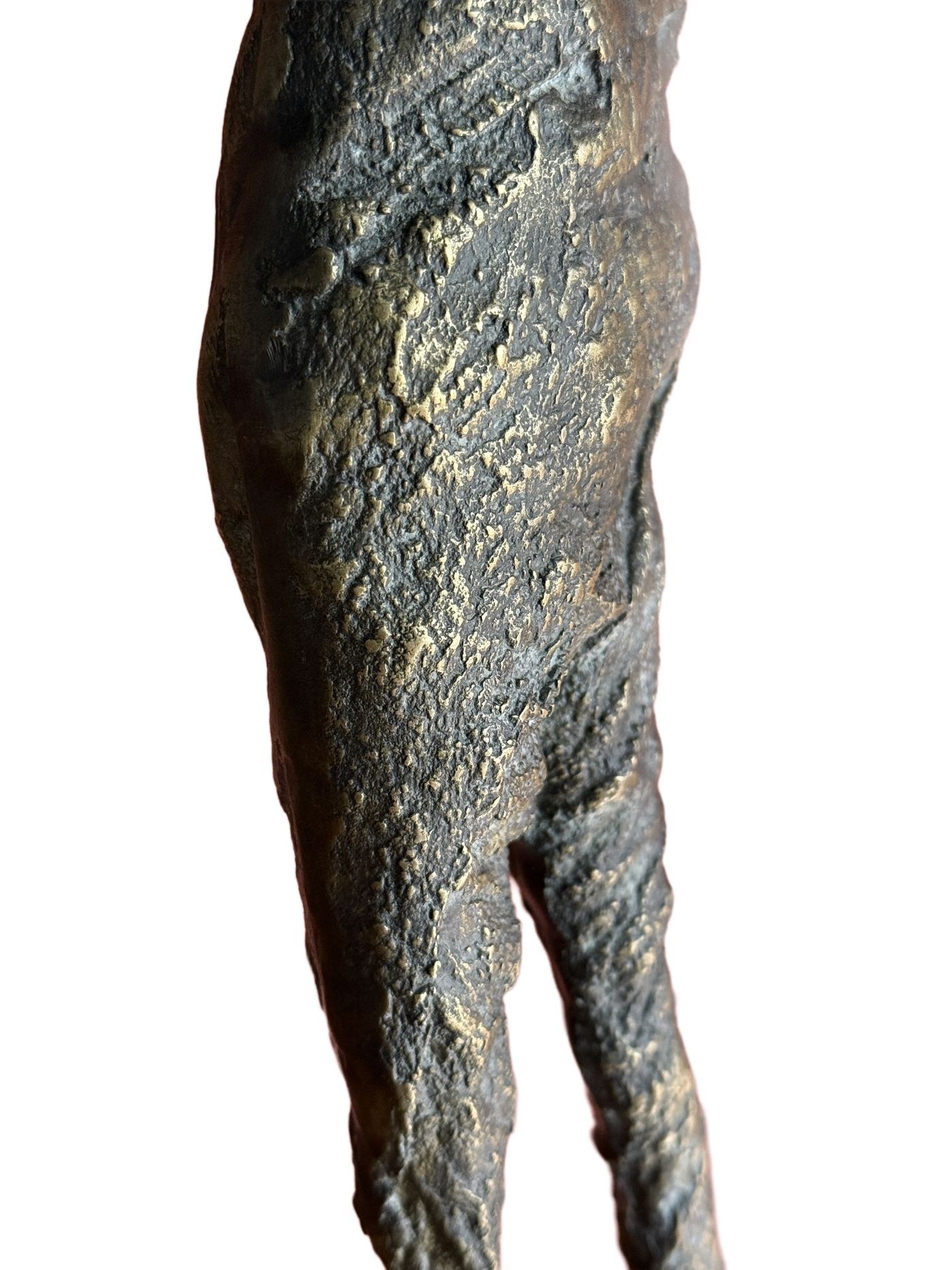
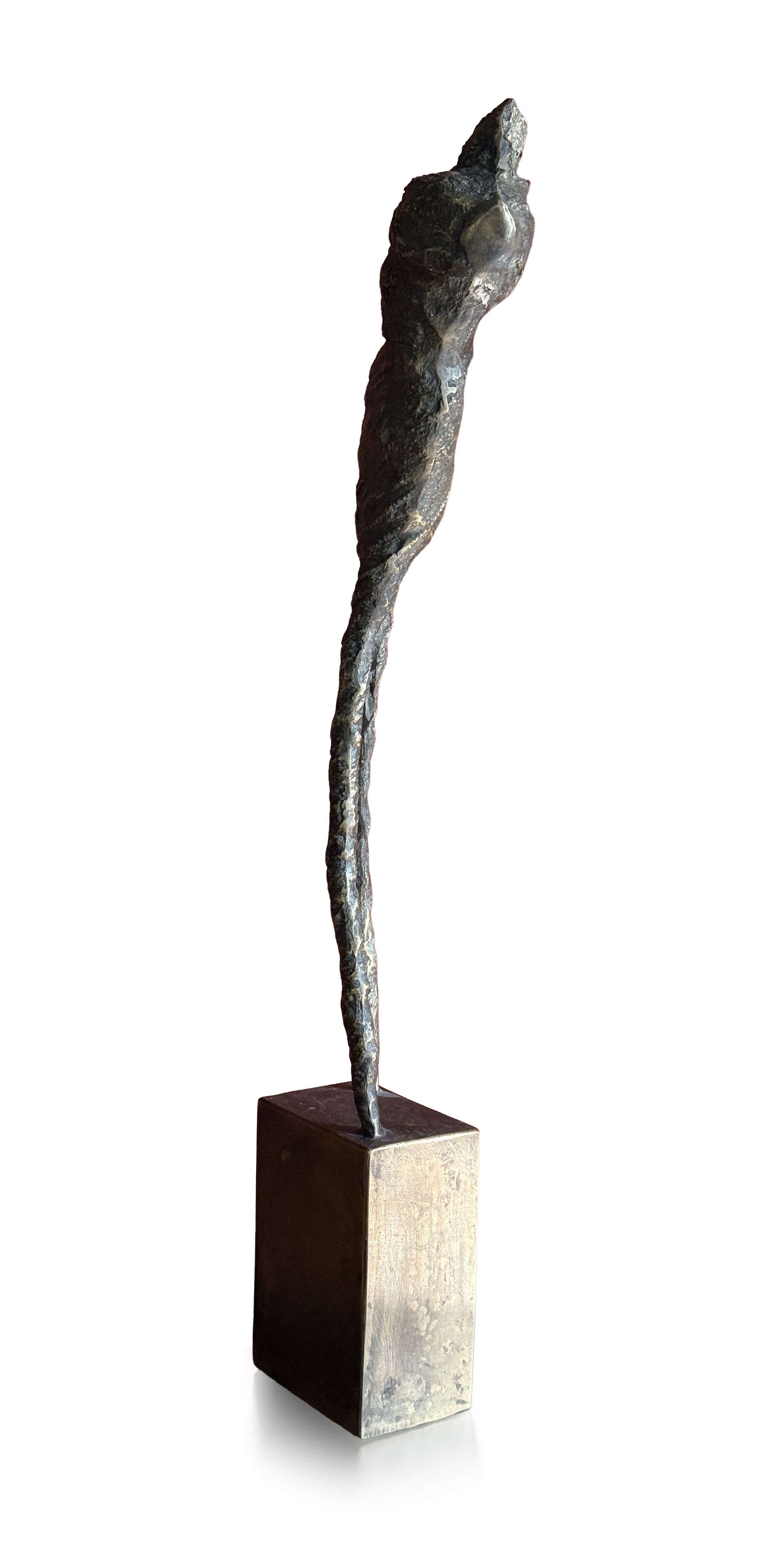
patinated bronze, metal base (bronze), 63 x 12 x 7 cm, 2/2, signed on the base
Born in 1976 in Warsaw, he is a sculptor, designer, and creator of public art installations. He graduated from the State Secondary School of Fine Arts in Kielce and subsequently from the Academy of Fine Arts in Warsaw. He received his diploma in 2001 from Prof. Adam Myjak’s Sculpture Studio, earning the Rector’s Distinction. Later, he continued his academic and artistic work as a doctoral student at the Faculty of Graphic Arts at the Academy of Fine Arts in Warsaw.
Mateusz Łagowski’s work centers on sculpture, the design of spatial forms, and projects that combine art with craftsmanship and production technology. In his work, he uses various materials and techniques, creating both original sculptural objects and functional and decorative forms, as well as designs for interiors and public spaces. His practice encompasses the design, modeling, and creation of artistic and applied objects. He is also publicly recognized as an artist who collaborates on solutions for interior design and television programs.
Domestic and international exhibitions occupy a significant place in Mateusz Łagowski’s artistic body of work. Among the most important presentations of his work are exhibitions at the Center for Polish Sculpture in Orońsko, the Generali Gallery in Warsaw, the BWA in Kielce, Królikarnia in Warsaw, the Church of Creative Communities in Warsaw, the Studio Gallery in Warsaw, as well as his participation in the “Sensitivity” International Sculpture Triennial in Poznań and the DAP in Warsaw. His works have also been exhibited abroad, including in Slovakia, Lausanne, Sydney, Berlin, and Amsterdam. The artist has also participated in sculpture symposia, including “Wind” and “Four Elements—Birds” in Lučenec-Keramik, Slovakia.
For his creative work, he has been honored with, among other awards, the Silver Laurel of the Polish Olympic Committee for the sculpture “Weights,” recognized as an outstanding work on the theme of sports. He also received an honorable mention for his design of the “Guardian Angel of the Polish Nation” monument in Warsaw. Information regarding the awarding of the Silver Laurel is also confirmed in a publication by the Polish Olympic Committee.
Another significant area of Mateusz Łagowski’s work involves projects in public spaces. Among his notable works are “Polish Proverbs” in Izabelin, “Square of the Four Bards” in Radzymin, and works related to the “Four Elements” project in Mrągowo. This work combines his original sculptural expression with the creation of enduring forms that function within the open urban and social landscape.
At the same time, Mateusz Łagowski is expanding his activities at the intersection of art, design, and artistic craftsmanship, establishing himself as an artist who combines artistic expertise with practical knowledge of production processes. As a result, his work encompasses both classical sculpture and individual, exhibition, and functional projects commissioned by private, institutional, and commercial clients.
Motto
In my work, I am interested in sculpture as a form that does not so much represent reality as interpret it. My starting point is specific concepts, experiences, and observations, which, in the course of my work, are reduced to a sign, a solid form, tension, and spatial relationships.
I do not seek literalism. I am more interested in the moment when a form begins to function on several levels simultaneously—it remains an autonomous object, yet it also triggers associations and allows the viewer to establish a personal relationship with it. That is why my sculptures are not illustrations of the themes contained in their titles. The title is rather a direction, a point of reference, and sometimes an impulse for interpreting the work.
I am drawn to the tension between organic form and a synthetic, almost geometric order. I often use cracks, openings, intersections, or voids, as they allow me to break the obviousness of the solid form and give it an internal dynamism. I am also interested in the relationship between the weight of the material and the impression of movement or lightness that the form itself can evoke.
For me, the material has not only technical significance but, above all, artistic significance. Its surface, texture, method of preparation, and traces of the creative process shape the character of the object just as strongly as its shape. I do not seek to neutralize the material—on the contrary, I want it to retain its own presence and contribute to the meaning of the work.
My sculptures straddle the line between abstraction and symbol. I am not interested in subordinating them to a single style or fitting them into a predefined framework. What matters more to me is consistency in developing my own formal language—one that allows me to combine simplicity with tension, materiality with idea, and compositional clarity with the possibility of diverse interpretations.











Recentemente visualizados
Efetue login para ver a lista de itens
Preferidos
Efetue login para ver a lista de itens