


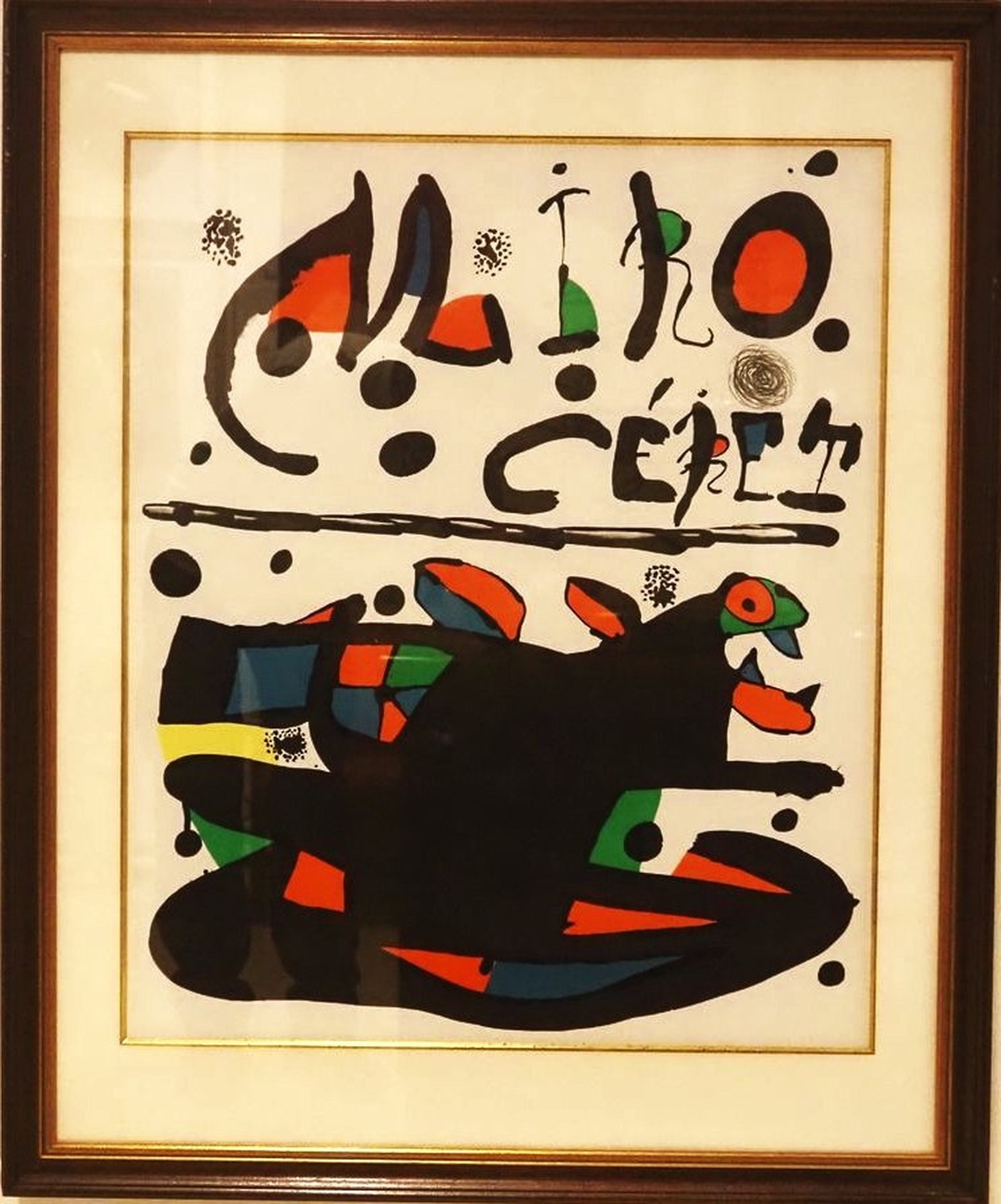
Color lithograph, 60 x 51 cm (original sheet 63.2 x 52.5); mounted in a frame measuring 87 x 71 cm
The words “Miro CERET” are incorporated into the design; Edition of 2,000 copies
Publisher: Museum of Modern Art in Céret (Musée d’Art Moderne de Céret)
Printer: Arte Adrien Maeght, Paris
References: Catalogue raisonné, Patrick Cramer, *Der Litographe 1976–1981*; Weber, Geneva, 1992; vol. VI; no. 1120; p. 46
Miró designed and created the above-mentioned composition for his own exhibition at the Museum in Céret in 1977. This work dates from Miró’s late period, characterized by a radically simplified form: Here we see a black, almost “monstrous” yet joyful figure, which may symbolize primal energy or the Catalan spirit.
The inscription “Miró à Céret,” written in the artist’s own hand, is an integral part of the composition, lending it a personal, even intimate character—an invitation into his world.
Céret is a small town in the French part of Catalonia (Eastern Pyrenees). In the early 20th century, it became a center of the international avant-garde—Picasso, Braque, and Juan Gris were among its regular visitors. For Miró, who was a proud Catalan, Céret was a place that bridged the French art scene with his native culture. Céret is a town of immense significance for modern art (often called the “Mecca of Cubism”), and Miró had strong ties to the region and its museum.
Original, large-scale lithographs by Miró are extremely rare on the Polish art market.










Recentemente visualizados
Efetue login para ver a lista de itens
Preferidos
Efetue login para ver a lista de itens