


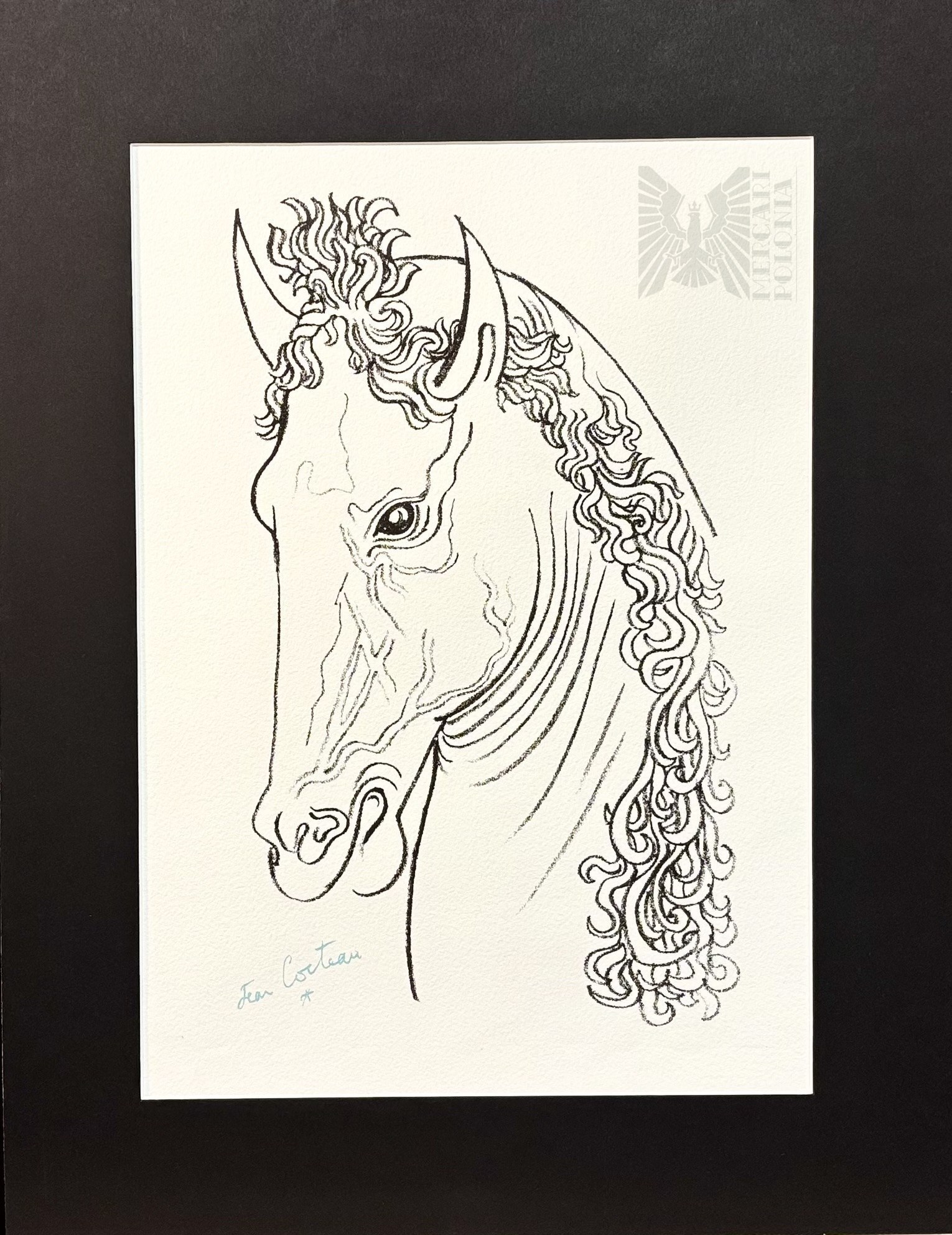
Lithograph, Arches vellum paper, 37 x 26 cm inside a 48 x 37 cm passe-partout; signed on the stone, lower left: “Jean Cocteau”;
publisher: Société de Diffusion Artistique.
Jean Cocteau (1889–1963) was an extraordinarily versatile artist—a poet, filmmaker, painter, and draftsman. His work is characterized by a deep passion for symbolism, mythology, and animals, especially horses.
The work was created in 1961 as part of a portfolio titled “Gitans et Corridas” (Gypsies and Bullfights), published by Société de Diffusion Artistique. Cocteau loved to draw horses and did so frequently. They were one of his favorite and most recognizable motifs, carrying deep symbolism and forming an integral part of his multifaceted body of work. Cocteau developed a highly distinctive drawing style, based on fluid, dynamic lines and simplicity of form. He was able to capture the essence of a figure, movement, and emotion with just a few precise strokes. This “economy of means” became his trademark. His drawings played a key role in the return to classical themes in modernism, especially in the 1920s. He combined antiquity with modernity, fantasy with reality.
His graphic works are regularly exhibited in major museums and galleries around the world, underscoring their artistic significance. Exhibitions often focus specifically on his work as a draftsman, designer, and illustrator. Jean Cocteau was not only a poet, prose writer, playwright, and visual artist, but also an outstanding film director. His contribution to cinema—especially to the avant-garde and surrealist movements—is extremely significant and highly regarded. His films, such as *The Blood of a Poet* (Le Sang d’un poète, 1930)—an avant-garde experimental film—is considered one of the most important Surrealist films.
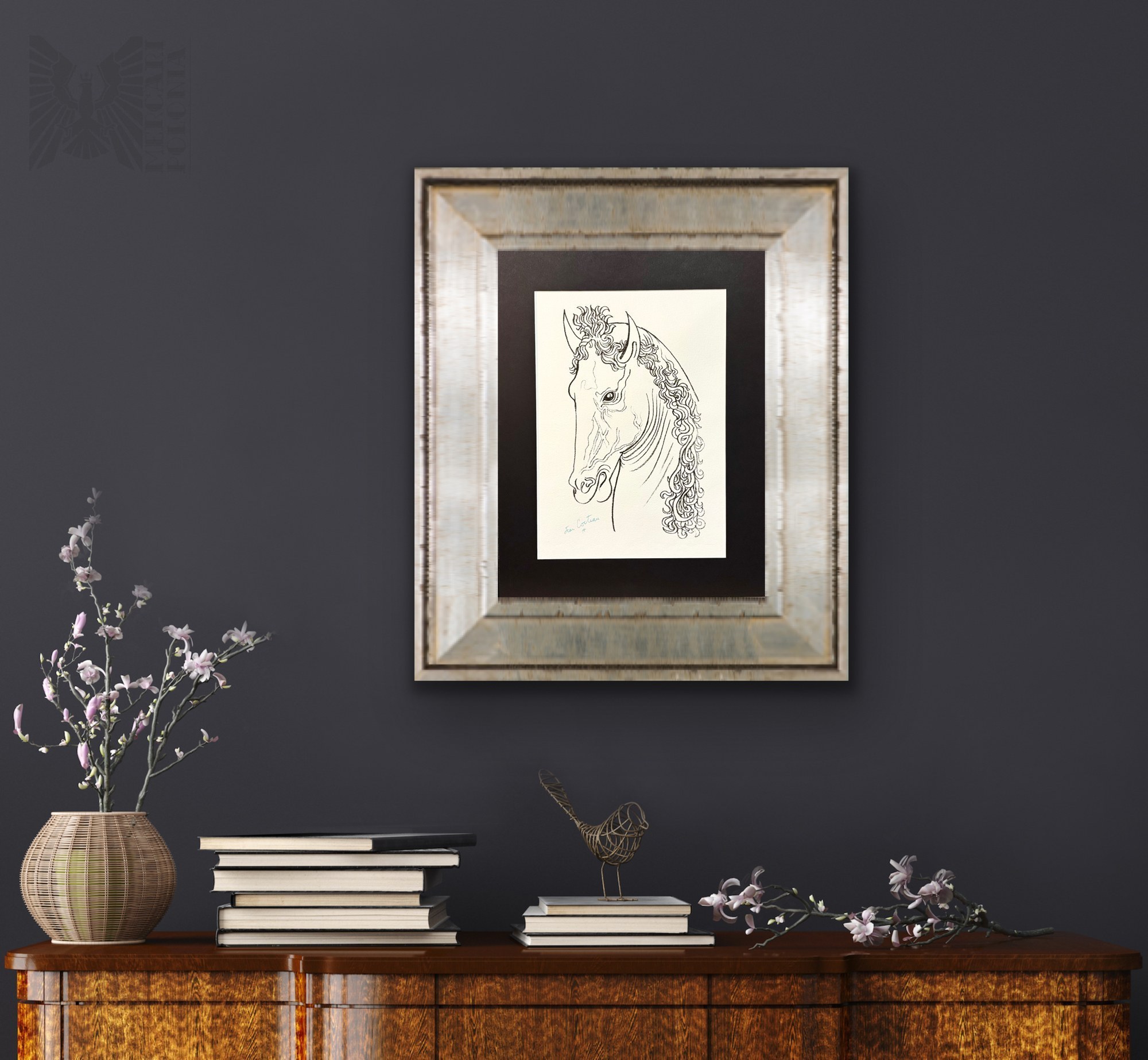
The frames shown in the visualizations are for illustrative purposes only and do not constitute a commercial offer.











Recentemente visualizados
Efetue login para ver a lista de itens
Preferidos
Efetue login para ver a lista de itens