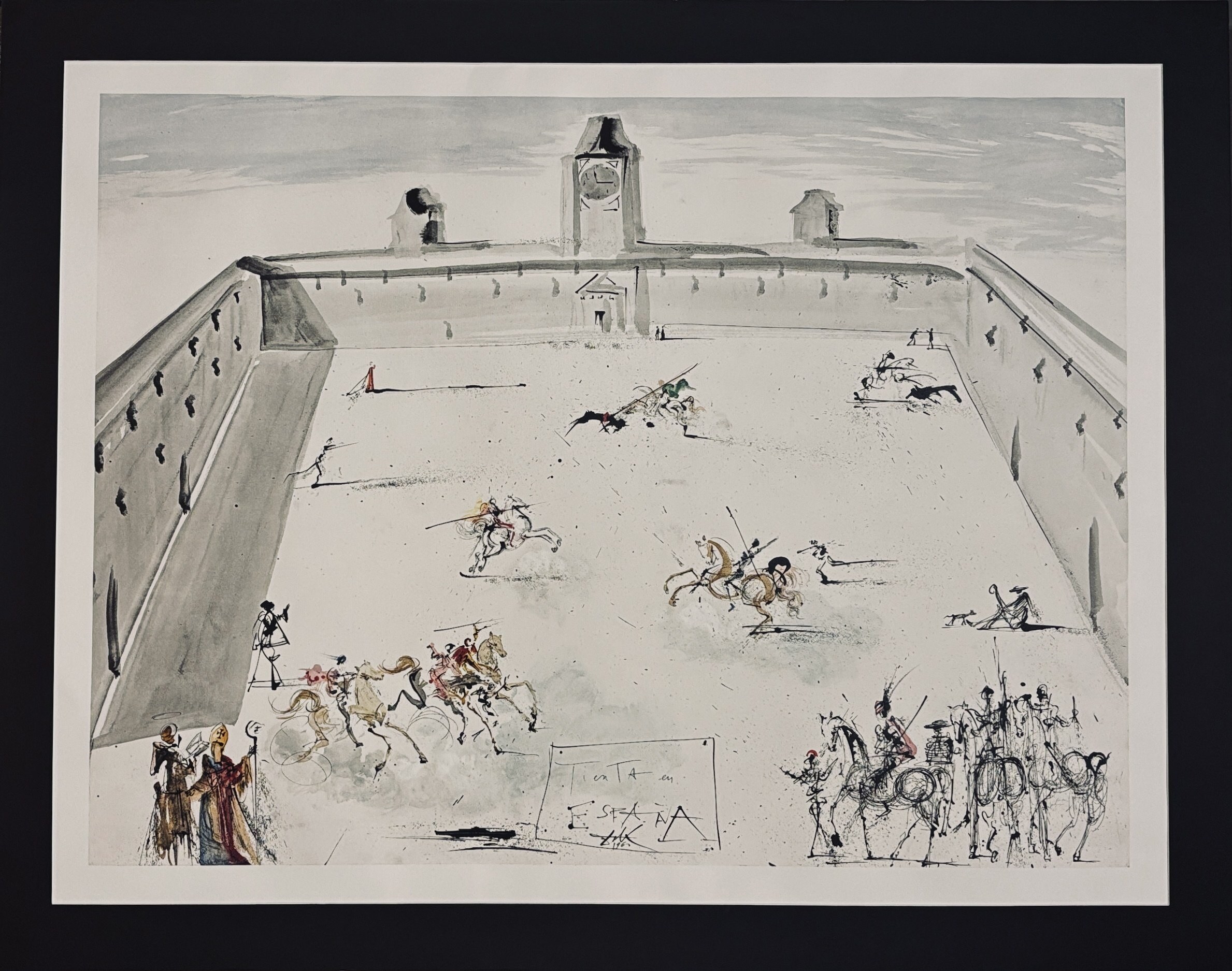
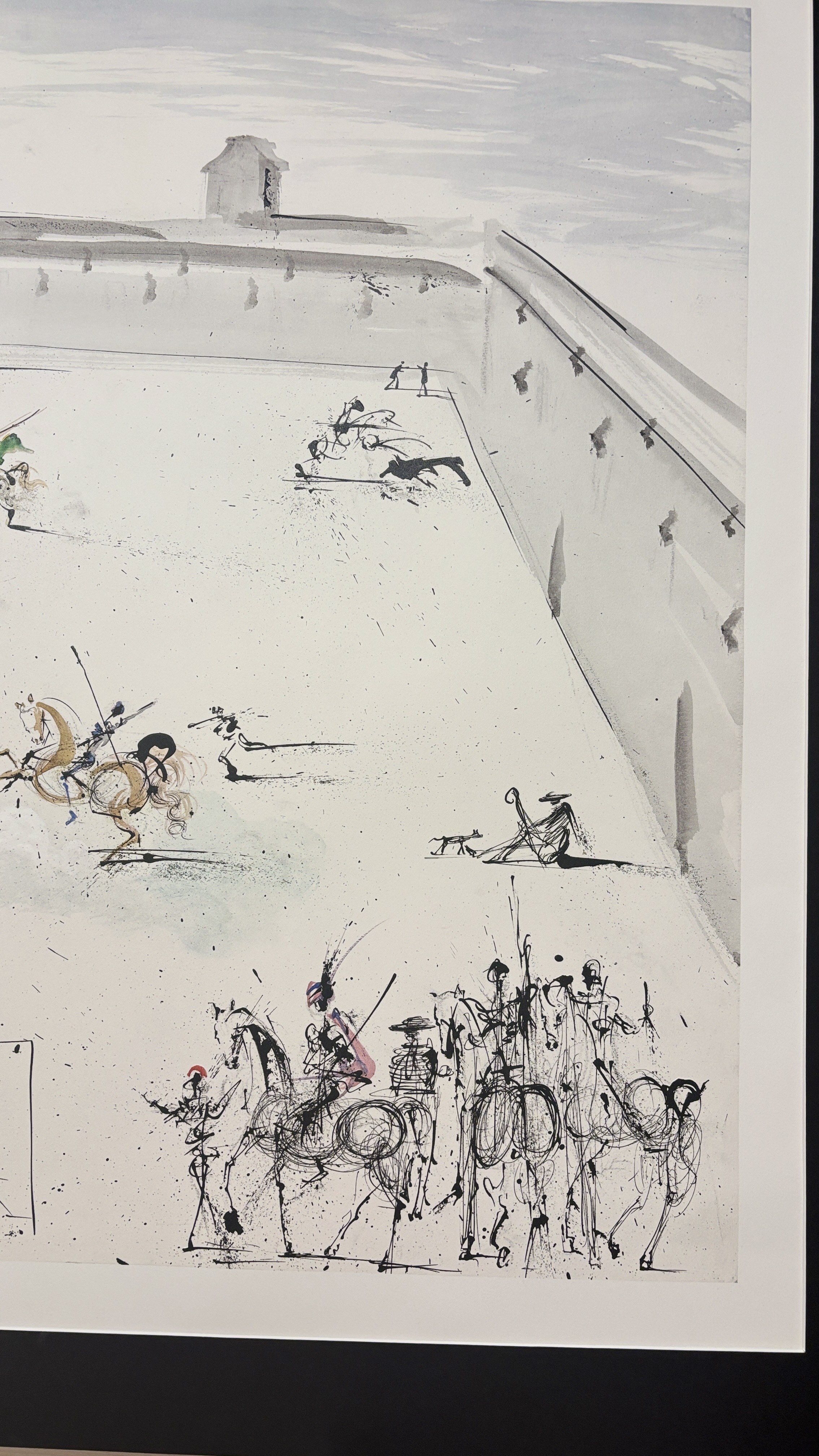
Granolithography, embossing on Arches Velin paper
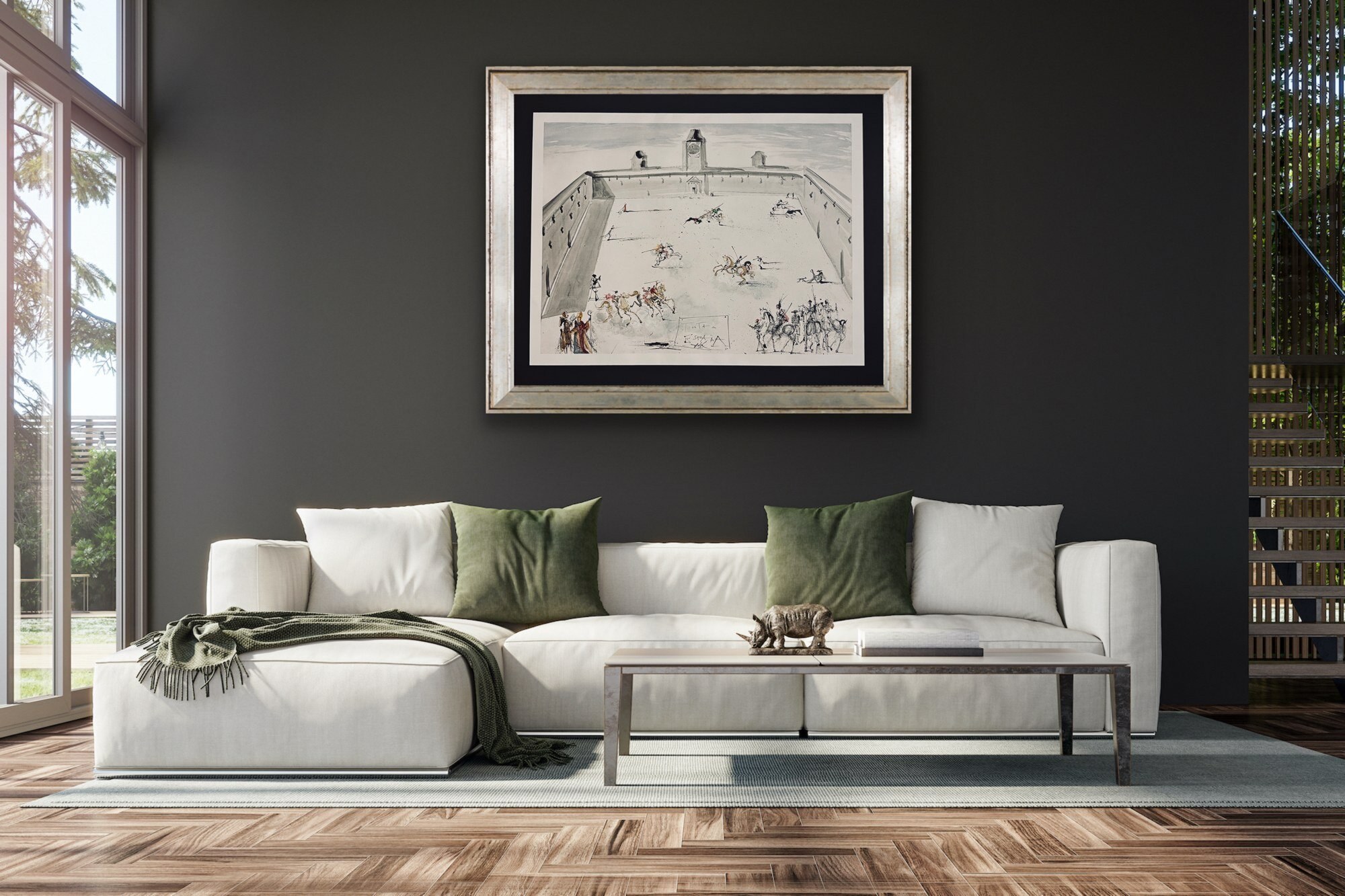
Luxury large-format edition, 70 x 92 cm inside a passe-partout measuring 81 x 103 cm
Inscribed in typography: “Tienta en España Dali 1960.”
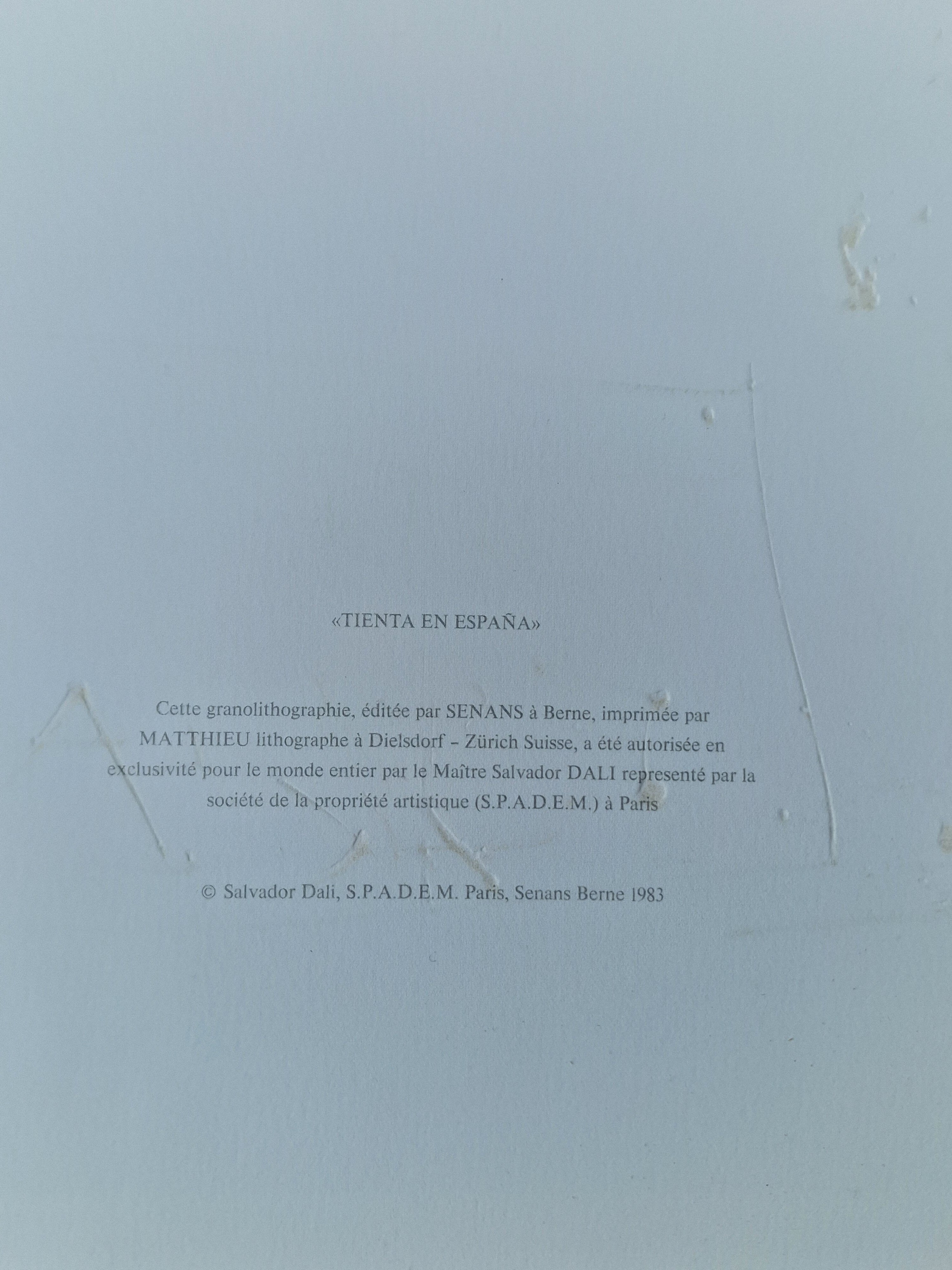
Publisher: SENANS in Bern, Switzerland (a renowned publisher of Dalí’s luxury editions) in collaboration with MATTHIEU lithographe in Dielsdorf–Zürich.
Edition authorized by Salvador Dalí and by S.P.A.D.E.M. (the French association for the protection of artists’ copyrights);
On the reverse, the publisher’s stamp (justification du tirage)
Granolithography is one of the most refined and precise planographic printing techniques, representing a modern evolution of classical lithography. Granolithography employs an advanced optico-chemical method—the image is broken down into extremely fine dots (grains—hence the name “grano”). Special plates are used for this (usually 8 to 12 different plates for a single image), with each plate responsible for a different color and shade. The raised areas on the work are the result of embossing (dry stamping). In this edition, the plate pressed down on the paper so firmly that the figures of the riders or bulls literally “jump out” of the surface, creating a bas-relief effect.
In 1960, Salvador Dalí painted a large-format watercolor with the same title (now considered a masterpiece from that period).
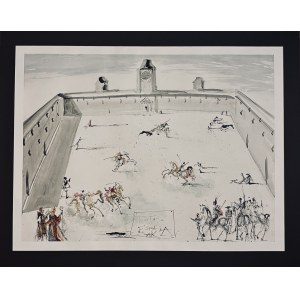
In Spanish terminology, a “tienta” is not a typical bullfight. It is a test of courage to which young bulls (and cows) are subjected to determine whether they are suitable for breeding or for the arena. Fascinated by the Spanish tradition and mystique of bullfighting, Dalí often returned to this theme, seeing in it a clash between primal forces and elegance. The empty space of the courtyard draws attention. Dalí adored this kind of “spatial void,” which lends the scene a dreamlike, somewhat unreal atmosphere. In the lower left corner, we see a dignified figure in liturgical vestments. Dalí often placed religious authorities in unusual contexts, which may suggest a sacred dimension to the bullfight ritual. The clock in the background is almost the artist’s “signature.” Time is always present in Dalí’s work, though usually in a fluid form—here it is more static, yet it keeps watch over the sequence of events in the courtyard.
This is one of those works that demonstrate Dalí’s genius as a draftsman. Even without his famous “melting clocks,” he was able to create a dense atmosphere with just a few precise strokes of the needle.