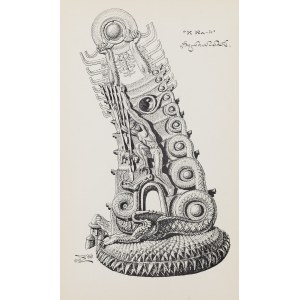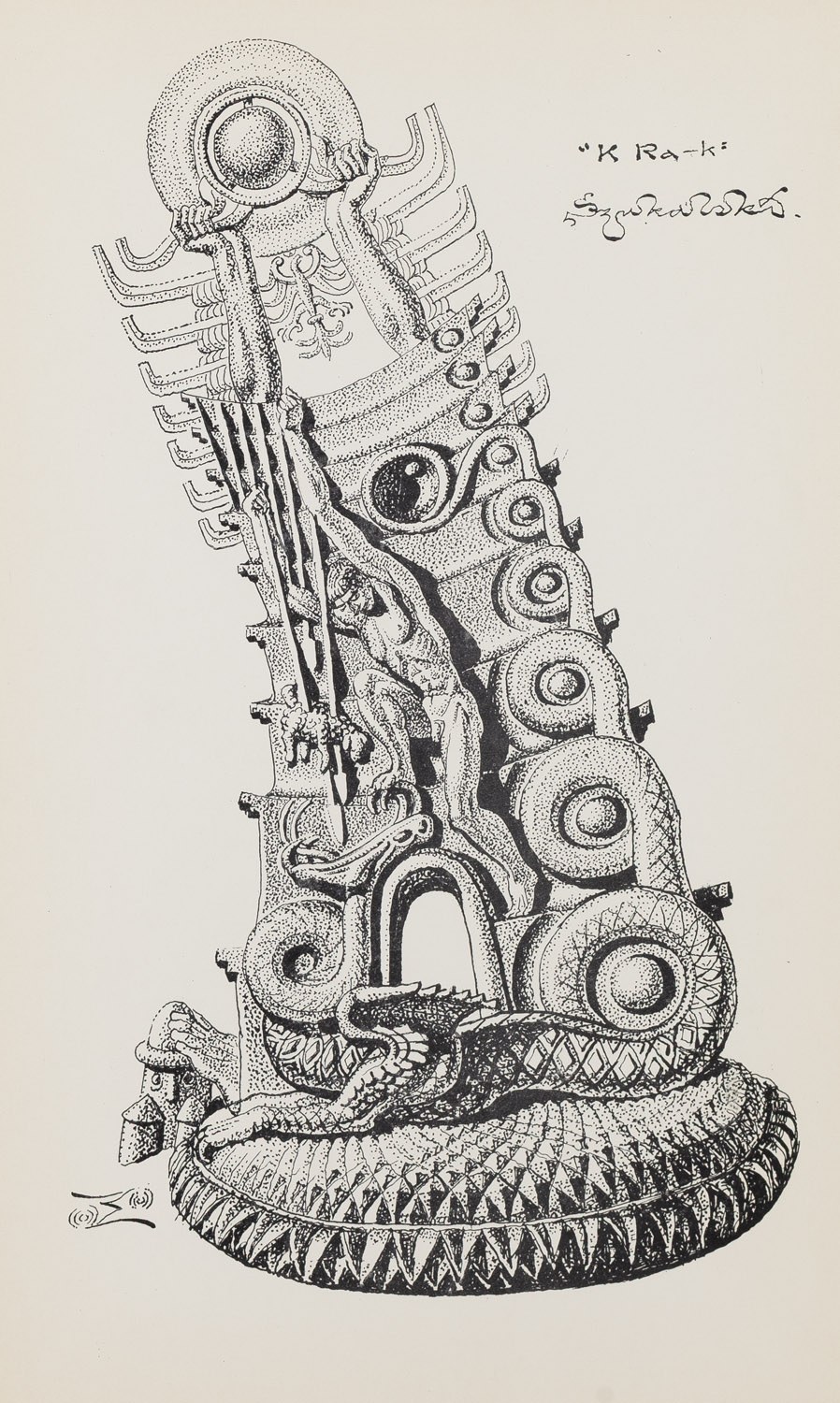
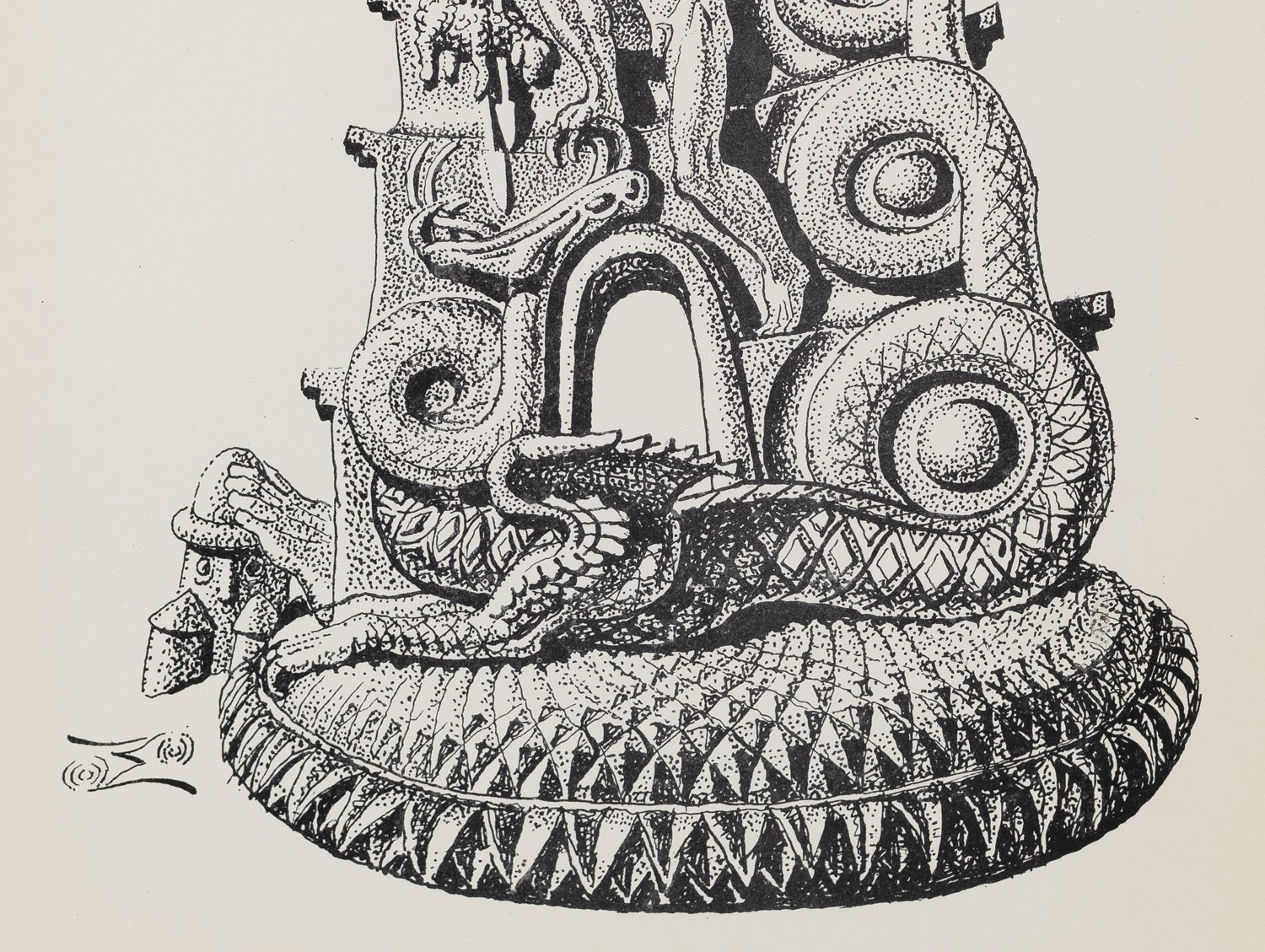
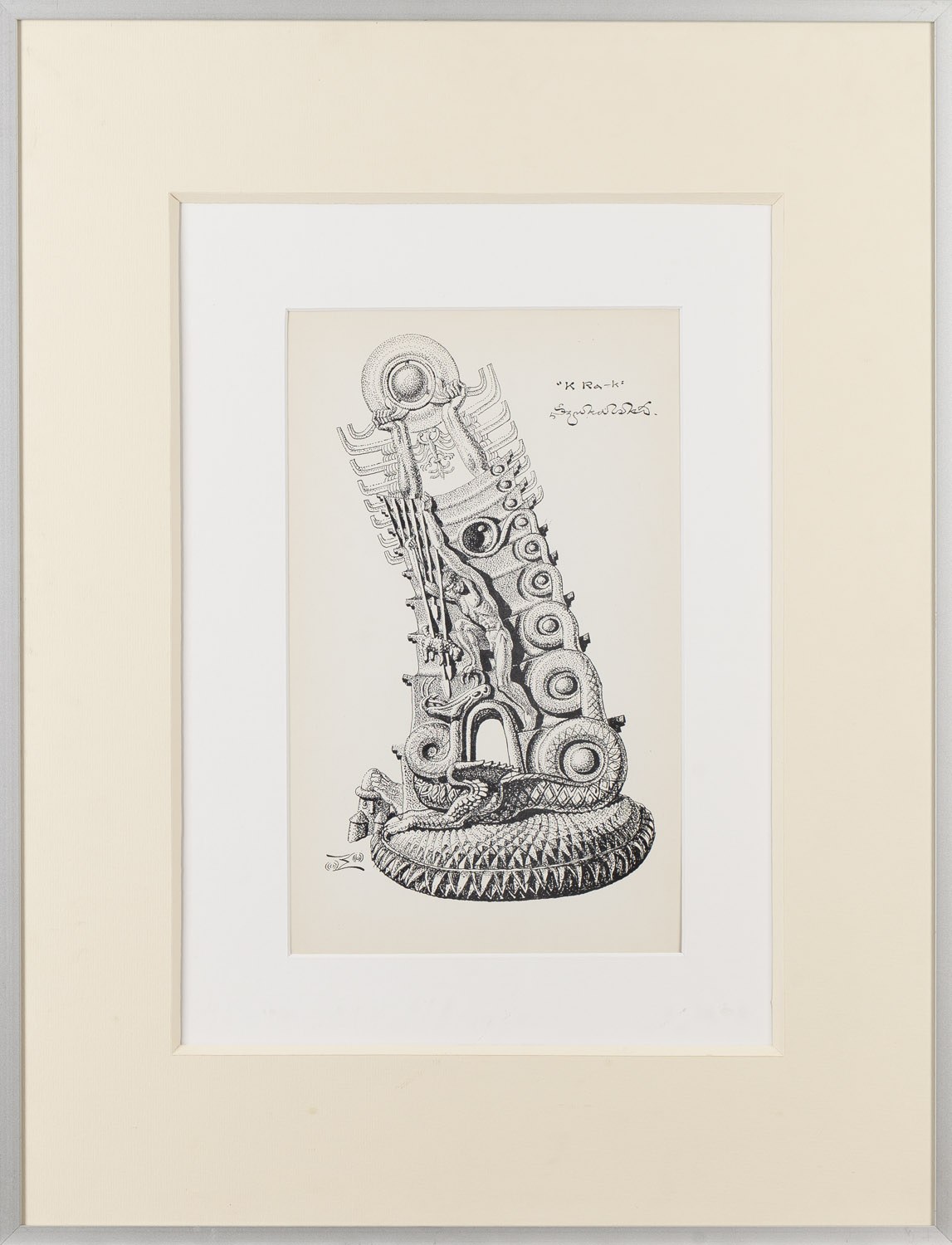
Dimensions: 30.5 x 19 cm (inside the mat)
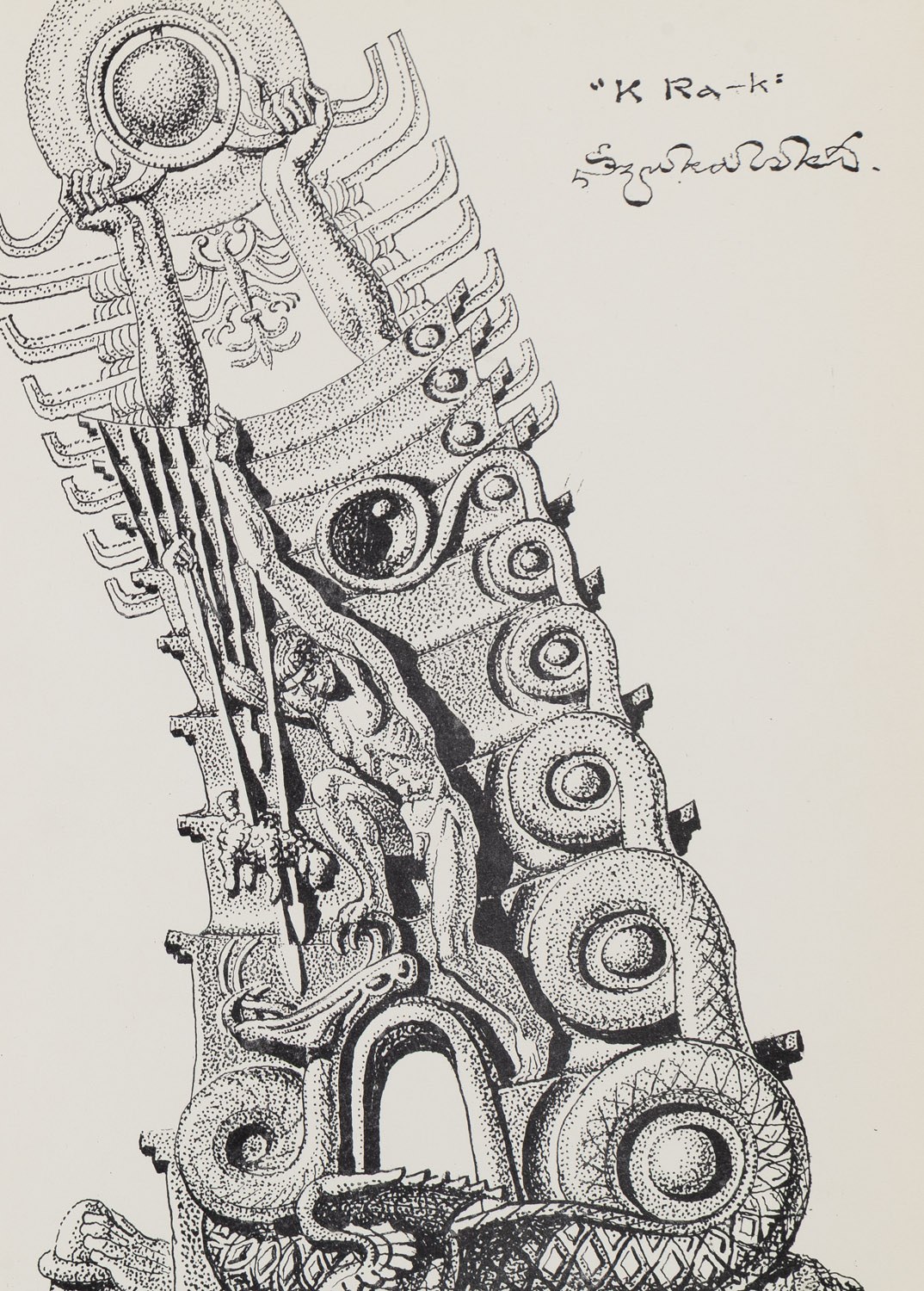
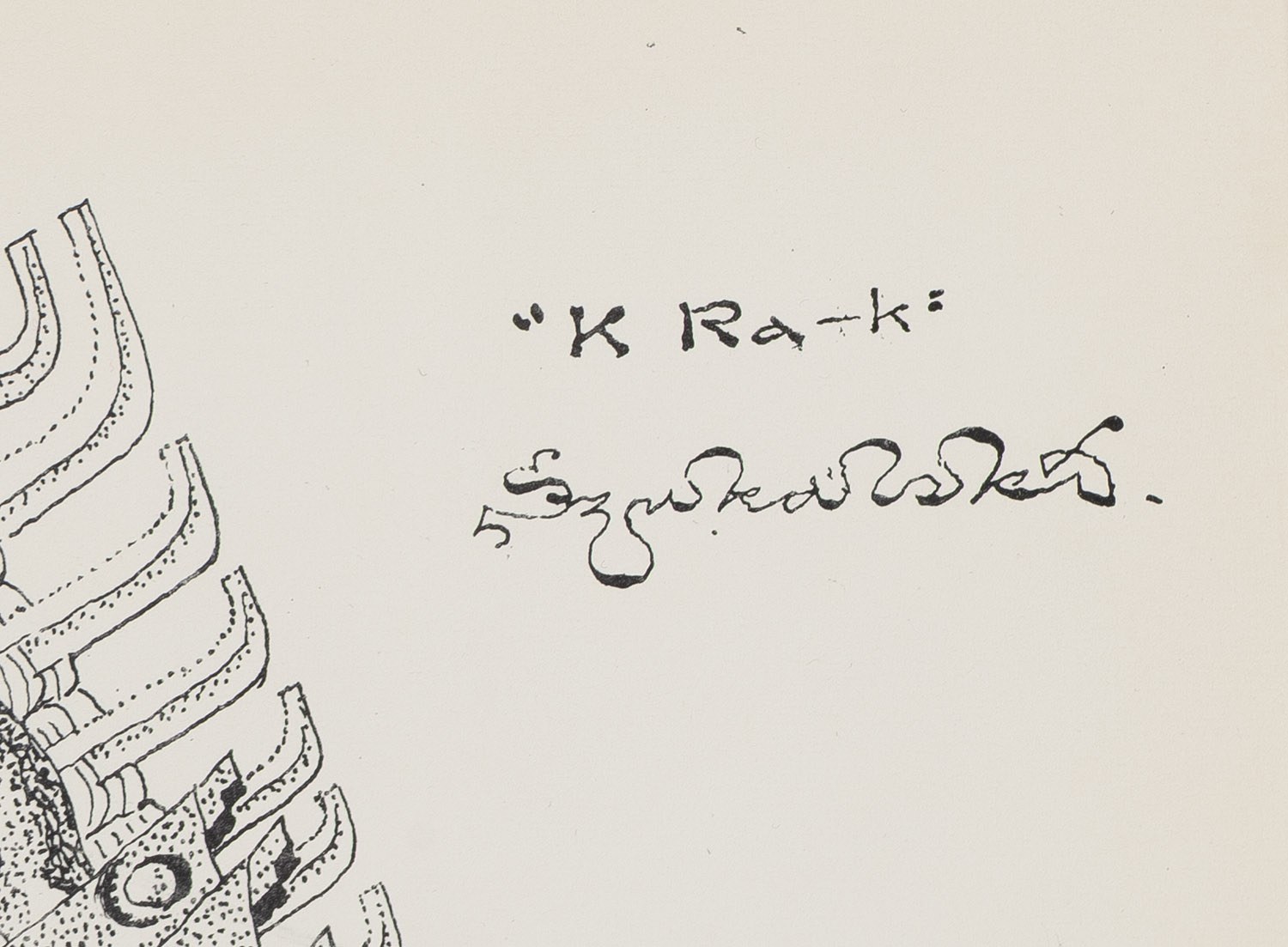
signed and inscribed on the stone at the bottom center: ' "K Ra-k" | Szukalski' and signed with a linked monogram within the composition
Biography
In 1903, he left for the United States with his parents. As a 13-year-old boy, he attended the Institute of Art in Chicago, where he caught his teachers’ attention with his exceptional talent for sculpture. In 1909, at the urging of the sculptor Antoni Popiel, who was living in the U.S., his father decided to send 15-year-old Stach to the Academy of Fine Arts in Kraków. He was an exceptionally colorful figure in the artistic circles of interwar Poland—revered by a group of young artists gathered in the “Rogate Serce” (Horned Heart) group he had founded, yet sharply criticized by a circle of older artists. A fanatic of Proto-Slavic culture and the myth of Polish power, he gravitated toward historical and allegorical themes, employing elements of geometric stylization in his formal approach. Between 1936 and 1939, he carried out a commission in Katowice to create bas-reliefs for the Silesian Museum building, which was then under construction. In 1939, he left Poland and settled permanently in California, where he devoted most of his time to unraveling prehistoric puzzles and the mysteries of humanity’s ancient history, the origin and development of languages, beliefs, customs, art, and the migrations of peoples, while his work as a sculptor took a back seat. The last retrospective exhibition of his works—the first in the postwar period and the last during his lifetime—took place in May 1978 at the Palace of Art in Kraków. During the war, nearly the entire body of the artist’s work created in Poland was destroyed.