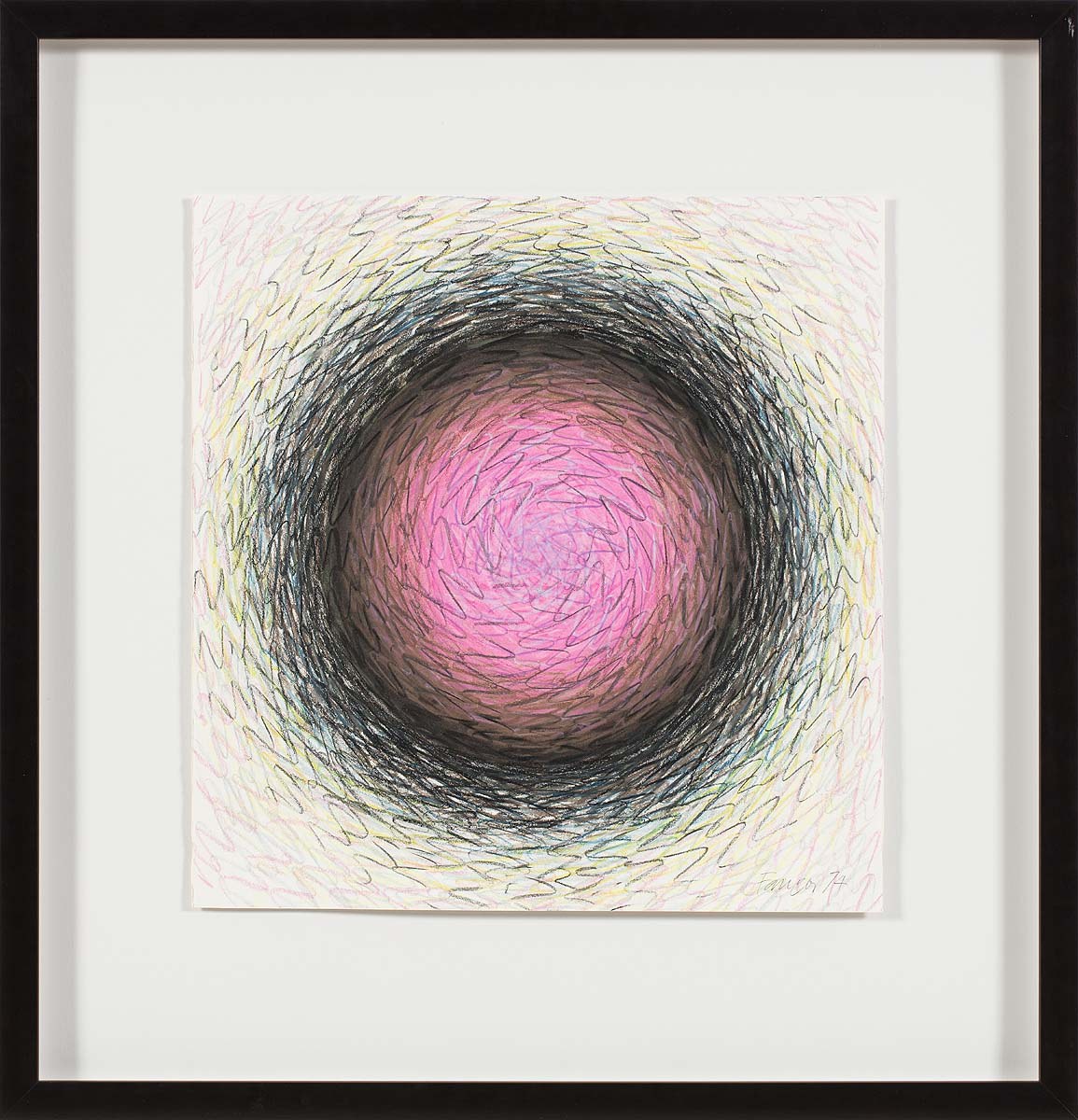
Dimensions: 56 x 51.5 cm
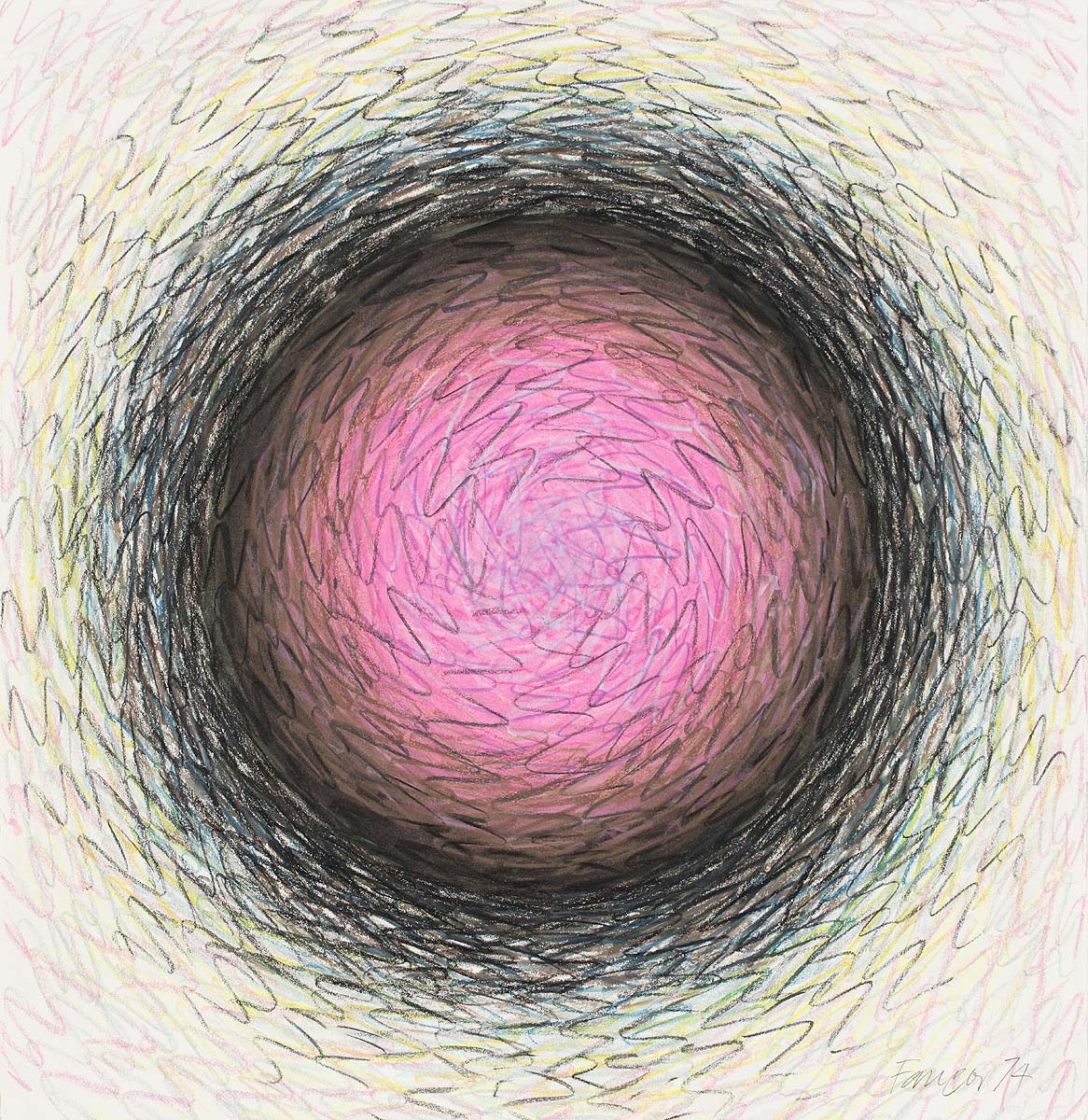
Signature: signature p.d.: Fangor 74
The object comes with a certificate of authenticity signed by the artist.
Provenance
Warsaw, private collection
Drawing was a special medium for Wojciech Fangor - not only a preparatory stage, but also an autonomous field of experimentation. As Stefan Szydłowski wrote, since the 1950s the artist "has been directly confronted with one of his most important artistic problems - the issue of space," which he developed both in drawings, paintings and spatial forms (Szydłowski S., Fangor. Works on Paper in Color, Polish Modern Art Foundation, Warsaw, 2007). In this context, works on paper allow us to capture the very process of Fangor's thinking: the moment when color, line and hand movement begin to build the illusion of depth.
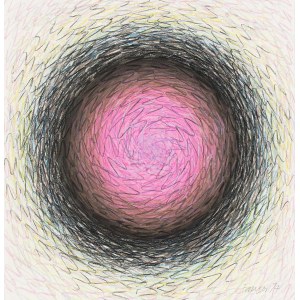
The drawings on display, dating from 1974, were created during the peak period of the artist's Op Art explorations, related to the creation of space on the picture plane by means of color and shape. The motif of the circle - one of the most recognizable in his oeuvre - is built up here not through smooth, painterly transitions, but with hundreds of tiny, nervous lines made with candle crayons. The lines overlap, thicken and dissipate, creating a luminous, pulsating core and a surrounding aura of color. Up close, a record of gesture is visible: single touches, movements, and successive layers. From a distance, on the other hand, the composition begins to work optically - the colors intermingle, the eye becomes illusionary, and the flat sheet of paper acquires the impression of depth and radiation.
It is in this duality that the value of Fangor's drawings is revealed. They are at once a record of the process and a finished, autonomous composition. A laboratory study of color and a full-fledged work of art. Unlike oil paintings, where the effect of color permeation is smooth and almost invisible, here the mechanism of illusion is exposed - as if the artist were allowing the viewer to look under the surface of his own painting. These small works show that with Fangor, space was born from rhythm, repetition and patient application of color, until the painting began to breathe with light.