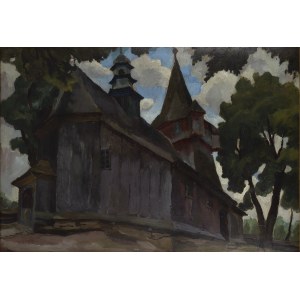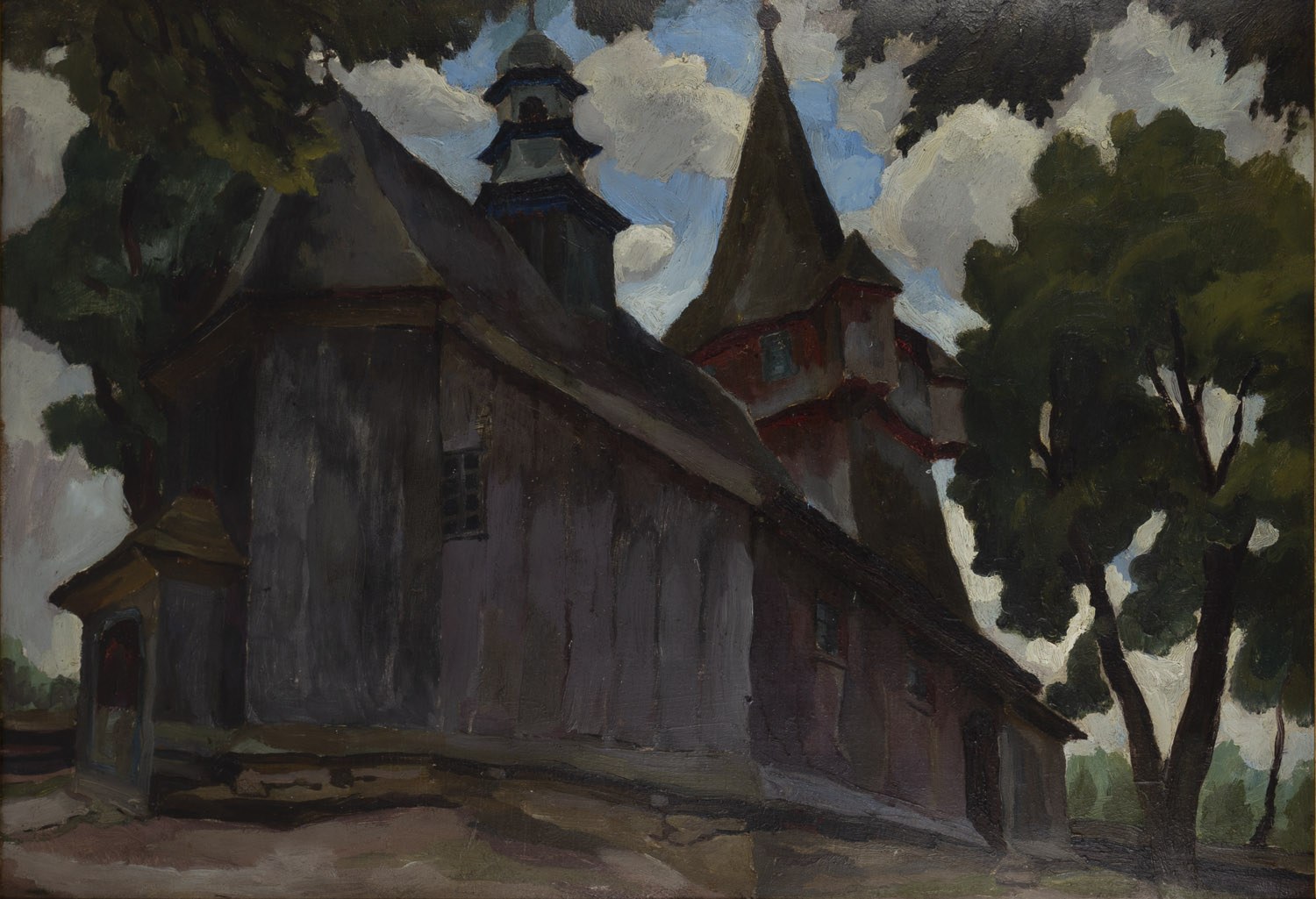
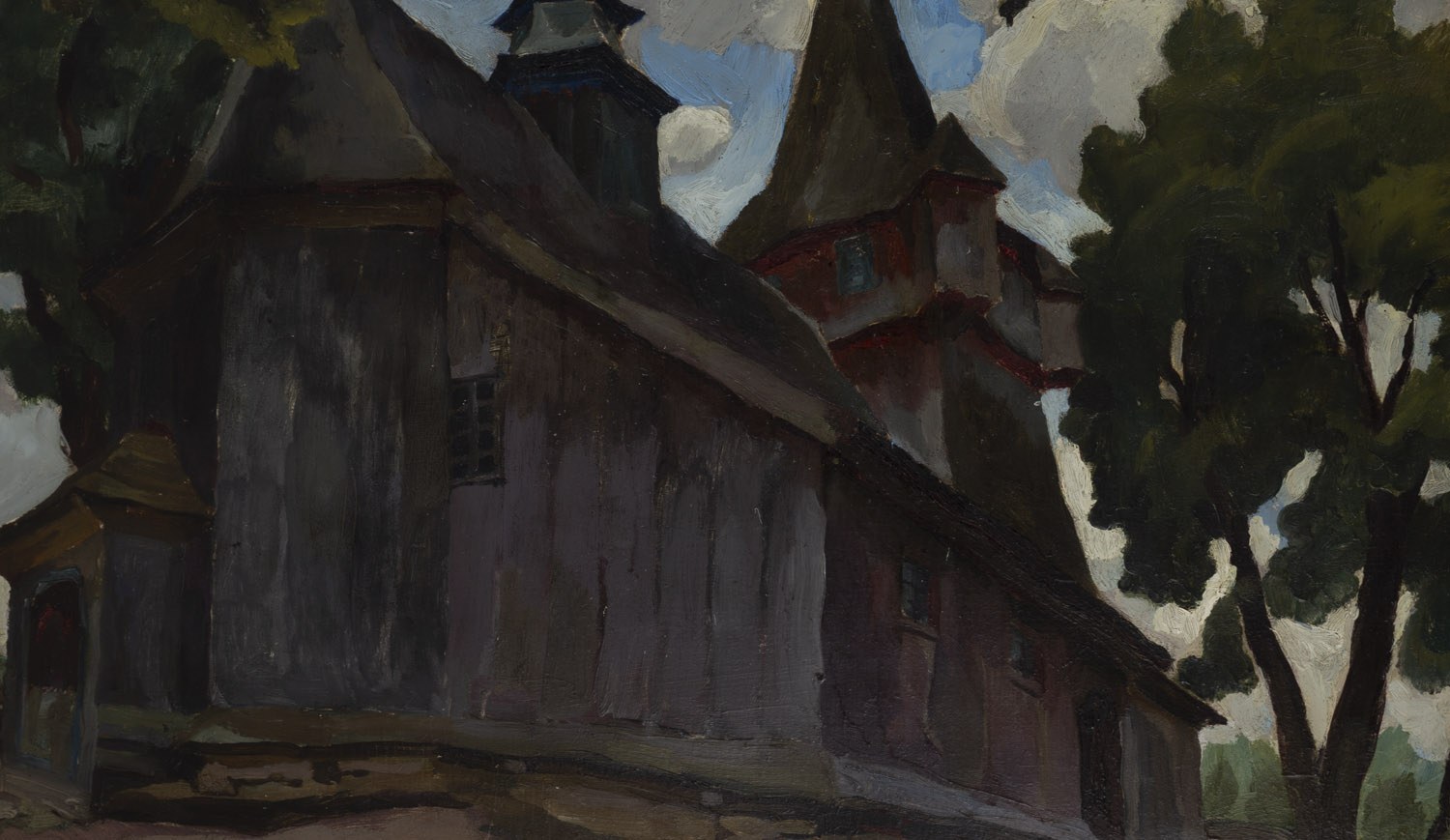
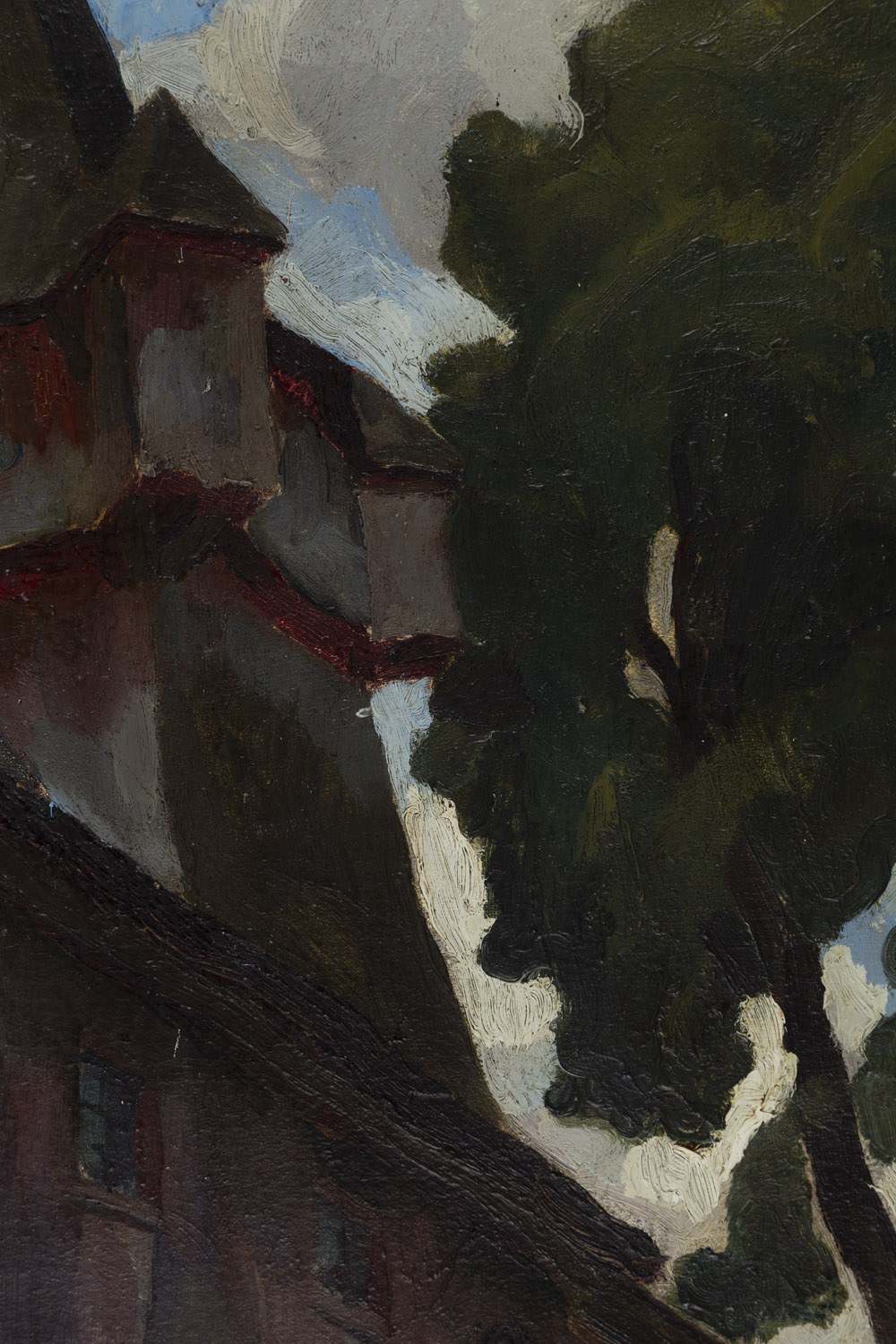
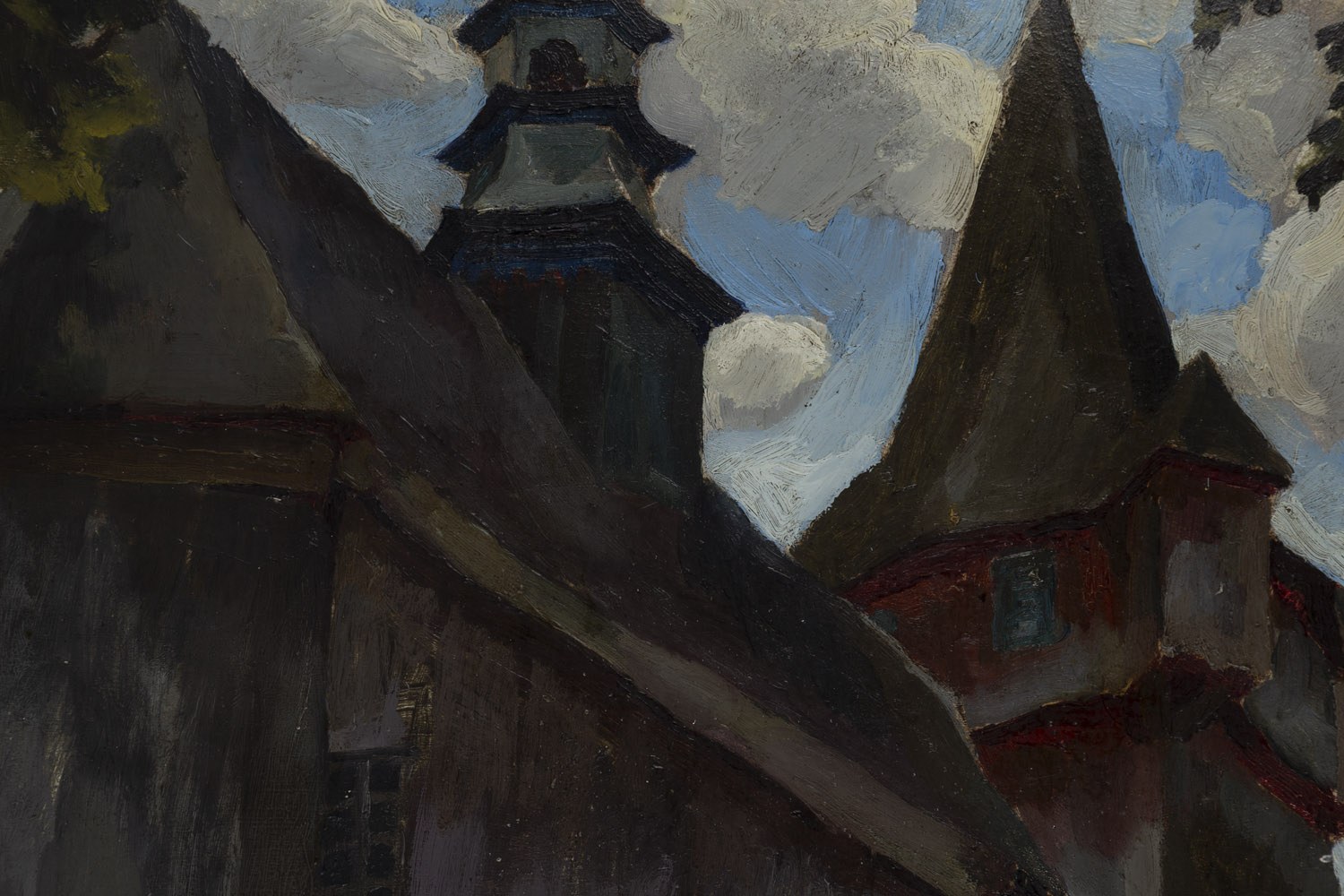
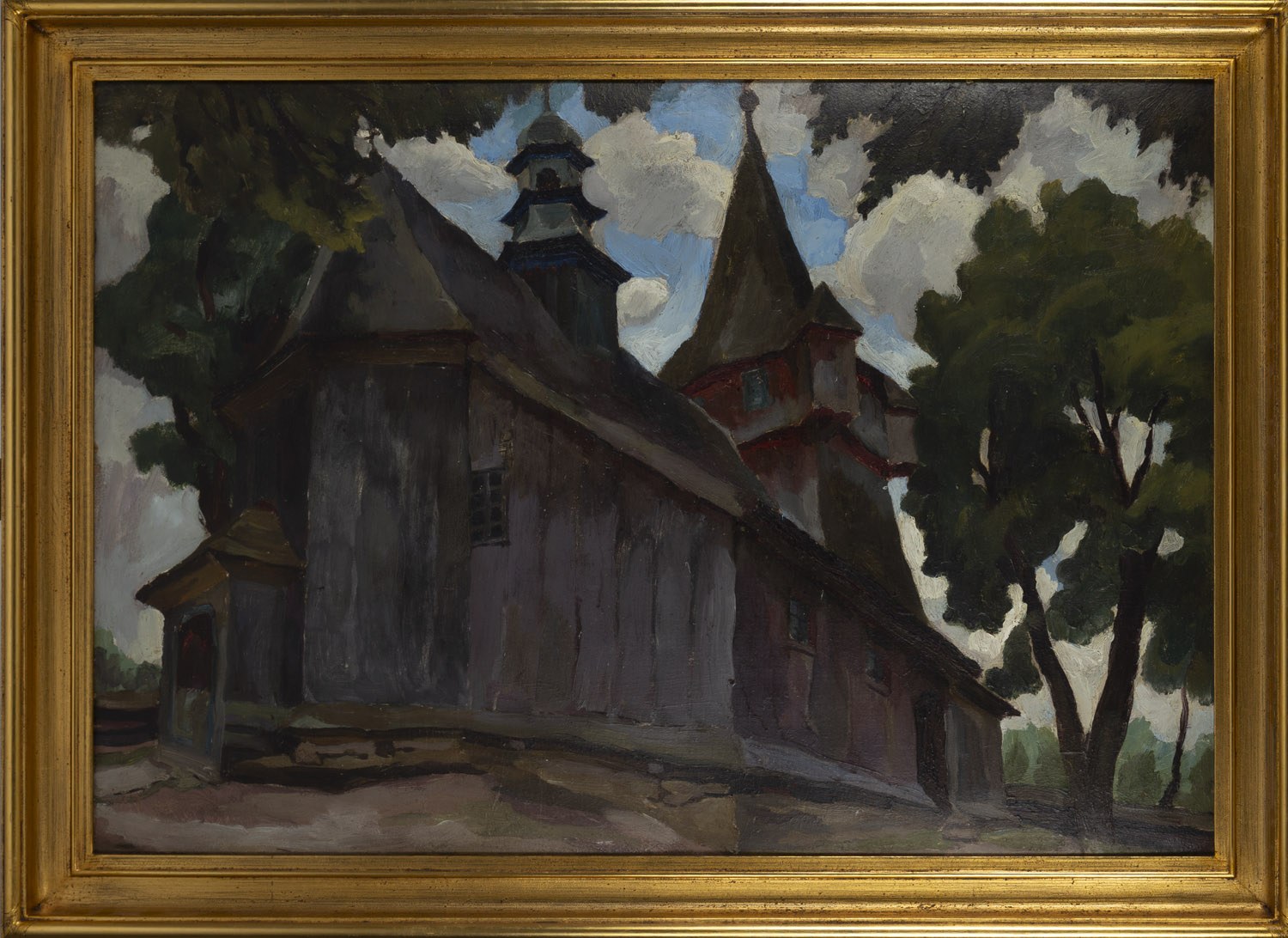

Dimensions: 68 x 98 cm
Inscribed on the back in pencil: 'CHURCH IN RADZISZÓW II PRICE 180 zł'
Provenance
Rempex, Warsaw, June 2025
private collection, Poland
Biography
In 1891, he graduated from the School of Fine Arts in Kraków, where he studied under Florian Cynk, Józef Unierzyski, Leon Wyczółkowski, Jacek Malczewski, and Jan Stanisławski. Thanks to a scholarship, he continued his studies in Paris. He also visited Italy, Germany, and Switzerland. In 1919, he became a professor of landscape painting at the Academy of Fine Arts in Kraków. As a teacher, he continued the program of his mentor, Jan Stanisławski, by organizing plein air landscape painting sessions. It was from Stanisławski that he inherited a love of nature, a keen eye for observation, and an emotional connection to the Polish rural landscape. Hence, the motifs that frequently appear in his paintings include: fields of grain, potato patches, haystacks, trees, manor houses, and rural churches viewed at various times of the year. Kamocki sought out these subjects while traveling through the villages of Podolia, Volhynia, Spisz, and especially the regions around Kraków and Podhale. He painted his works en plein air. In the early period of his career (1900–1915), he used thick oil paint, which he applied generously to achieve the effect of a distinct, textured surface. He worked with a relatively limited color palette. In his summer landscapes, he used deep greens with relatively subtle tonal contrasts. He generally employed local colors and remained faithful to his subject. In his later period, the paint was applied casually with broad brushstrokes, giving the paintings a matte surface. He was a member of such artistic groups as “Sztuka,” the Vienna Secession, the Association of Polish Visual Artists, and the Society for the Encouragement of Fine Arts.