


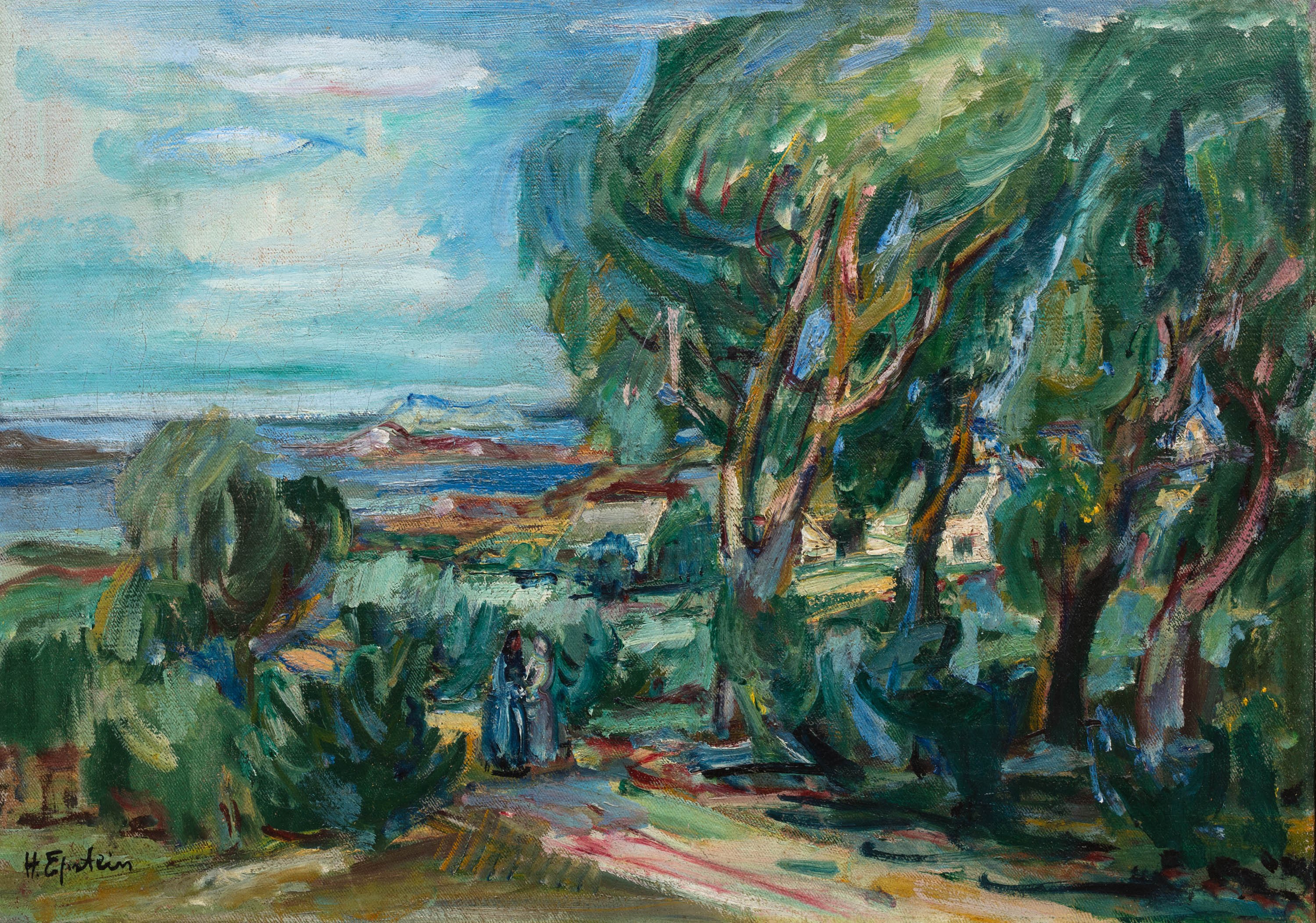
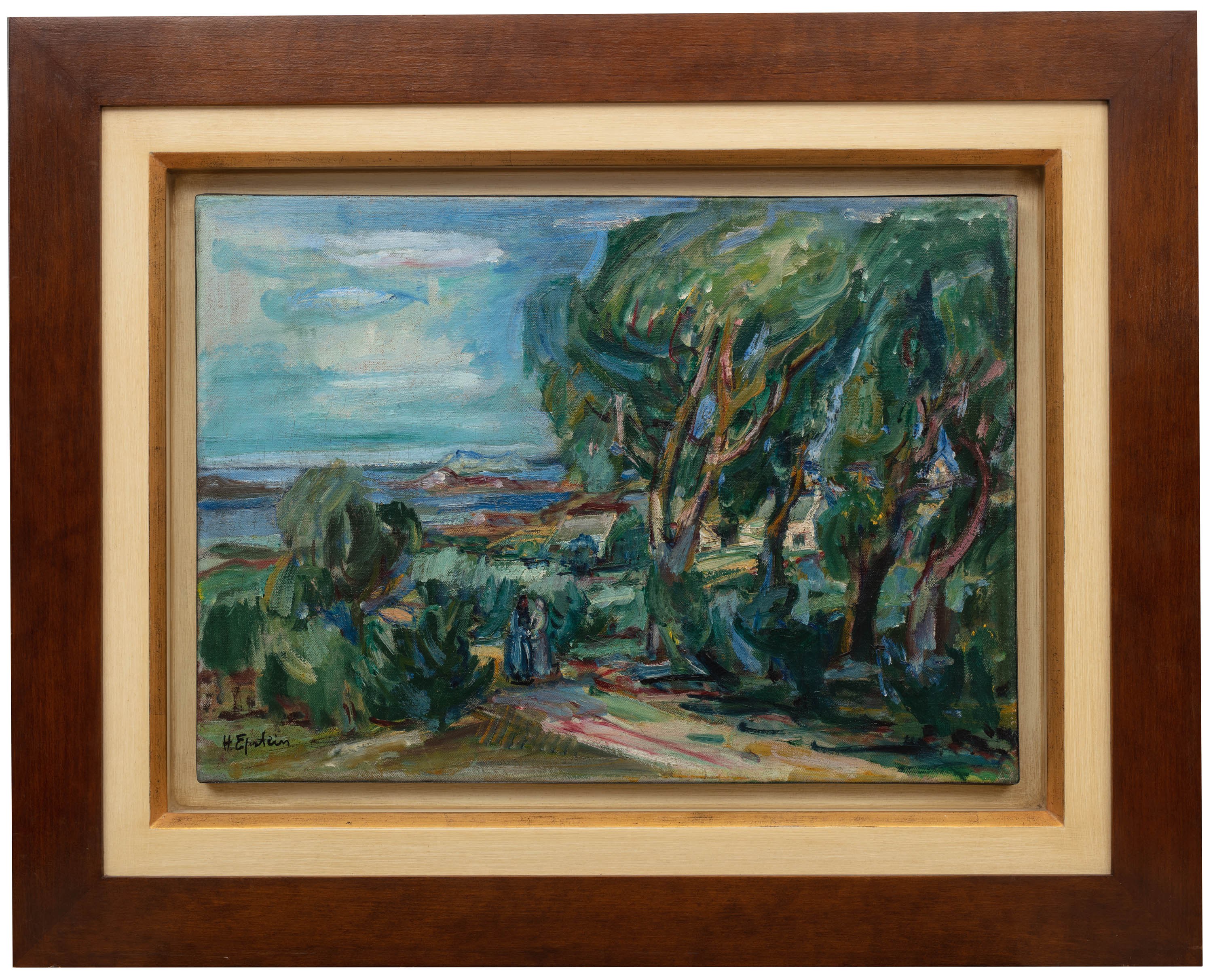
oil, canvas, 33 × 46 cm
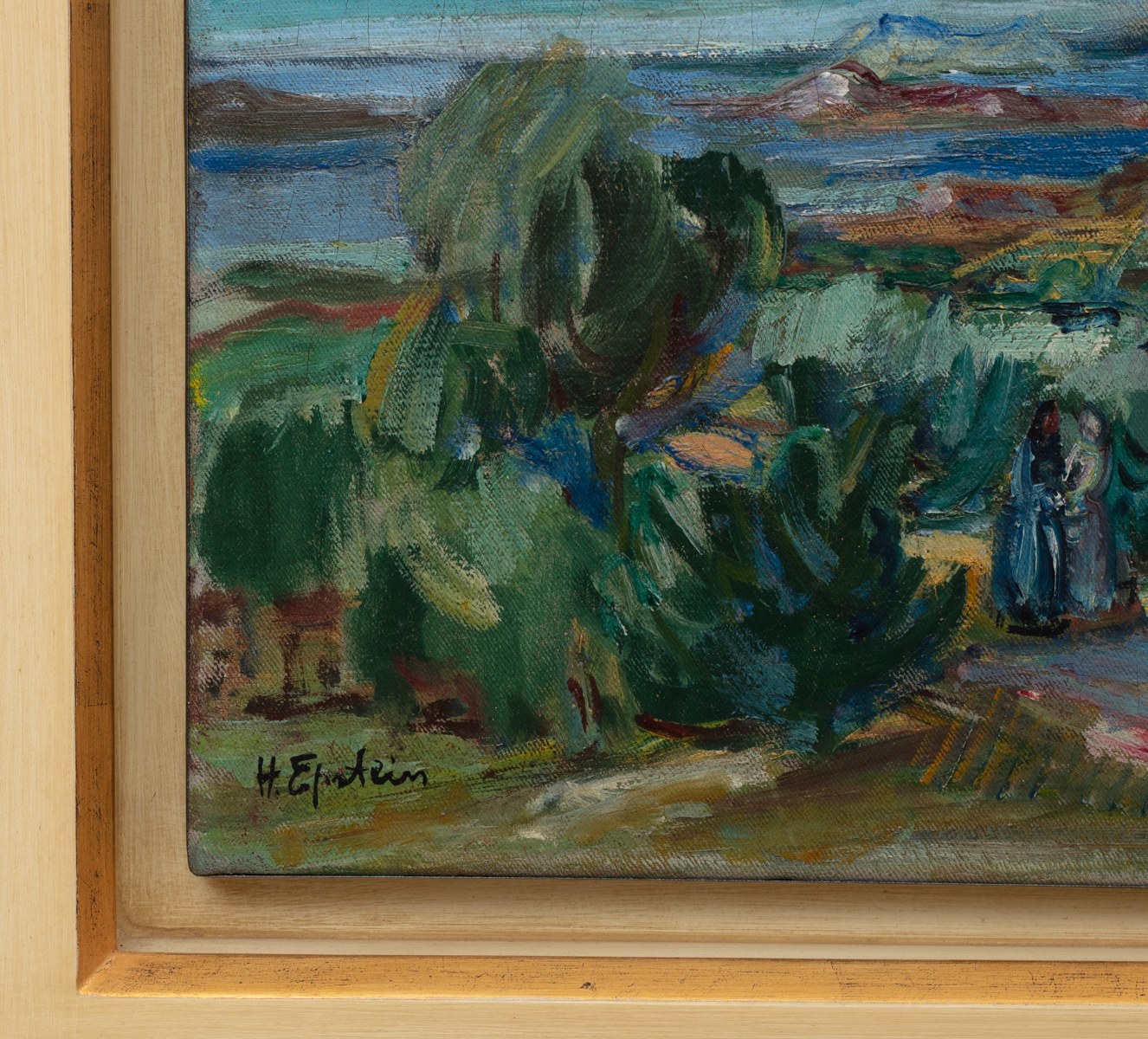
signed l. d.: "H. Epstein"
on the back a sticker with inventory number, on the frame an ownership sticker
with a description of the painting
Exhibited:
- "Masters of the Ecole de Paris. Henri Epstein", Villa la Fleur, Konstancin-Jeziorna,
September 18 - December 31, 2015
Reproduced:
- Artur Winiarski, "Henri Epstein, exhibition catalog," Villa la Fleur, Warsaw, Poland.
2015, p. 158, cat. no. 70
"His first works painted after arriving in Paris were greenish, tart, sharp, but already then strangely appealing, peculiar, in an unusual and barbaric way. Figures, landscapes and still lifes - everything first irritated and then fascinated. Gradually, but inevitably! " Gustave Coquiot, Les indépendants - 1884-1920, Ollendorf 1920.
"The individual paintings resemble separate organisms living an intense life. Planes vibrating and trembling. Colors whose task is not to create colorful arabesques, but to bring to life the matter depicted on a two-dimensional canvas, and therefore to apply visual fiction. The cardinal virtue of the artist in question is the ability to create the illusion that the depicted figures are alive and working. Which is not to say that Henry Epstein aims at figurative art. The artist does not aim to convey or communicate his feelings, his visual experience. His goal is different. The painter seeks to bring to life figures whose shapes and outward appearance resemble ordinary people, equipping them with a new soul, a product of his imagination, his property." W. George, The School of Paris, [in:] C. Roth, Jewish Art: An Illustrated History, Tel Aviv 1961, p. 709.
The featured painting is part of the so-called "blue period" in the artist's work, falling in the 1930s. At that time, the dominant group of works in Epstein's oeuvre were views of the Breton coast with their picturesque terrain and harbor scenes depicting fishermen at work. It is known that in 1931 the artist stayed in Brittany, in the village of Concarneau and sailed to the coastal island of Belle-Ile-en-Mer, from where he brought back numerous watercolors and oils inspired by these themes. What is notable about the artist is that he almost always placed even a small human figure in his landscapes. There is much truth contained in the words: "In each of his expeditions, Epstein not only manages to discover the essence of the landscape, but also paints people, depicting their daily life and relationships, thus bringing out the local color not only of the place, but also of the community" (Henri Epstein, [series: Masters of École de Paris], Warsaw 2015, p. 47).










Recentemente visualizados
Efetue login para ver a lista de itens
Preferidos
Efetue login para ver a lista de itens