


17th-century Neapolitan painter
Joseph in Prison
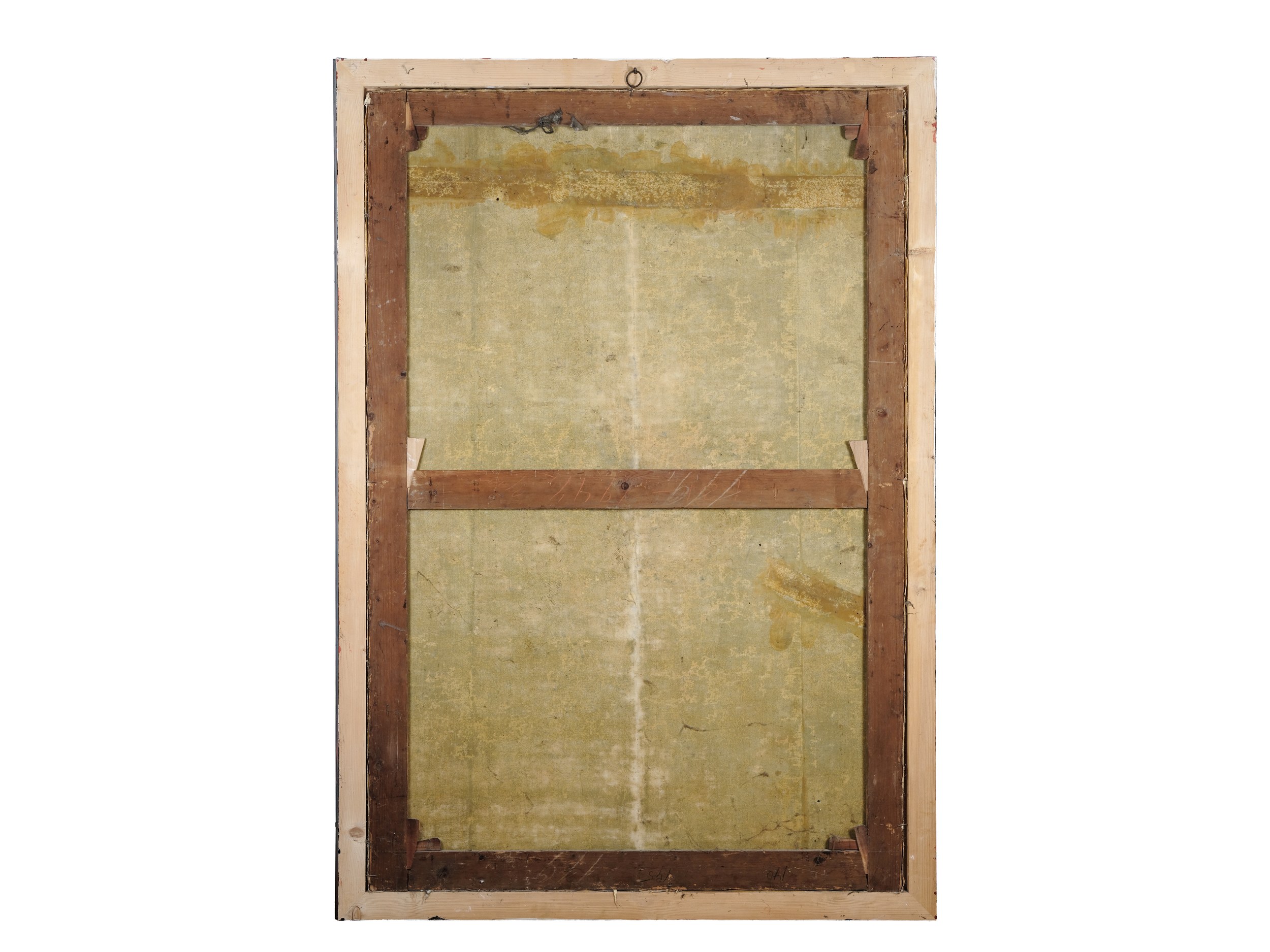
Oil on canvas, relined
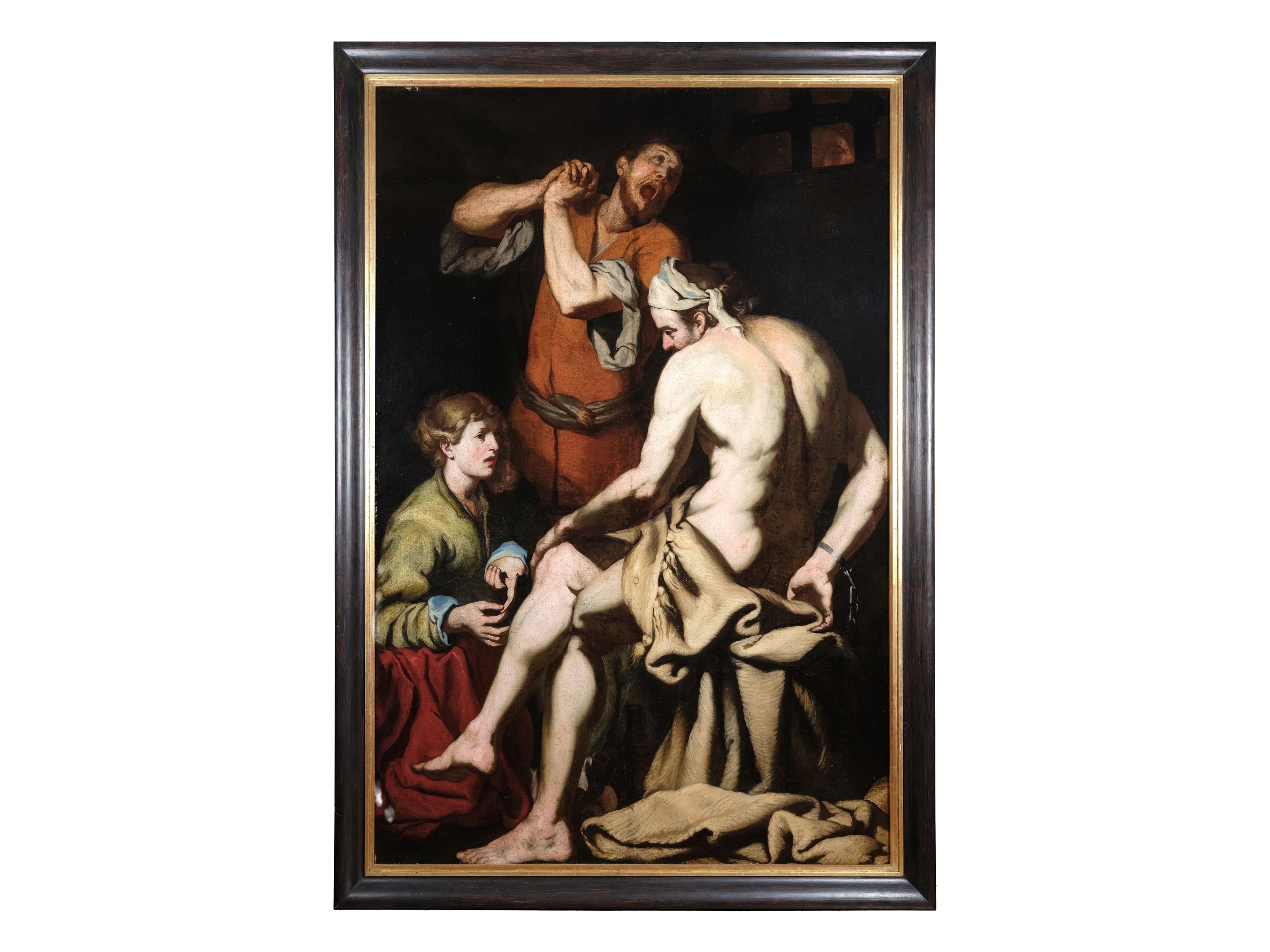
194 x 130.5 cm, with frame 210 x 146.5 cm
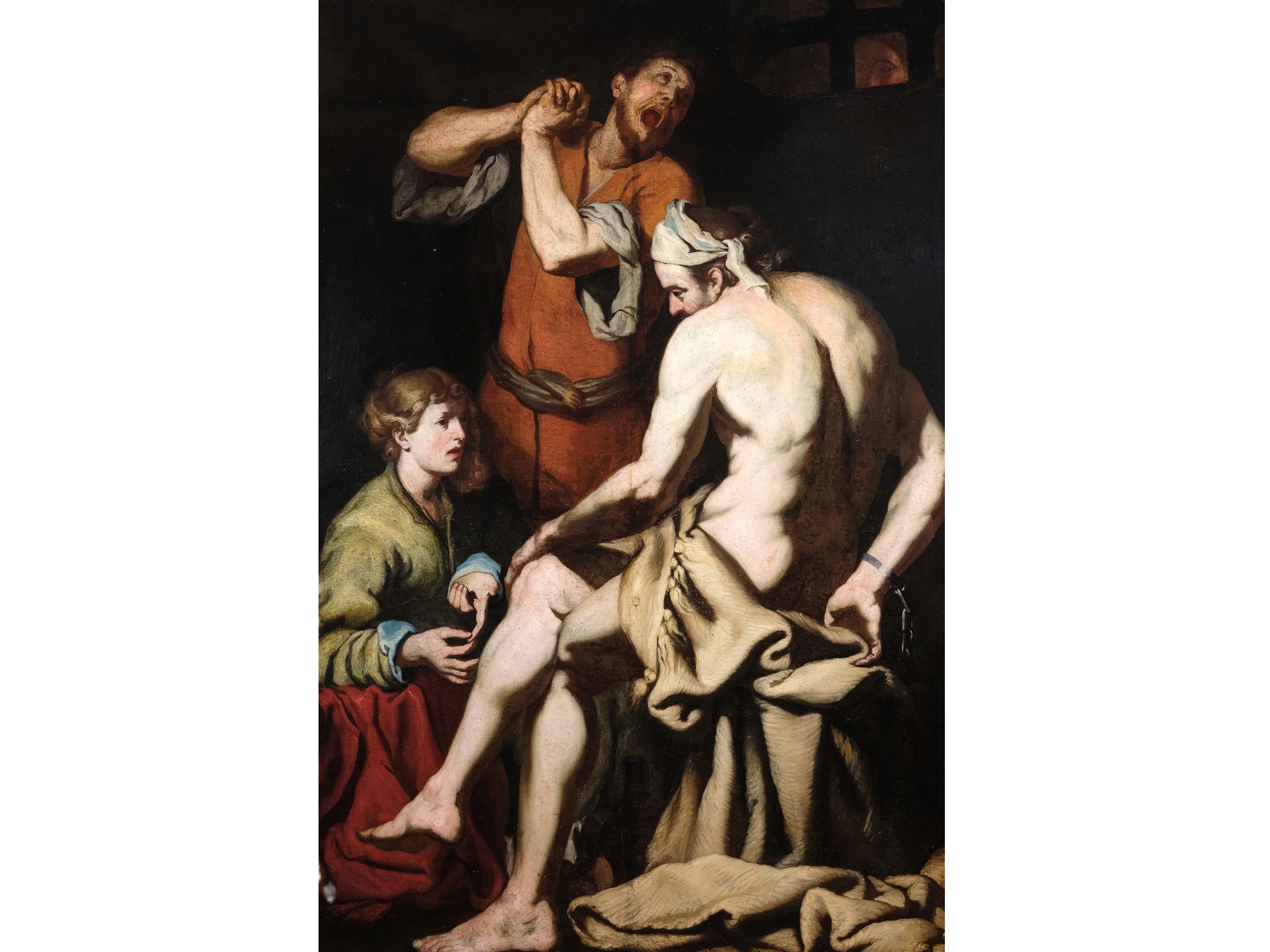
The painting depicts a scene from the Old Testament story “Joseph in Prison,” which originates in the Book of Genesis (Gen 39-40). The narrative recounts how Joseph, the son of Jacob, is falsely accused after being taken to Egypt: The wife of his master Potiphar attempts to seduce him; when he rejects her advances, she accuses him of rape. As a result, Joseph is imprisoned. While in captivity, however, he soon attains a special position, as he possesses the ability to interpret dreams—a gift that will later make him an advisor to the Pharaoh. In 16th- and 17th-century art, this theme was depicted primarily in two iconographic variations: either as the moment of his capture and imprisonment, or showing Joseph interpreting the dreams of his fellow prisoners in the dungeon, particularly those of Pharaoh’s cupbearer and baker.
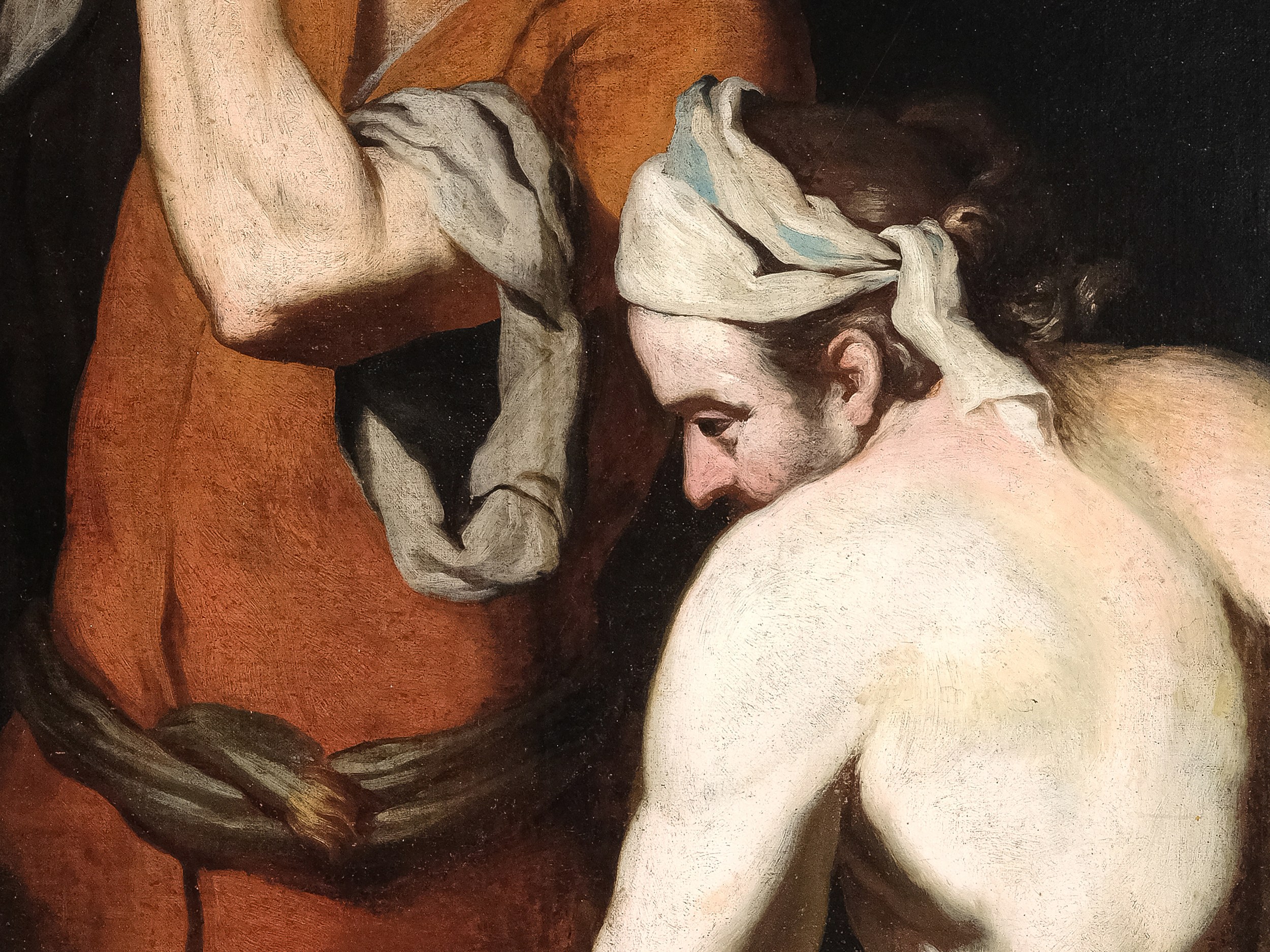
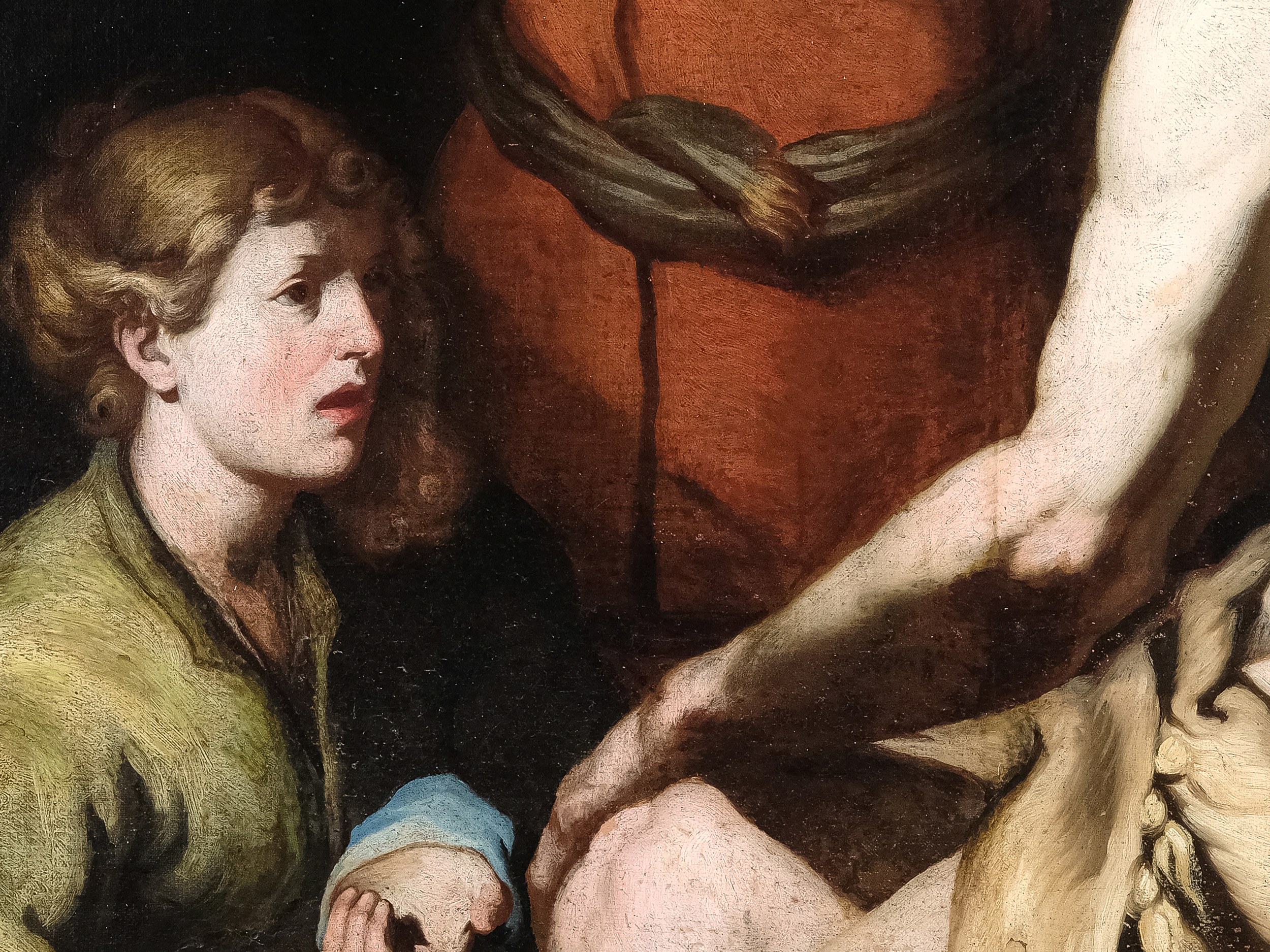
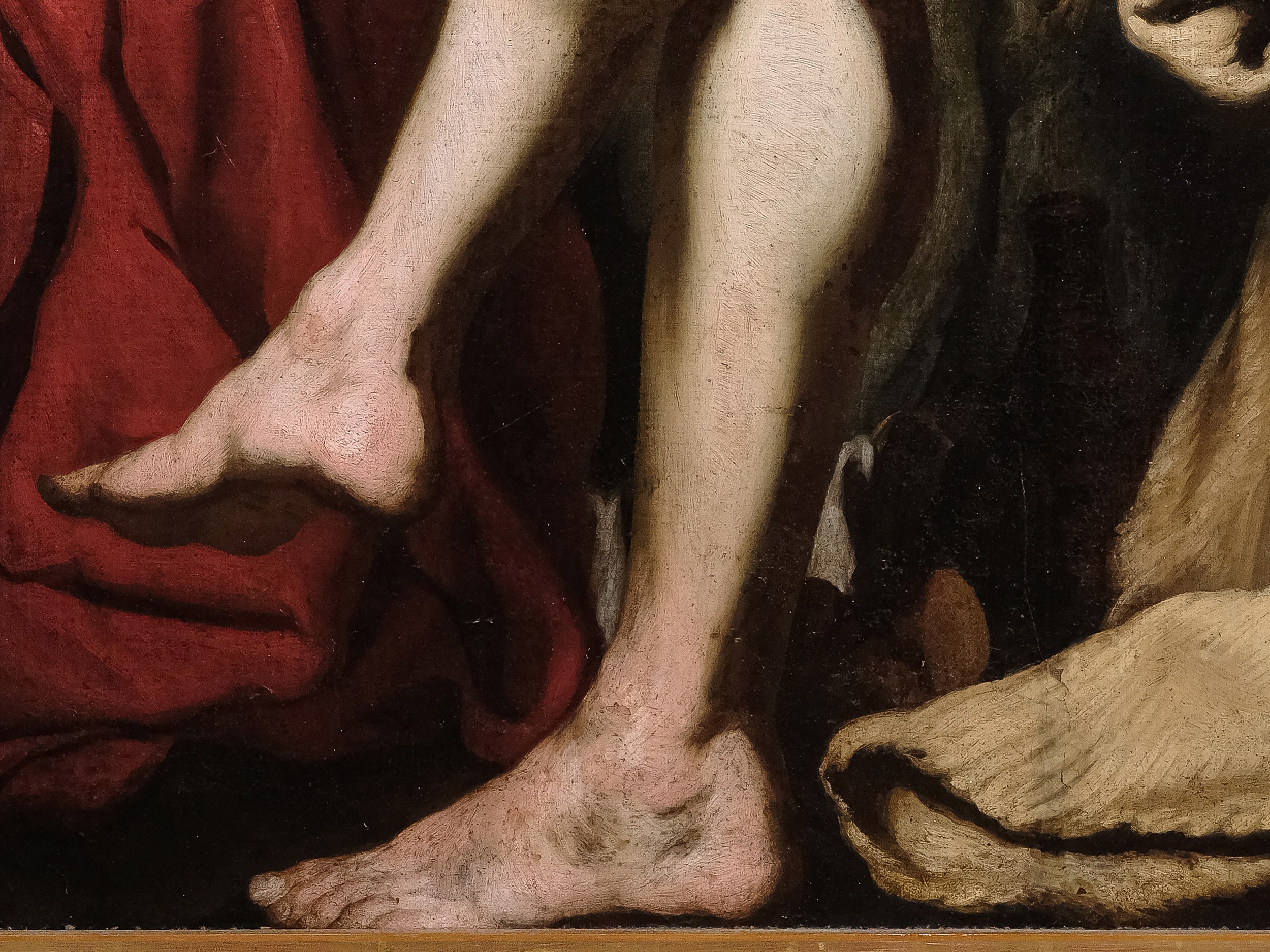
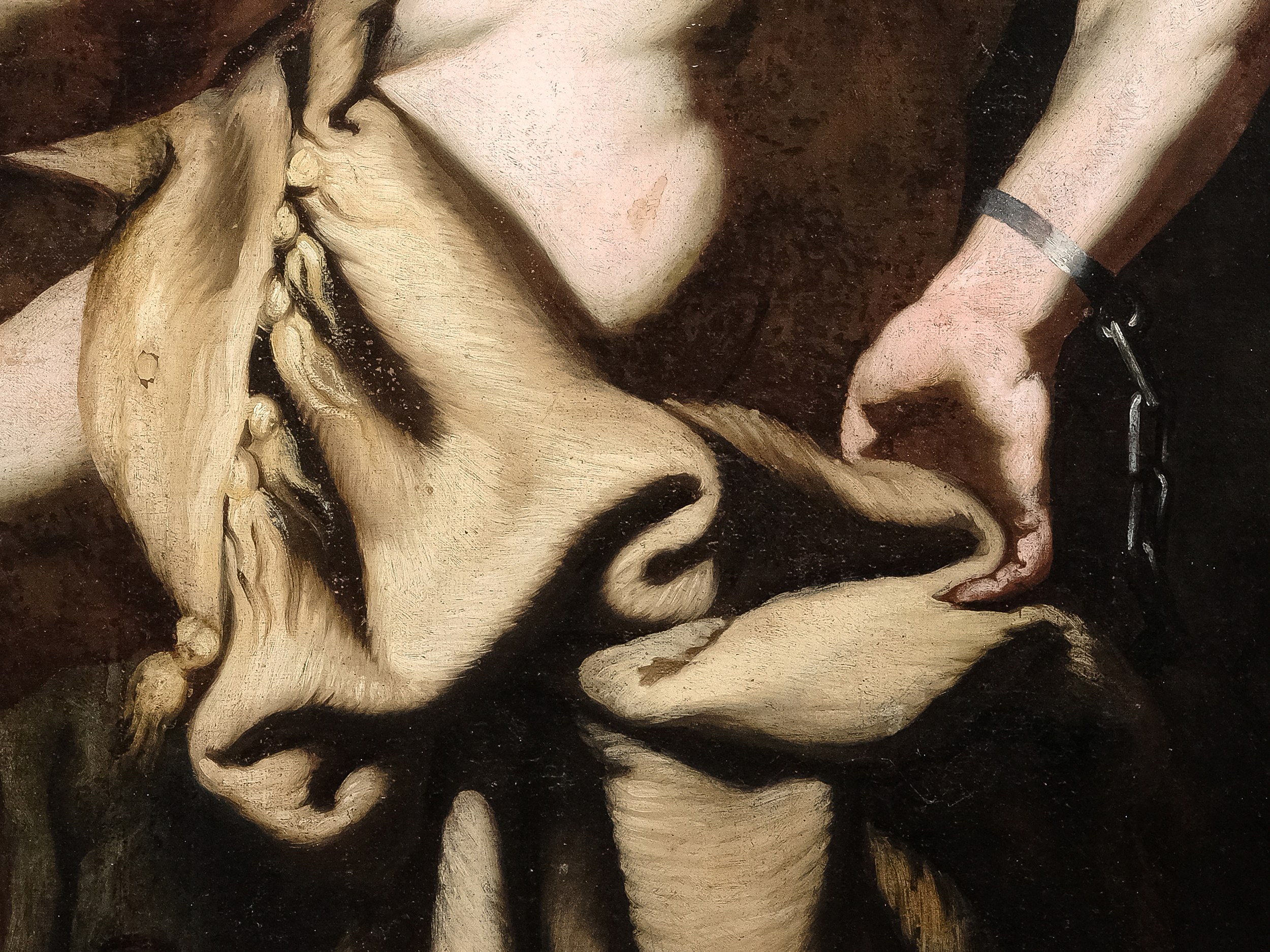
This painting depicts three figures in a dark prison cell. The composition focuses strongly on the dramatic exchange between the figures and on the contrast of light and shadow. In the foreground, a male figure sits in a three-quarter view from behind. His muscular upper body is unclothed; he is covered only by a pelt around his loins and a cloth around his head. A chain suggests that he is depicted as a prisoner. The light falling on this man’s body highlights him particularly, making his flesh tones appear sculpted and emphasizing the figure’s physical presence. Kneeling before him is a second person with long, light hair, holding an object in his hand and turning toward the seated man. Based on iconographic tradition, this figure is to be understood as a fellow prisoner—possibly one of the pharaoh’s officials—who is describing his vision or dream to Joseph. In Baroque painting, Joseph is frequently depicted in this scene as a half-naked prisoner, while his fellow prisoners turn toward him in supplication or explanation.
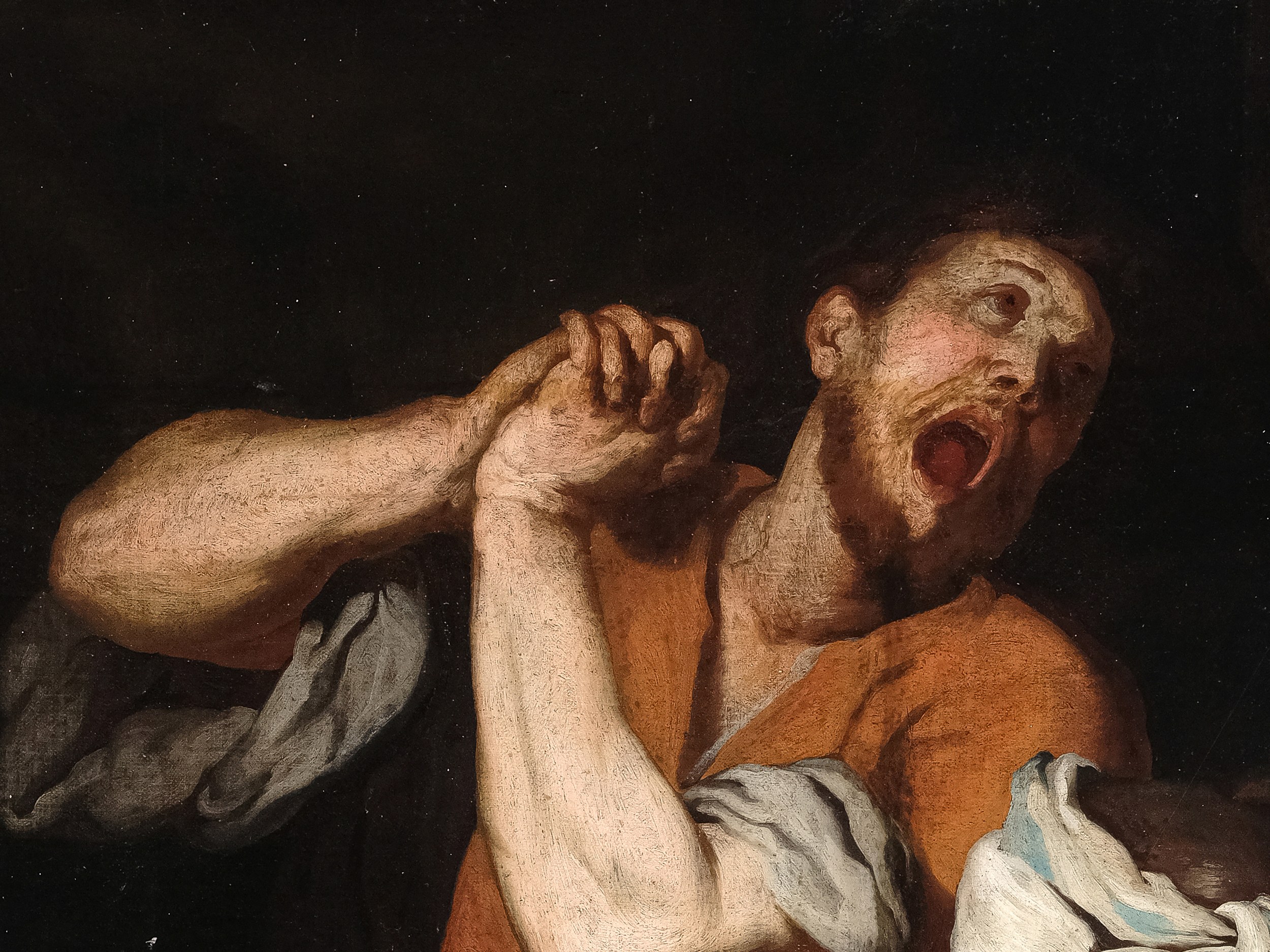
Behind these two figures stands a third person wearing a long, belted red tunic. With raised hands and interlaced fingers, he appears to be depicted in a pleading or praying gesture. His head is turned to the left, as if he were looking out of the cell or seeking help beyond the picture plane. The figure’s posture conveys emotional tension, heightening the dramatic character of the scene. The two figures in the foreground, on the other hand, are engrossed in direct dialogue: the kneeling man addresses the seated prisoner, who—with his gaze lowered—looks down at him and thus appears as an interpreting or judging authority. This constellation suggests that the chained, seated figure is indeed Joseph, depicted here as the interpreter of dreams.
Stylistically, the painting shows clear parallels to 17th-century Neapolitan painting, particularly to works from the Circle of Luca Giordano (1634-1705). Characteristic features include the dramatic chiaroscuro contrast and the strong emphasis on the nude body through directed light. The flesh tones of the seated prisoner are rendered in rich, warm hues and stand out clearly against the dark background of the cell. The figures are depicted in dynamic, slightly contorted poses, creating a sense of movement and emotional tension. The vivid colors of the garments—such as the intense red of the standing figure’s tunic—also reflect the Neapolitan Baroque preference for bold, high-contrast color accents.
Another characteristic is the theatrical staging of the scene: the figures appear as if on a stage, emerging from the darkness into the light. This dramatic lighting and the expressive gestures are among the stylistic devices with which 17th-century Neapolitan artists imbued religious and biblical scenes with emotional intensity. At the same time, the energetic modeling of the bodies and the loose, fluid brushwork evoke the painterly freedom cultivated in Giordano’s studio and within his artistic circle.
The painting can therefore be convincingly placed within the context of Neapolitan Baroque painting and shows clear stylistic affinities with Luca Giordano’s compositions. The combination of dramatic lighting, a figure-oriented conception of the figures, and narrative intensity lends the depiction a powerful impact and makes the scene from the story of Joseph immediately tangible.










Recentemente visualizados
Efetue login para ver a lista de itens
Preferidos
Efetue login para ver a lista de itens