


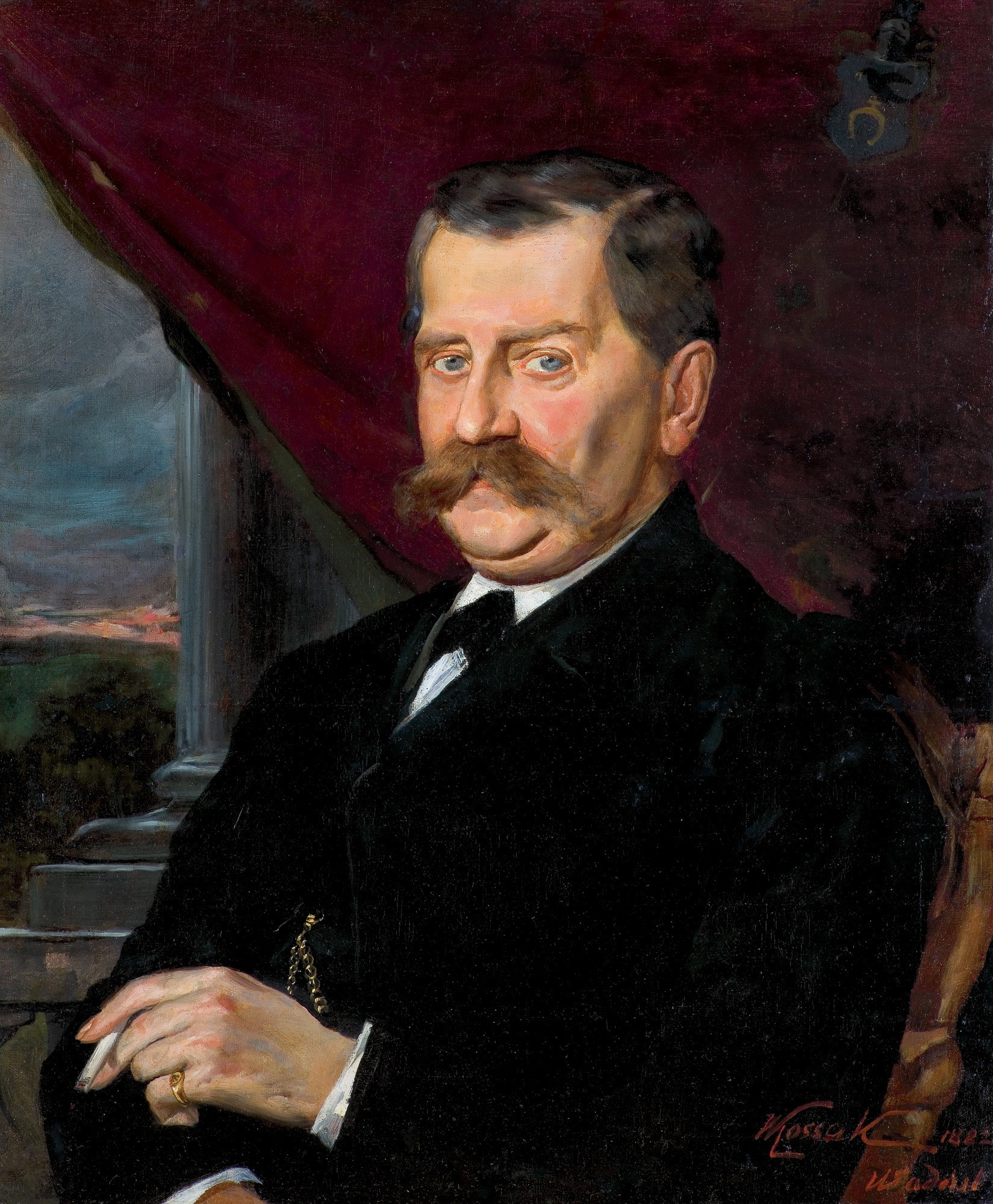
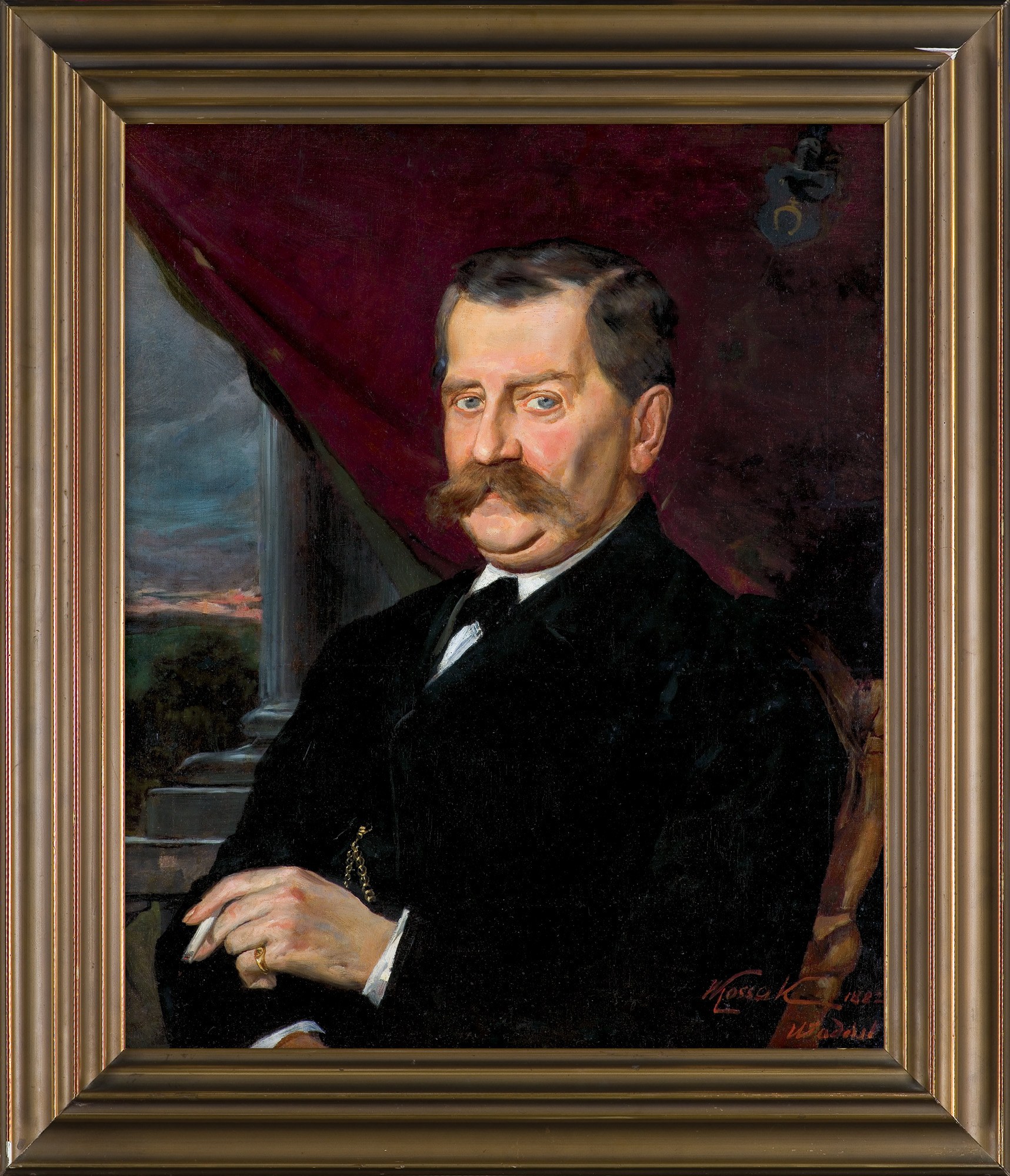
73.3 x 60.8 cm - oil, canvas
Signed p.d.: WKossak 1882 | Uładówk[a].
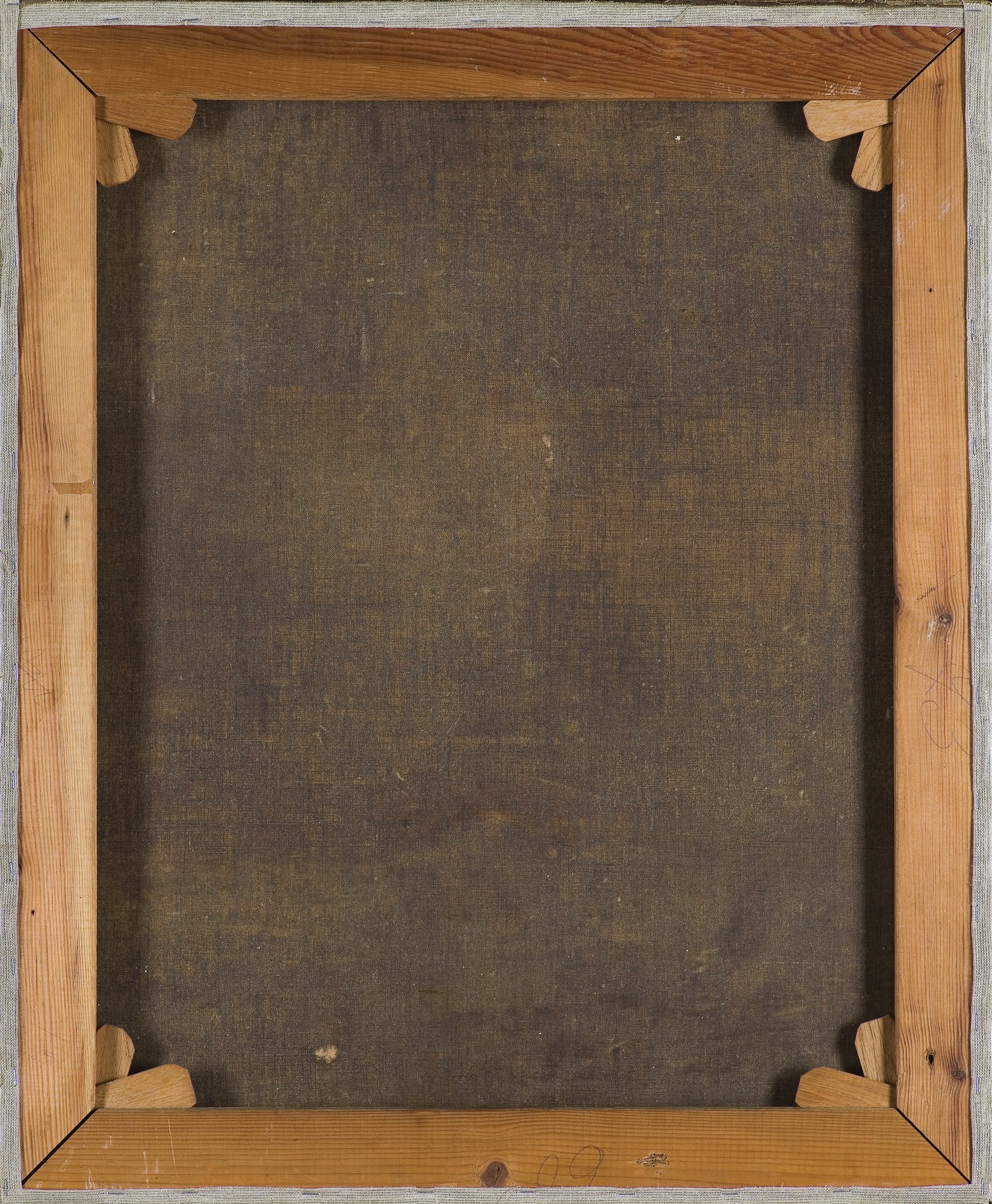
On the right and bottom slat of the painting loom numbers referring to the dimensions of the painting: 73 and 60.
On the lower bar of the frame a paper sticker of the Bruno Wenzel antique shop.
Provenance: the circle of the Kossak family.
Her father especially loved Zofia, she had drawing skills and later attended Adrian Baraniecki's courses in Cracow, she also studied drawing with Matejko," wrote Kazimierz Olszański about Zofia née Kossak Romańska, daughter of Juliusz Kossak and sister of Wojciech Kossak (K. Olszański, Juliusz Kossak, Kossakiana Publishing House, Cracow 2000, p. 74). Zofia (1861-1946) married Kazimierz Romański (ca. 1856-1911), plenipotentiary of the Potocki estate, in 1882. Around 1904, Romanski acquired an estate in Hrusiatycze in Halich Rus. The Kossaks visited his manor many times, as Wojciech described in Letters to his wife and friends, and Magdalena Samozwaniec in her book Maria and Magdalena. In 1909 Wojciech's brother-in-law went bankrupt, and together with his wife and already three children, he moved to Novosielicy, where Romanski once again became manager.
Known primarily for his battle paintings, Wojciech Kossak was a highly regarded portraitist. Possessing the virtuoso technique of a realist, he also possessed the sense of an attentive observer, thanks to which he was able to accurately capture the psychology of his model, as exemplified by the work on offer. Romanski, dressed in an elegant dark suit, is seated in an armchair, holding a cigarette in his left hand, and a gold signet ring is visible on his heart finger. He directs his gaze straight toward the viewer. To the right, at the top, is his family crest - the Slepowron. Behind it, a heavy maroon drapery is visible, and next to it is a classical column, which gives the composition solemnity and monumentality. In the depths stretches a landscape illuminated by the glow of sunset, which introduces an element of moodiness and metaphor to the portrait.
In the lower right corner, the artist has affixed his signature, stamping it with the year 1882, referring to the date of the Romanski family's wedding, and the name of the Uładówka estate (a village in Vinnitsa district, in the Potocki estate), where the young couple then resided.
The offered portrait is one of the few Kossak family heirlooms to have appeared on the antiquarian market. Hence, it undoubtedly has significant historical and museum value.
Wojciech Kossak (Paris 1856 - Krakow 1942 ) - widely known painter, seen primarily as a great battle artist. The son and pupil of Juliusz Kossak, he studied at the Cracow School of Fine Arts, the Munich Academy and in Paris. In 1895-1902 he stayed mainly in Berlin, working for Kaiser Wilhelm II. He traveled extensively, including to Spain and Egypt, where he made sketches for intended panoramas. In later years, he traveled to the United States several times doing portrait commissions. In 1913 he was appointed professor at the Warsaw School of Fine Arts. During the years of World War I, he served in the military. He was co-author of panoramas: "Raclawice" (1893-1894), "Berezina" (1895-1896), "Battle of the Pyramids" (1901) and sketches for the unrealized "Somosierra" (1900). With temperament and freedom, he created extensively painted dynamic battle scenes, historical scenes, genre scenes and numerous portraits. He was fond of painting horses. His paintings, glorifying the Polish military and the heroism of soldiers, both ancient and contemporary to the artist, appealed to the patriotic feelings of the public and enjoyed great popularity.





Recentemente visualizados
Efetue login para ver a lista de itens
Preferidos
Efetue login para ver a lista de itens