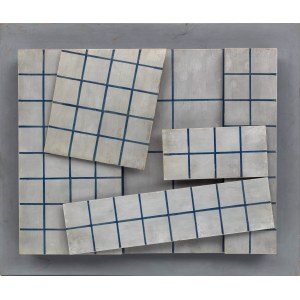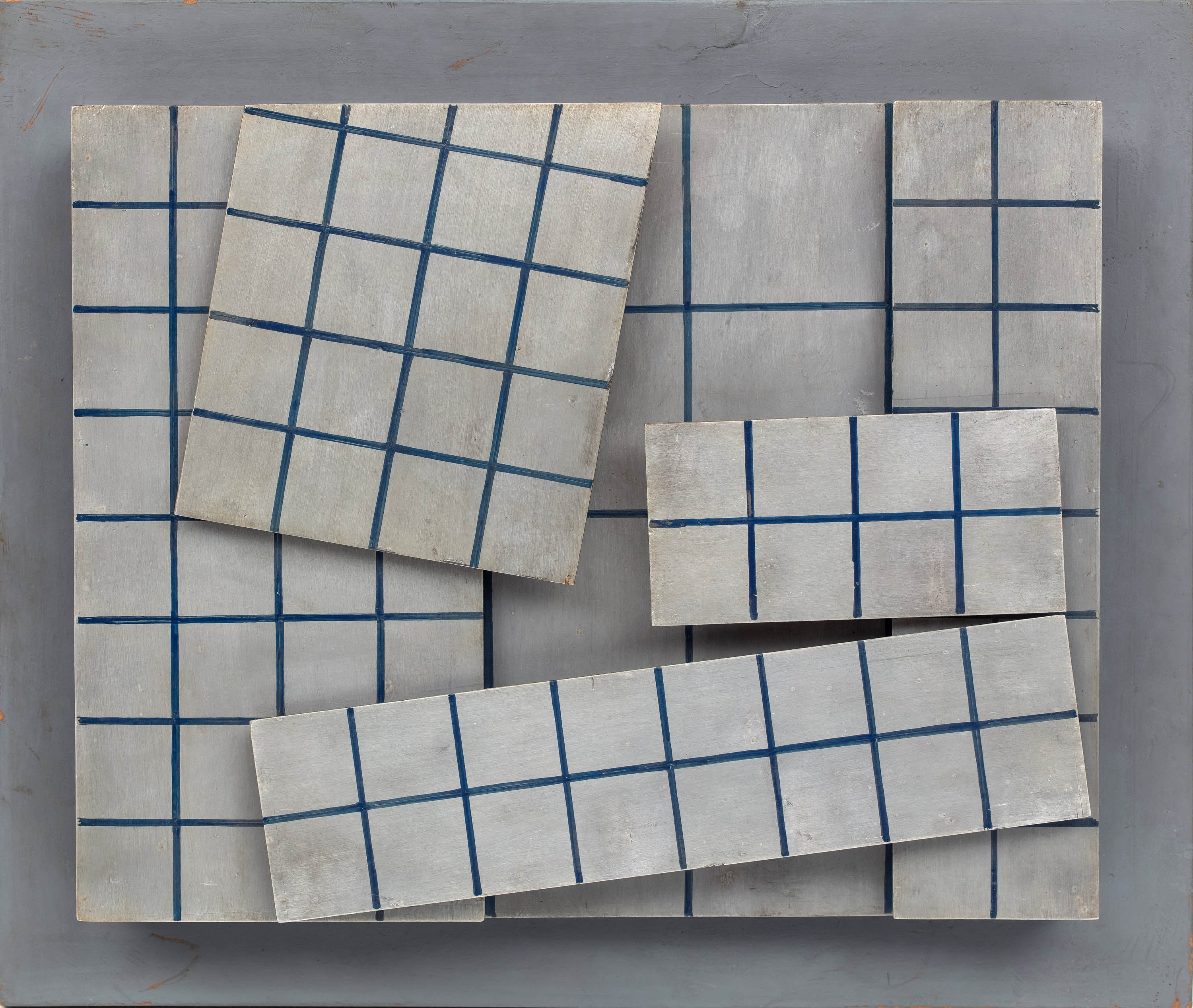
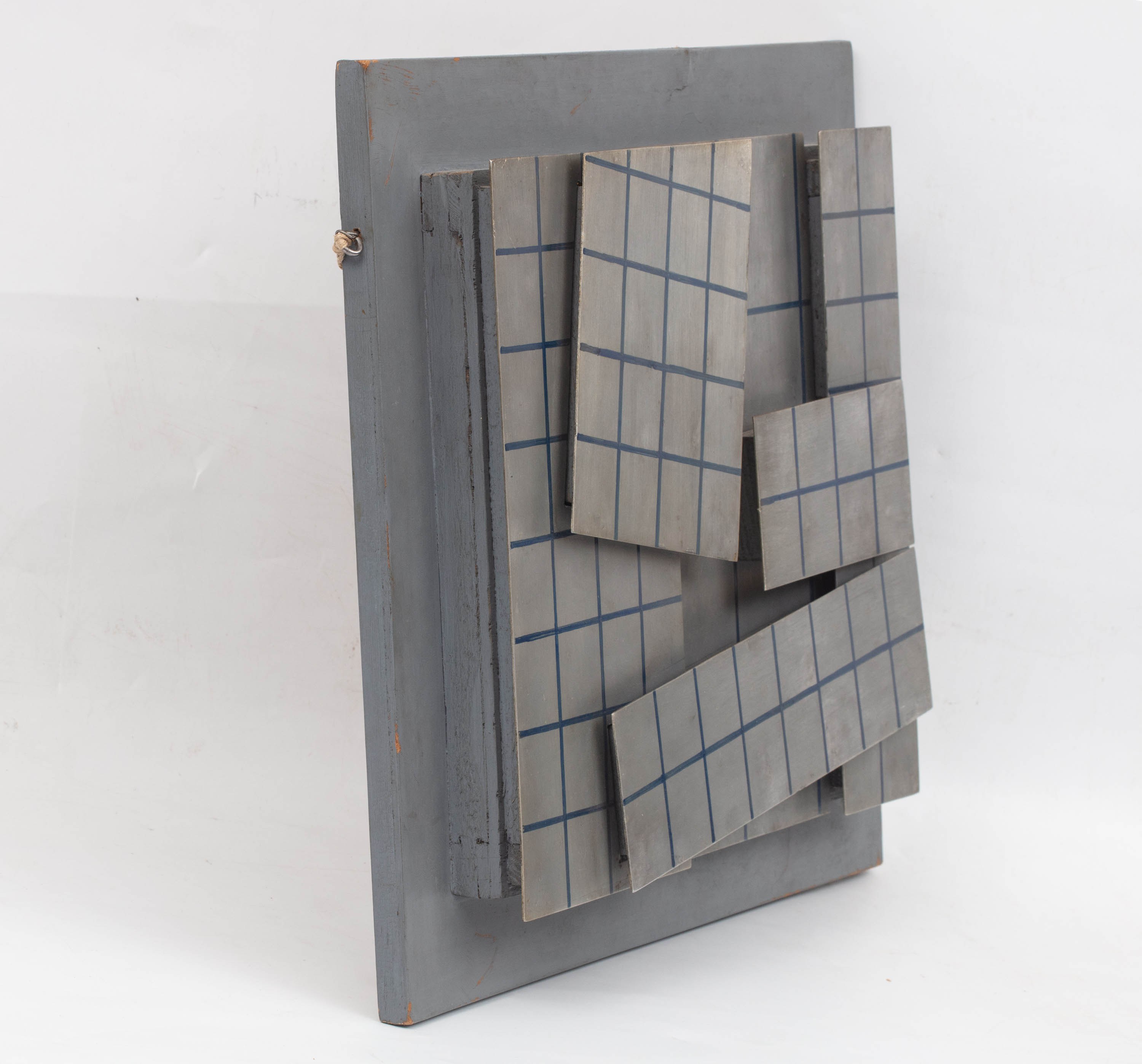
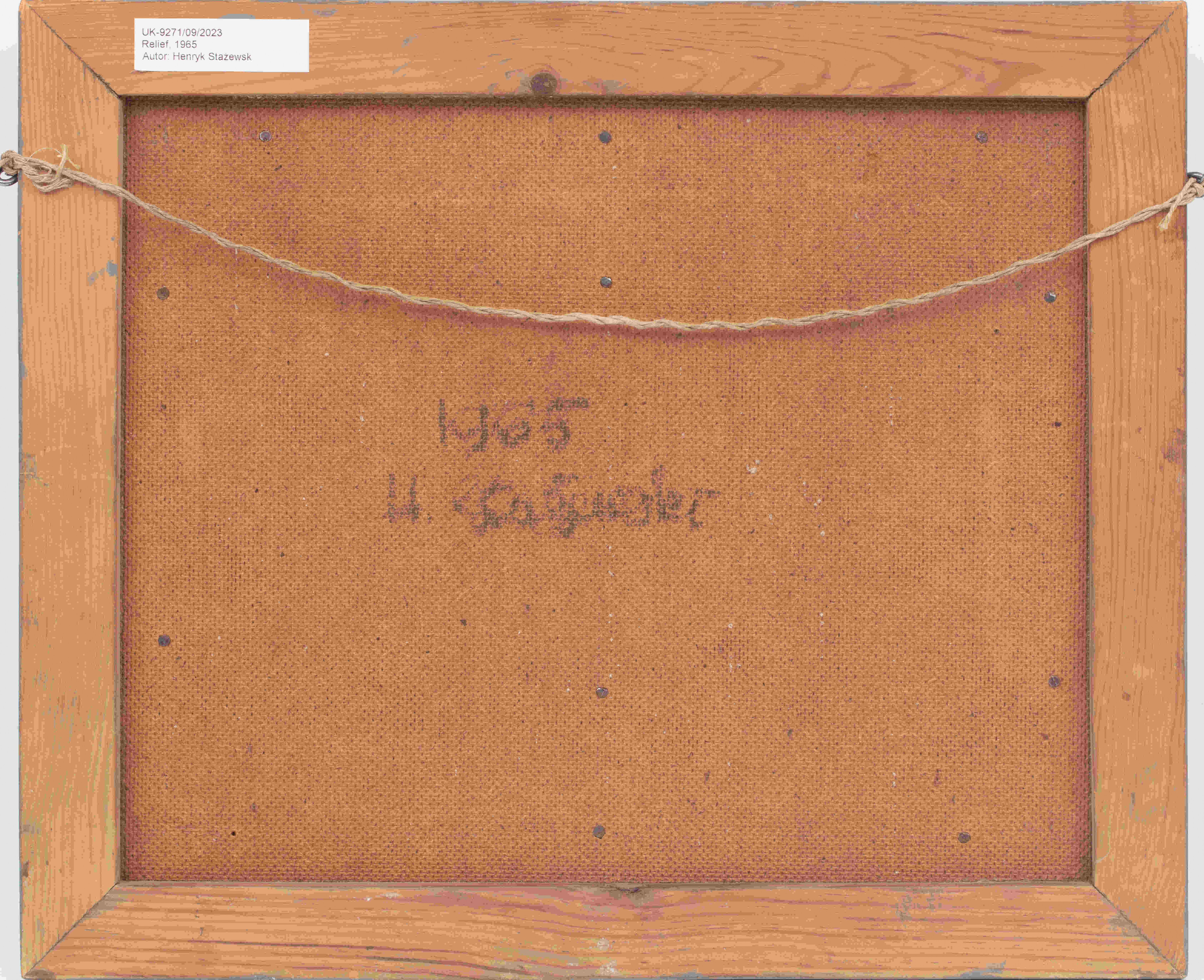
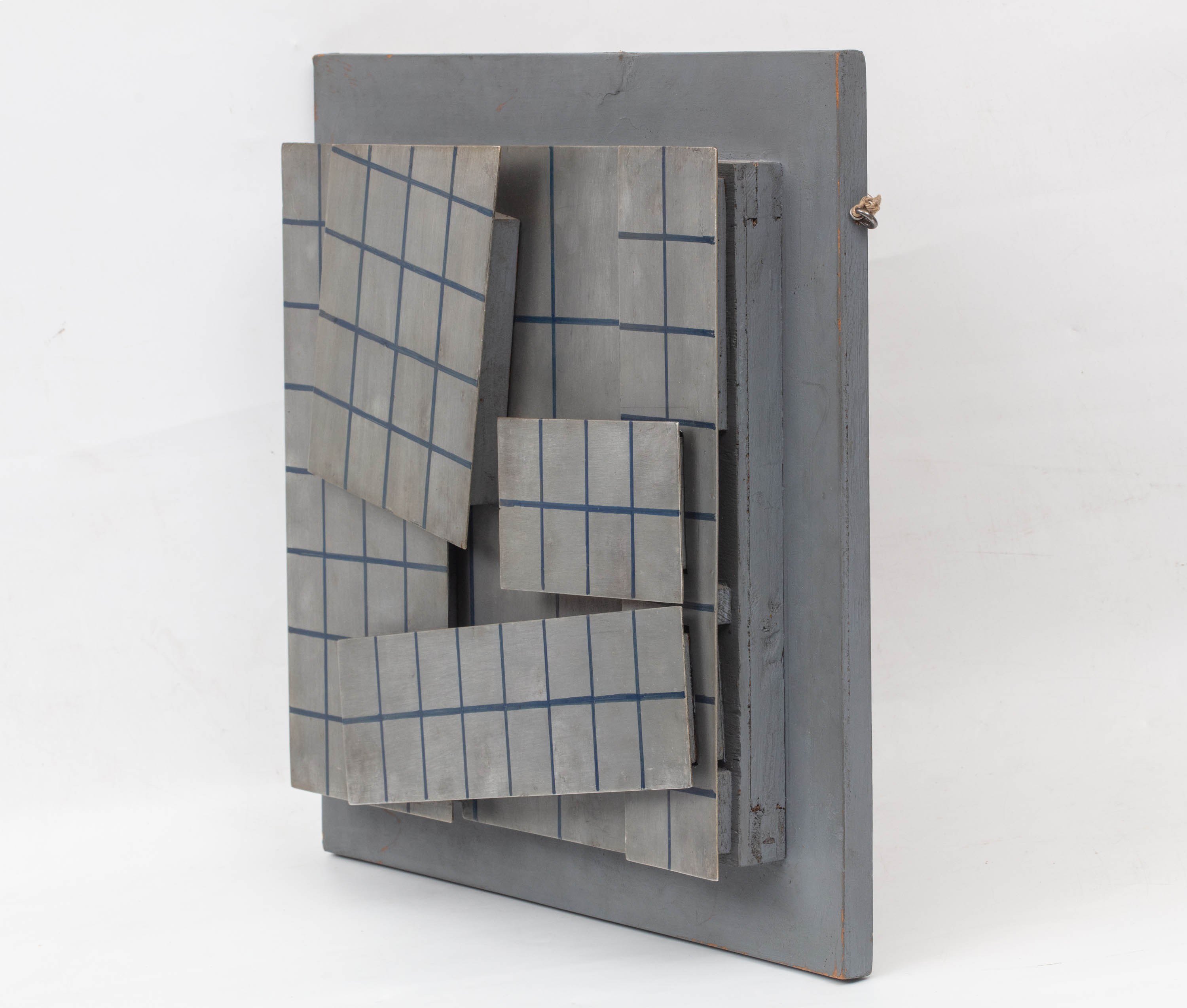
The year 1965 was a period of intense exploration and creative experimentation for the still young in spirit 71-year-old Henryk Stażewski, who then created a series of metal reliefs and kinetic sculptures in public space. Stażewski undertook work on reliefs, from which emerged two large series most often seen in museums: white reliefs made of wood and metal reliefs. They dominated his work for a long time.
That year Henryk Stażewski celebrated 40 years of creative work, received the Prize of the Minister of Culture and Art in the field of fine arts, and participated in the First Biennial of Spatial Forms in Elbląg. At the turn of the following year, he had an exhibition of his latest works, created in 1964-1965, at Warsaw's Zachęta Gallery. At that time, the artist presented 27 reliefs, most of which introduced a new material - metal. It was present in various variations: from silver lacquer, through aluminum, copper, aluminum black and white, chrome plating, silvering and gilding. Stażewski's metal and metallic reliefs were usually received very positively. In May 1966, the artist was awarded the Officer's Cross of the Order of Polonia Restituta, and at the XXXIII Venice Biennale he exhibited some 30 metal compositions, for which he received an honorable mention.
ORIGIN:
- Cracow, private collection
- Lodz, Olimpus Gallery
- Poznan, private collection
EXHIBITED:
- 2004 "2 x Dariusz and Krzysztof Bieńkowski collection", Orońsko Polish Sculpture Center, Orońsko.
- 2009 "Collection of Events", Atlas Sztuki Gallery, Lodz.
the work is accompanied by a confirmation of authenticity by Janina Ładnowska and Zenobia Karnicka from 2002
Painter, printmaker, art theoretician. He is considered one of the most prominent avant-garde artists of the interwar period. He was associated with the trend of constructivism. In 1913-19 he studied at the School of Fine Arts in Warsaw, under the direction of Stanislaw Lentz. He belonged to many art groups, such as: Polish Expressionists, Blok, Praesens, a. r., Cercle et Carré, Abstarction-Création. He traveled frequently to Paris. He was friends with Piet Mondrian, Theo van Doesburg and Michel Seuphor. He is considered one of the first Polish artists of geometric abstractions. In 1930, he was a co-organizer of a collection of works by artists of the international avant-garde intended for the Lodz museum (now in the Museum of Art in Lodz). After World War II, he lived and worked in Warsaw. After 1956, widely regarded as the patron saint of the Polish avant-garde, he already practiced exclusively abstraction of Constructivist origin. He created series of works that were studies of planes, lines, colors in various arrangements in relation to each other. In addition to painting and derivative forms, such as collages, reliefs, multiples, he created spatial forms and graphics. His works have appeared in many exhibitions, including: Warsaw, Vilnius, Lodz.