


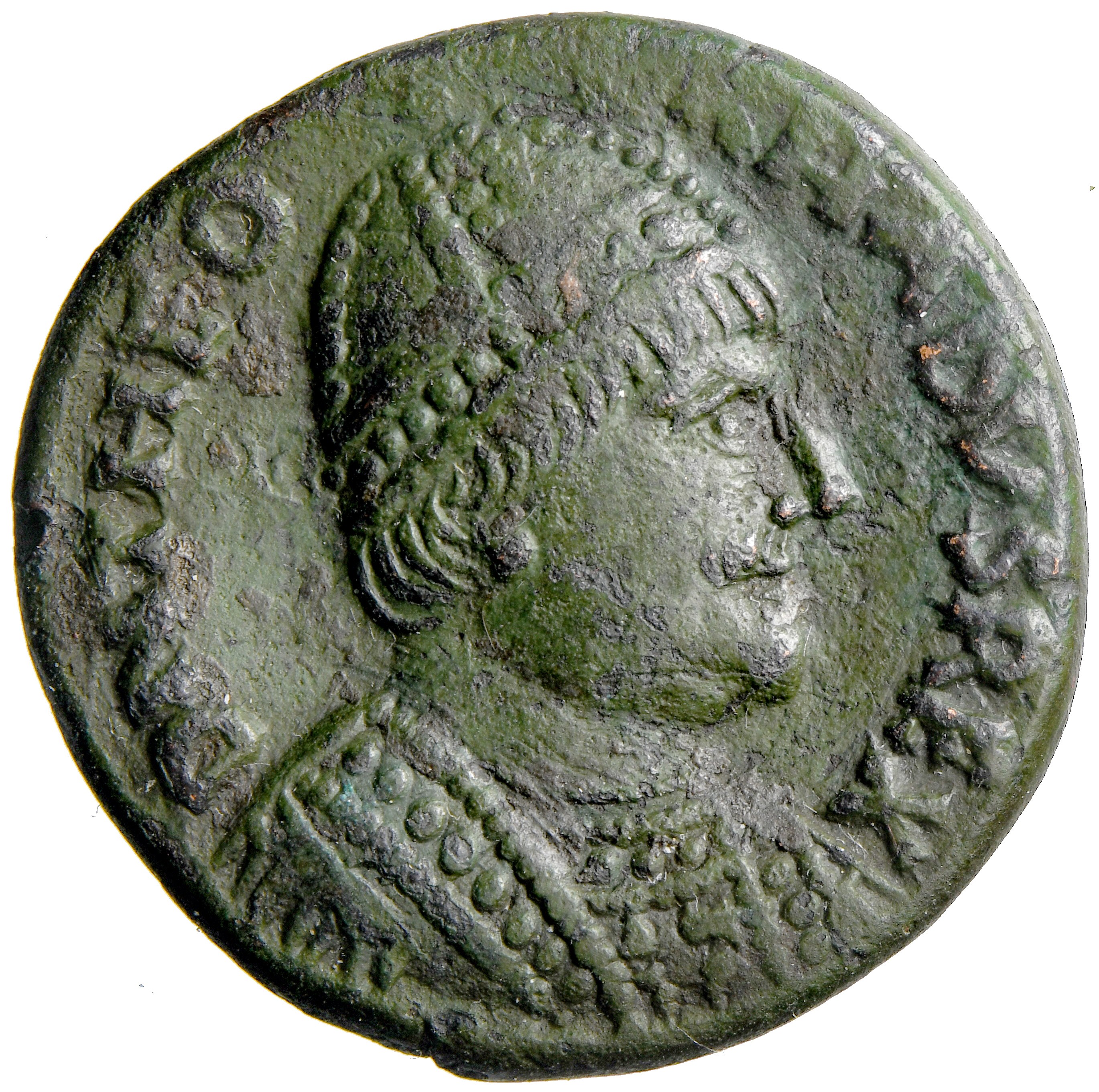
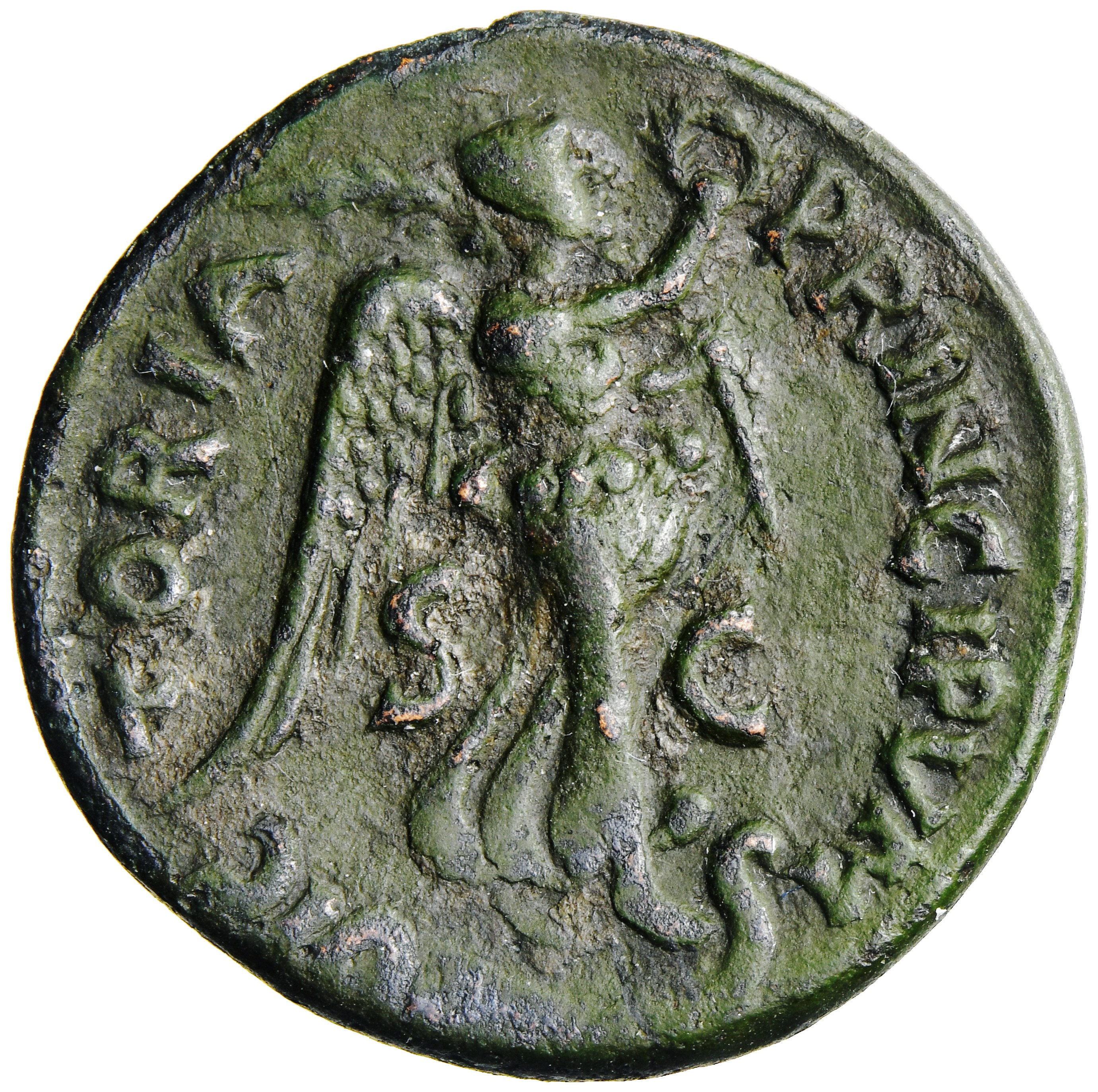
Kingdom of the Ostrogoths, Theodahad, 40 nummi (follis), ca. 535, Roman mint.
Obv. D N THEO-DAHADVS REX, bust of a mustached ruler wearing a royal cloak and a "Spangenhelm"-type helmet, facing right.
Rev. VICTORIA PRINCIPVM, Victoria standing facing right on the prow of a galley, holding a palm branch on her left shoulder and a wreath in her outstretched right hand; S-C across the fields.
Bronze, 10.01 g, 26.0 mm, 6 h. Metlich OCOI 89b subtype 1b.
Condition III+, dark green patina
The coin offered here represents a very rare variant featuring the full Latin spelling of the Gothic king’s name using the letter D (THEODAHADVS). Only two pieces of this variant are recorded in the numismatic.org database, both held in the Münzkabinett collection in Berlin. While in contemporary Byzantine and Greek sources (e.g., Procopius of Caesarea) the name was phonetically Latinized to a form with the letter T (Theodahatus), in this case, Roman die-cutters in the years 534–536 rendered the hard, Germanic sound of the root -haþus (struggle) using the letter D.
An outstanding example of this rare and fascinating issue, one of the most magnificent Gothic coins.
Theodahad inherited the Gothic kingdom after the death of Atalaric, the direct successor of Theodoric the Great (471–526), who expanded the Goths’ small tribal lands in Pannonia into an empire stretching all the way to Spain. Theodahad had no intention of inheriting the kingdom, content to rule over a fiefdom encompassing a significant part of Etruria and devoting himself to his passion for art and the study of the fading classical world. However, Amalasunta, Theodoric’s daughter and the sole surviving member of the dynasty, was unable to rule on her own and needed her cousin by her side. It was a poor choice. As Warwick Wroth succinctly put it, Theodahad proved to be “fickle, cowardly, and greedy.” And ungrateful—in 535, he ordered Amalasunta’s arrest and exile. The queen had been protecting Byzantine law in Italy, and her dethronement gave Justinian the perfect pretext to launch a renewed conquest of the peninsula. Theodahad frantically tried to appease the emperor, profusely apologizing for his actions and promising to hand over authority over Italy to Constantinople. This only angered the Ostrogothic nobles, who immediately elected Witigis as the new king. Theodahad was assassinated in December 536 while attempting to take refuge in Ravenna. He was an extremely incompetent ruler, but one who was enamored with classical tradition, a fact reflected in his bronze coins. The bust in a helmet on the 40th nummi, though entirely Gothic in its details, is rendered with precision and realistic accuracy, fully corresponding to imperial portraits from the 2nd century, and the reverse, featuring a victory motif, alludes to numerous propaganda sesterces from the early imperial period.









