


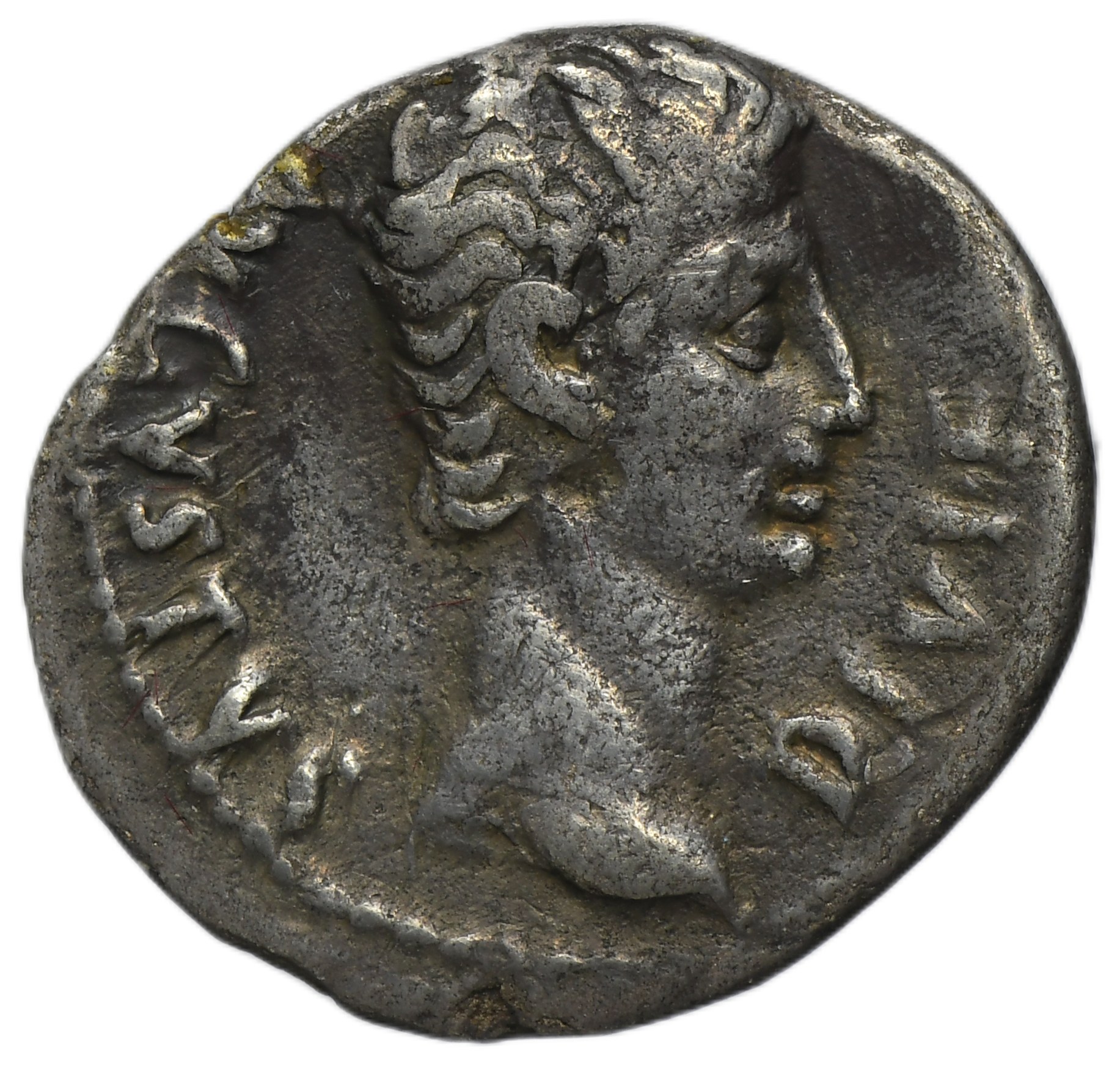
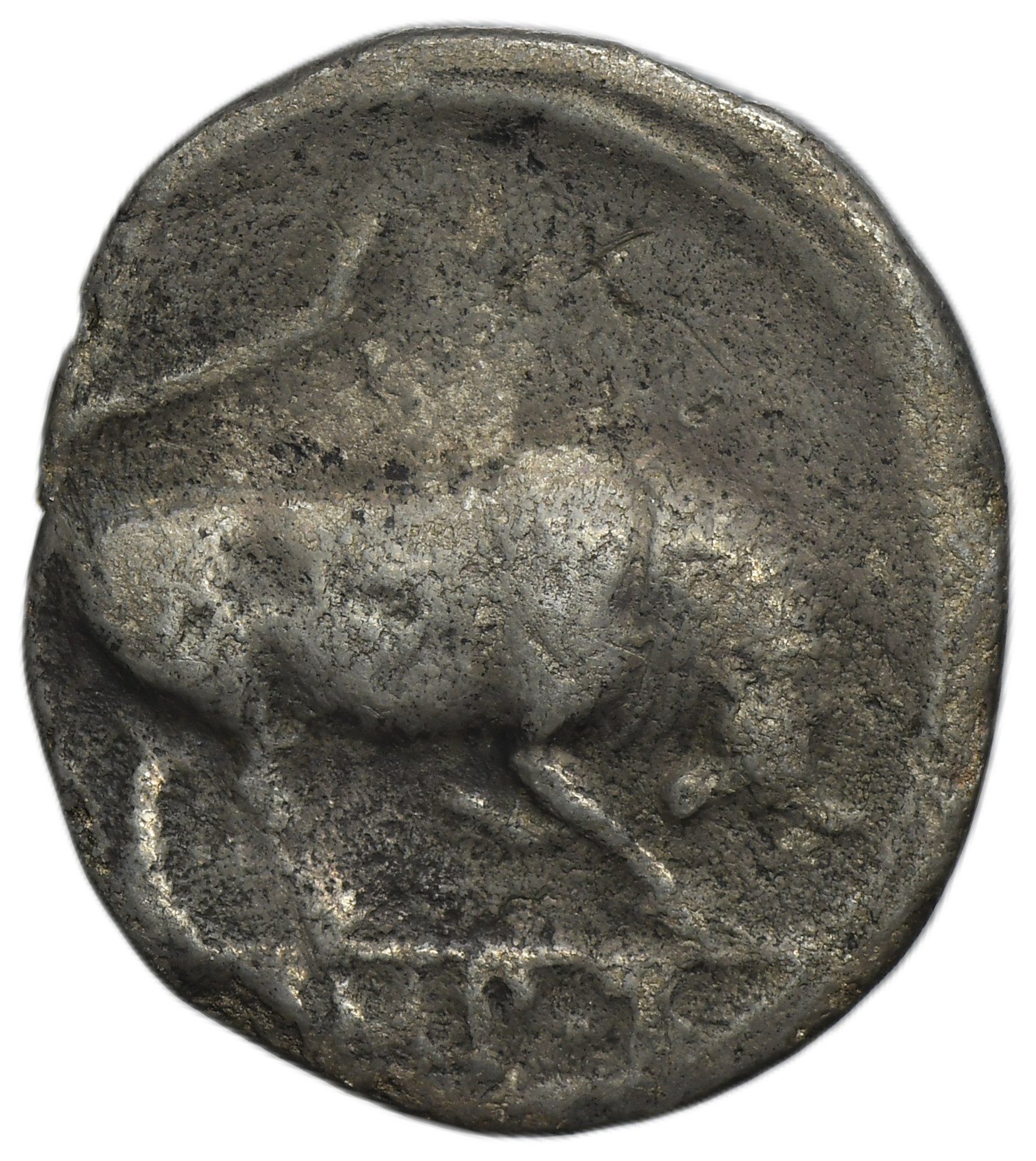


A very interesting issue of Augustus, struck at Lugdunum between 15 and 13 BC, during a period of intensive reorganisation of the western provinces of the Roman Empire. The mint at Lugdunum became one of the most important centres of imperial coin production in the West.
The obverse depicts the bare head of Augustus surrounded by the legend AVGVSTVS DIVI F. The title Divi Filius, “son of the deified one”, referred to Octavian’s adoption by Julius Caesar and Caesar’s subsequent deification, becoming one of the most important elements in the legitimisation of Augustus’ authority.
The reverse, with its dynamic depiction of a charging bull, belongs to the most distinctive motifs of early Imperial coinage. The precise symbolism of the image remains a matter of debate, and it is therefore preferable not to associate it conclusively with any specific event or cult. Nevertheless, the powerful image of the animal clearly conveys strength and energy, corresponding well with the military character of the legend IMP X.
IMP X records Augustus’ tenth acclamation as imperator. Its combination with the title Divi Filius brings together on a single coin two fundamental foundations of his position: exceptional dynastic and religious legitimacy and the authority of a victorious military commander.
The present denarius thus constitutes a characteristic testimony to the early Principate, when Augustus was systematically developing a new language of political authority while simultaneously preserving the formal structures and traditions of the Republic.
Roman Imperial
Octavian Augustus (27 BC-14 AD), Denarius 15-13 BC, Lugdunum (Lyon) mint
Obverse: bare head of August right
AVGVSTVS DIVI F
Reverse: bull butting right, IMP X in exergue
Diameter 20 mm, weight 3.46 g











