


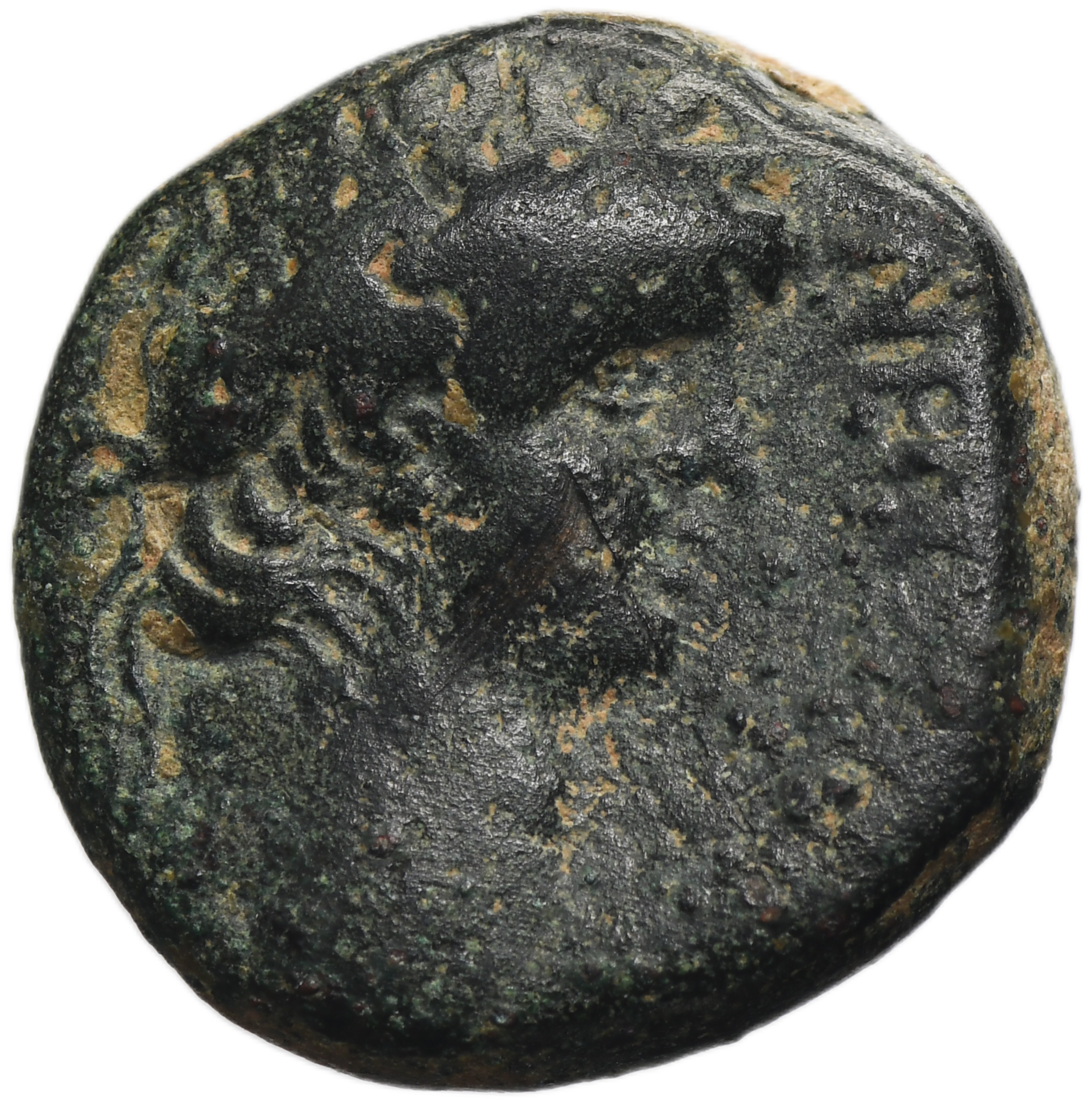
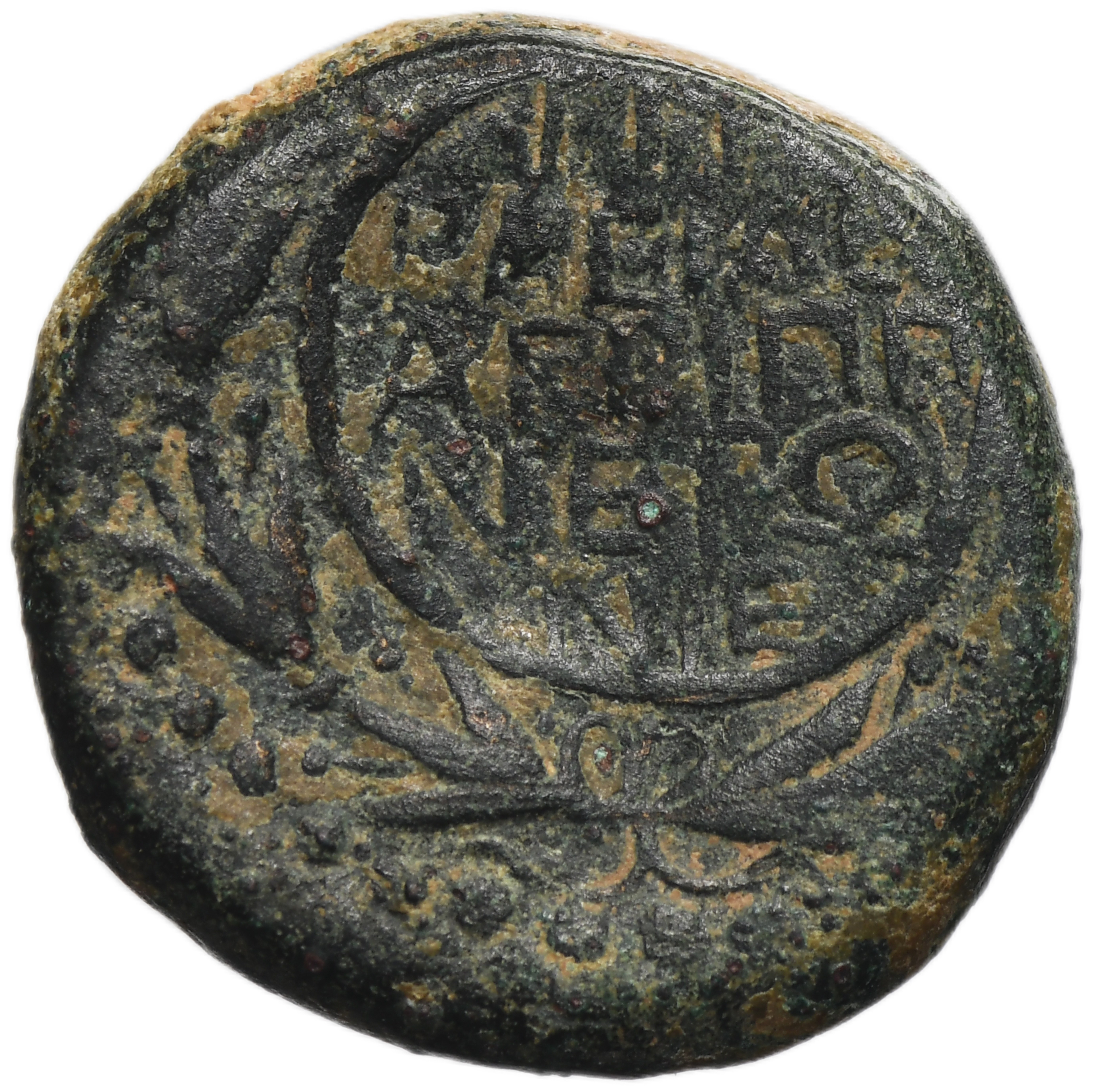


A provincial bronze issue from Judea, struck during the reign of Emperor Nero (AD 54–68) at the mint of Neronias, represents a clear example of monetary cooperation between Roman imperial authority and local client kingship structures.
Neronias named in honor of the emperor lay within the territories governed by Herod Agrippa II, who ruled as a client king allied to Rome. Such issues are well documented in the standard corpora of Roman Provincial Coinage and reflect the administrative framework of the eastern provinces in the mid-1st century AD.
The obverse bears the laureate portrait of Nero facing right with the legend NEΡΩNOΣ KAIΣAΡ ΣEBAΣTOY (“Nero Caesar Augustus”), corresponding to the emperor’s official titulature in Greek, the customary language of coin legends in the eastern provinces. The reverse displays a wreath enclosing the inscription EΠI BAΣIΛE AΓΡIΠΠI NEΡΩ NIE, referring to the reign of King Agrippa (Agrippa II) and to the regnal year counted according to Nero’s rule. The formula “epi basileos” (“under the king”) is characteristic of coinage issued in client kingdoms of Judea and Syria during the 1st century AD, as confirmed by scholarly studies of Herodian and provincial minting practices.
Roman Provincial
Judaea, Nero (54-68), AE, Neronias mint
Obverse: laureate head of Nero right
NEΡΩNOΣ KAIΣAΡ ΣEBAΣTOY
Reverse: EΠI BAΣIΛE AΓΡIΠΠI NEΡΩ NIE within wreath
Diameter 17 mm, weight 5.58 g











