


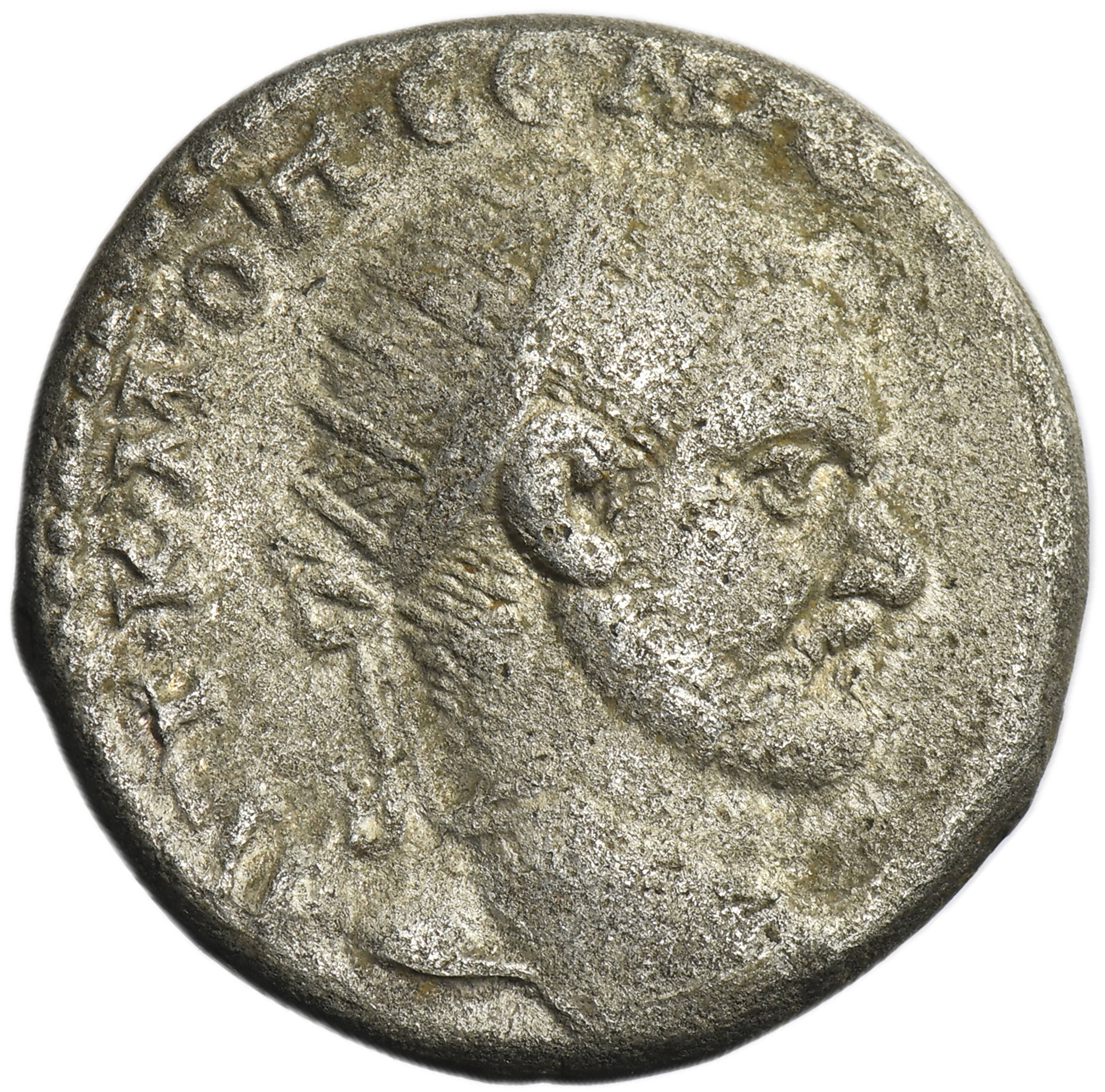
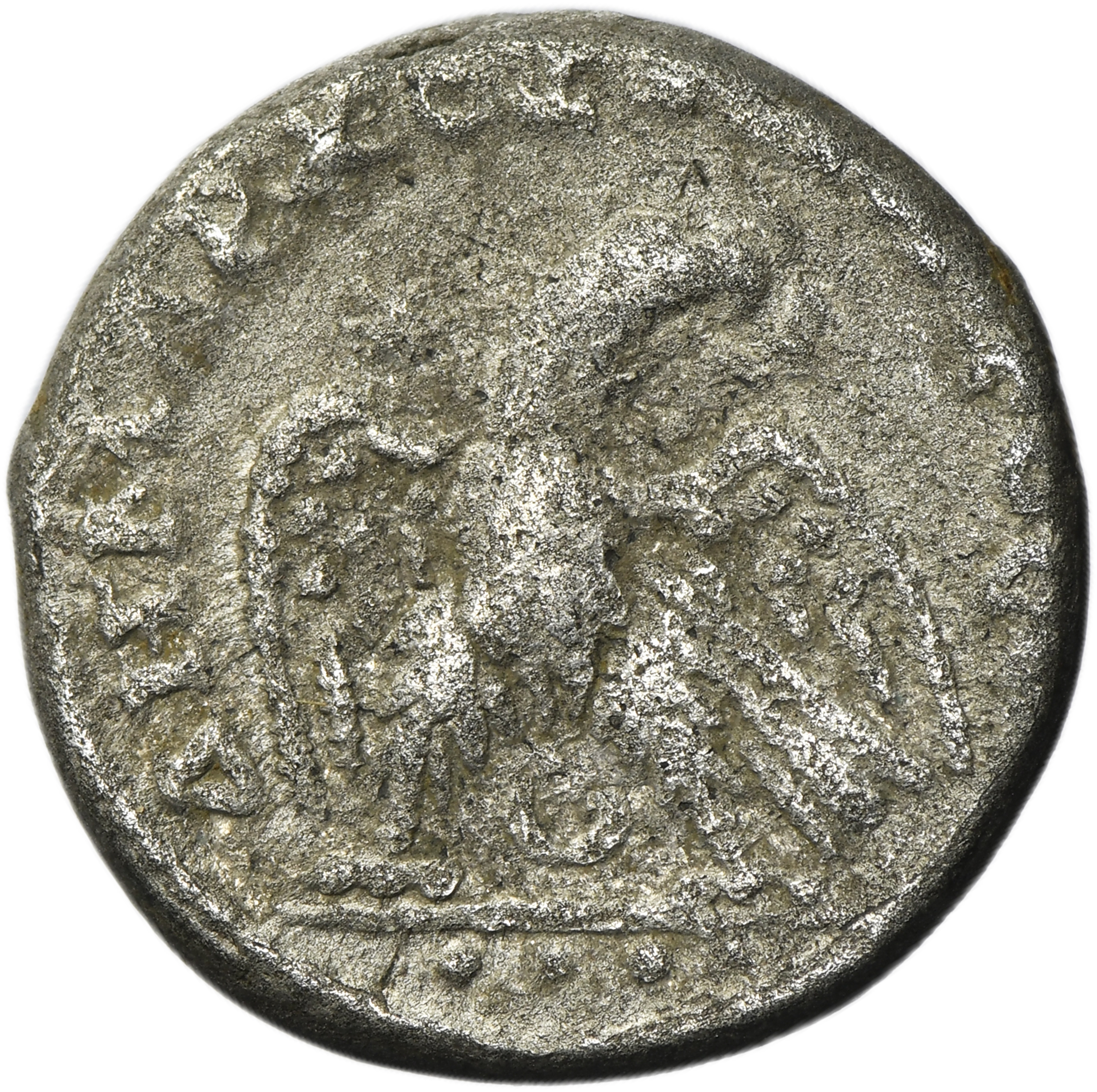


Bilon tetradrachm of Macrinus (AD 217–218), struck at Carrhae in Mesopotamia, belongs to the eastern provincial issues operating within a distinct monetary system based on tetradrachms, separate from the imperial denarius standard.
The obverse features a radiate head of the emperor facing right, with the Greek legend ΑΥΤ Κ Μ ΟΠ ϹΕ ΜΑΚΡΙΝΟϹ ϹΕB, giving his name and titulature as autokrator and augustus.
The reverse shows an eagle with outstretched wings, facing left with its head turned right, holding a wreath in its beak, with the legend ΔΗΜΑΡΧ ΕΞ ΥΠΑΤΟϹ. The eagle (aquila) was one of the principal symbols of imperial authority and the Roman army, while the wreath signifies victory and prosperity.
In addition, the presence of astral symbols a star in the field and a crescent below reflects well-documented regional iconography characteristic of Mesopotamian issues, integrating local religious symbolism into the broader framework of Roman imperial coinage.
Roman Provincial
Mesopotamia, Carrhae, Macrinus (217-218), Tetradrachm
Obverse: radiate bust of Macrinus to right
AYT K M OΠ CE MAKPINOC CEB
Reverse: eagle standing left, with wings spread, head right, holding wreath in his beak, star in left field, crescent below three pellets in exergue
ΔΗΜΑΡΧ ΕΞ ΥΠΑΤΟϹ
Diameter 24 mm, weight 12.21 g











