


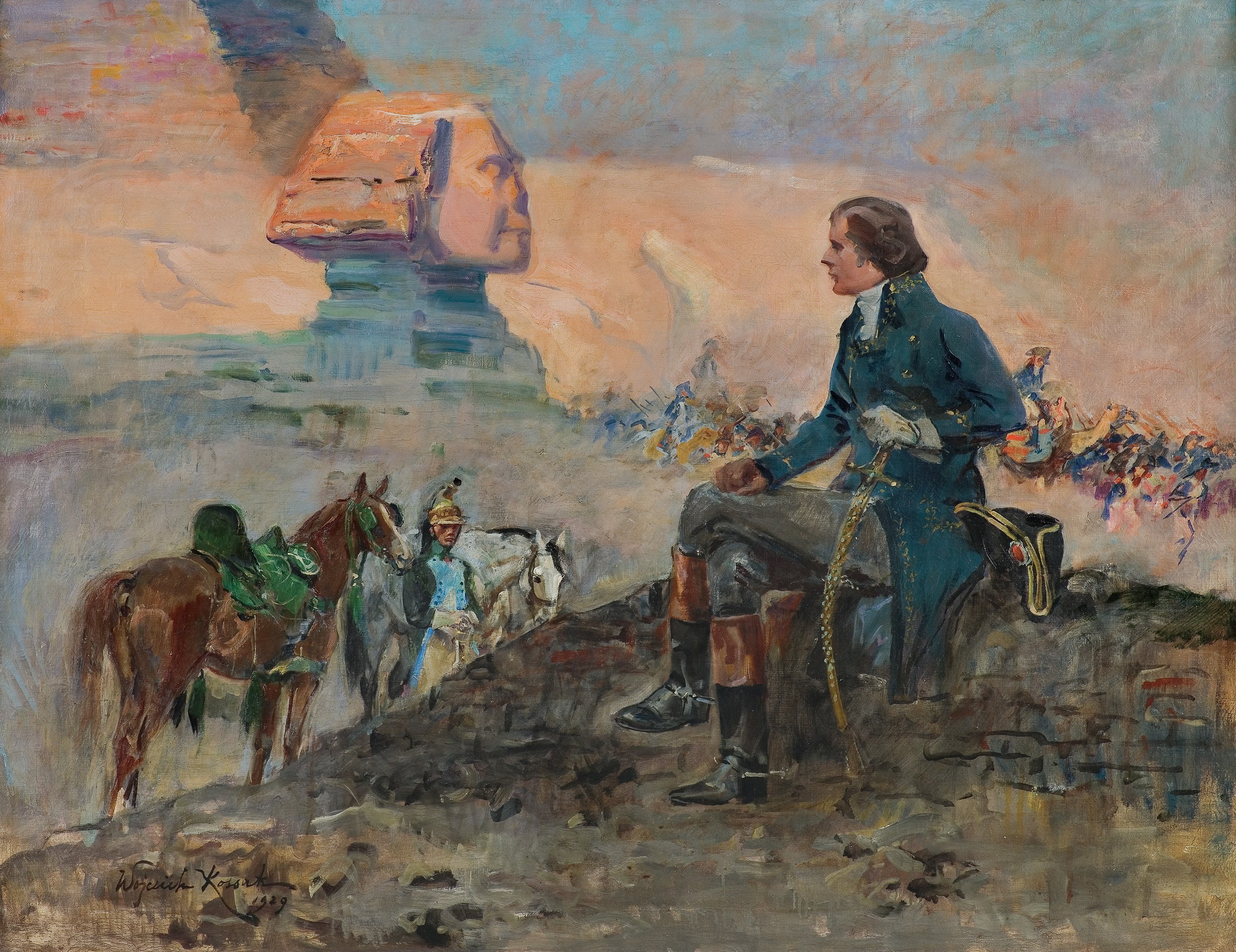
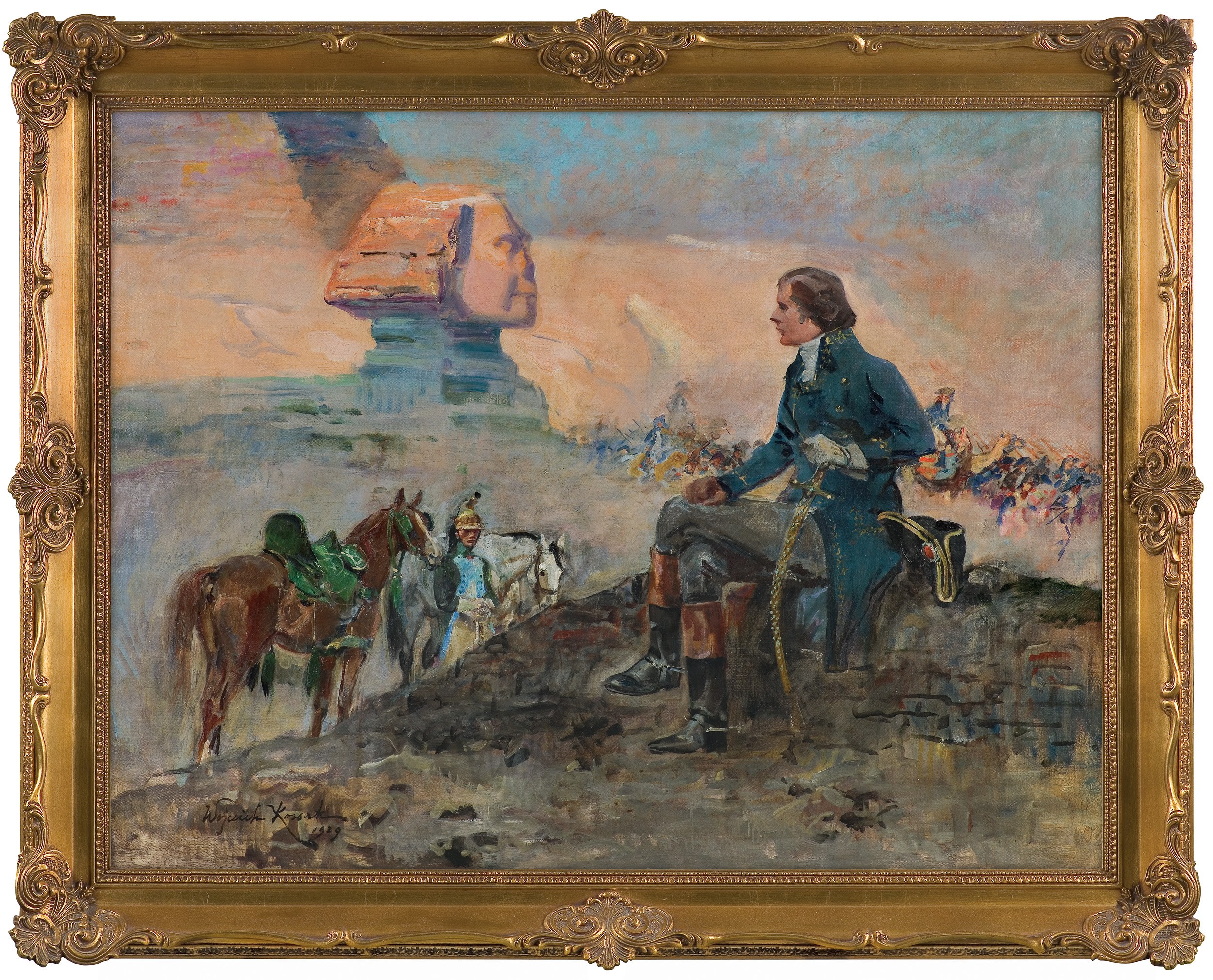
90,3 x 116,5cm - oil, canvas
Signed l.d.: Wojciech Kossak | 1929
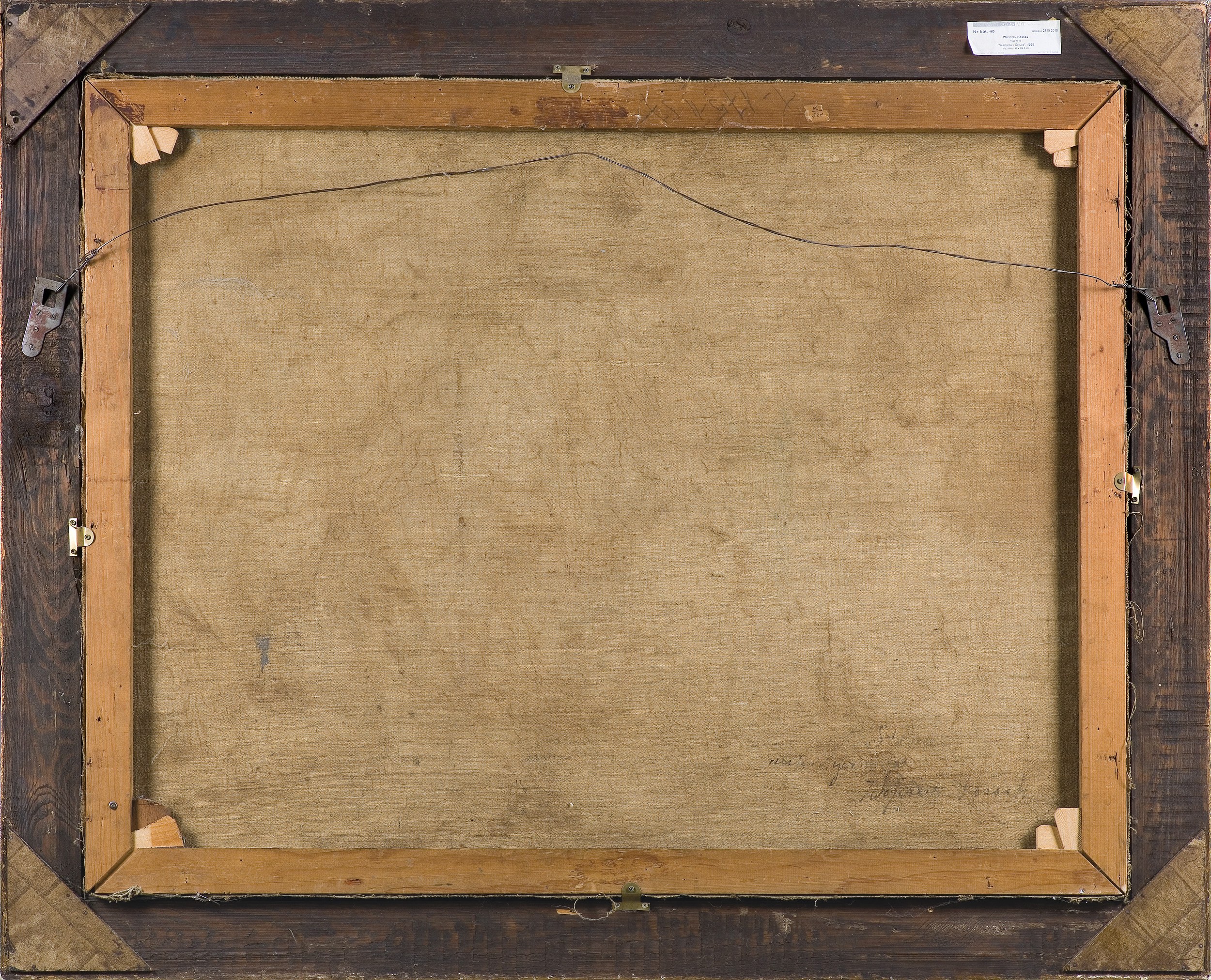
On the back of the canvas p.d. author's inscription (in black paint): I affirm | authenticity | Wojciech Kossak; on the upper bar of the loom a sticker with the number (in ink): K | 320; next to it a number (in black crayon): T-175-II 57; in addition, on the upper frame bar, an Agra-Art auction sticker dated 2010.
Napoleon and the Sphinx was painted by Wojciech Kossak several times, repeating this motif in slightly different compositional variants. The very idea of this composition seems to have been inspired by a well-known painting by the famous French Orientalist painter Jean-Léon Gérôme from 1867/68. Kossak's expedition to Egypt, undertaken in September 1900, was also significant, where he, together with Michal Gorstkin Wywiórski, prepared sketches for the intended panorama The Battle of the Pyramids.
The first version of Kossak's Napoleon and the Sphinx was created in the same year 1900, the next version was developed by the artist in 1911 (both reproduced in subsequent editions of K. Olszanski's album, Wojciech Kossak, Wroclaw 1976, 1982, 1990). Our painting is another redaction of this popular subject.
The Egyptian campaign was primarily intended to weaken Britain's economic position and give the French a beachhead from which to embark for India. On July 21, 1798, under the pyramids, Napoleon said, Soldiers! Remember, forty centuries he looks down on you from the heights of these monuments and led them to the victory that opened the way to Cairo and allowed him to conquer Egypt.
The featured Napoleon and the Sphinx is a pensive painting. The hustle and bustle of the battlefield does not come from it, no gunshots are heard, or the clatter of sabers. The artist has depicted only a man in the face of the might of the ancient world. Napoleon, sitting on a small wall in the foreground, looks over his right shoulder with admiration and respect at the Sphinx and pyramids - symbols of four thousand years of history. The Egyptian campaign was not just a purely military expedition, but also a scientific one. In addition to soldiers, Napoleon took with him about 170 researchers whose task was to study the legacy of the pharaohs. The expedition sparked Europe's fascination with antiquity and led to further archaeological expeditions.
Wojciech Kossak (Paris 1856 - Krakow 1942 ) - widely known painter, seen primarily as a great battle artist. The son and pupil of Juliusz Kossak, he was educated at the Cracow School of Fine Arts, the Munich Academy and in Paris. In 1895-1902 he stayed mainly in Berlin, working for Kaiser Wilhelm II. He traveled extensively, including to Spain and Egypt, where he made sketches for intended panoramas. In later years, he traveled to the United States several times doing portrait commissions. In 1913 he was appointed professor at the Warsaw School of Fine Arts. During the years of World War I, he served in the military. He was co-author of panoramas: "Raclawice" (1893-1894), "Berezina" (1895-1896), "Battle of the Pyramids" (1901) and sketches for the unrealized "Somosierra" (1900). With temperament and freedom, he created extensively painted dynamic battle scenes, historical scenes, genre scenes and numerous portraits. He was fond of painting horses. His paintings, glorifying the Polish military and the heroism of the soldiers, both ancient and contemporary to the artist, appealed to the patriotic feelings of the public and enjoyed great popularity.













Recentemente visualizados
Efetue login para ver a lista de itens
Preferidos
Efetue login para ver a lista de itens