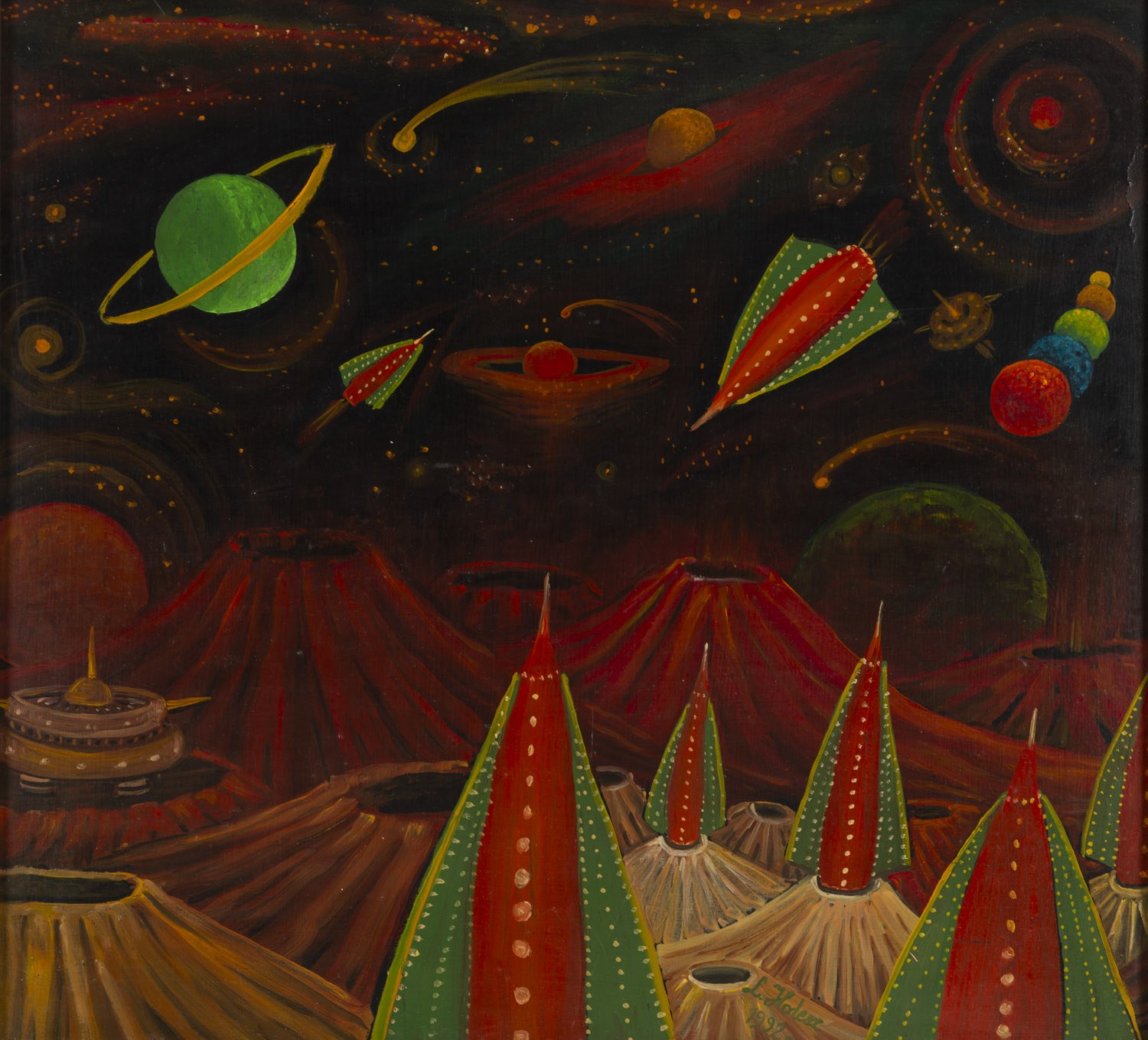
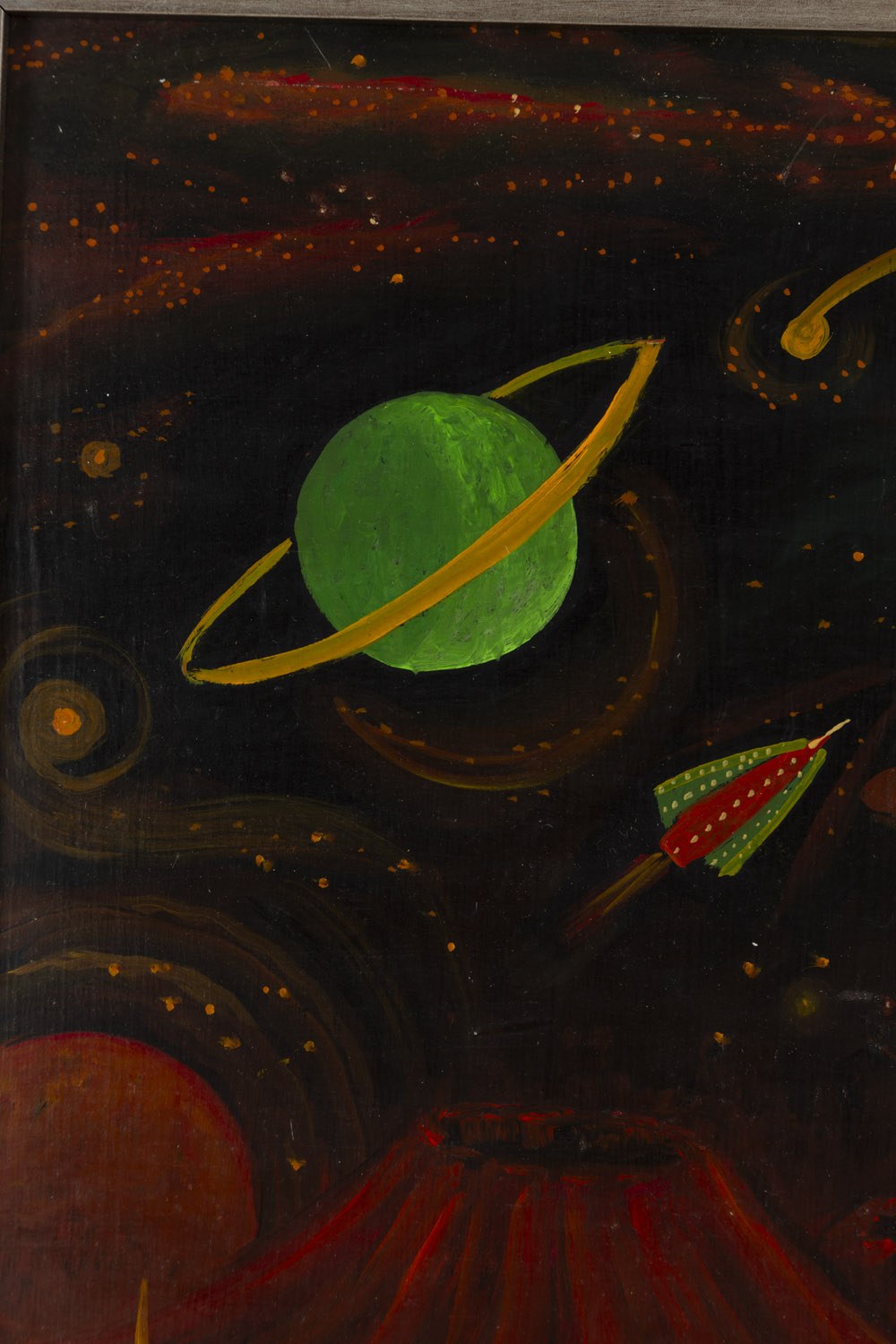
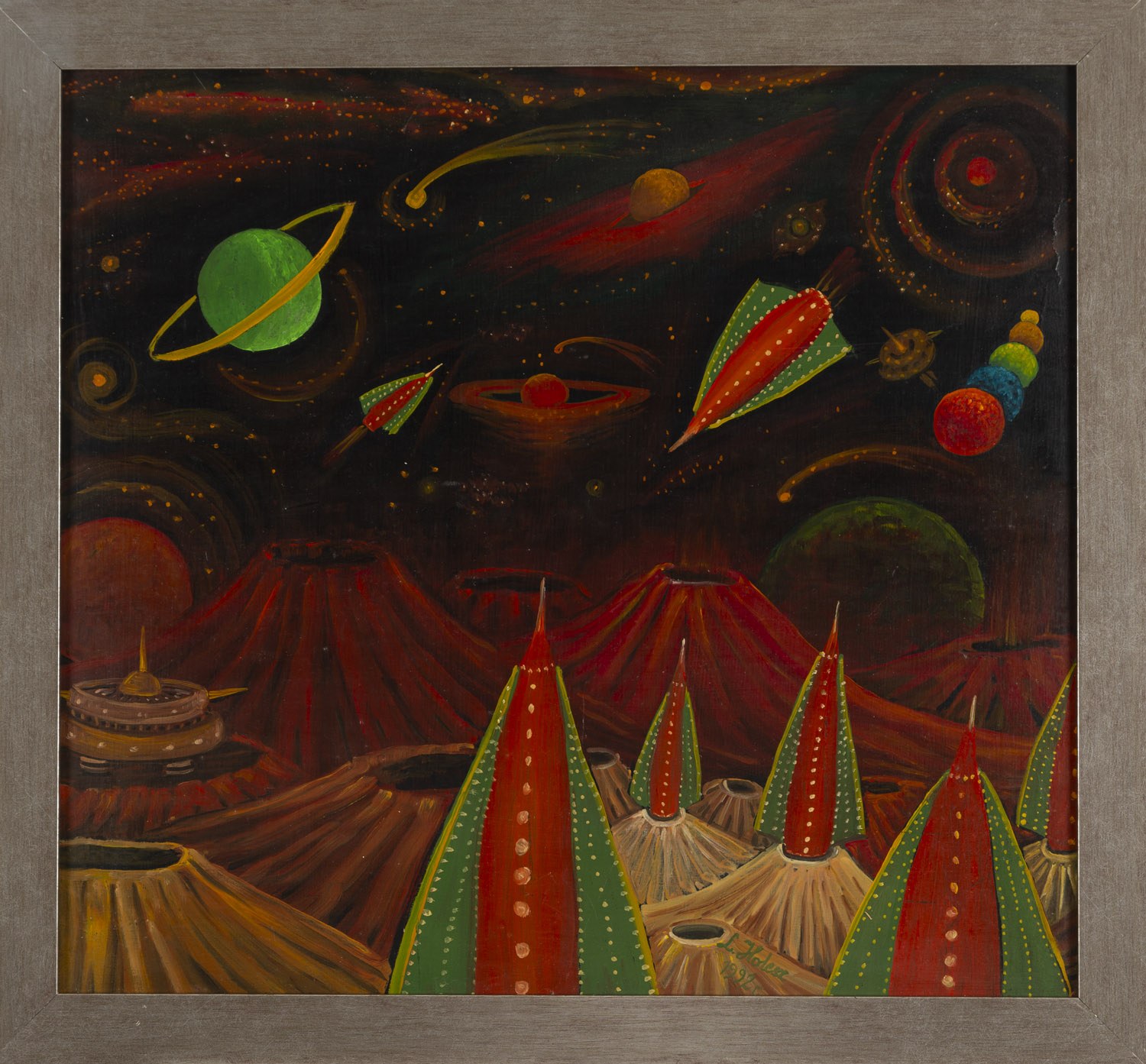
Dimensions: 53.5 x 59 cm (clear frame)
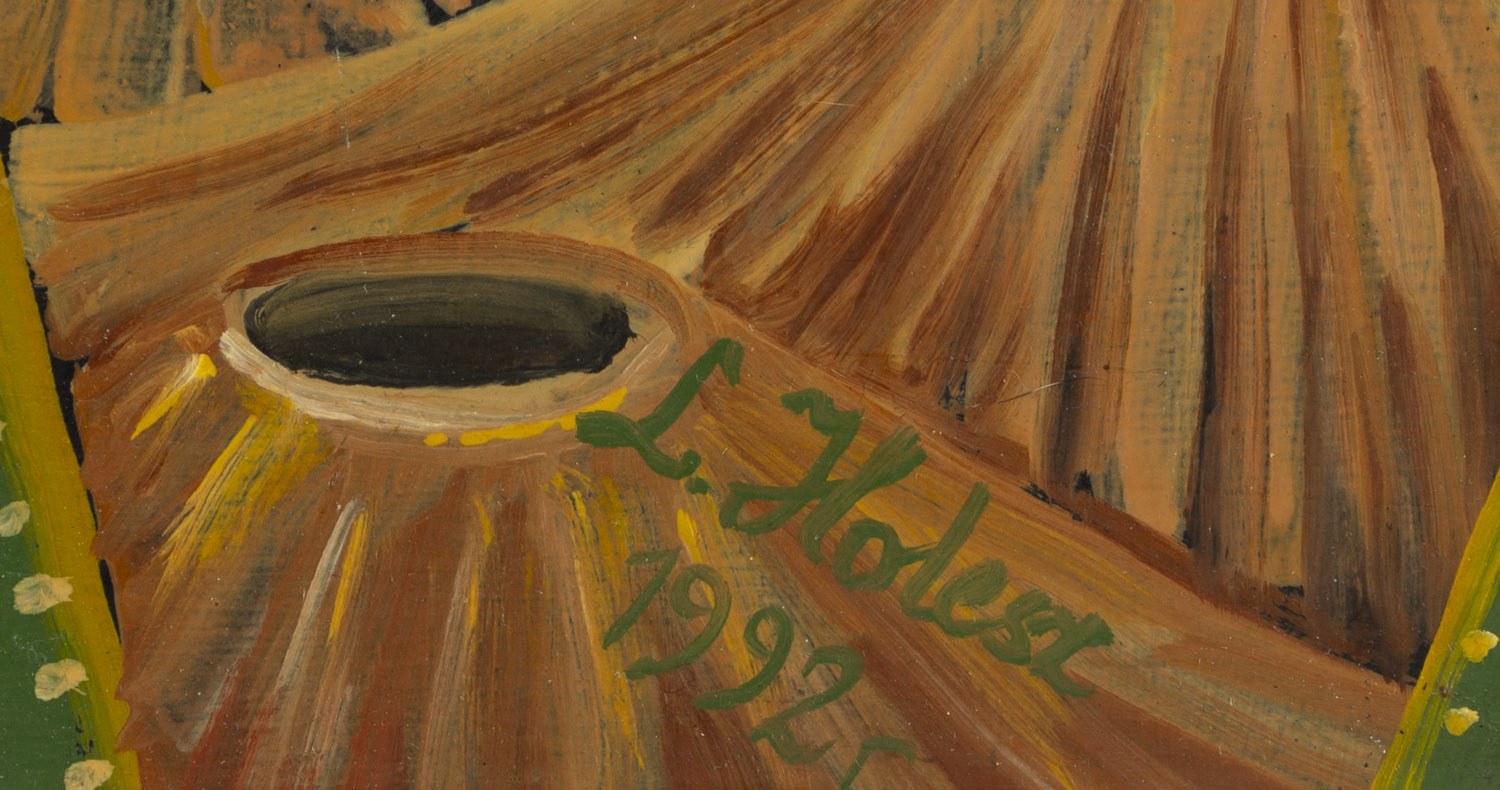
Signed and dated at the bottom: 'L. Holesz | 1992'.
Biography
Ludwik Holesz showed a desire to create from childhood, which may have resulted from family traditions - his grandfather carved in wood and his father was a carpenter. Due to a difficult financial situation and the loss of his mother, young Ludwig had to take up gainful employment very quickly to support his family. In his spare time he would create, escaping to his asylum in a valley nearby, which he called "Bird Valley."
World War II brought a dramatic change for Holesz - he was deported to forced labor in Germany and later drafted into the army. He suffered during the war, sustaining wounds that permanently limited his fitness. He returned to Poland in 1945, where he settled in Świerklany Dolne and met his wife, Agnieszka. The post-war years were extremely difficult; Holesz erected his house on his own, making it take him 10 years to complete the project. Throughout this time, the artist worked for a living - first at the Shaft Construction Company, then as a carpenter at the Moszczenica coal mine in Jastrzębie-Zdrój, where he worked until his retirement, to which he retired in 1979.
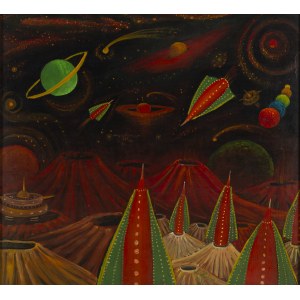
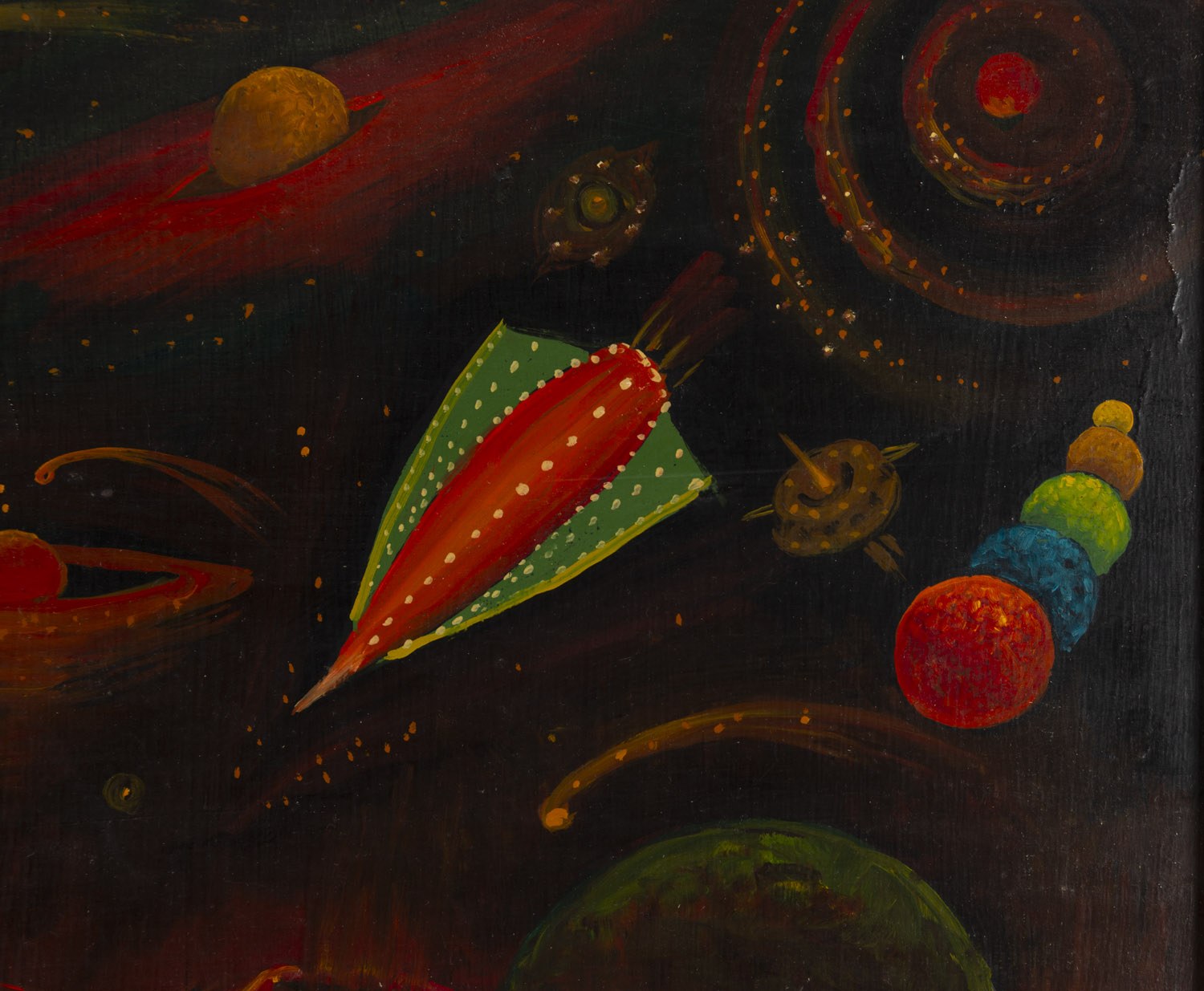
The need to create kept slumbering in Holesz all the time. He started painting again when he came to grips with the construction of his house. At first he painted on old sheets using a mixture of varnish and soot, later he received oil paints as a gift from his wife. A key moment in his work was his interest in the imprints of plants in coal, which inspired him to paint visions of the prehistoric Carboniferous world. Over time, he began to explore the theme of the cosmos, trying to decipher the riddles of the universe in his paintings. In parallel, he sculpted in charcoal, wood and graphite.
His talent was discovered in 1966 thanks to his neighbor, teacher Maria Pietraczuk. His first exhibition at the Rybnik Land Theater brought him fame. Soon his home became a place for visiting celebrities such as Agnieszka Osiecka, Franciszek Pieczka and German Chancellor Helmut Schmidt. Holesz exhibited his works in many countries, and his paintings went to Queen Elizabeth II, among others. He was given his own studio at the mine, where he created sculptures and paintings. After retiring, he focused on painting, and in the 1980s opened the Holesz Family Art Gallery at home. His works can be seen in museums and private collections. He has received numerous awards for his artistic activities, and since 2000 the Primary School No. 1 in Swierklany has borne his name.