


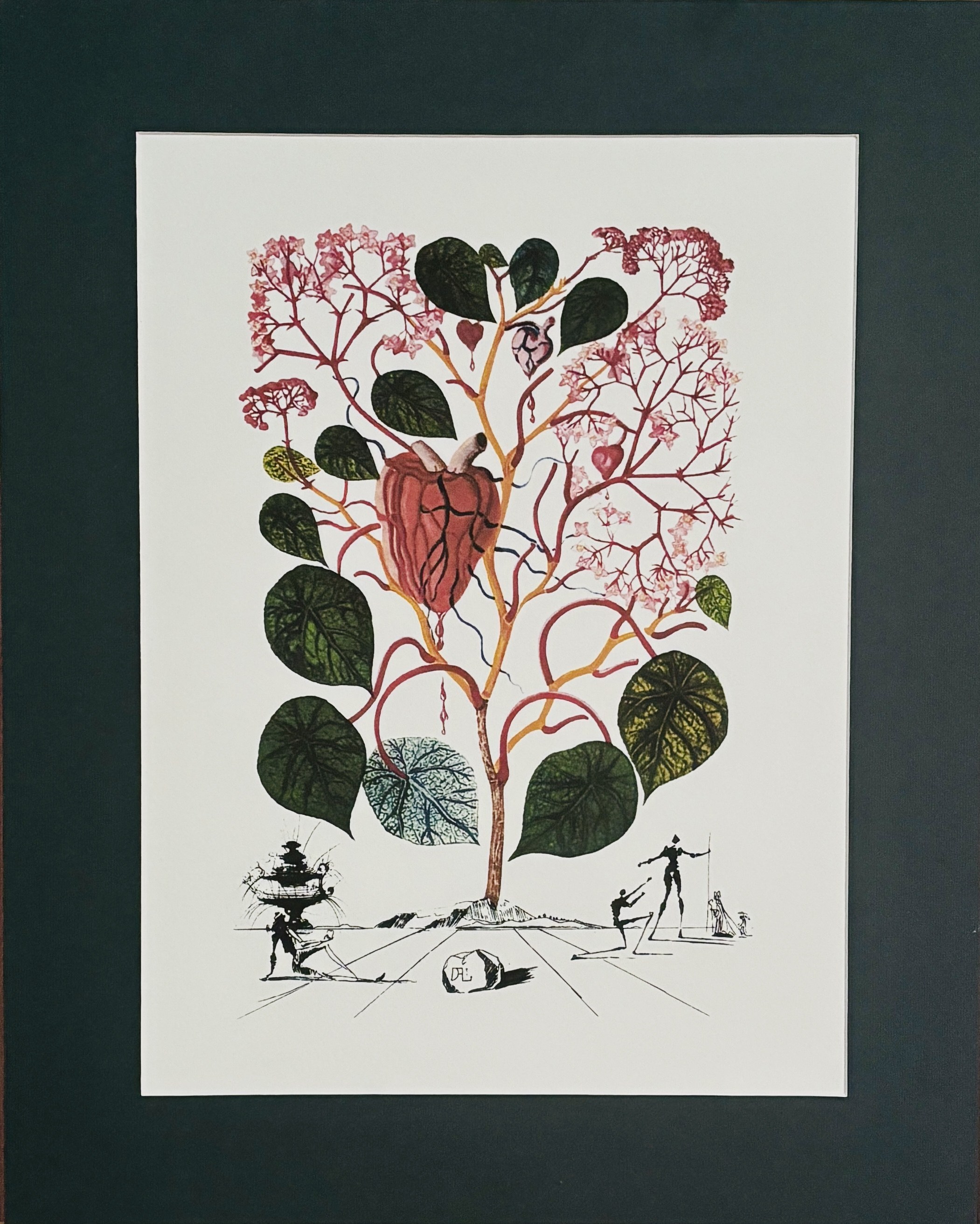
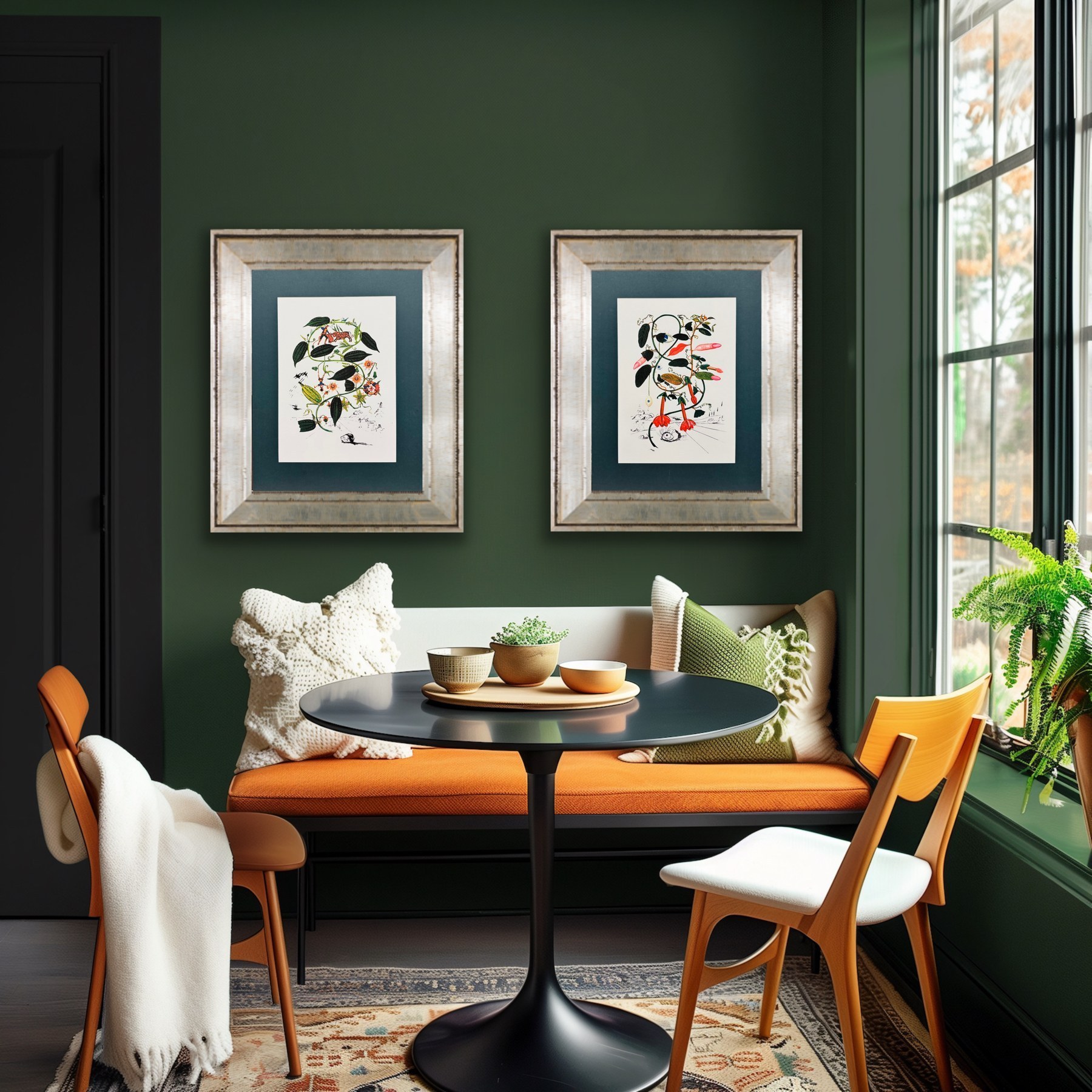
Color lithograph based on an original gouache by Salvador Dalí from the 1960s, on Privilege cotton paper, dimensions: 50 x 40 cm in a passe-partout; signed on the plate,
1979 edition: prints from this period were limited-edition collector’s items—
on the reverse, a certificate confirming a limited edition of 800 copies and the year of publication, 1979;
The publisher of the 1979 print edition from the Flordali (Flora Dalinae) series was the Swiss publishing house Inter Art Senans, based in Basel.
The lithographs were commissioned from the renowned Swiss lithographic workshop Atelier Matthieu (also based in Basel).
*Le Begonia* is part of the *FlorDali* series, which consists of 10 works by Dalí (*Rose Papillon* – *Lys musical* – *Marguerites* – *Passion flower* – *Cobea* – *Begonia* – *Arbre lunes* – *Pensée* – *Dahlia* – *Arbre soleil*).
The lithographs were originally intended as gifts for guests attending the Salvador Dalí gouache exhibition at the Hotel Le Meurice in Paris. For unknown reasons, they were never given away and remained in the collection of the Hotel Le Meurice in Paris for over half a century.
The exclusive Hotel Le Meurice was a favorite destination for great artists and thinkers and served as a hub for world exhibitions. It was there that Pablo Picasso held his wedding reception, and Salvador Dalí spent a month there every year for 30 years in the old Royal Suite (comprising rooms 106 and 108), which had been used by King Alfonso XIII. Others included the Wright brothers, Giorgio de Chirico, Rudyard Kipling, Edmond Rostand, Gabriele Annunzio, Paul Morand, Walter Lippmann, Yehudi Menuhin, Seiji Ozawa, Anne-Sophie Mutter, and Plácido Domingo.
Flordali “are fanciful, anthropomorphized plants that convey, among other things, humorous and erotic themes.” The entire series also features characteristic elements of Salvador Dalí’s painting, such as the eye motif, chicken legs, or a figure evoking associations with Don Quixote. Dali succeeds in transforming the meaning of the images and their interconnections, essentially creating a new concept and “way of seeing” in his own surrealist, unique style.










Recentemente visualizados
Efetue login para ver a lista de itens
Preferidos
Efetue login para ver a lista de itens