


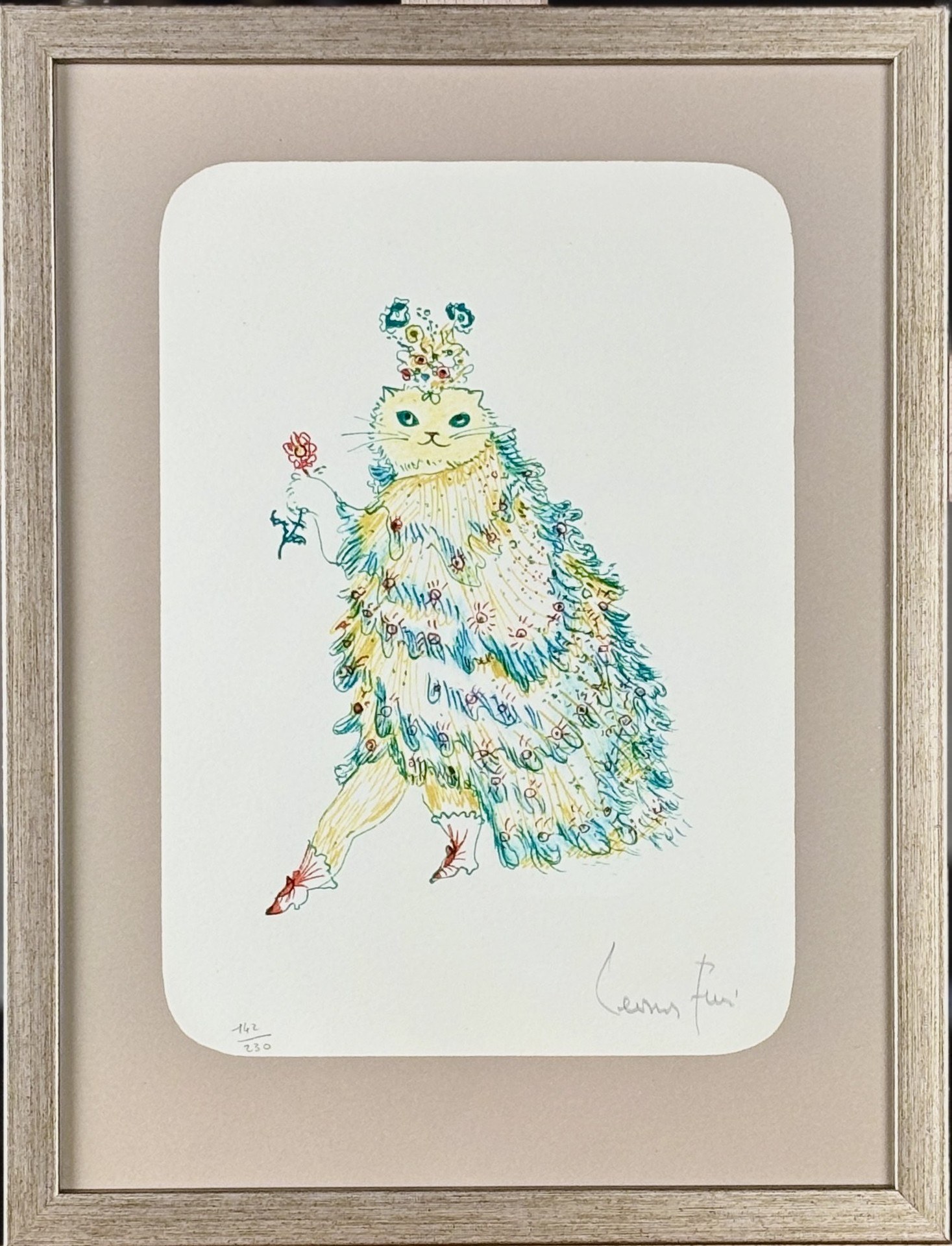
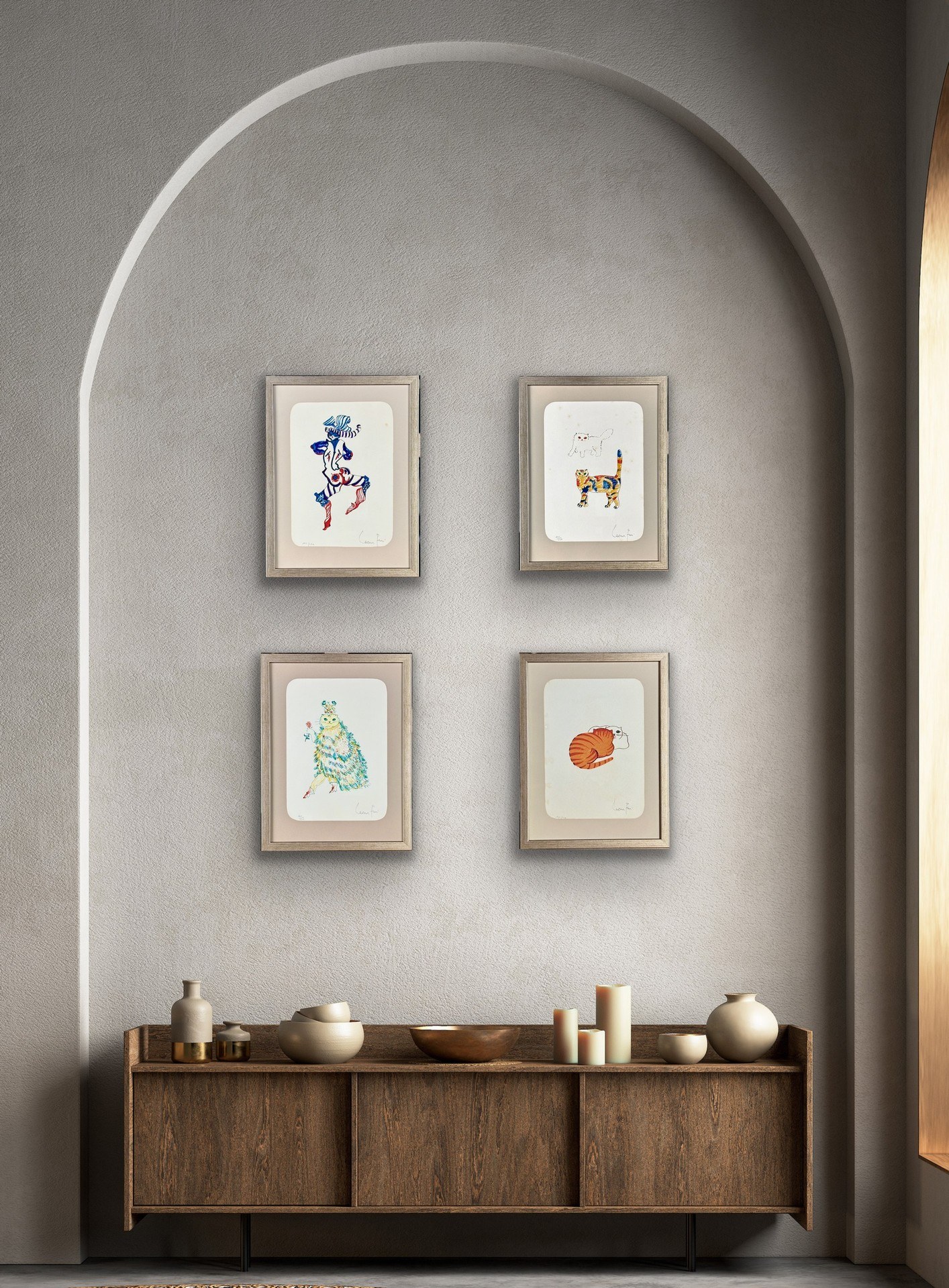
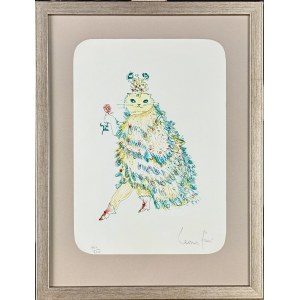
Collotypia on Arches Velin paper, 32 x 23 cm, limited edition, hand-numbered 142/230, lower left, signed by Leonor Fini in pencil lower right.
The series was published by the prestigious Parisian publishing house Éditions d'Art de l'Ibis in 1978.
The artist personally supervised the printing process and approved the so-called bon à tirer (proof piece) before the series was numbered.
(Leonor Fini was a master of detail. The collotype process allowed for the perfect rendering of her very fine, “trembling” line, visible on the striped dress of the cat or on Harlequin’s plumes. Each color was applied separately, which required tremendous precision in registering the sheets; print runs were limited to small series—the plates wore out very quickly)
Leonor Fini—one of the most independent and charismatic artists of the 20th century, associated with the Surrealist movement, though she herself always distanced herself from formal affiliation with any group.
Leonor Fini was a total artist: a painter, theater costume designer, illustrator, and writer. She was born in Argentina, raised in Italy, and spent most of her life in Paris.
The Queen of Self-Creation: She was famous for her extravagant lifestyle and for wearing masks and elaborate costumes at Parisian balls. Leonor Fini’s work is inextricably linked to the figure of the cat. To her, they were not merely pets—at one point in her life, she shared her Paris apartment with as many as 23 cats—but they became powerful symbols, alter egos, embodiments of independence and feminine strength, and guides through the world of the imagination.
The “Le Chats” series is one of the most iconic publications in Leonor Fini’s body of work. It was these works that cemented her image as the “Cat Lady of Surrealism.”
Fini did not want to create ordinary portraits of animals. In this series, the cats become theatrical characters. The artist endowed them with anthropomorphic features—their bodies have human proportions, hands, and feet, but their heads remain feline, while retaining a wild gaze. Their outfits draw on the Baroque, Rococo court fashion, and costumes from the Commedia dell’arte. This was a deliberate choice: for Fini, the cat was a creature that was by nature proud, mysterious, and “inhuman,” which is why the attire of viscounts or harlequins suited them perfectly. Upon its release, the series was received with great enthusiasm, especially in France and Italy. These works immediately became “objects of desire” because they combined Fini’s two greatest passions: her love of cats and her passion for theater and masquerades. It was emphasized that Fini had managed to avoid the trap of “cute little cat pictures.” Her cats are unsettling, almost demonic in their elegance. Critics saw in them an expression of her own personality—independent, predatory, and incredibly stylish.


![Leonor Fini, Akt z kotem [Zmora]](https://img1.one.bid/img/8933/2705499_1w.webp)







Recentemente visualizados
Efetue login para ver a lista de itens
Preferidos
Efetue login para ver a lista de itens