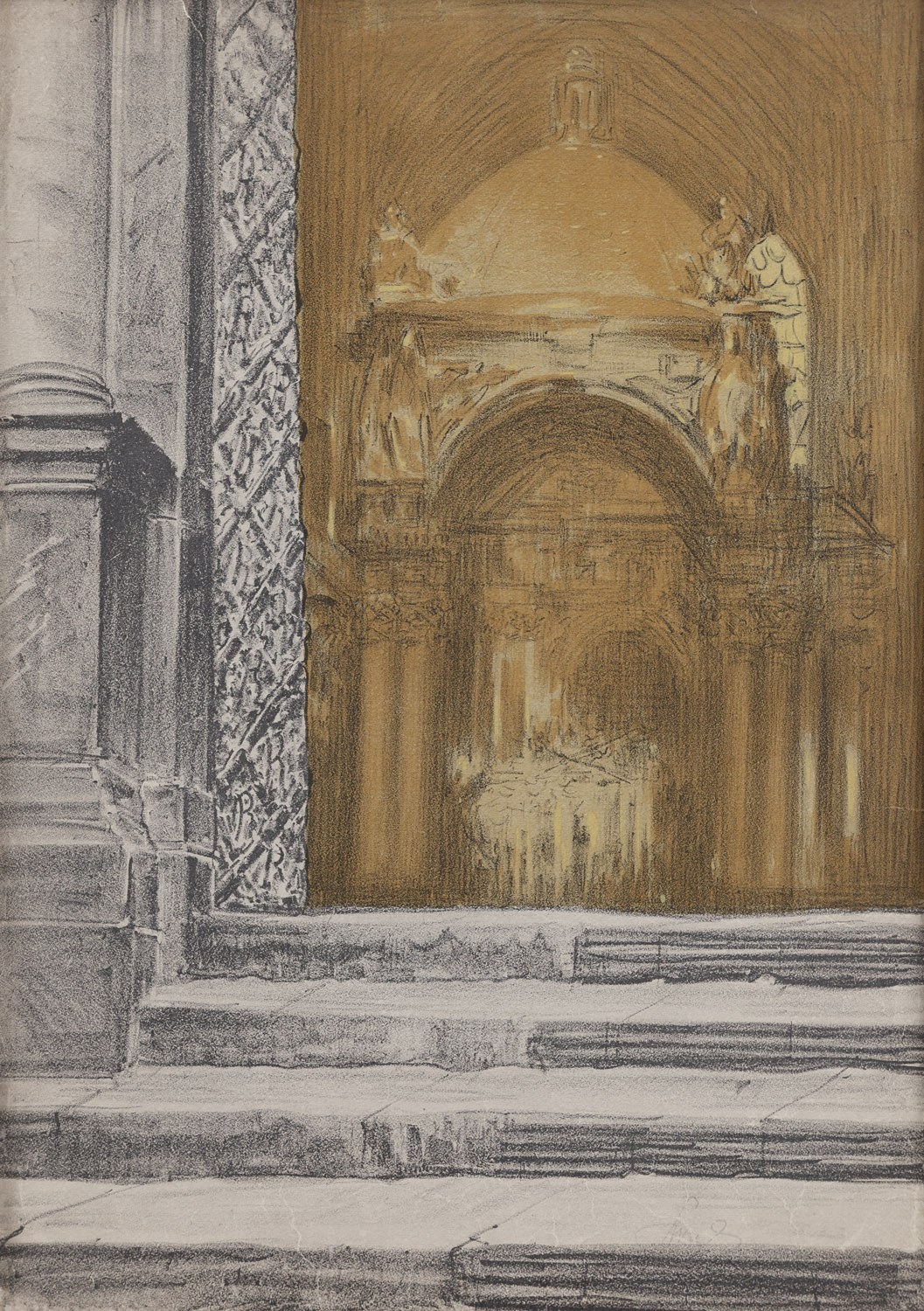
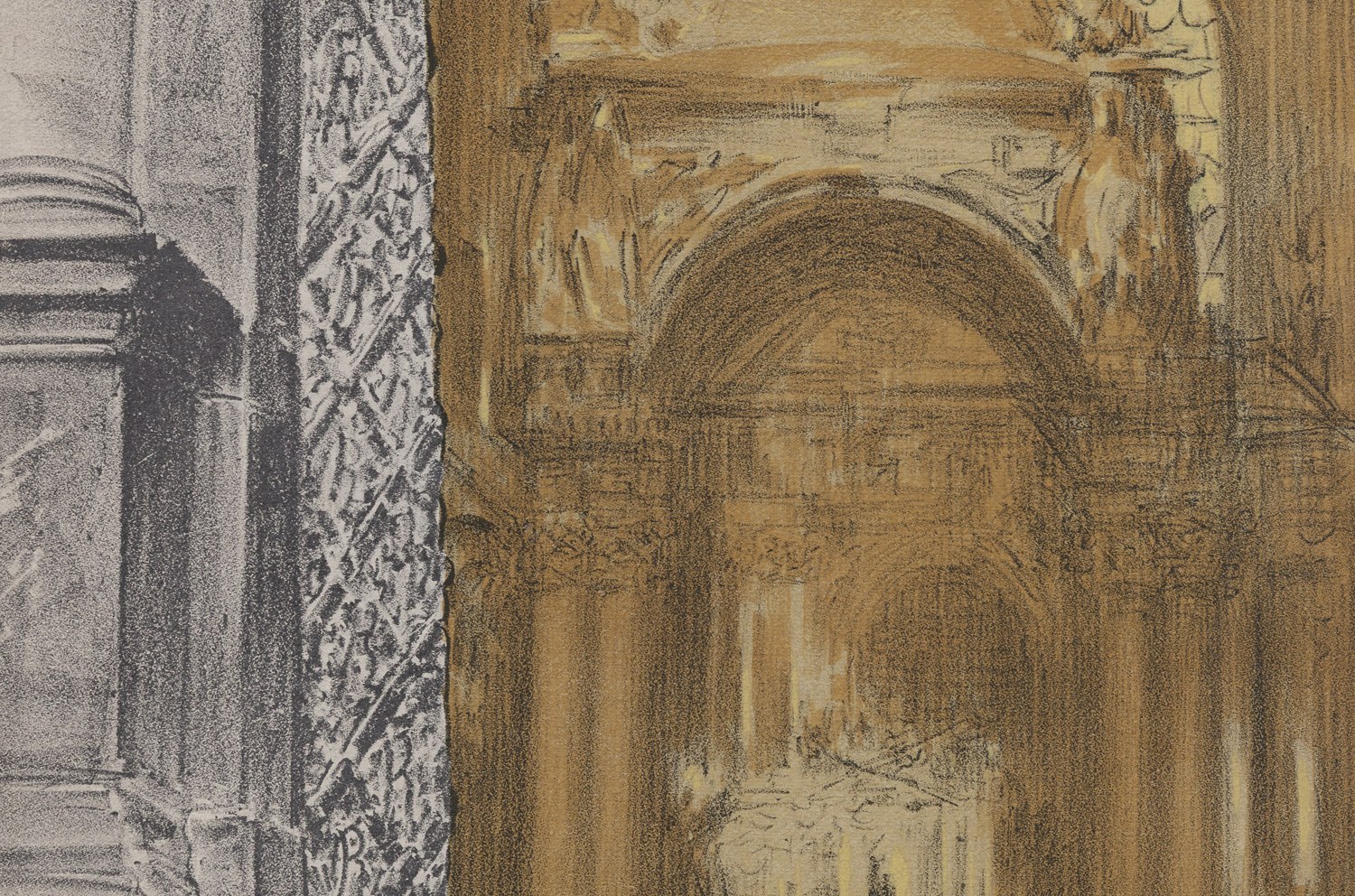
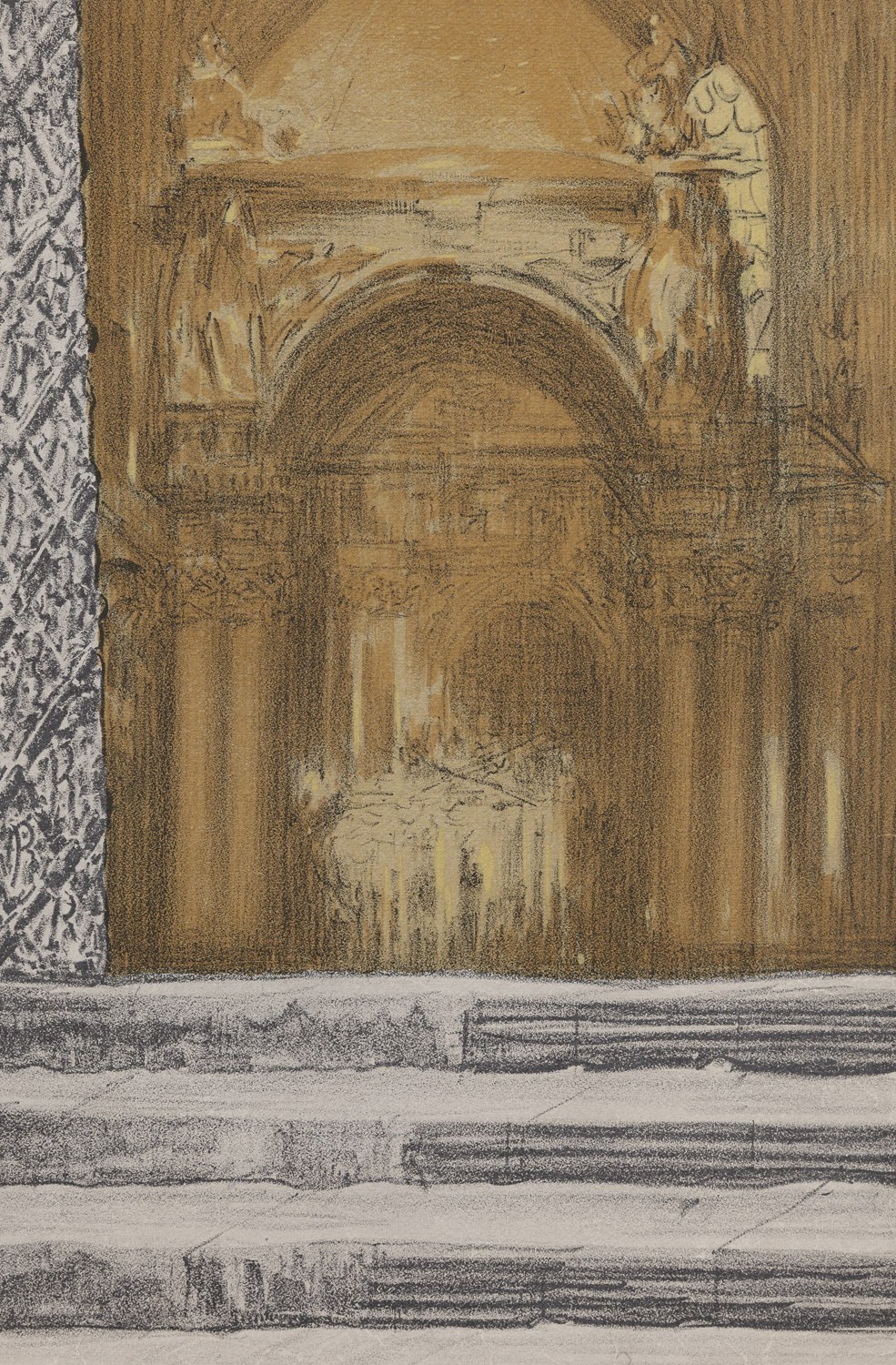
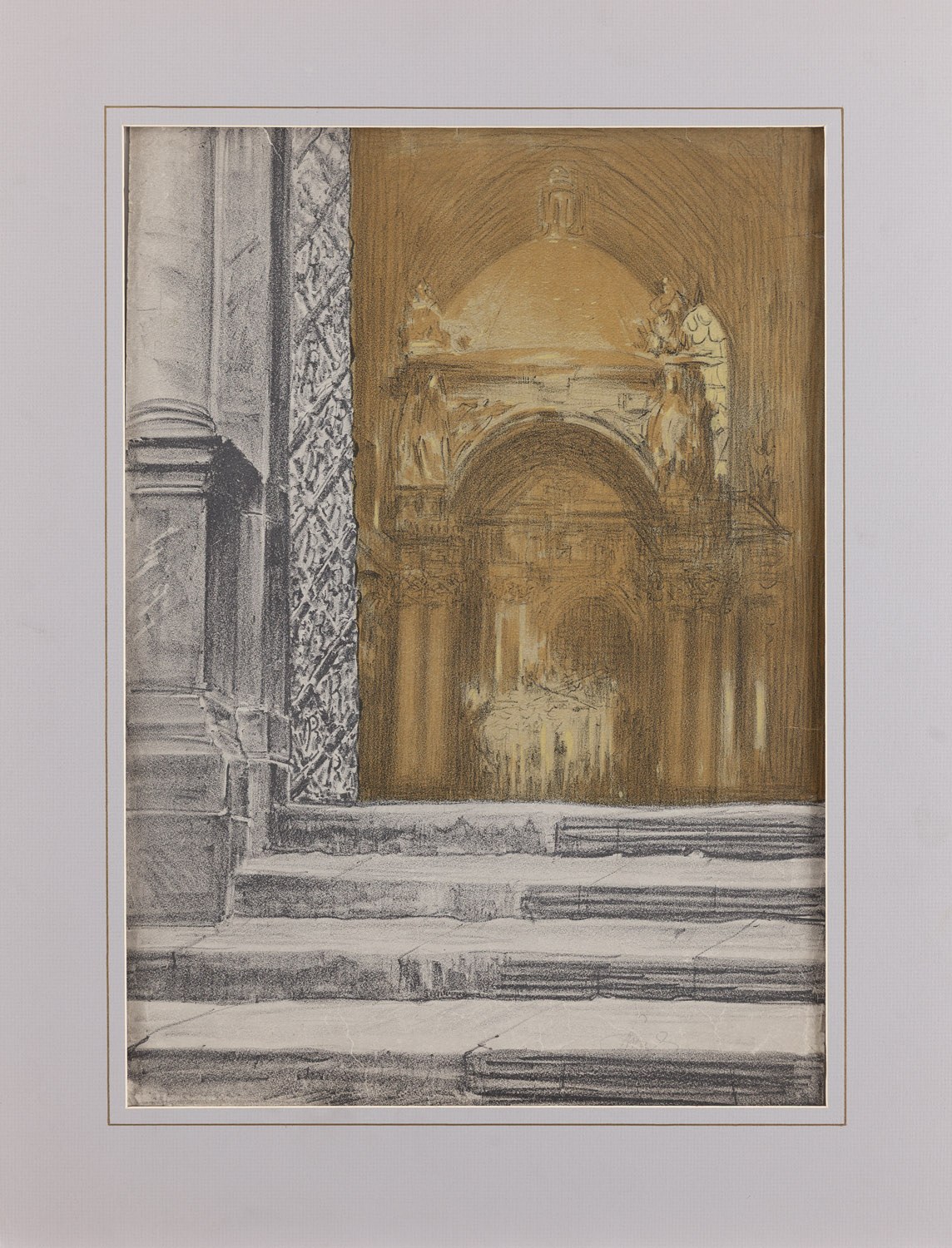
Dimensions: 56.5 x 40.8 cm (print area)
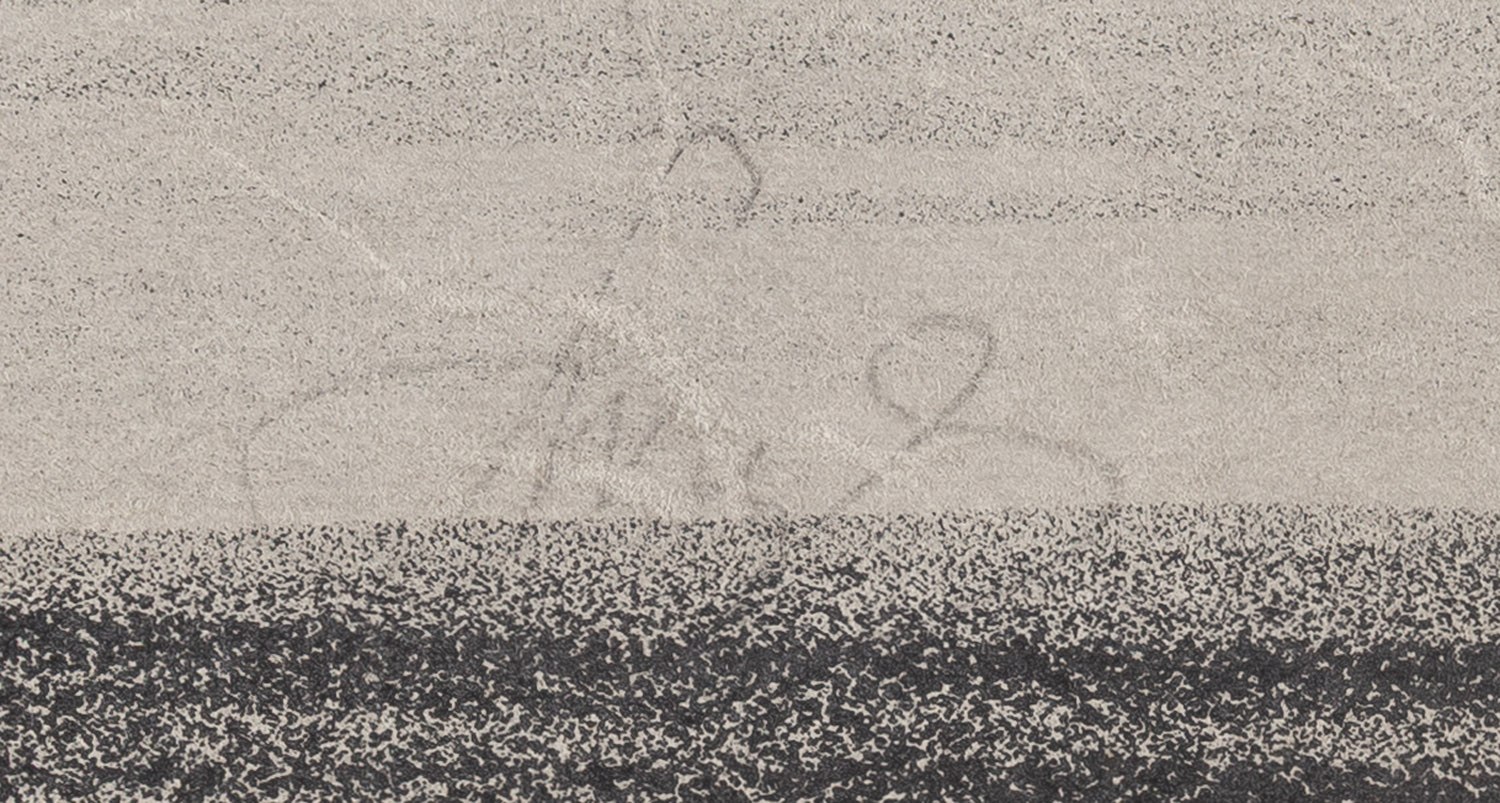
signed in pencil on the lower right: 'LWycz'
Print from the portfolio "Wawel I, II," published in 25 pieces (stones destroyed).
Condition
Unretouched work, in a passe-partout
Bibliography
Maria Grońska, Prints in Books, Portfolios, and Albums, Wrocław 1994, p. 298
Danuta Muszanka, Leon Wyczółkowski’s Lithographs, Wrocław-Kraków 1958, pp. 37–39
Biography
From 1869 to 1875, he studied at the Drawing Class in Warsaw under, among others, W. Gerson, A. Kamiński, and R. Hadziewicz. He continued his studies at the Academy in Munich, and from 1877 to 1879 attended the State School of Fine Arts in Kraków, where he studied under J. Matejko. From 1895 to 1911, he was a professor at the Academy of Fine Arts in Kraków, and from 1934 onward, he headed the Department of Graphic Arts at the State School of Fine Arts in Warsaw. In 1889, he traveled to Paris, where he encountered Impressionism. Initially, he painted historical and genre scenes; later, he turned to realistic portraits and fashionable salon scenes. During his stay in Ukraine from 1883 to 1893, he mainly created scenes depicting fishermen and peasants, exploring the themes of light and color in his work. After 1895, he was briefly influenced by Symbolism, after which he turned toward a distinctive style of colorism. He worked primarily in pastel, watercolor, and ink. He painted atmospheric landscapes—primarily of the Tatra Mountains—architectural monuments, and still lifes, especially flowers. He also created stylistically diverse, insightful portraits. From around 1918, he turned to printmaking (etching and autolithography). His work is considered one of the most outstanding artistic phenomena in Polish art at the turn of the 19th and 20th centuries.