


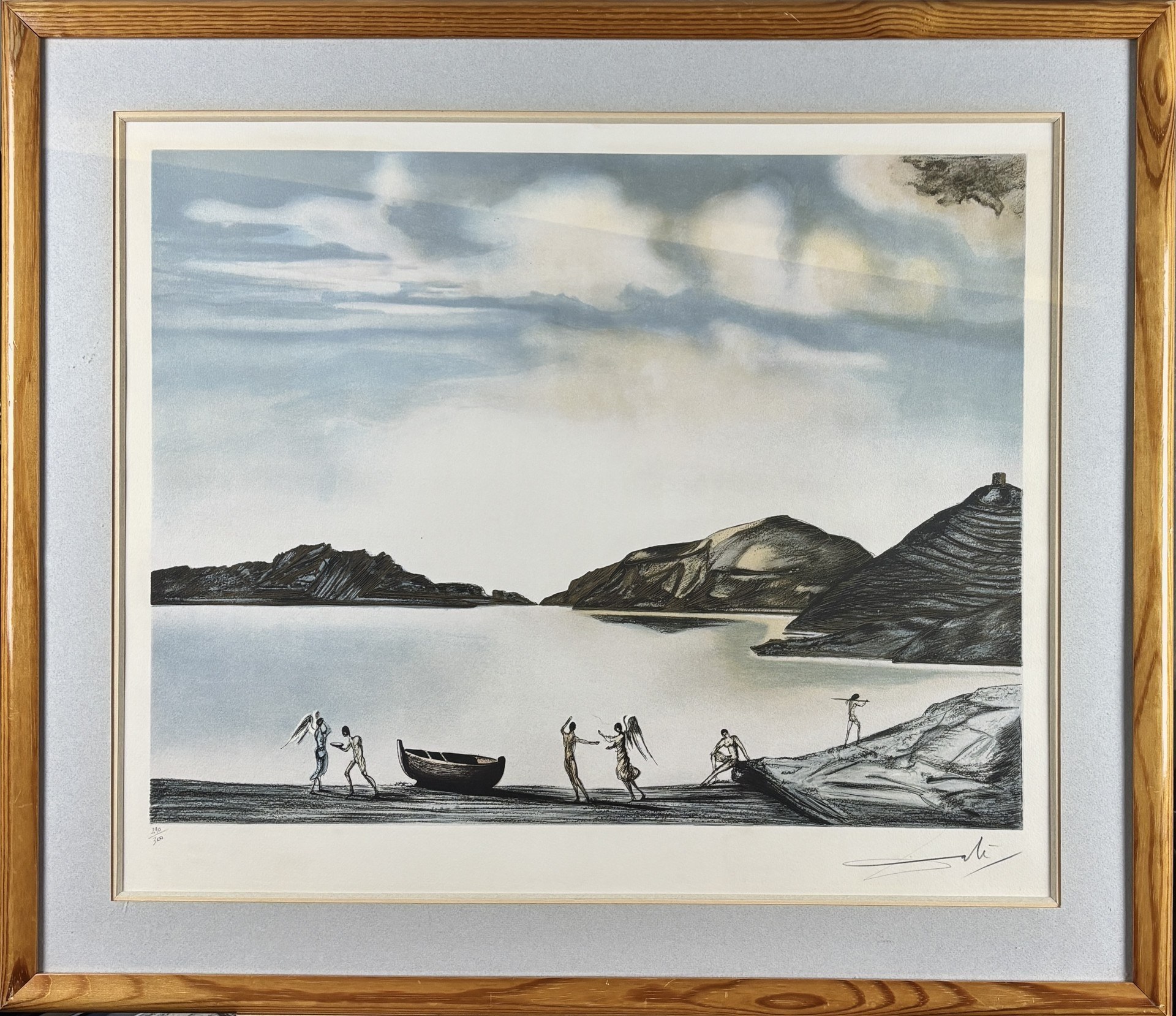
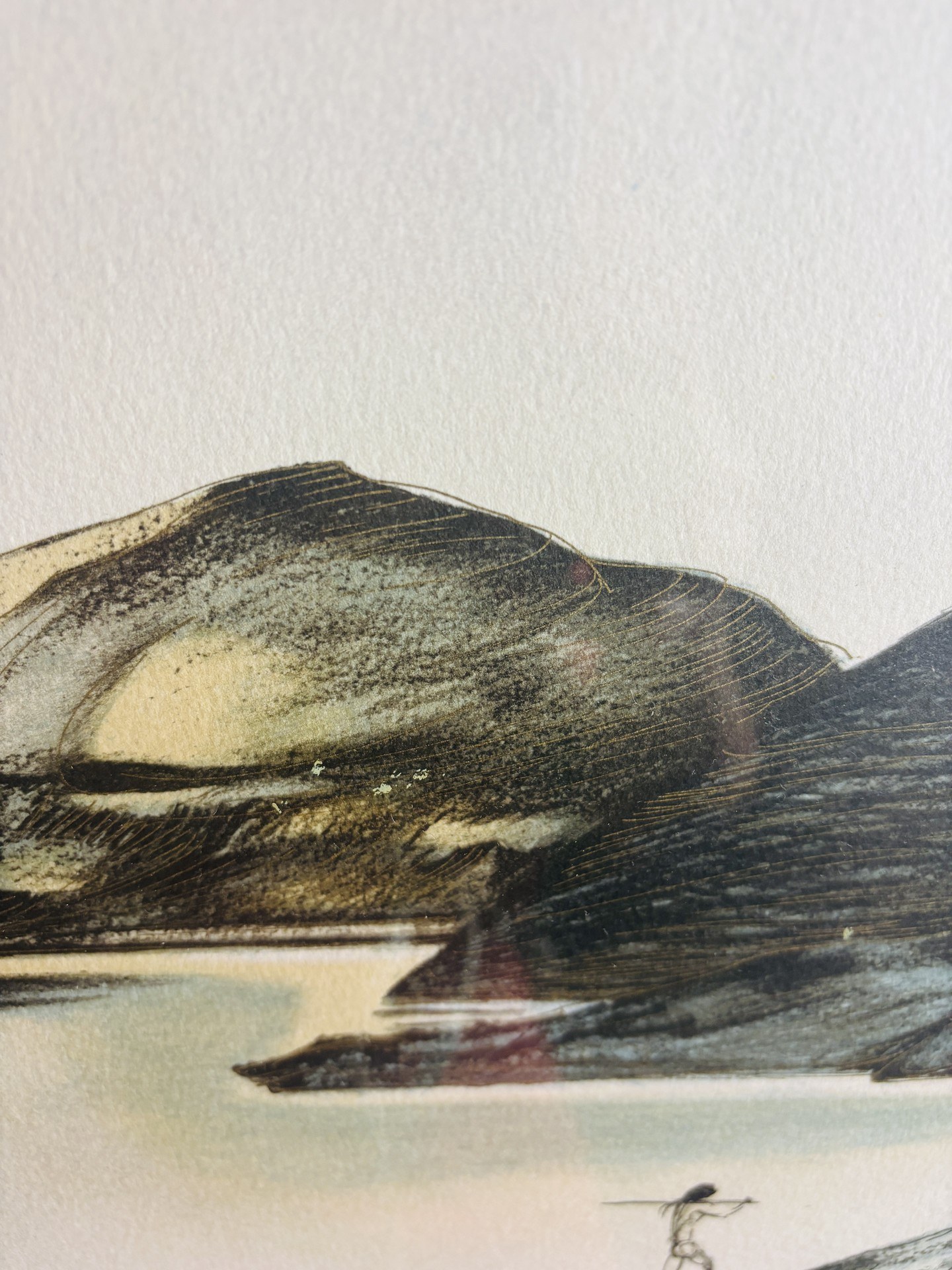
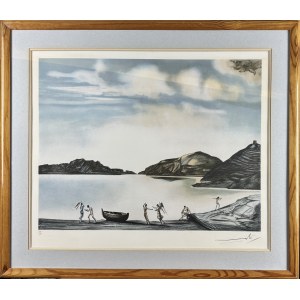
Drypoint on lithograph (mixed media), 65 x 53 cm (inside the mat), framed to 71 x 82 cm;
Limited edition, numbered in pencil 290/300 lower left;
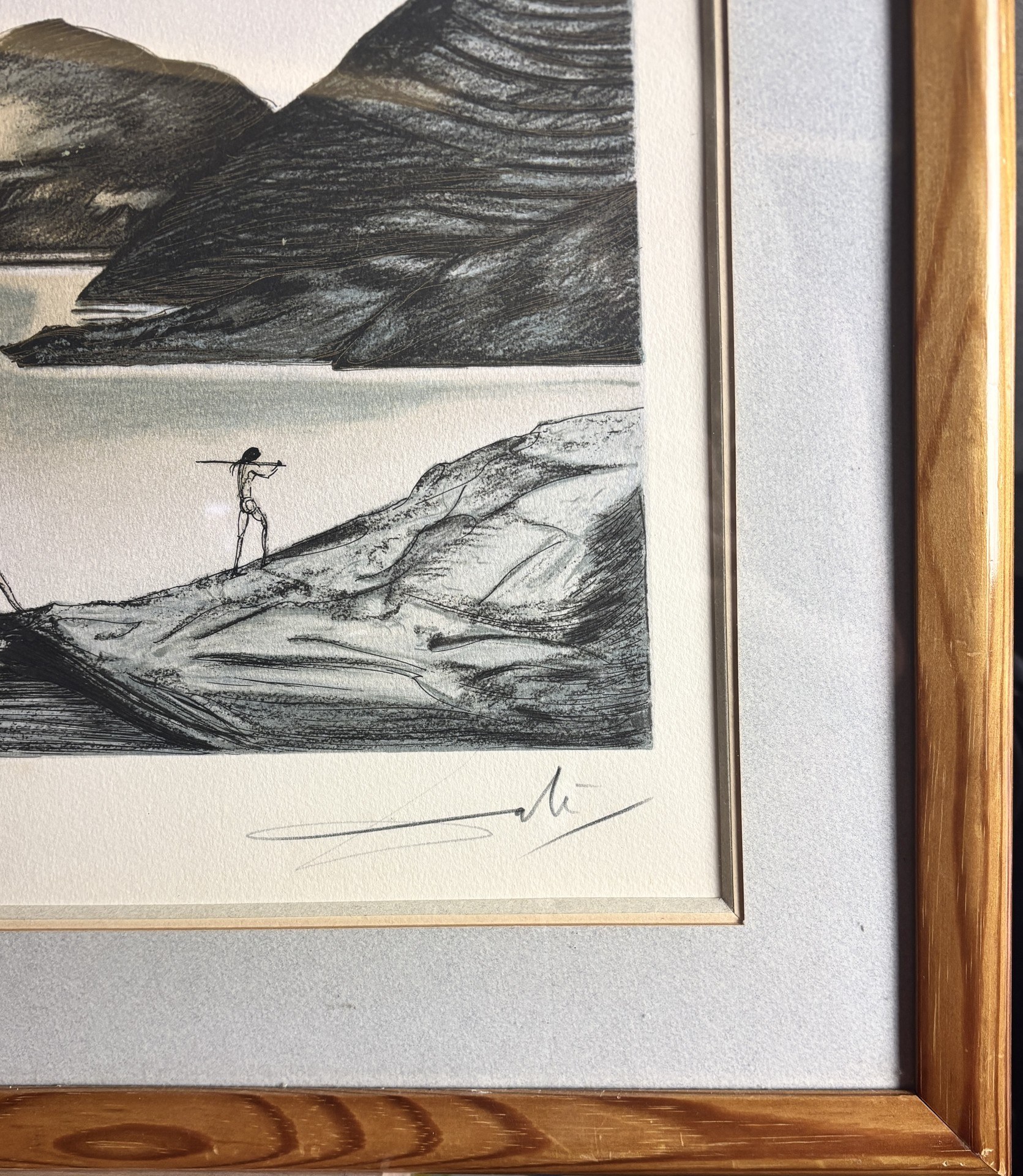
Signed in pencil lower left;
Publisher: Editions Graphiques Internationales; production commissioned to Atelier Rigal.
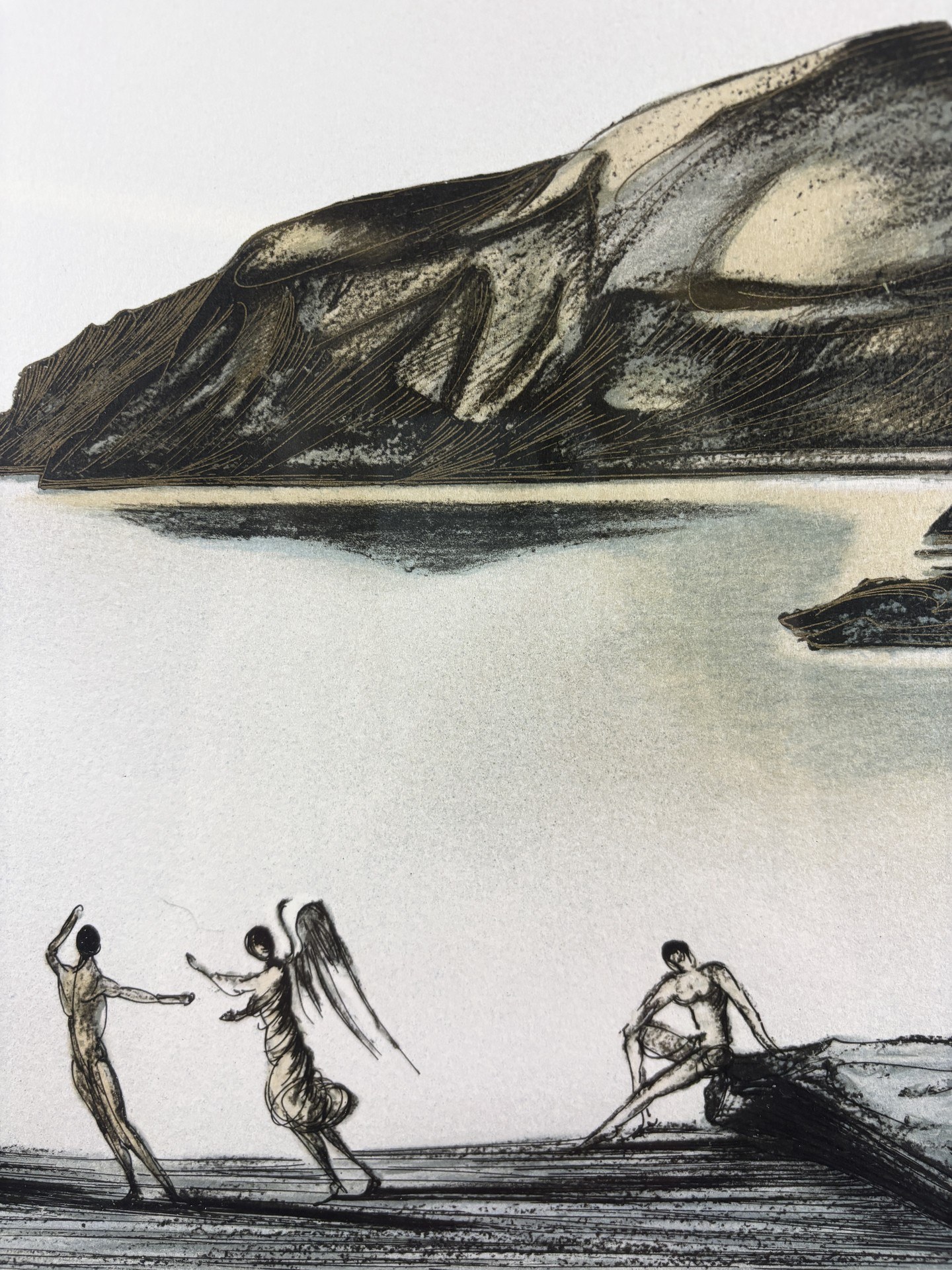
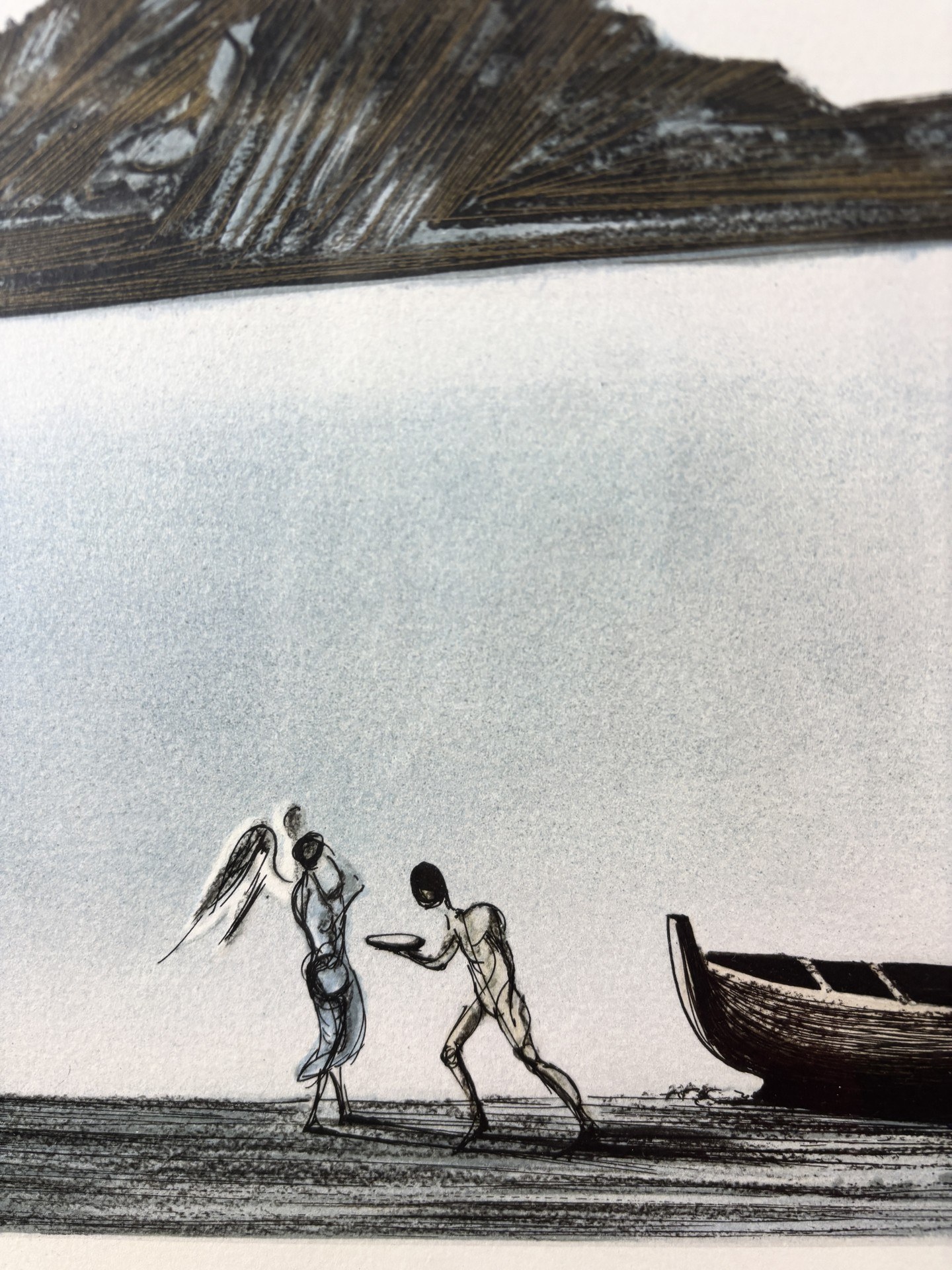
The exceptional visual quality of this print is the work of the legendary Parisian Atelier Rigal—a studio renowned for its unrivaled mastery of printmaking techniques. The masters at Rigal were able to reproduce the expressiveness of Dalí’s lines with absolute fidelity. Salvador Dalí’s collaboration with Atelier Rigal resulted in the creation of the most refined print editions in the artist’s oeuvre. The precision with which the grid of lines was executed using the drypoint technique on the rocks at Port Lligat attests to the virtuosity of the craftsmanship:
References:
*Catalogue des lithographies de Salvador Dalí*, published in collaboration with Salvador Dalí, S.P.A.D.E.M., museums, and private collectors, compiled by Art Graphic International Paris,
Provenance: private collection
For Salvador Dalí, Port Lligat was much more than just a picturesque fishing village—it was the matrix of his entire visual universe. Dalí used to say that the light there was exceptionally pure, and the rugged, eroded rocks of the Cap de Creus peninsula seemed to suggest paranoid-critical forms all on their own. It was this Catalan coastline that served as the backdrop for his most important compositions: from the famous *The Persistence of Memory* with its melting clocks to the mystical landscapes of the 1950s and 1960s. The artist returned to the motif of the bay at Port Lligat time and again, treating its calm expanse of water and rocky hills (including the famous island of Sa Farnera) as a stage for his philosophical and religious visions.
When Dalí placed angelic figures on the deserted or rocky shore of Port Lligat, he created a striking contrast: the eternal, austere landscape of his childhood met with something ephemeral and sacred. He even claimed, with his characteristic extravagance, that “nothing is more joyful than an angel,” and their presence in his landscapes was meant to bring an element of divine geometry to the chaotic world of human emotions. This juxtaposition gives these works a unique, meditative, and downright mesmerizing atmosphere.
Salvador Dalí was famous for rarely abandoning a composition once it was created—he would return to his most important oil paintings years, or even decades, later to rediscover them in the medium of printmaking. For him, printmaking was not merely a means of reproducing his works, but a separate space for experimenting with material, texture, and light. And the practice of combining techniques (so-called “mixed media”) allowed Dalí to achieve an effect that oil painting alone could not provide: the clash of fleeting, painterly light with the hard, sculptural line of the engraving tool. Thanks to this, works such as *Port Lligat at Sunset* gained a second life in the 1960s and 1970s as intricately finished, limited-edition prints.










Recentemente visualizados
Efetue login para ver a lista de itens
Preferidos
Efetue login para ver a lista de itens