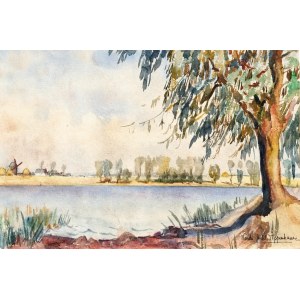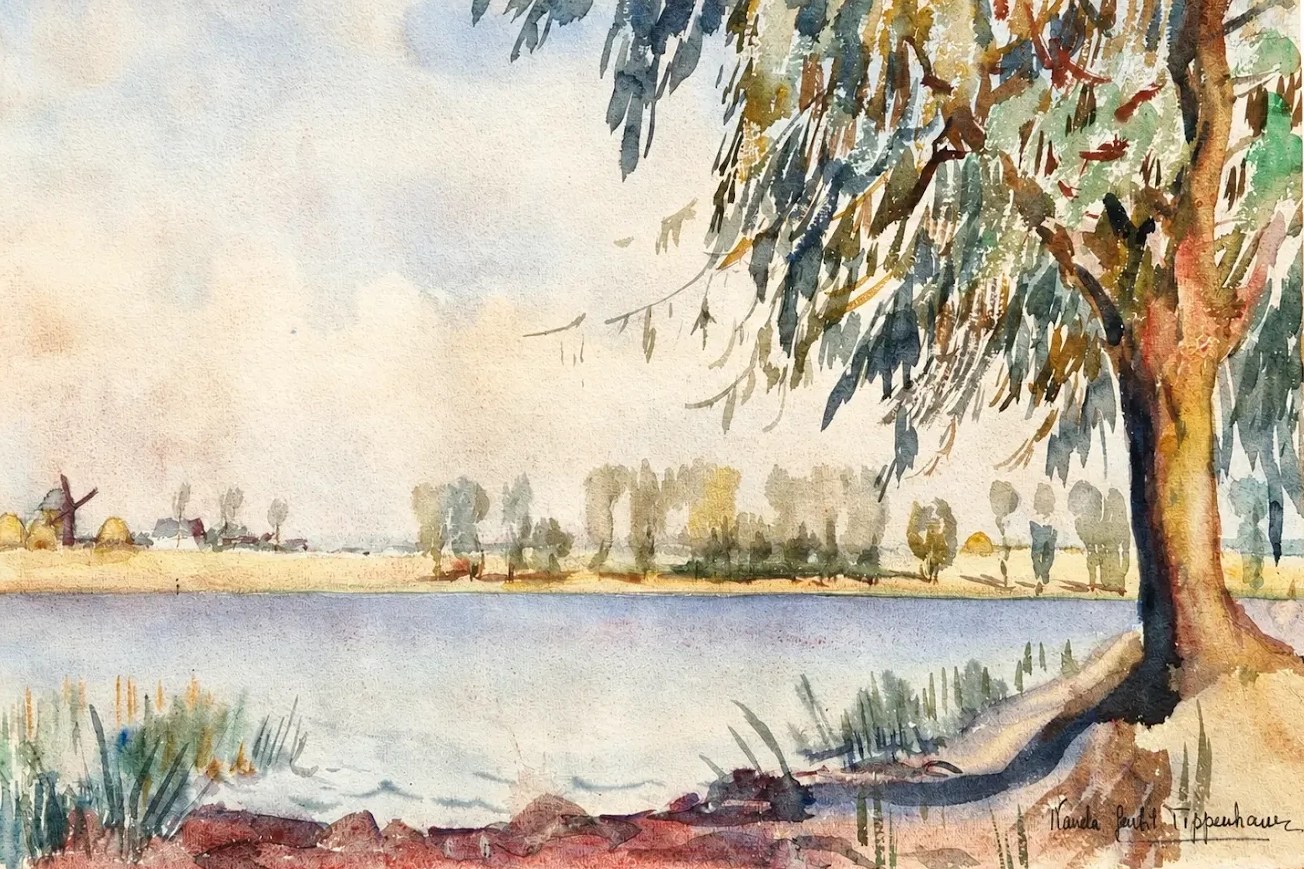
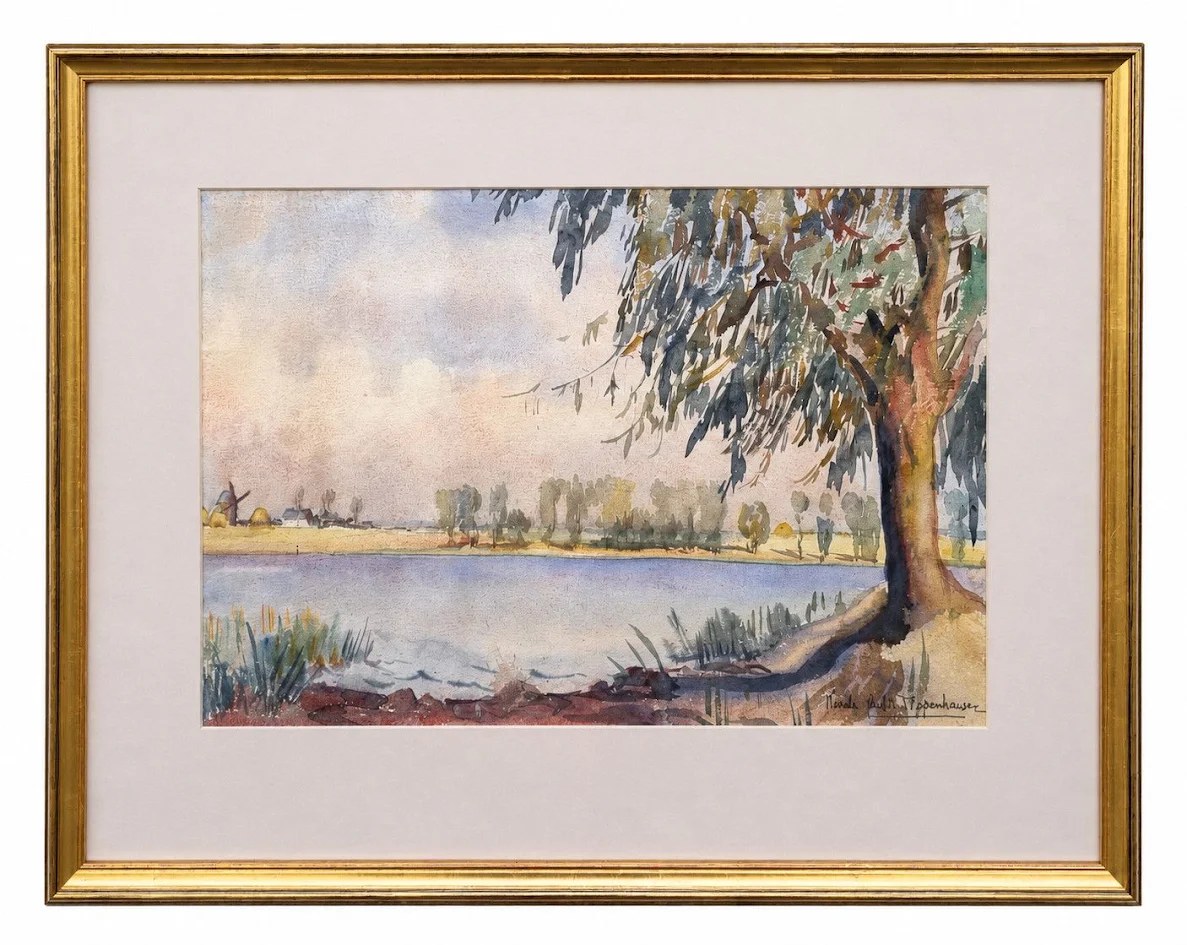
Watercolor on paper, signed lower right "Wanda Gentil-Tippenhauer."
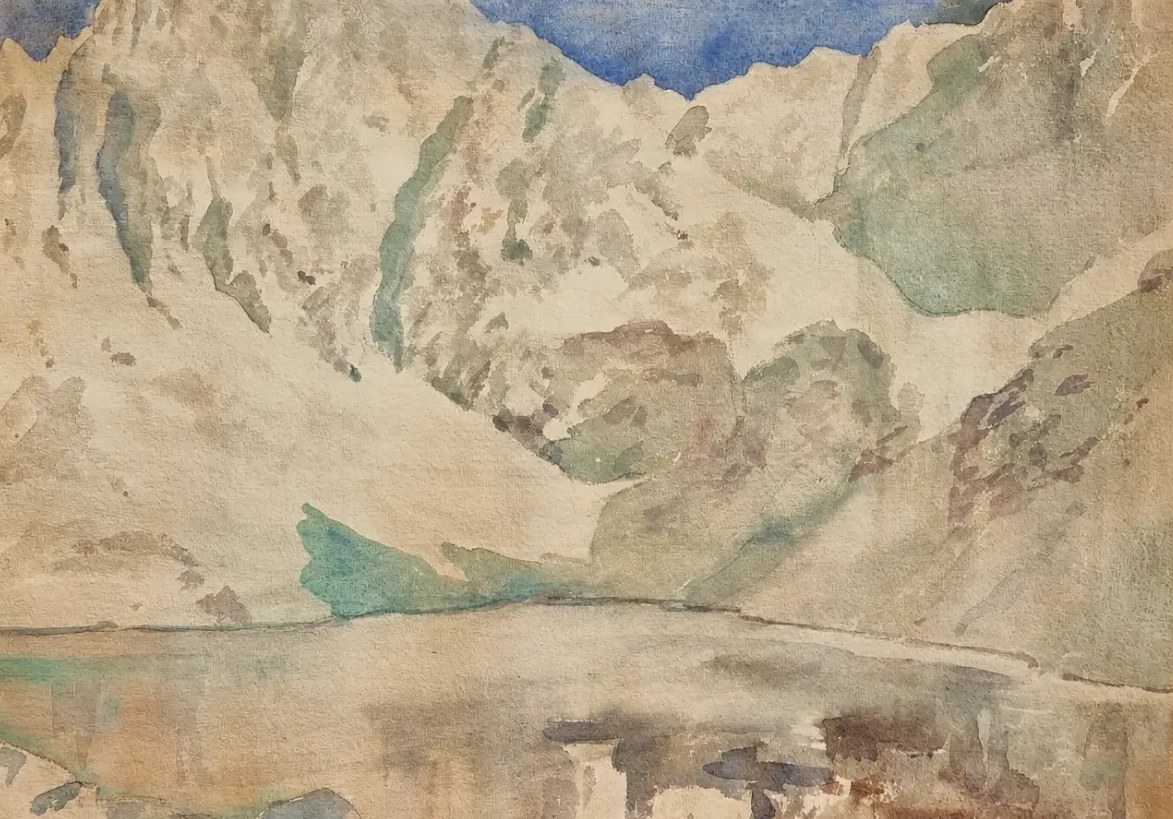
Double-sided work: on the reverse, a painting sketch depicting a view of Czarny Staw Gąsienicowy.
Exhibited: 1st Exhibition of Polish Women Artists, Bydgoszcz, 1930
Dimensions with frame: 47x62 (30x45) cm
Wanda Anna Gentil-Tippenhauer Widigierowa (Port-au-Prince, Haiti, 1899 – 1965, Zakopane) – Polish painter, lover of the Tatra Mountains and skiing. Wanda Gentil-Tippenhauer was born in Port-au-Prince, Haiti, where her father served as the chief municipal engineer. Wanda’s mother was Wiktoria, née Rosicka, the first Polish translator of Shakespeare. After graduating from high school in Lausanne, Wanda began her studies at the School of Fine Arts in Hamburg, and at the end of World War I, she moved to Warsaw. In 1921, she completed the State Courses for Art Teachers at the School of Fine Arts in Warsaw, led by Karol Tichy. From 1921 to 1923, she studied at the Kunstgewerbeschule in Hamburg. She traveled throughout Europe (Italy, France, Switzerland, and Germany) and the United States.
Wanda Gentil-Tippenhauer painted stylized landscapes with Tatra Mountain motifs (e.g., the Biała Woda Valley, a view of Giewont) and genre scenes from the Podhale region using watercolor and tempera. Occasionally, she painted flowers and religious subjects. She also worked in glass painting, mural painting, batik, interior design, and painting conservation. During the interwar period, she created, among other works, murals in St. Catherine’s Church in Zgierz and in the chapel of the Krasicki Castle near Brzeżany. She illustrated Haitian folk tales written by Wiktoria Gentil-Tippenhauer, published in 1931. After the war, she created decorations for the Orbis building and the TPPR Hall in Zakopane.